
Keeping your children busy without a screen can sometimes feel like an impossible challenge, can’t it? This article explores the benefits of crafts for children, a simple way to turn a rainy afternoon into a moment of growth. You’ll discover how modelling clay or collage build up fine motor skills and boost the confidence of your budding little artists. 🎨
- How crafts build fine motor skills
- Awakening creativity and imagination
- Building self-confidence
- Growing patience and calm
- How to adapt projects by age
- Tips for stress-free crafting at home
🤲 How crafts build fine motor skills
Now that the scene is set, let’s look at how fiddling with scissors or glue genuinely prepares a child for the challenges of school.
✏️ Getting the hand ready for school
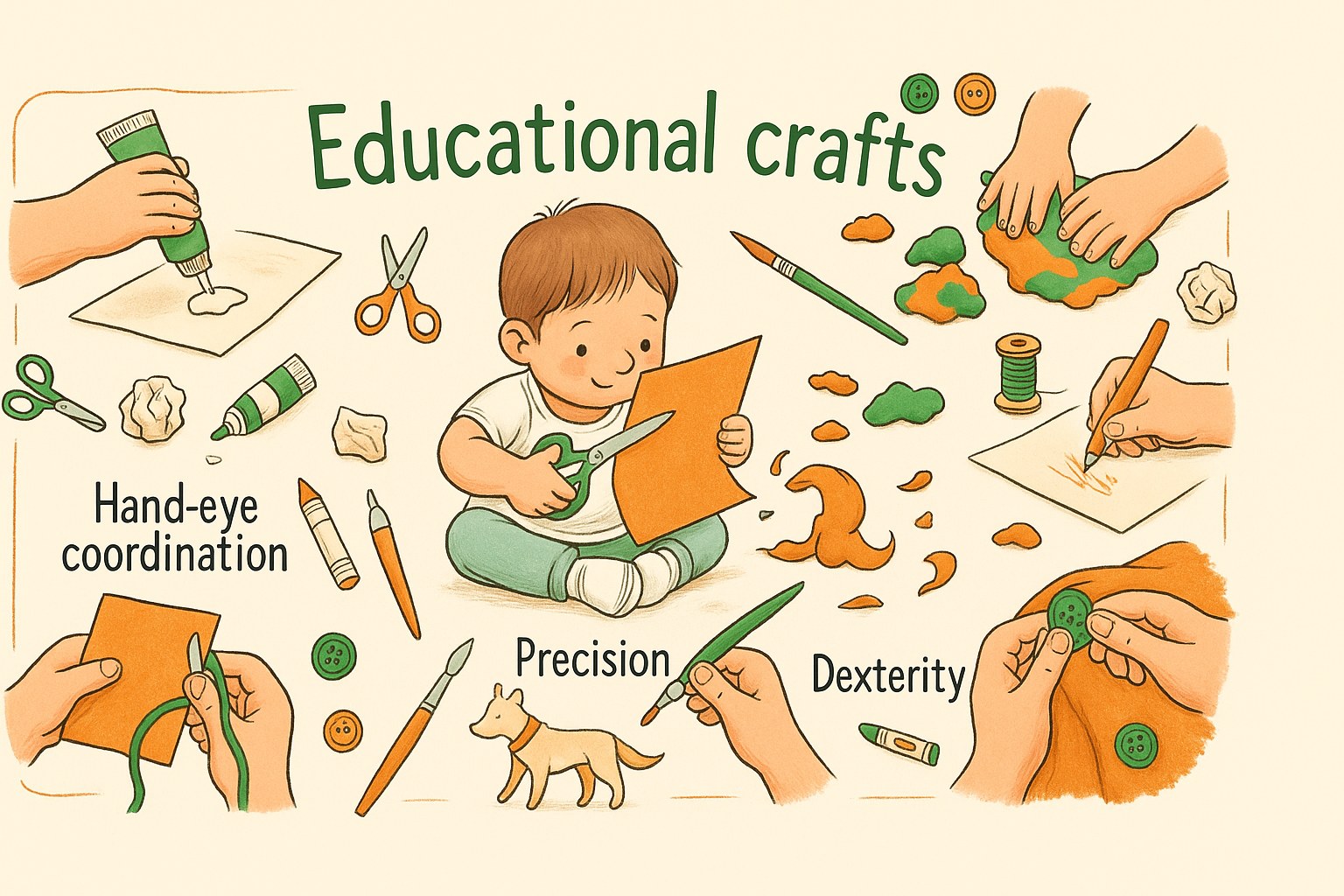
Cutting with scissors builds up the fingers. It then helps them hold a pen without getting tired. It’s an essential precision exercise. The child gains more control over their movements.
Gluing calls on the small muscles of the hand. Squeezing a tube of glue strengthens the overall grip.
These repetitive movements are essential. They make learning to write easier later on.
🛠️ Using different tools with ease
Handling fine brushes or sponges takes a lot of focus. The child learns to control how much force to use. They discover how to apply colour with growing precision.
Modelling clay is a wonderful tool. It lets children knead, stretch and sculpt shapes. This builds up the strength of fingers and palms.
These activities support the development of fine motor skills and an understanding of physical actions. It’s a real game of exploration.
🤲 Refining technical movements
Creative lacing or buttoning fabrics are technical challenges. These activities mirror everyday gestures. The child becomes more skilled at dressing alone.
Hand-eye coordination grows stronger at every step. The child has to aim accurately to fit two pieces together. It’s a constant visual and motor workout.
These exercises lay the foundations of geometry. Handling objects helps them get a better grasp of shapes and sizes in space.
In fact, the benefits of crafts for children turn every creative session into a small win for their future independence. So, shall we get the glitter out?
🎨 Awakening creativity and imagination
Beyond the purely physical side, crafting is a doorway into worlds only a child can invent.
📖 Inventing stories through objects
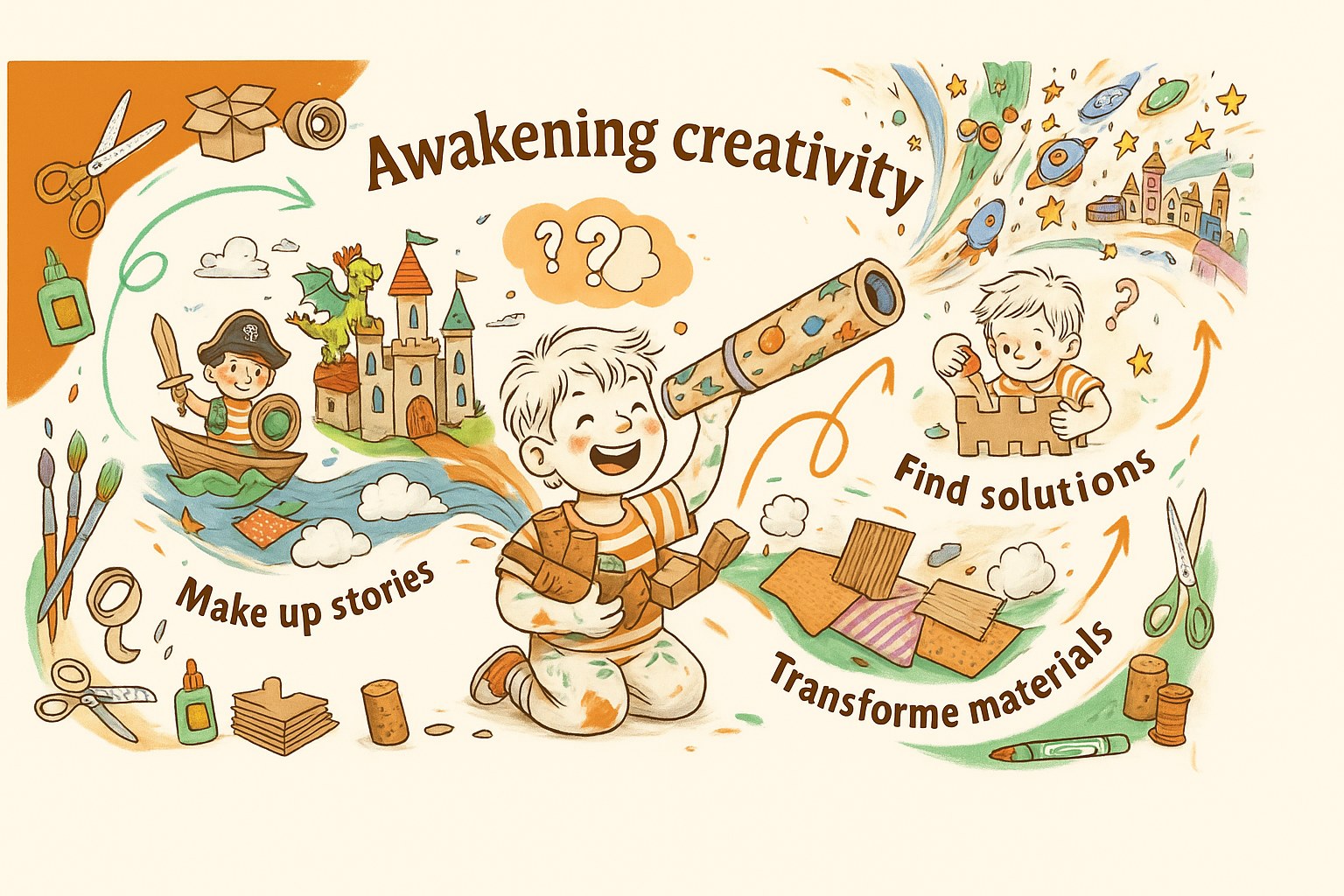
A simple cork can become a brave pirate. The child gives it a name and a mission. The lifeless object comes alive thanks to their imagination. It’s the start of a great storytelling adventure.
A shoebox quickly turns into a castle. It becomes the main backdrop for their games. The play space has no limits any more.
Making their own toys sparks the mind. It encourages rich, personal storytelling.
💡 Finding solutions on their own
Joining two pieces of cardboard isn’t always easy. The child has to think about the best method. They try, they fail, then they find a solution.
Using tape or glue takes some thinking. Which fixing will be the strongest? This search for balance feeds their capacity for logical thinking.
The benefits of crafts for children come through sparking creativity during free play with no set model. Standing on their own two feet against obstacles strengthens their natural perseverance.
♻️ Transforming simple materials
Mixing soft and rough textures wakes up the senses. The child discovers the contrast between cotton and sandpaper. Bright colours draw their eye. They learn to blend elements to suit their own sense of beauty.
Repurposing everyday objects is a powerful creative act. A paper roll becomes a telescope. This radically changes how they see their familiar surroundings.
Working in three dimensions with various materials helps children picture the world in 3D and feeds their creativity.
💪 Building self-confidence
By turning their ideas into real objects, a child doesn’t just make things, they build solid self-assurance.
🌟 Valuing every little creation
Praising the effort matters more. The child feels supported in what they’re doing. They understand that their work has value in your eyes.
Displaying their work on the fridge or a shelf is a powerful gesture. It turns the home into an art gallery. The child feels immense, well-deserved pride.
This kind attention strengthens their sense of achievement. They’ll want to start again and keep getting better.
🆓 Encouraging independence in choices
Let the child choose blue rather than red. Their decisions, however small, are crucial for their ego. They take control of their project. It gives them the feeling of being a capable, independent player.
Deciding the shape of a character strengthens their confidence. They aren’t following an order, they’re creating. This freedom is the engine of their future independence as an adult.
Self-assertion runs through these little choices. They become the creative subject.
😊 Choosing pleasure over a perfect result
The final look matters little in the creative process. It’s the lived experience that really counts. The child should have fun above all. Pleasure should stay the only guide.
A failed piece is a learning opportunity. Teach them to take the drama out of small technical failures. You can always turn a stain into a new detail.
The benefits of crafts for children rest on the fundamental role of play in socialising and self-assertion. That’s how they grow up calmly and happily.
🧘 Growing patience and calm
Crafting sets a slow pace, a necessary pause in the whirlwind of the day that teaches a child to settle down.
🏁 Learning to finish a project
Seeing a task through to the end brings immense satisfaction. The child learns that perseverance pays off. They finally see the fruit of their efforts after the wait.
For the youngest ones, suggest very short steps. This avoids discouragement in the face of a project that’s too long. Every step completed is a small win.
Little by little, they’ll stretch their attention span. Patience then becomes a natural, acquired skill.
🎯 Channelling their energy onto one task
Crafting needs sustained, careful attention. The child has to focus on their hands. The surrounding noise seems to fade during the activity. It’s a form of active meditation, very effective for restless little ones.
Hands-on activity helps them return to calm quickly. After a school day, it’s a decompression chamber. The mind focuses on the material and settles.
Silence often falls naturally. It’s the sign of total, beneficial immersion.
💪 Accepting mistakes along the way
A collage that comes unstuck can be frustrating. It’s the perfect moment to teach perseverance. You have to try again, differently. A mistake is never the end.
Turn an accidental scribble into a new element. The unexpected becomes an extra creative strength. This builds great flexibility of mind in the face of problems.
Construction games help a child face physical reality and build up logical reasoning.
The benefits of crafts for children lie precisely in this ability to turn a small slip-up into a brilliant new idea, stress-free.
👶 How to adapt projects by age
For the fun to stay alive, you need to know how to match the tools and challenges to the child’s real abilities.
👶 Sensory discovery for babies
Finger painting is perfect for the very little ones. They explore the material with their hands. Soft or sticky textures fascinate them. It’s a first tactile approach to the world around them.
Use only non-toxic materials. Babies often put everything in their mouths. Safety must stay your absolute priority.
Go for giant formats. This gives them total freedom of movement.
🧒 First hands-on tries for toddlers
Around the age of three, bring in round-ended scissors. It’s an important symbolic step. The child learns to follow simple safety instructions.
Sticking stickers is a great classic. Torn paper also lets them create colourful mosaics. These activities are rewarding and easy to set up.
Here’s the ideal kit to support the benefits of crafts for children of this age:
- Large stickers
- Glue stick
- Chunky felt-tips
- Crepe paper
🏗️ Construction projects for older children
Older children love complex challenges. Suggest structured cardboard models. They can follow a plan or invent their own architecture. It takes precision and an overall vision of the finished project.
Bring in natural materials like wood or pebbles. This makes the child aware of the environment. They learn to put mismatched elements together with ingenuity.
Complexity fuels their urge to succeed. They become real little engineers.
🏠 Tips for stress-free crafting at home
Many parents hesitate because of the mess, but with a little organisation, the workshop becomes a moment of pure pleasure.
♻️ Creating with recycled objects
Toilet roll tubes are treasures. Don’t throw away plastic caps any more. These clean bits of waste make up your free basic stock.
Sort cardboard by size in a dedicated box. The child can dip into it freely. It’s an excellent lesson in recycling and second lives.
Here are the recycling must-haves:
- Egg boxes
- Washed yoghurt pots
- Fabric scraps
- Magazines
🪑 Planning a suitable workspace
A wipe-clean tablecloth protects your table well. You can also use old newspapers. The key is not to fear stains. A protected space lets the child express themselves freely, without holding back or feeling afraid.
Set up storage they can reach at their height. They should be able to get their tools alone. This organisation encourages their independence and sense of responsibility.
A dedicated corner saves getting everything out each time. It’s a precious time-saver.
🧹 Handling clean-up without the headache
Get the child involved in the final tidy-up. It’s a full part of the activity. They learn to respect their materials and their home.
Keep a damp sponge within reach. Paint stains come off better when they’re fresh. A few simple tips are enough to keep the house clean.
| Type of stain | Quick fix | Preventive tip |
|---|---|---|
| Water-based paint | Warm water | Wipe-clean tablecloth |
| Glue | Gentle soap | Plastic desk mat |
| Felt-tip | Household alcohol | Protective apron |
| Glitter | Sticky tape | Work in a tray |
The benefits of crafts for children also come through this learning to care for their environment, without it becoming a chore for you.
Crafting builds fine motor skills, boosts confidence and soothes little creative minds. Set up a hands-on workshop soon to turn these simple moments into memorable keepsakes. Your child is already blossoming, one snip of the scissors at a time. Creating together is the loveliest project of all. ✨
❓ FAQ
🎨 What are the real benefits of crafts for my child’s development?
Crafting is a complete activity that calls on the body as much as the mind. Physically, handling tools like scissors or brushes refines fine motor skills and builds up little fingers, which makes learning to write so much easier later on. It’s excellent preparation for school without seeming like it!
Beyond the gesture, it boosts self-confidence. Making an object with their own hands brings a feeling of immense pride. It also teaches patience and how to handle small mistakes, while offering a magical channel of expression for emotions that children can’t always put into words.
👶 From what age can children start hands-on activities?
It’s never too early to wake up the senses! As soon as a baby can sit up, they can discover tactile sensations with finger paint or modelling clay, as long as you use non-toxic materials. Around two and a half, the child starts to give meaning to their creations and can try simple tools like brushes or stamps.
The key is always to match the activity to your little treasure’s abilities to avoid frustration. For older ones, around five or six, you can move to more technical challenges like lacing, cutting out complex shapes, or cardboard constructions that need more precision.
✂️ How can I teach a child to use scissors safely?
Cutting is a strong symbolic step. To start off calmly, choose ergonomic round-ended scissors suited to small hands. You can begin by cutting easy materials like modelling clay or old leaflets. It’s an excellent exercise for coordination.
A fun little trick: compare the scissors to a dinosaur that has to nibble the paper gently without snapping its teeth. This helps the child control their movement. Always value the effort and focus rather than a perfectly straight line; fun should stay the priority.
♻️ What recycled materials can we use for crafts at home?
Your recycling bin is a real goldmine! Toilet roll tubes, egg boxes, plastic caps and well-washed yoghurt pots make perfect, free bases. A simple cardboard box can become a castle or a pirate ship with a bit of imagination.
Using recycled bits is also a wonderful lesson in ecology. It shows children you can turn waste into a precious object. Feel free to add natural finds from your walks, like pebbles or fallen leaves, to vary the textures.
🧹 How can I handle the mess and stains during the creative workshop?
The trick to staying calm is organisation. Protect your table with a wipe-clean tablecloth or old newspapers. Set up a little tray with all the materials within reach and keep a damp sponge nearby: water-based paint or glue stains come off much better when they’re fresh!
Get your child involved in the final tidy-up too. It’s a full part of the activity that teaches them to respect their materials. By creating a fun little clean-up ritual, the moment stays positive from start to finish, stress-free for parents.
