
Do you ever feel guilty when your little one would rather empty the cupboard than recite the alphabet? The importance of play in a child’s development lies precisely in these moments of free exploration, which build up their brain and confidence far more than any guided exercise. Discover how to turn everyday objects into tools for learning, and why letting the magic happen without stepping in is the loveliest gift for their future balance. 🎲
- Why play is the foundation of child development
- Should you let your child be bored to boost creativity?
- Setting up an exploration space on a budget
- Learning outdoors, in touch with nature
- The adult’s role: supporting without directing
- How play needs change as children grow
🎲 Why play is the foundation of child development
We often tend to see play as a simple distraction, when in fact it’s the main building site where a child constructs their future.
🤸 Motor skills and a body in motion
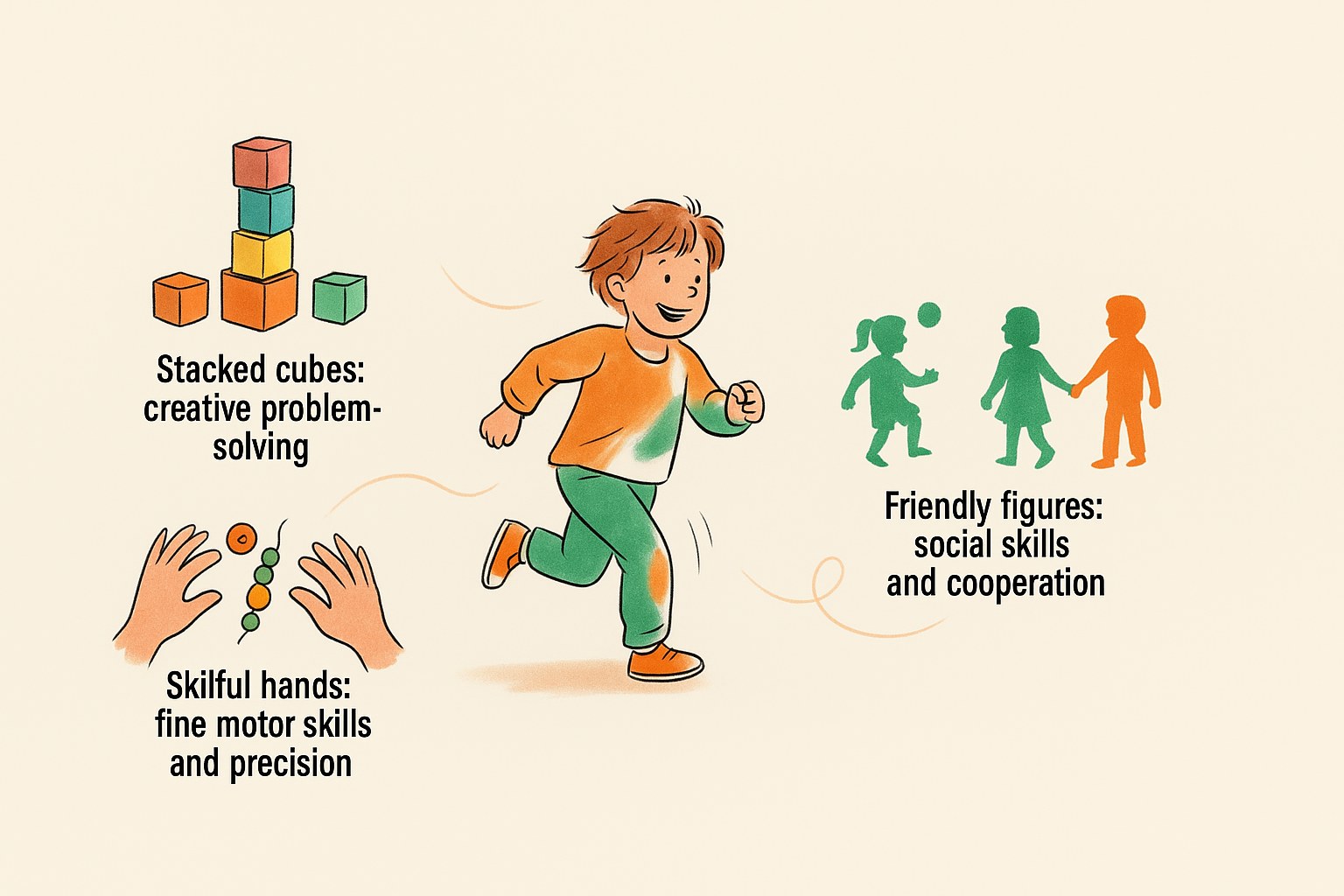
Moving isn’t just about burning energy. It’s about refining coordination and agility. Every jump or run builds the brain as much as the legs. The child learns to master their own physical limits day by day.
Climbing helps them discover body awareness. The little one grasps where their arm ends and the obstacle begins. It’s an essential mental map. It fosters solid independence for the years ahead.
Handling small objects develops fine motor skills. This prepares the fingers for writing later on. It’s an invisible but truly powerful training for what’s to come.
Movement also steadies our little ones’ moods. There are real benefits of play for mental health. An active body helps the mind stay calm.
🧩 Cognitive awakening and problem-solving
Play is a real laboratory. The child tests hypotheses by stacking simple cubes. If the tower falls, they look for another solution. It’s pure science applied in the living room.
Repeating an action lets them work out logical rules. Why does this toy make that particular sound? This perseverance in the face of playful failure builds a resilient mind. They learn to think for themselves.
“Play is an effective way to actively involve pupils, making learning more enjoyable and boosting motivation.”
We remember better what we discover while having fun. Pleasure fixes knowledge for the long term. The importance of play in a child’s development is obvious here.
🤝 Social skills and managing emotions
Playing in a group means following rules. You have to wait your turn or share your favourite truck. It’s the very first concrete lesson in living in society and showing respect.
Managing frustration remains a real challenge. Losing a game teaches a child to channel their rising anger. They then develop genuine empathy towards their playmates during these interactions.
Play is often seen as a social laboratory. The child tries out different roles to build their own identity. It’s a safe space to experiment with life.
A child who plays well gains emotional security. They feel solid and capable. They then face the outside world with far more confidence and a smile.
💭 Should you let your child be bored to boost creativity?
If play is vital, so is empty time; yet many parents dread these moments of silence.
✨ The magic of free play without stepping in
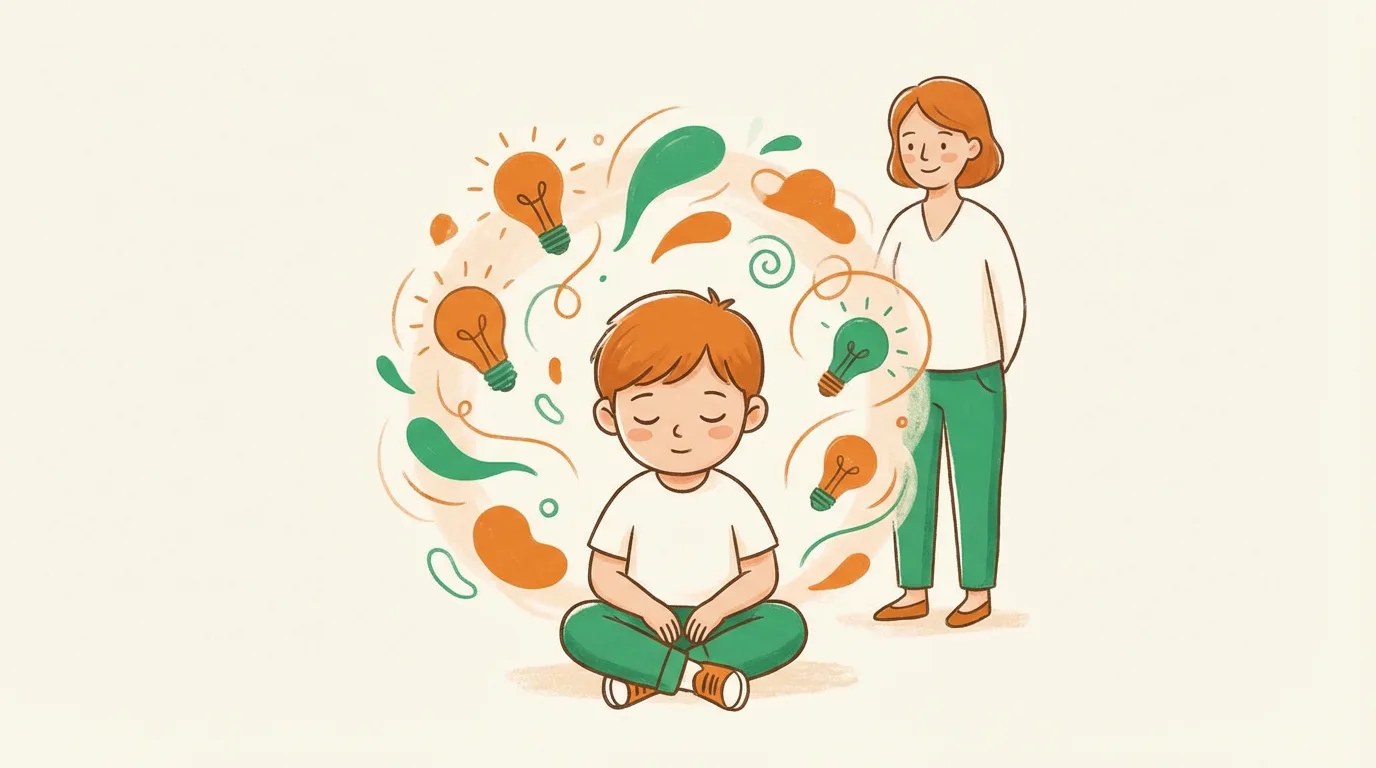
Boredom is an incredible engine for imagination. With no instructions, the child has to draw on themselves. They then invent worlds no one would have suggested. That’s where true independence of thought is born.
Unstructured activity is defined by the absence of constraints. The adult stays back, a simple observer. The child becomes the only one in charge. Their spontaneous choices reveal their deep interests.
This approach is fundamental. It fosters independence; free play helps a child learn to organise themselves.
A brain at rest works differently. It creates brand-new connections. It’s the breeding ground for pure creativity.
💭 Boredom as the engine of imagination
Why are we afraid of empty time? We overload schedules out of anxiety. Yet a pause is a gift for the mind.
With no outside stimulation, the child looks around. A simple spoon becomes a magic wand. The ordinary object is transformed by the power of thought.
Boredom helps a child to:
- Develop patience
- Encourage looking for solutions
- Strengthen self-knowledge
- Foster inner calm
Accepting these moments takes courage. It means making room for the unexpected. The result is always worth it.
⚖️ The difference between guided and spontaneous activities
Judo or music lessons are useful. They bring structure and technique. But they don’t replace playing in the garden. Spontaneous play is often far richer emotionally.
In guided play, the child obeys an outside rule. In spontaneous play, they create their own law. The balance between the two is the key to healthy growth.
Too much structure smothers initiative. The child then waits to be told what to do. It’s a trap for their future life as an adult.
Give them unplanned time. It’s in these gaps that intelligence shines best. Trust their instinct and the importance of play in a child’s development to guide them.
🏠 Setting up an exploration space on a budget
There’s no need to empty your bank account to stimulate your little one; genius often hides in recycling.
♻️ Everyday objects and recycled treasures
Sophisticated toys sometimes limit how they can be used. A cardboard box, on the other hand, can become a castle or a car. It’s the all-purpose tool for imagination.
Rummage through your cupboards to find treasures. Old fabrics, corks or saucepans will do the trick. These everyday objects are free and fascinating. Children love repurposing what adults use. It makes them feel important.
Recycling is also a lesson in ecology. They learn that everything can have a second life. It’s a sustainable education.
- Paper rolls
- Egg boxes
- Wool scraps
- Clothes pegs
🏠 Creating accessible themed corners
Organise the space into areas of interest. A reading corner, a building corner and a drawing corner. This helps the child find their way and choose.
Put everything at their height. If they can reach their games alone, they gain independence. Accessibility is the first step towards free exploration.
| Area | Suggested materials | Learning goal |
|---|---|---|
| Quiet corner | Cushions, books | Rest and reading |
| Active corner | Mat, balls | Moving and jumping |
| Creative corner | Paint, cardboard | Expressing their art |
| Role-play corner | Clothes, dishes | Acting like grown-ups |
Simple storage makes the end of play easier. Use clear bins without tricky lids. Tidying up almost becomes a pleasure.
💞 Dedicated time and emotional security
Physical space isn’t enough. You also need time without interruption. Avoid breaking into a child’s creative flow.
A reassuring setting lets them take risks. If the child knows they’re safe, they dare to explore more. Your kind presence is their anchor.
Be mentally available, even without playing. Put down your phone and simply watch. This silent attention feeds their self-confidence.
Emotional security is the engine of adventure. Without it, the child holds back. Give them this freedom to be.
🌳 Learning outdoors, in touch with nature
Stepping outside the four walls of the home completely changes things for sensory and physical development.
🌬️ The physical benefits of fresh air
Fresh air improves overall health. Children who play outdoors often sleep better at night. It’s a natural remedy against stress.
Gross motor skills take off outdoors. Running on uneven ground builds up the ankles and balance. You don’t move the same way on concrete as on grass. This burst of energy is vital.
The sun provides the vitamin D they need. It’s good for the bones and the spirits. Never overlook these outings.
The importance of play in a child’s development also runs through access to leisure and wellbeing. It’s worth remembering that this is a fundamental right.
🍃 Sensory discovery of natural elements
Handling earth or water awakens the senses. Natural textures are rich and varied. It’s an experience screens will never replace.
An uncontrolled environment is a real chance. The child watches the wind, the insects or the rain. They understand the cycles of life first-hand.
Play is a fundamental right recognised by the UN, essential for understanding the world and developing motor and cognitive skills.
Each season offers new free toys. Fallen leaves in autumn, snow in winter. Nature is generous.
🌲 Measured risk and outdoor independence
Climbing a tree teaches them to weigh up danger. The child tests their own physical limits carefully. That’s how they gain independence.
Little challenges build confidence. Managing to cross a stream is an immense victory. The adult must stay discreet but watchful. You shouldn’t forbid, but support the action. That’s where the child truly grows.
Parents’ fear sometimes holds back exploration. Learn to let go gradually. Your child is more capable than you think.
A grazed knee is part of a child’s job. It’s the price of freedom and discovery. Be proud of their feats.
👀 The adult’s role: supporting without directing
Knowing how to be present without being intrusive is probably the hardest exercise for us, parents and educators.
👀 Kind observation and discreet presence
Watching a child without stepping in is an art. You discover their strategies and their little victories. It’s a mark of respect for their work.
Value their discoveries with a simple glance. No need for grand speeches or over-the-top cheering. Your silent presence is enough to reassure them.
Sharing a moment without speaking creates a strong bond. You’re together, quite simply. It’s a form of very soothing parental meditation.
A child senses when you’re really there. Your attention is their finest toy. Cultivate this quality of presence.
💬 Responding to invitations without imposing rules
If they invite you into their game, join in. But let them lead the dance and the story. Don’t try to make the play educational.
Following their imagination takes humility. Become the passenger on the spaceship they’re flying. Don’t correct their playful logic mistakes. It’s their world, not yours. Enjoy this trip inside their head.
Adopt a low physical stance. Get down on the floor, at their level. It changes everything in the relationship.
Playing together strengthens the attachment bond. It’s a universal language between parent and child. Have genuine fun with them.
🌟 Valuing progress without pressure to succeed
Encourage the effort rather than the result. Say “You tried for a long time” rather than “That’s pretty”. This values perseverance and hard work.
Pleasure should always come before performance. Play isn’t a school competition in disguise. Let them fail at their builds without judgement.
Acknowledging the journey boosts self-esteem. The child learns they’re allowed to fumble. It’s essential for their future confidence.
A child who plays without pressure learns better. They dare to explore unknown paths. Be their first supporter, not their judge.
📈 How play needs change as children grow
Needs change with age, but the very essence of pleasure stays the engine of every new skill.
👶 Awakening the senses in babies
For a baby, everything is play and discovery. Touching a soft or rough texture is an adventure. The first activity mats encourage this exploration.
Freedom of movement is crucial from the very start. Let them discover their hands and feet on the floor. Their parents’ faces stay their favourite toy. Sounds and smiles are their first playful interactions. Everything goes through their awakening senses.
Handling simple objects helps coordination. A wooden spoon is often more interesting than a rattle.
Respect their rhythm and their need for calm. Too much stimulation tires their young brain. Simplicity always wins.
🎒 Preschool learning and getting ready for nursery
Fun prepares them for future skills. Playing shop develops language and counting. It’s a very effective bit of learning on the sly.
Symbolic play is essential at this age. The child imitates adults to understand their world. They take in social codes without realising it.
Daily play matters the world over. It’s a fundamental right for growing up.
Natural curiosity is the basis of all knowledge. Encourage their questions and their wacky experiments. This is a passionate future pupil.
🤲 Inclusion and awareness of difference
Play is a powerful tool for inclusion. Offer dolls or books that show diversity. This normalises difference from the earliest age.
Playing together reduces future prejudice. Children don’t see social barriers naturally. It’s by having fun that they learn tolerance and respect. A mix in their games fosters openness to the world. It’s a lever for social peace.
Play is a universal language that brings people together. It goes beyond words and origins. It’s an incredible force for cohesion.
Offer varied, representative materials. Every child should be able to see themselves in the stories. Cultivate this human richness.
Play shapes a child’s motor skills, resilience and social independence. Simply give them open spaces and everyday objects to spark their imagination. Encouraging the importance of play in a child’s development today means guaranteeing them a happy, calm future. To play is to grow up smiling! ✨
❓ FAQ
🎲 Why is play considered essential for my child’s development?
Play is far more than a simple distraction; it’s a genuine cornerstone. It stimulates every part of who they are, letting the child discover the world while picking up skills that are crucial for their future and their start at school.
While playing, the child builds self-confidence and learns to master their environment. It’s a natural laboratory where they test their physical, cognitive and social abilities in a playful, spontaneous way.
🤸 What are the concrete benefits of play for physical health and motor skills?
Playing, especially outdoors, helps the child control their body in space better. By running, jumping or climbing, they refine their coordination, build up their balance and learn to sense their own physical limits.
Hands-on activities like puzzles or modelling clay call on fine motor skills and hand-eye coordination. These play moments prepare the small finger muscles for more complex tasks like writing.
💞 How does play help my child manage their emotions and stress?
Play plays a key role in mental health by offering a unique means of expression. It helps to reduce stress, channel difficult emotions and build resilience in the face of everyday surprises.
Sharing playful moments with parents creates a strong, reassuring attachment bond. Children who play regularly with their loved ones are often less prone to anxiety and develop better self-esteem.
🧸 Do I need to buy sophisticated toys to spark their imagination?
Not at all; shop-bought toys aren’t essential for growing up well. Simple everyday objects or recycled materials, like cardboard boxes or kitchen utensils, wonderfully spark the imagination.
The key is to provide varied materials that leave room for creativity. An environment rich in possibilities, even with free objects, lets the child make their play space their own.
👨👩👧 What role should the adult take during play?
The adult gains by being a kind observer who takes a genuine interest in the activity without necessarily directing it. Asking questions or valuing the child’s efforts strengthens their sense of importance and their confidence in their abilities.
If the child invites you in, join in while respecting their rules and their story. The idea is to support without imposing, while letting the child find their own solutions when they hit a difficulty in their game.
🌳 Why is it so important to encourage outdoor play?
Fresh air is a natural remedy that improves overall wellbeing and sleep quality. Each season offers unique opportunities, like handling fallen leaves or watching insects, which awakens sensory curiosity.
Exploring nature also lets them take measured risks, like crossing a stream or climbing a tree. These little challenges build independence and cardiovascular health while offering unmatched freedom of movement.
🆓 What is free play and why should we protect it?
Free play is an activity with no outside constraints, where the child follows their own instincts and interests. It’s essential for developing independence, because the child becomes the sole master of their choices and discoveries.
This kind of play fosters perseverance and focus, skills that are very useful for success at school. By letting the child play without interruption, you let them immerse themselves fully in their invisible learning.
