
Does your little explorer turn your living room into a physics lab the moment they wake up? 🌟 To nurture your child’s curiosity every single day, you often just need to let go a little and set up spaces for free, hands-on play. Discover how to turn every “why?” into a sensory adventure that naturally boosts neural connections and self-confidence.
- A Child’s Curiosity: A Natural Engine for Learning
- 3 Tips for a Home That Invites Exploration
- How to Become a Model of Wonder Without Even Trying
- Handling the Avalanche of Questions Without Burning Out
- 3 Rituals to Turn Routine Into Adventure
- Finding the Right Balance to Avoid Overstimulation
🔍 A Child’s Curiosity: A Natural Engine for Learning
Curiosity isn’t just a personality trait. It’s the very foundation of our little explorers’ intellectual development.
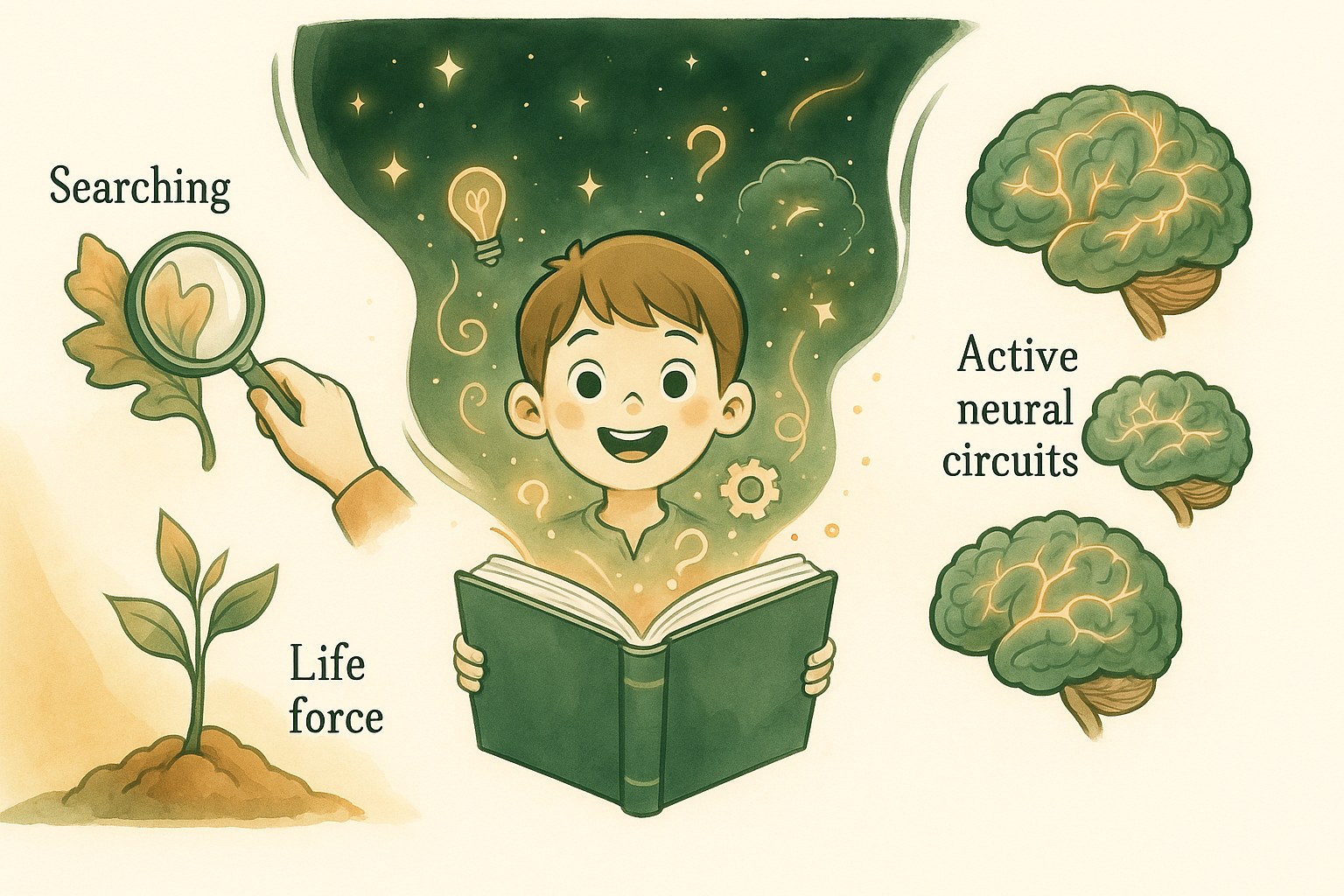
🔥 The Thirst to Understand as Inner Fuel
Curiosity is a genuine life force. It’s a natural desire to see and experience the surrounding world. A child simply wants to understand what surrounds them.
Research on active learning shows that curiosity makes acquiring knowledge easier. The brain learns far better when it is actively searching for an answer. It’s a powerful and efficient biological mechanism.
Learning then becomes fluid and effortless. The magic happens when the activity is driven by the child’s own personal interest.
🎯 The Difference Between Specific and Diversive Curiosity
Specific curiosity is fascinating to watch. A child focuses intensely on a single, precise subject. They can become a true expert on dinosaurs or outer space.
On the other end is diversive curiosity. It’s a broad openness to anything new. The child flits from one discovery to the next with constant enthusiasm for the unknown.
Varying these sources of discovery is genuinely helpful. It helps build a wide base of knowledge. This versatility will be an adaptable asset for their future.
🧠 The Impact of Discoveries on a Growing Brain
Every discovery strengthens neuroplasticity by creating solid neural circuits. The reward circuit lights up the moment an idea clicks. The brain literally builds muscle.
Curiosity shapes the activity of the reward circuit and the hippocampus, encouraging the long-term retention of information.
Early sensory exploration remains essential. Touching, tasting and smelling are the first tools of analysis. It’s through the body that a child decodes their environment.
These physical experiences aren’t just play. They sculpt the intelligence of tomorrow. Encouraging your child’s curiosity every day then becomes a joyful priority.
🏡 3 Tips for a Home That Invites Exploration
Moving from biological theory to practical, everyday action at home simply takes a few gentle, caring adjustments to let the magic happen.
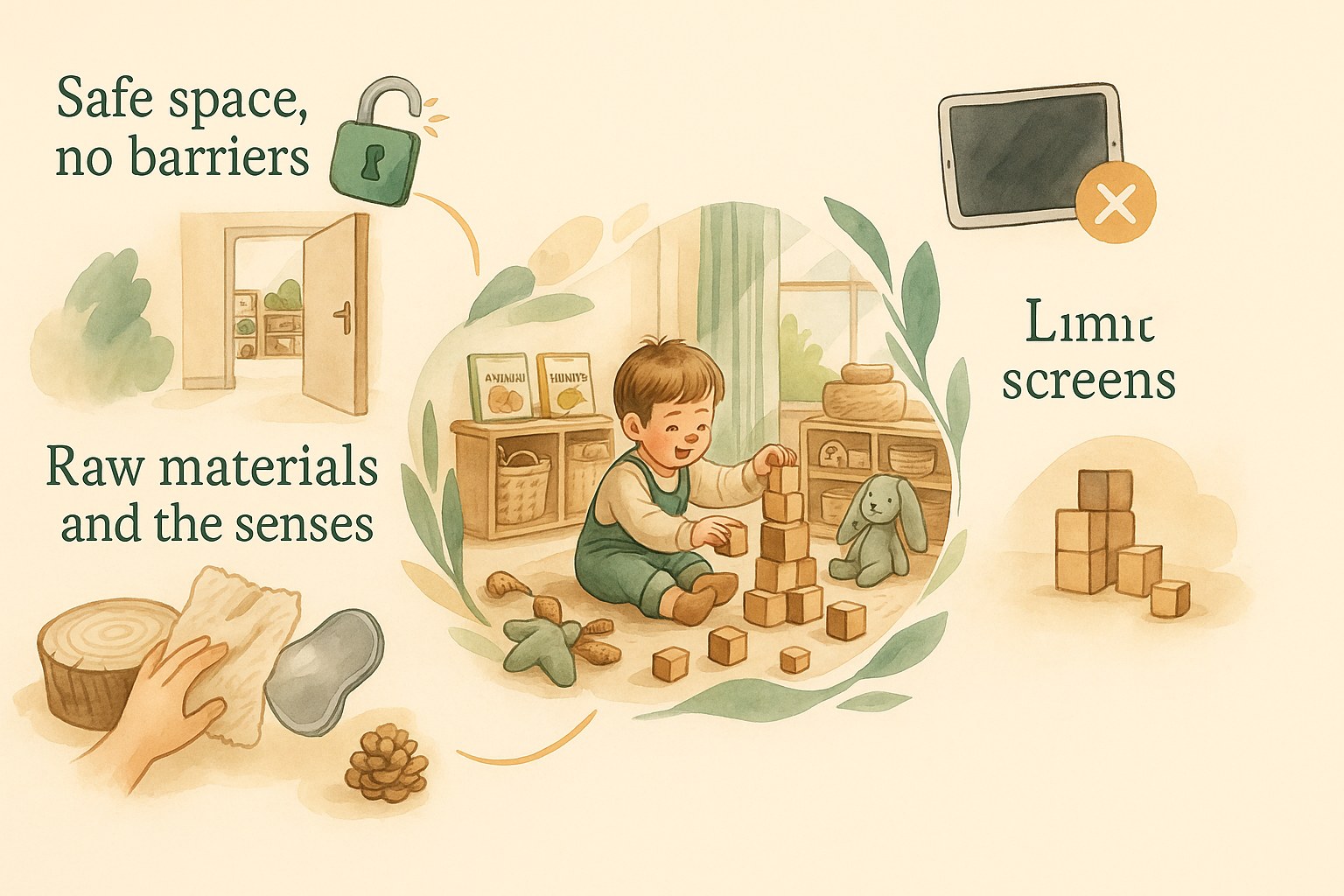
🏠 Create a Safe Space, but Without Barriers
Accessibility is the first step toward independence. If a child can reach their tools on their own, they will naturally take the initiative to create or observe their immediate surroundings without asking for help.
Storing objects at their height changes everything. Using low shelves helps support their daily independence. That way they choose their activities according to their own interests in the moment.
Safety doesn’t have to mean total restriction. A smart setup protects without holding back. We swap barriers for a space where free experimentation finally becomes possible and calm.
✋ Choose Raw Materials and Sensory Awakening
Wood, metal and fabric have incredible benefits. These varied textures send rich information to the nervous system. They stimulate the senses far better than uniform plastic.
There’s a direct link between the senses and understanding. A heavy, cold object feels different from a light one. Touching these contrasts helps a child grasp the laws of the world.
You can easily add these natural elements to the usual toy box. Mixing recycled objects and raw materials is enough to nurture your child’s curiosity every day.
📵 Why Limiting Screens Boosts Real Exploration
Videos often create a regrettable passivity. The screen delivers everything with no effort of thought. Over time it can dull the natural instinct to investigate that is so precious in the very young.
Offering hands-on alternatives is the best solution. Using modelling clay or wooden building blocks fires up the imagination. The child then becomes the author of their own discoveries.
Real action brings lasting pleasure. Creating something physical brings a much deeper satisfaction than simply consuming fleeting images.
- Development of fine motor skills
- Concrete understanding of gravity
- The satisfaction of real creation
✨ How to Become a Model of Wonder Without Even Trying
Filling a room with toys never replaces the parents’ own attitude. Your own way of looking at the world serves as a mirror and a guide.
😲 Embody Surprise Yourself, Every Day
Setting an example means marvelling at simple little details. A line of ants carrying a crumb suddenly becomes a fascinating show. Take the time to notice these little things.
Know that your enthusiasm is genuinely contagious. If you show authentic curiosity, your child will copy that attitude. They will open up naturally to the discoveries around them.
An attentive adult gaze is essential. It validates the child’s interest in their environment. By sharing that moment, you give value to their own exploration.
🕊️ Letting Go of Control to Foster Independence
Accepting that a child tests their own hypotheses is essential. Even if the outcome seems obvious to you, let them try their idea. Direct experience is worth more than a long speech.
Succeeding on their own strengthens a child’s sense of personal competence. It creates a direct link to self-confidence. The child feels capable of acting on their world.
The principles of active teaching methods, like Montessori, value this independence. Letting a child handle and mix ingredients supports their learning. That’s how they build their own intelligence.
💡 Turning Small Mistakes Into Big Discoveries
See failure as a simple piece of scientific data. If water spills over the glass, it’s a concrete lesson about volume. Don’t scold over the mess. Calmly observe the physical result instead.
Taking the drama out of clumsiness changes the whole family mood. It encourages a child to try again with no fear of being judged. Punishment often blocks the desire to attempt new experiments.
A mistake is often the starting point of an investigation. It’s a way to nurture your child’s curiosity every day with kindness.
❓ Handling the Avalanche of Questions Without Burning Out
Welcoming the endless stream of questions from our little curious ones can take the patience of a saint, but it’s a wonderful sign of their awakening to the world.
💬 Responding Kindly to Repeated “Why?”s
Repetition helps a child memorise important information. They are simply checking that the rules of their world stay stable. It’s a key step to cementing their new cognitive gains.
Stay calm by breathing deeply. Remember that these endless requests prove their great trust in you. You are their favourite go-to source for understanding what surrounds them.
How can you nurture your child’s curiosity every day without exhausting yourself? Try turning the question around. Simply ask them what they think. This sparks their imagination and their own reasoning.
🤷 Dare to Say You Don’t Know Everything
Admitting you don’t know is a real educational strength. It shows that knowledge is a never-ending quest. The child then understands that it’s perfectly normal not to have every answer right away.
Offer to look for the answer together in an illustrated book. Observe nature or run a little experiment. This approach turns a simple dead end into a fun two-person investigation.
This intellectual honesty strengthens your bond. It creates a unique closeness around discovery and gives value to the active search for information.
📚 Adapting the Complexity of Explanations to Their Age
Always favour short, very vivid answers. Avoid long technical or theoretical speeches. Too much detail risks losing the little one’s attention and slowing their natural drive to explore.
Check your listener’s understanding regularly. Ask them to re-explain the idea in their own words. It’s a great way to see what they have actually held onto from your chat.
Adjust the level of detail to their reactions. If interest fades, move on to something else without insisting. The goal is always to feed their desire to learn without ever turning the conversation into a lecture.
🎒 3 Rituals to Turn Routine Into Adventure
Every ordinary moment of the day holds huge educational potential, as long as you change the way you look at it. Turning habits into discoveries awakens the mind with no special effort.
🌿 Observing Nature’s Cycles as a Family
Setting up morning weather-watching habits changes everything. Look together at the shape of the clouds or the changing colour of the sky. This small gesture anchors the child in the present.
Use the seasons to stimulate visual attention. Note the first buds appearing in spring or the fall of russet leaves. These details turn a simple walk into an active exploration.
These regular cycles reassure the child every day. They awaken scientific curiosity gently. It’s a wonderful way to understand how to nurture your child’s curiosity naturally, every day.
🧹 Involving the Child in Practical Daily Tasks
Cooking and gardening are real open-air laboratories. Measuring flour for a cake or planting a seed teaches patience. These simple acts introduce concrete ideas from physics and biology.
Valuing the learning gains of chores helps everyone. The child grasps cause and effect and how materials transform. Pouring, mixing or transferring also strengthens their precision and focus.
Independence in these household tasks boosts personal pride. Managing to peel a vegetable or water a plant builds real confidence in their own abilities.
| Activity | Skill Stimulated | Materials Needed |
|---|---|---|
| Cooking | Measuring and quantities | Scale, bowl, flour |
| Gardening | Biology and cycles | Seeds, soil, pot |
| Laundry | Sorting and colours | Baskets, clothes |
| Craft work | Geometry and shapes | Ruler, wood, paper |
🛒 Turning Shopping Into a Playful Observation Mission
Turn the trip to the shop into a treasure hunt. Look for objects of a certain colour or spot geometric shapes. The journey then becomes a thrilling field of investigation.
Use the urban environment as an endless playground. Road signs and colourful shop windows are reading tools. The child deciphers the world around them with enthusiasm.
The boredom of the trip finally vanishes in favour of active exploration. Shopping is no longer a chore but a special mission. In short, adventure is waiting just around the corner.
⚖️ Finding the Right Balance to Avoid Overstimulation
It can be tempting to fill every minute of our little ones’ day. Yet knowing when to stop is a real gift for their personal blossoming and their rest.
🧘 Respecting the Need for Calm and Creative Boredom
The absence of forced activity is beneficial. It’s in these empty moments that the imagination truly springs to life. The child’s mind then draws on its own resources to keep busy.
Don’t overload the schedule. Too many guided workshops can smother a child’s natural curiosity. An overstuffed calendar leaves little room for spontaneous, personal exploration.
Let the child “do nothing” so they invent their own pastimes. These pauses encourage introspection. They also help them discover their own deep interests.
📖 Feeding the Imagination Through Shared Reading
Books are windows onto the unknown. They let children explore worlds and eras they could never reach physically. It’s an invitation to travel without leaving home.
Stories trigger new questions. They stimulate divergent thinking and empathy. It’s a great way to feed curiosity without leaving the sofa. We watch, we talk and we marvel together.
Reading and educational outings encourage critical thinking and lifelong learning from the earliest age.
Encourage calm reading moments each evening to round off the day. It soothes the mind before sleep.
🎲 Knowing When to Step Into Free Play
Find the perfect moment to guide. Step in only if the child seems stuck or discouraged by a difficulty. Too much help could slow their momentum and their desire to search.
Stay a discreet observer. Your silent presence offers emotional security without interrupting the creative flow. The child feels supported while remaining the sole master of their adventure.
Trust your child’s problem-solving abilities in their play. By letting them test their ideas, you strengthen their confidence. Nurturing your child’s curiosity every day then becomes child’s play.
Feeding your little one’s awakening comes through a safe space, real independence and a warm welcome for their “why?”s. Set up their exploration corner soon to turn every mistake into a discovery. Stimulating the thirst to learn today means giving your child the keys to a fulfilling future.
❓ FAQ
❓ Why does my child ask “why?” all the time?
It’s a perfectly normal and even thrilling stage! By repeating this question, your little one is trying to understand how the world works and to check that the rules around them are stable. It’s also a sweet sign of trust in you: they know you’re their favourite source of information.
To avoid burning out, the trick is to stay kind and offer short, vivid answers. Sometimes, don’t hesitate to turn the question back to them to stir their own thinking. It’s a great way to help them memorise concepts while having fun.
🔍 How can I help my child be more curious every day?
Curiosity is a natural engine that you sometimes just need to let purr along. You can create a stimulating environment by leaving varied objects within reach, such as raw materials (wood, fabric, metal) that awaken the senses. The idea is to offer a safe space where they can experiment freely without too many barriers.
Adopting the posture of a role model is also very effective. By marvelling yourself at a little flower or an insect, you show that the world is a constant show. Independence is the key: let them mix ingredients in the kitchen or choose their own games to feed their desire to discover.
📱 Do screens prevent the development of curiosity?
It’s all a question of dosage and quality. While screens can sometimes stimulate the imagination through interactive apps, overly passive consumption can dull the natural instinct to investigate. Screens often deliver everything with no effort, which can hold back the urge to find out for oneself.
To boost real exploration, favour physical handling such as modelling clay or building blocks. These activities help children understand gravity and matter in a concrete way. And don’t be afraid of moments of boredom: it’s often when we’re doing “nothing” that the best ideas and the greatest explorations begin.
🤷 What should I do if I don’t know the answer to my child’s question?
It’s a fantastic chance! Daring to say “I don’t know” shows your child that knowledge is a never-ending quest, even for grown-ups. It takes the drama out of not knowing and turns a simple question into a real investigation adventure to take on together.
Suggest looking for the answer in a book, observing nature or running a little experiment. This shared approach strengthens your bond and teaches them a precious skill: knowing how to find information for themselves. That’s the very heart of active learning.
💡 How should I react to mistakes or mishaps tied to exploration?
See little blunders as scientific data rather than faults. If water spills during an improvised experiment, it’s a concrete lesson about volume! By taking the drama out of failure, you encourage your child to test their own hypotheses without fear of judgement.
A mistake is often the starting point of real research. By staying a discreet, caring observer, you let your child build their self-confidence. Managing to solve a problem on their own after a first failed try is the best reward for their growing brain.
