
It’s hard to compete with screens when tiredness sets in and there’s no time left to share a real moment of calm. 📖 Family reading offers a gentle solution, soothing emotions while naturally boosting your children’s listening skills and language. Discover how to set up a cosy ritual and choose the right picture books to turn those few daily minutes into a lasting treasure of closeness.
- The real benefits of shared reading
- Strengthening the emotional bond through stories
- 4 tips for setting up a daily ritual
- How to choose the right books by age
- Fun ideas to involve the whole family
- Practical solutions for concentration challenges
📖 The real benefits of shared reading
Having skimmed the overall importance of books, let’s look at how this practice concretely transforms our children’s brains and their path ahead.
🗣️ The impact on language and school success
Reading stories enriches a child’s stock of words. This regular exposure to sounds builds a very varied vocabulary. Each story then becomes a solid brick. It builds the very structure of their future language.
Attentive listening helps memorise sentence patterns. The child naturally absorbs the rhythm of words. These moments gently prepare their future writing skills. Language becomes fluent and instinctive for them.
Studies highlight the positive impact on language skills during family exchanges. The progress seen in little ones is often very marked. It’s a powerful lever for their intellectual awakening.
The child gains precious self-confidence. They start their first school years feeling more assured.
👂 Building concentration and listening skills
Following a linear plot takes patience. It steadies the attention of curious little ones. In our world full of fast-moving screens, it’s an essential focus exercise. The mind then learns to stay nice and calm.
Imagination works at full throttle during reading. The child has to picture the settings and the heroes. This strengthens their capacity for mental representation. Their pure creativity develops with every page turned alongside you.
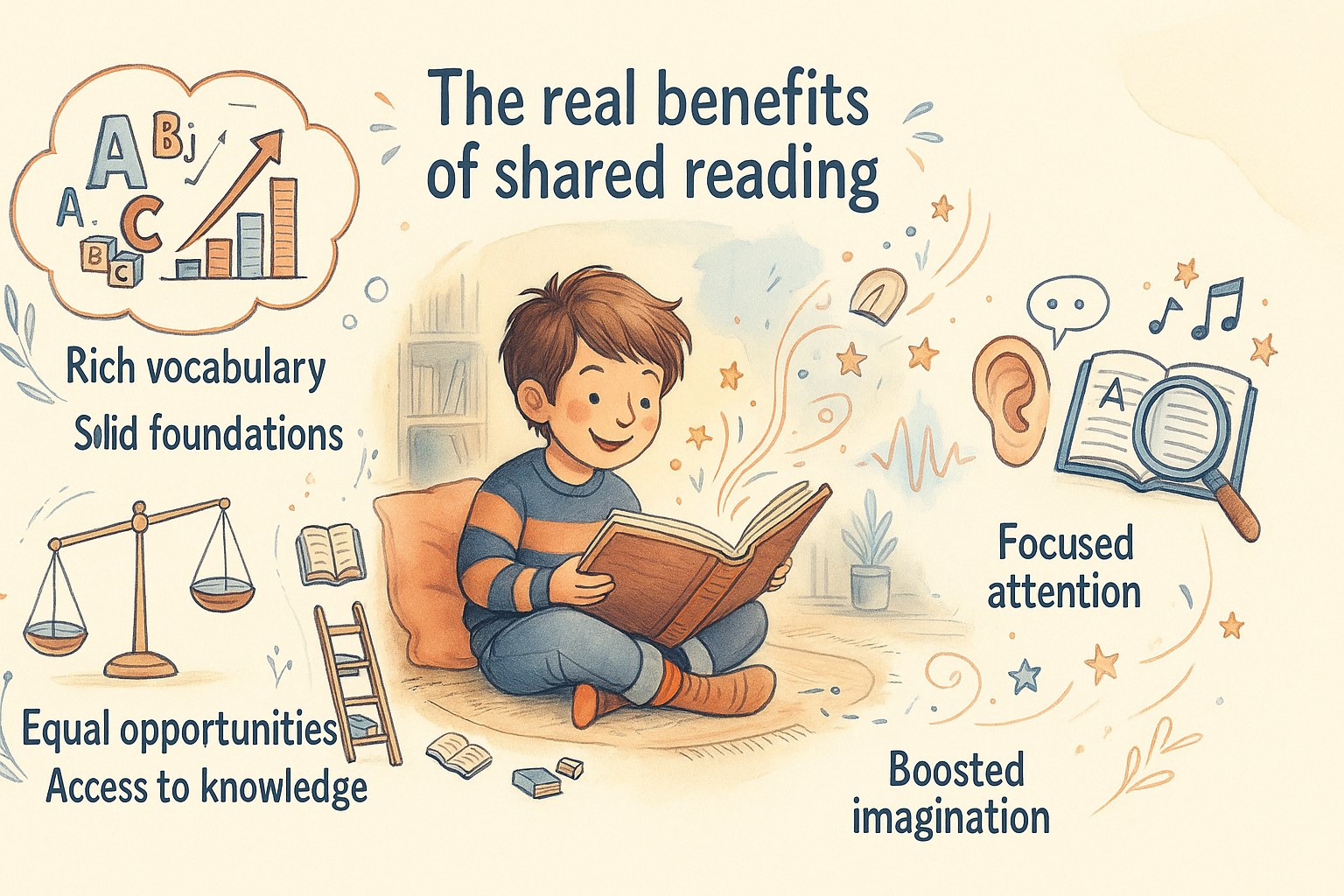
Reading is a silent training where the mind learns to stop flitting about so it can finally settle on the heart of the story.
This quality of listening becomes an asset. It will serve their future learning.
⚖️ A lever to reduce inequality right from the start
Access to books is a major issue for everyone. Family reading helps reduce school inequalities through reading at home from the earliest age. It’s an equal chance for every little one.
Books work as a wonderful tool for independence. They open a window onto the outside world. Every child feeds their own curiosity this way, whatever their social background or starting point.
- Democratising knowledge
- Access to a shared imaginary world
- Boosting the chances of success from the preschool years
Family reading is the most accessible passport to equality.
❤️ Strengthening the emotional bond through stories
Beyond school marks, reading together is above all a matter of heart and presence.
🤗 A special moment of closeness far from the noise
Nothing replaces physical presence and undivided attention. You switch off the phones. You snuggle up together. It’s a protective bubble against everyday stress.
This time is vital for emotional security. The child feels truly important. Their parent dedicates their most precious asset to them: their time. It’s a priceless gift.
The smell of paper and the sound of a voice leave their mark. They create memories that last a lifetime.
This tradition spans the ages. It appears in classic artworks depicting families reading together.
😌 Using stories to soothe emotions
Characters help to identify feelings. Fear, joy or anger become easier to explain. They feel simpler when a hero goes through them too.
Reading acts as a true decompression chamber. After a busy day at daycare, the story calms everything. Nervous tension comes down slowly and surely.
| Emotion | Type of character | Aim of the story |
|---|---|---|
| Anger | A grumpy little creature | Calm the outbursts and find peace again. |
| Fear of the dark | A brave little cub | Reassure and turn darkness into gentleness. |
| Sadness | A colourful feelings monster | Name the sorrow to let it go more easily. |
| Jealousy | A little wolf | Understand one’s place and build confidence. |
Books are a magical mediator. They mend little hearts.
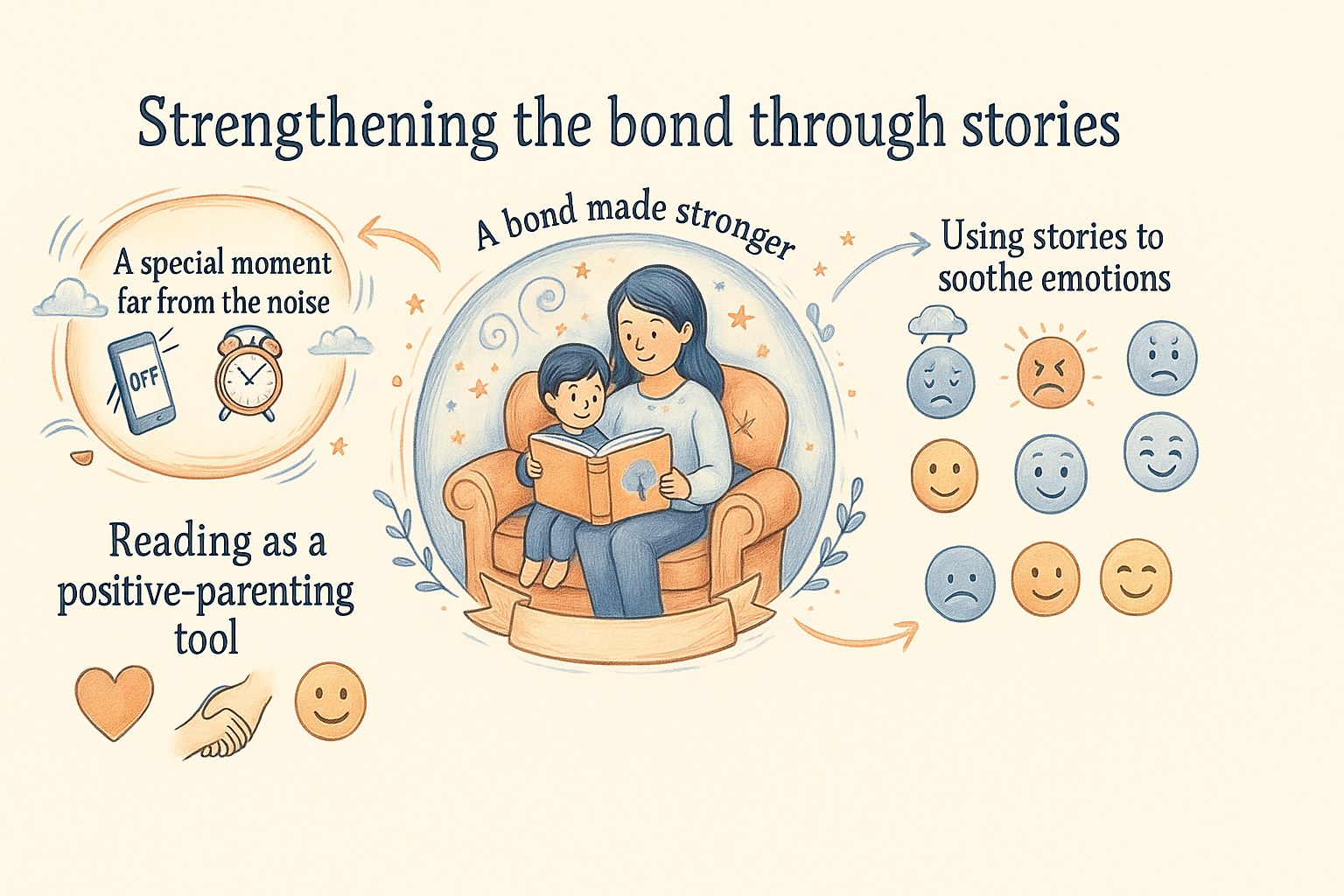
💚 Reading as a positive-parenting tool
Let’s take a kind approach. This isn’t a lesson. It’s a sharing. We forget about school performance. We focus only on the exchange.
Let’s encourage shared pleasure. Does the child want to skip pages? Let them. It’s their moment of freedom. It’s their own discovery that matters.
“A child who loves to read isn’t trying to learn — they’re trying to feel something alongside their parent, through the words.”
There’s no such thing as a mistake here. This loving ritual is always perfect.
🔔 4 tips for setting up a daily ritual
Now that we know why it’s great, let’s look at how to make it stick.
🛋️ Setting up a calm, accessible reading corner
Installing bookshelves at child height changes everything. Independence begins when they can choose their book on their own. Avoid shelves that are too high. They force an adult to step in every time.
Then create a truly comfortable space. A few cushions on the floor are more than enough. Add a soft rug and warm lighting. The spot should invite relaxation.
Here are a few elements for a cosy corner:
- Soft cushions
- A gentle bedside lamp
- An accessible book bin
This little refuge should stay calm. Keep it away from screens and the noisy traffic of the house.
🌙 Finding the right slot despite evening tiredness
Bedtime isn’t the only option. Quiet time after school sometimes works better. Snack time is also a good moment. Evening tiredness sometimes spoils the pleasure.
Always adapt the length of the session. Five minutes is better than nothing. What matters is the regularity of the ritual. Don’t aim for a timed performance every day.
Flexibility is your best ally. If one evening it’s impossible, don’t feel guilty. Simply pick it up again the next day. Keep your enthusiasm intact for the rest.
This shared moment should stay enjoyable. Family reading should be a pleasure for the parent too.
🏠 Scattering chances to read all around the house
Use everyday objects for reading. Shopping lists are perfect for this. Calendars or recipes work too. Show that words surround us everywhere.
Leave picture books lying around in every room. One book in the living room, another in the kitchen. The child can pick one up on the spot. This encourages discoveries during their play.
This habit is nothing new. The wish to bring reading into the home goes back well over a century. It’s a lasting tradition.
Books thus become ordinary. Yet they remain a precious object within the home.
📚 How to choose the right books by age
Once the habit takes hold, you still need the right tools in your hands so as not to bore your audience.
🎨 Adapting the format to their interests
Go for board books for the youngest. For older children, comics or wordless books work really well. You need to vary the visual pleasures.
Always respect the child’s personal tastes. If they’re mad about dinosaurs or trucks, follow their wish. It’s the best way to keep their motivation going over the long term without forcing them.
Don’t hesitate to reread the same book ten times. Children love this reassuring repetition that helps them learn.
- Touch-and-feel books
- Picture word books
- Classic fairy tales
- Animal fact books
💬 Varying your tone and asking interactive questions
Dare to use different voices while reading. Do the wolf in a deep voice and the bird in a high one. It makes the story truly come alive. The child’s attention is then captured immediately.
Suggest inventing alternative endings together. Ask the child what they would do in the hero’s place. This stimulates their active participation. Their critical thinking develops.
Pause to look closely at the pictures. Ask simple questions about what the characters are doing in the background. The book then becomes a real treasure hunt.
Be a performer, not just a reader. Have fun too.
🌍 Valuing many languages and oral storytelling
Support reading in your home language. It’s an incredible richness for the child. It strengthens their cultural baggage and their identity. Learning to read will be all the easier for it.
Use the pictures as a basis for discussion. You don’t have to read the text word for word. You can simply tell what you see in your own words.
The emotion of a story passes through the parent’s heart, whatever language it’s told in.
Oral storytelling is the foundation of all human cultures. It’s how the most beautiful memories are passed on.
👨👩👧👦 Fun ideas to involve the whole family
Reading isn’t an exclusive one-on-one; it can become a collective, social celebration.
👵 Getting grandparents and siblings involved
Suggest the older ones read stories to the little ones. It’s very rewarding for the eldest and truly fascinating for the youngest. It naturally strengthens sibling bonds around the imaginary world.
Also organise reading sessions from a distance. Use digital tools so grandparents can tell a story over video. It’s a perfect way to keep the bond alive despite the geographical distance.
Set up “pyjama reading” rituals at the weekend. The whole family then gathers on the big bed to share a text.
More readers means more variety. Each voice brings a different, enriching approach to the story for the child.
🍪 Organising story-time snacks with neighbours
Create moments of collective sharing. Invite a few neighbours around a book and a snack. It’s a simple way to create a friendly atmosphere.
Encourage books to circulate between families. Set up a little swap box or lend out your favourite picture books. This refreshes your library at little cost.
Suggest the children draw what happens next in the story after the snack. The activity becomes hands-on and social at the same time. You can have a lot of fun with just three crayons.
In fact, books are a wonderful creator of social bonds. They bring generations and neighbours together with ease.
🏛️ Making the most of public libraries
Take advantage of librarians’ precious advice. They’re experts passionate about literature. They’ll know how to dig out the gem that matches your child’s age exactly.
Join in the story hours. These local workshops let children listen to tales in a different setting. It’s also a chance to meet other parents and swap your tips.
Remember that membership is often free for children. It’s unlimited access to thousands of worlds without spending a penny. Why miss out?
Make the library your second home. It’s the ideal place to explore the world together.
🎯 Practical solutions for concentration challenges
Sometimes things don’t go as planned, but don’t panic, simple solutions exist.
🌀 Handling a child’s passing lack of attention
Accept short sessions. If the child only stays two minutes, it’s no big deal. Never force them, or they’ll associate books with a chore.
Use finger games or touch-and-feel books. For the more restless ones, movement helps them stay connected. Flap books or texture books capture interest through touch.
Change position: read on the floor, under a blanket fort or outside. It’s often magic for reviving interest.
Watch whether the chosen moment really suits their energy level. A child who’s too tired will inevitably switch off.
🗨️ Reading together without mastering the language perfectly
Reassure yourself about the importance of sharing. The emotion you pass on matters more than perfect grammar. Your child wants your voice, your gaze and your presence above all.
Favour oral storytelling from the pictures. Tell what you see in your own words. The picture book is a visual support that lets you chat freely without stress.
Use wordless books. They’re perfect for inventing stories together with no language barrier. Everyone is on the same level to imagine.
Your love for the child is the best translator of all. The essential lies in this moment of closeness.
👶 Working out the ideal age to begin the adventure
Start from birth. The baby loves the rhythm of your voice. Handling cloth or plastic books can begin very early for sensory awakening.
Adapt the complexity over time. Move from simple pictures to short sentences, then to full stories. Follow how their understanding develops without rushing the important stages.
Remember it’s never too late to begin. Even an older child will enjoy this moment of shared calm with their parent. Family reading remains a precious gift.
Reading together strengthens the emotional bond, boosts language and reduces school inequality. Set up a little cosy corner this very evening to share a story with your children. This daily ritual is the finest gift for their future and for your family closeness.
❓ FAQ
🍼 Why is it important to read stories to your child from a very young age?
Reading together supports language development and enriches vocabulary dramatically. Every shared story is a brick that builds their future school success, while stimulating their natural curiosity and creativity.
It’s also a powerful lever for reducing inequality. Offering access to books from the preschool years lets every child, whatever their background, boost their chances of success and build their independence.
🎯 How can reading help my child concentrate better?
Following a linear narrative is an excellent exercise for steadying attention in a world full of screens. Reading takes patience and strengthens the capacity for mental representation, since the child has to picture the characters in their head.
For more restless little ones, calm-focused activity books offer playful exercises and quiet moments. These supports turn concentration into a peaceful game.
💡 What are your tips for creating an effective reading ritual at home?
The ideal is to set up a little cosy corner with cushions and a soft lamp, where the books are at child height. If the evening is too tiring a moment, don’t hesitate to read after school or during the snack: regularity counts more than length.
Also think about scattering chances to read everywhere. Use shopping lists, calendars or cereal boxes to show that words surround us. What matters is that books stay a fun object, with no pressure to perform.
😊 How can I use books to soothe my child’s emotions?
Stories act as magical mediators for identifying feelings like fear, anger or sadness. By seeing a hero go through a trial, the child understands their own feelings better and learns to name them more easily.
Reading time acts as a decompression chamber after a long day. It’s a safe space where you can discuss the characters’ emotions to find positive, soothing solutions together.
🌍 Is it useful to read together if you don’t master the local language perfectly?
Absolutely, because the emotion and the bond come first. You can perfectly well tell the story from the pictures or use wordless books to invent your own tales in your own words.
Valuing your home language is an incredible richness that strengthens the child’s identity and later makes learning other languages easier. Sharing and closeness remain the best translators in the world.
👪 How can I involve the whole family in this literary adventure?
Reading can become a collective celebration by inviting grandparents to tell a story, even over video if they’re far away. Encouraging older children to read to the little ones also strengthens sibling bonds around a shared imaginary world.
Don’t forget local resources like public libraries. Story hours and librarians’ advice are free goldmines for refreshing your reading and meeting other passionate parents.
