
Magic colouring for ages 4-5 is the perfect next step after the very first early-years sheets. 🎨 Your 4-to-5-year-old already knows the idea: each area has a number, and a little key shows which colour to use. At this stage we step things up with more detailed pictures and a richer colour code, and the pride of watching the image appear is well worth the effort!
Here are 16 magic colouring sheets to print, sorted by theme (butterflies, unicorns, birds, dinosaurs and other funny animals) and arranged from the simplest to the most detailed. The 5- or 6-colour sheets are perfect for the heart of this age group; the richer ones, up to 9 colours, offer a lovely challenge for older children or can be coloured together. ✏️ All that’s left is to print them out and reach for the felt-tips!
🎯 Why these sheets suit ages 4-5
This stage marks an important shift in your child’s development. At 4-5, fine motor skills sharpen, attention spans grow longer and number recognition becomes more solid. Magic colouring makes the most of these gains by offering a slightly more demanding challenge than the very first sheets.
With 5, 6, and sometimes up to 8 or 9 colours on the richest sheets, your child has to remember and tell apart more matches. They no longer just hold “1 = red” and “2 = blue” in mind: they juggle several code-colour pairs at once, which gives their working memory a productive workout.
The smaller areas also call for a more precise pencil movement. Your child learns to control the pencil to colour without going over the lines. This precision is directly useful for learning to write later on, because both skills rely on the same muscles and the same kind of fine control.
Finally, this is the age when your child starts to enjoy activities that take time. Unlike the very first sheets, where quick success comes first, your 4-to-5-year-old can now settle into a denser sheet and get deeper satisfaction from it.
📋 Our 16 magic colouring sheets to print
🖍️ Every one of our sheets shows its own colour key: you spot the number, find the matching colour, and the picture slowly appears. Choose a theme your child loves and print the sheet in a single click. The first in each family are the easiest, the last the most detailed.
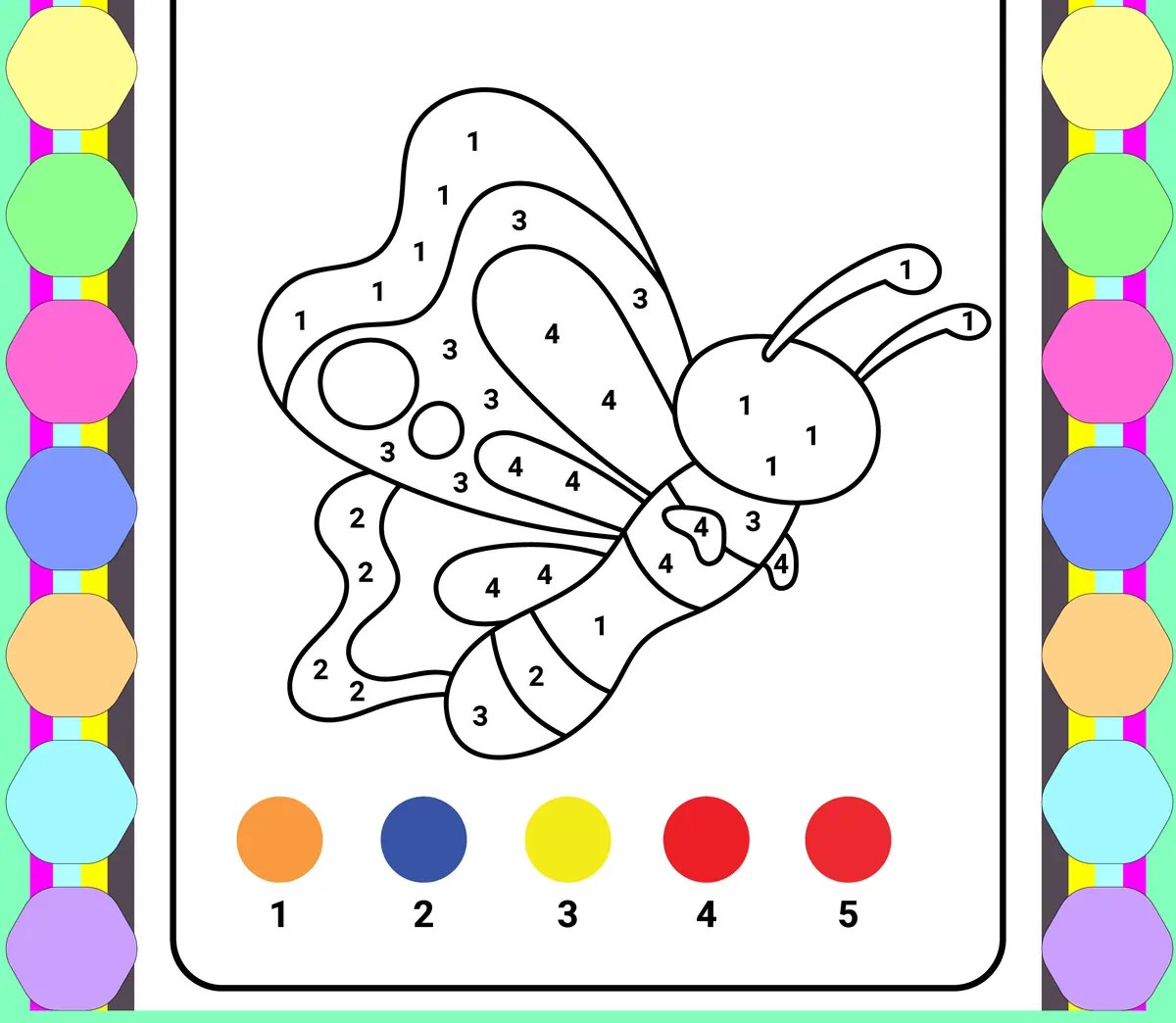
🦋 The very simple butterfly: 5 colours
A pretty butterfly with big, rounded wings, to colour using just five colours marked by dots at the bottom of the sheet. The areas are wide and clearly separated: it’s the ideal first sheet for this age group. Your child easily remembers five matches and ends up with a bright, cheerful butterfly in a few minutes.
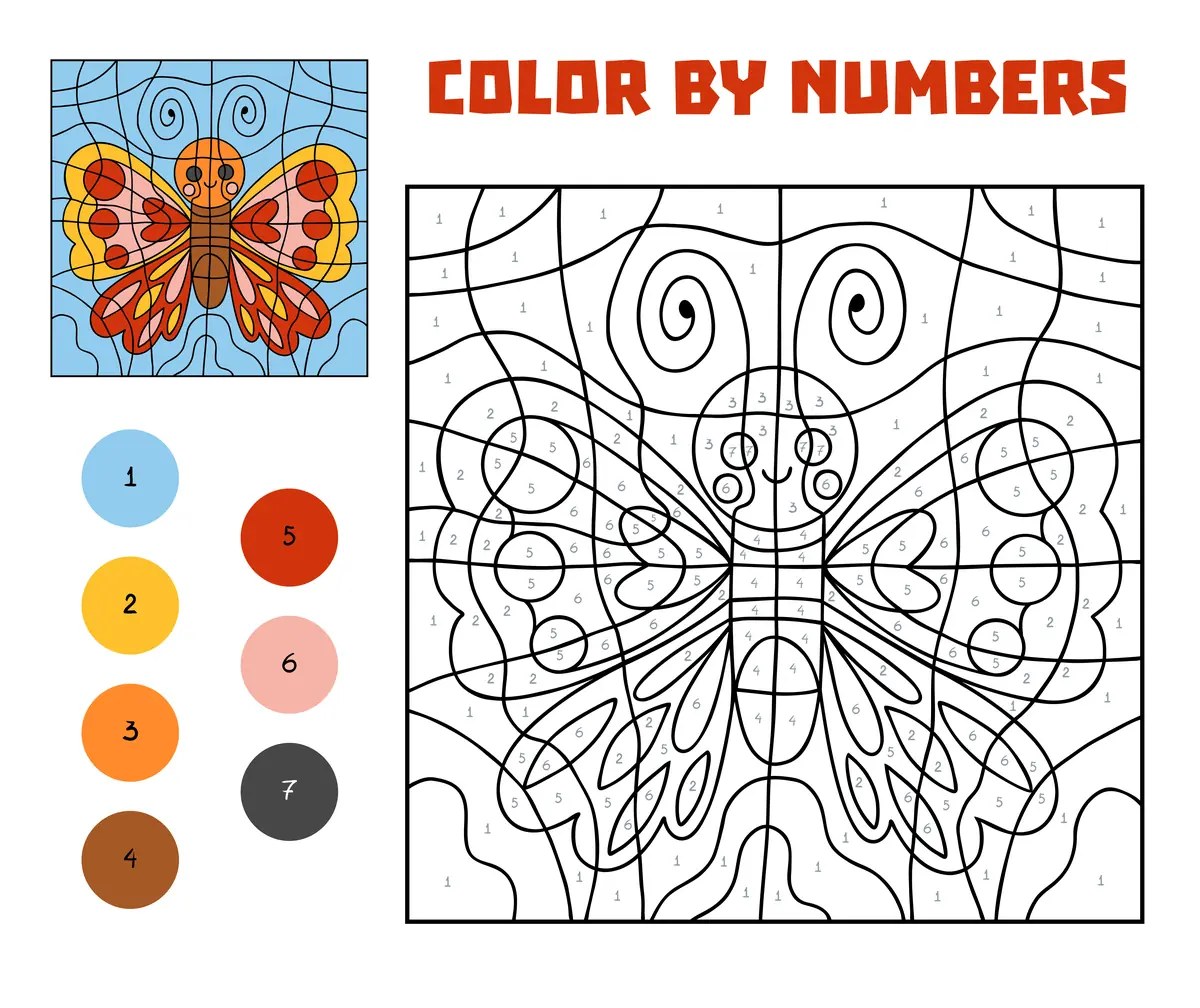
🎨 The stained-glass butterfly: 7 colours
A mosaic-style butterfly, with its already-coloured model to show the goal to aim for. Seven colours and finer areas make it a perfect challenge for the middle of this age group. The little colour preview reassures your child: they know exactly what their masterpiece will look like.
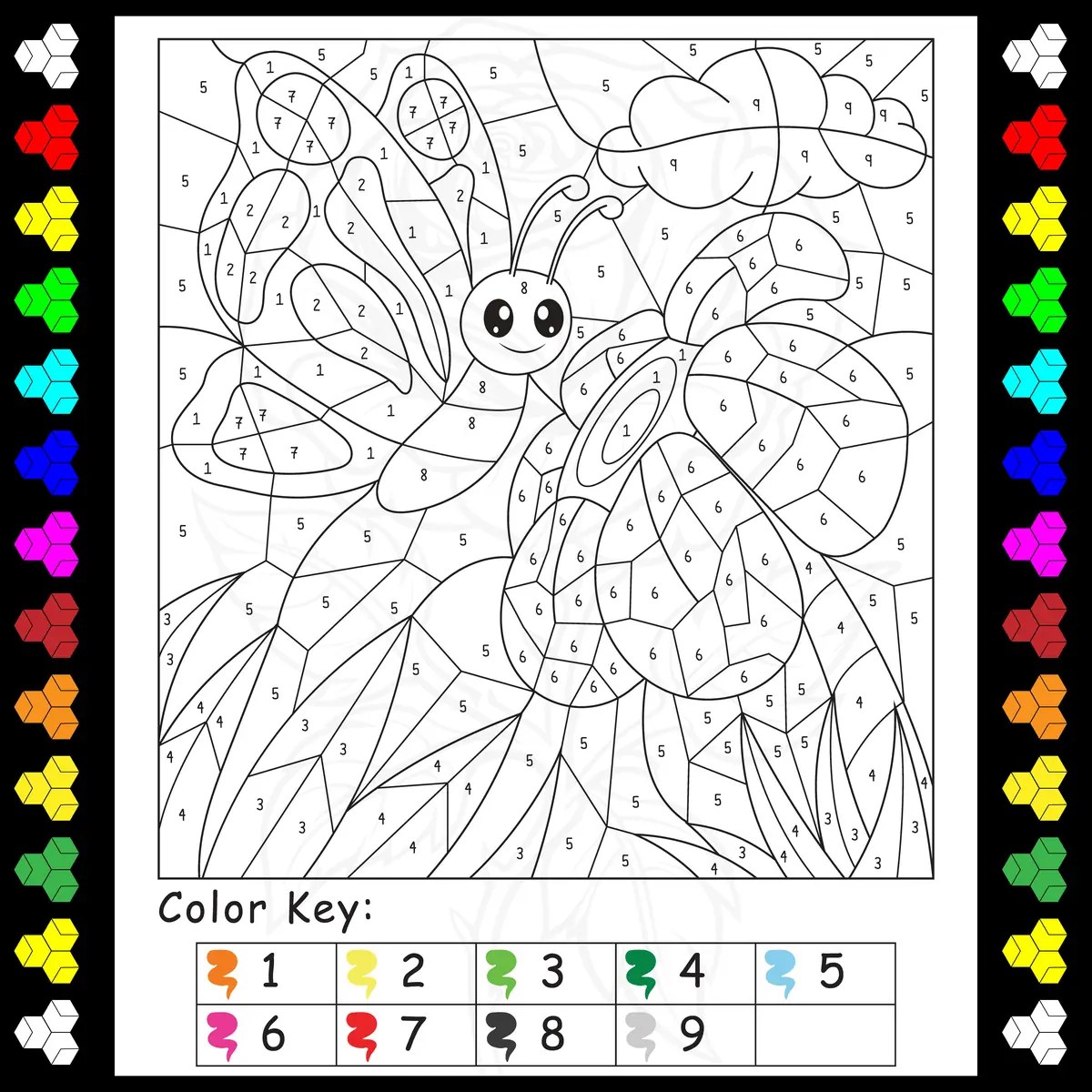
🌼 The butterfly among the flowers: 9 colours
A full scene: a smiling butterfly resting among the flowers, with an illustrated key of pencils numbered 1 to 9. It’s the richest sheet in the butterfly family, best saved for the end of this age range or coloured together for a lovely shared moment.
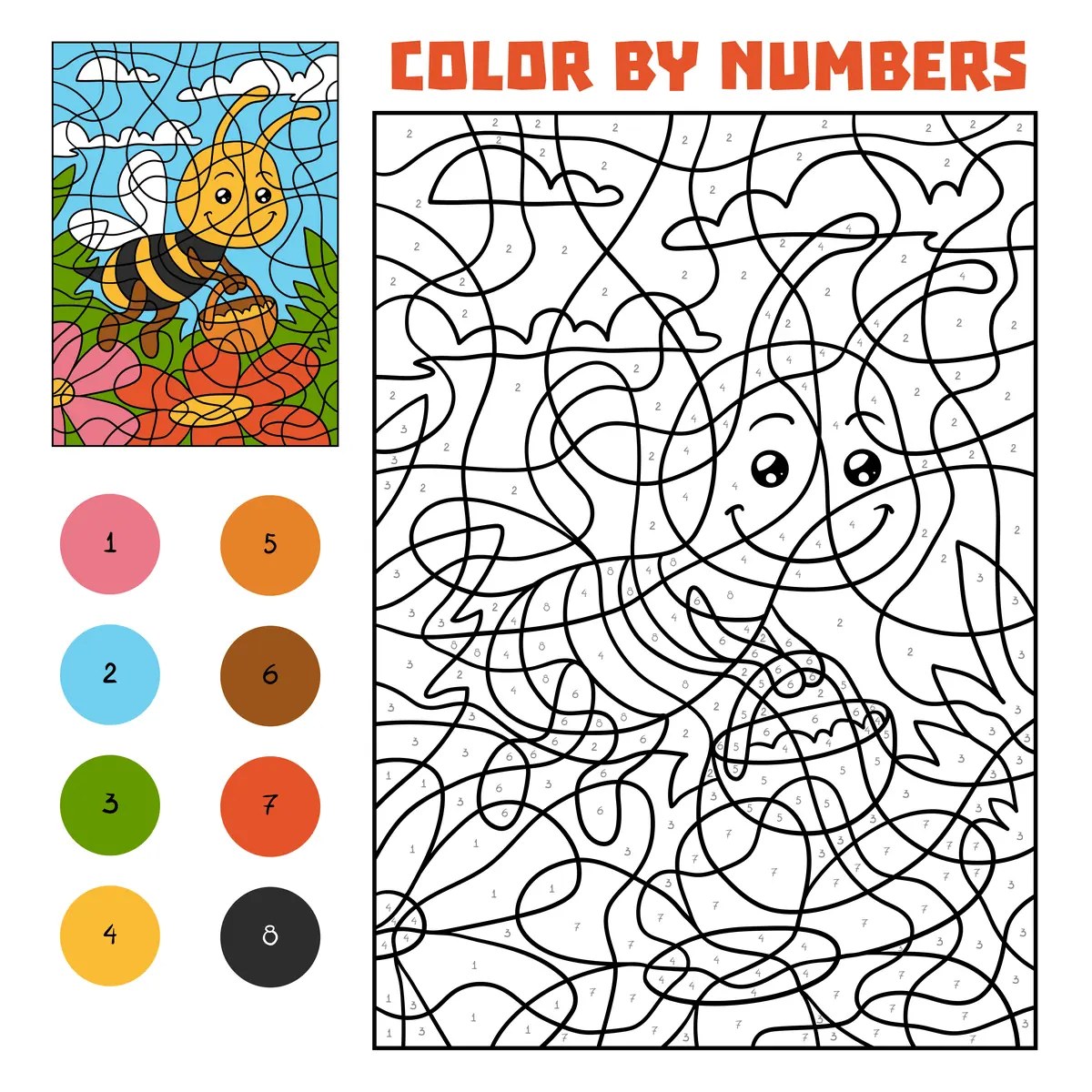
🐝 The busy bee: 8 colours
A funny bee resting on some flowers, with its colour model and an eight-dot key. Lots of small areas and a flowery background: a dense, rewarding sheet that fills a rainy afternoon beautifully and introduces the colours of nature.
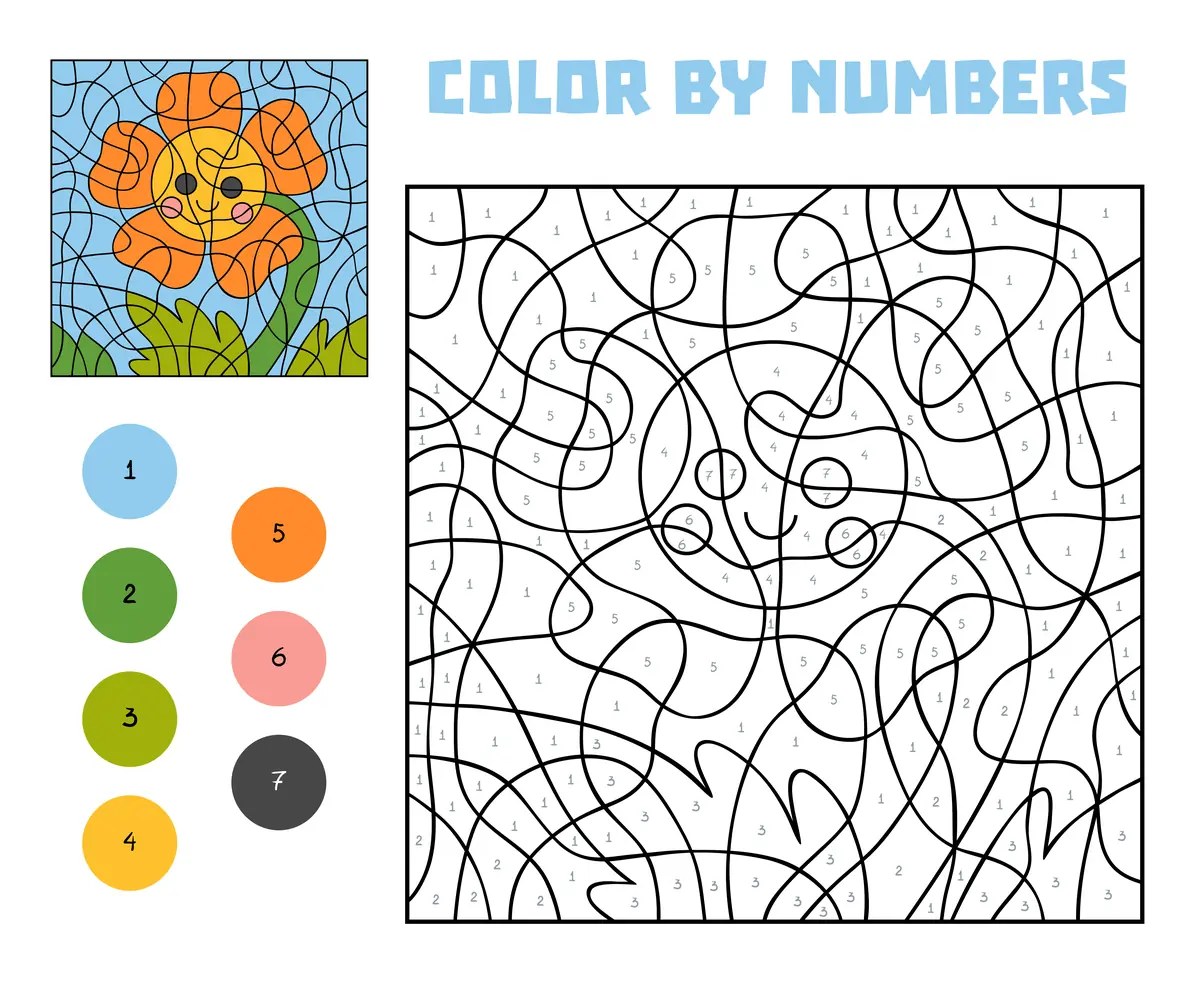
🌸 The smiling flower: 7 colours
A big flower with a sweet little face, set in a blue sky. Seven colours and a lovely reference model: a gentle, springtime sheet, perfect for chatting about the colours of the garden with your child while they colour.
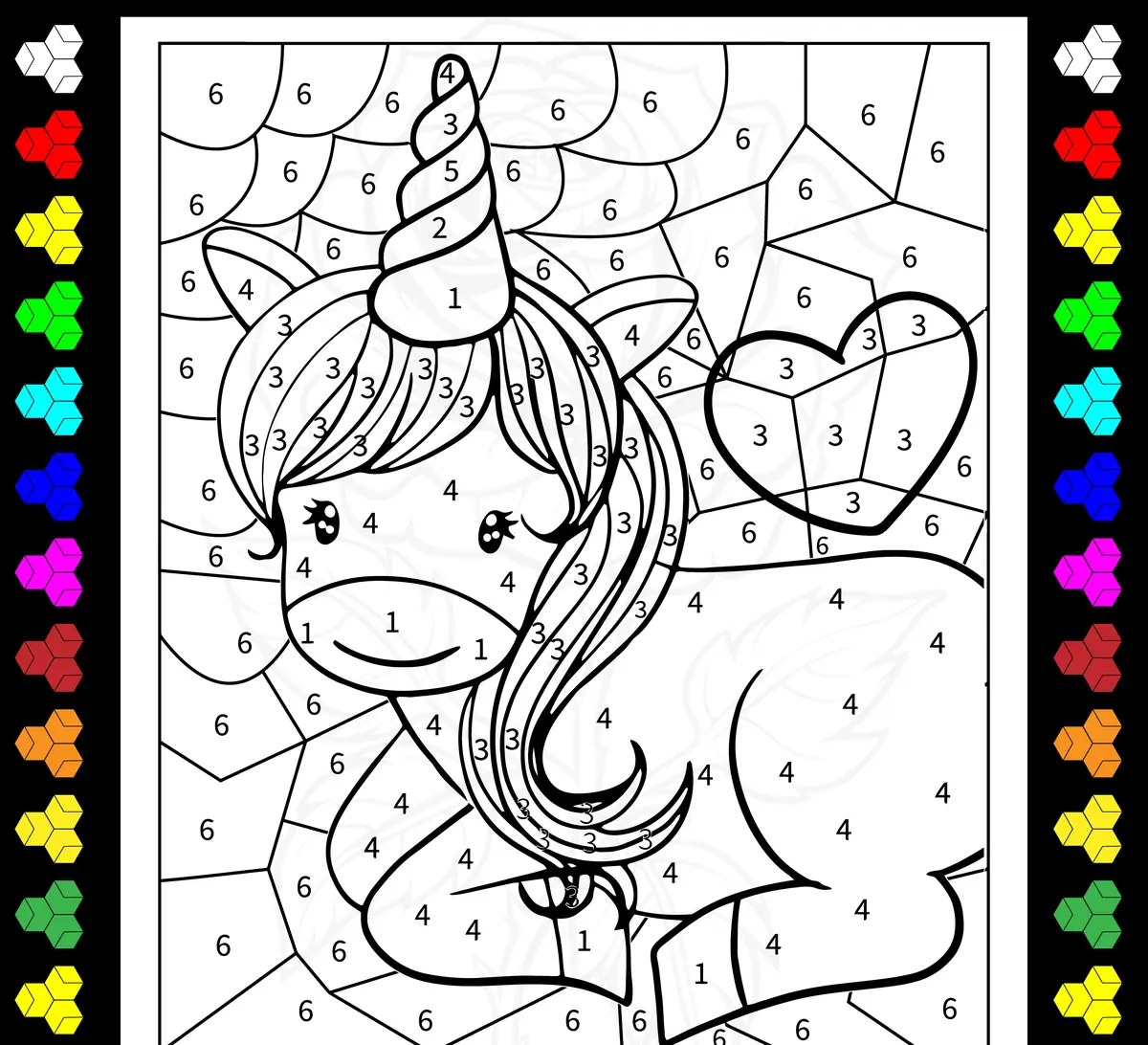
🦄 The unicorn and its heart: 6 colours
An adorable kawaii unicorn with a silky mane, with a little heart to colour right beside it. Six colours and pretty decorative borders: a classic that’s always a hit with this age group. The finer strands of the mane give precision a good workout.
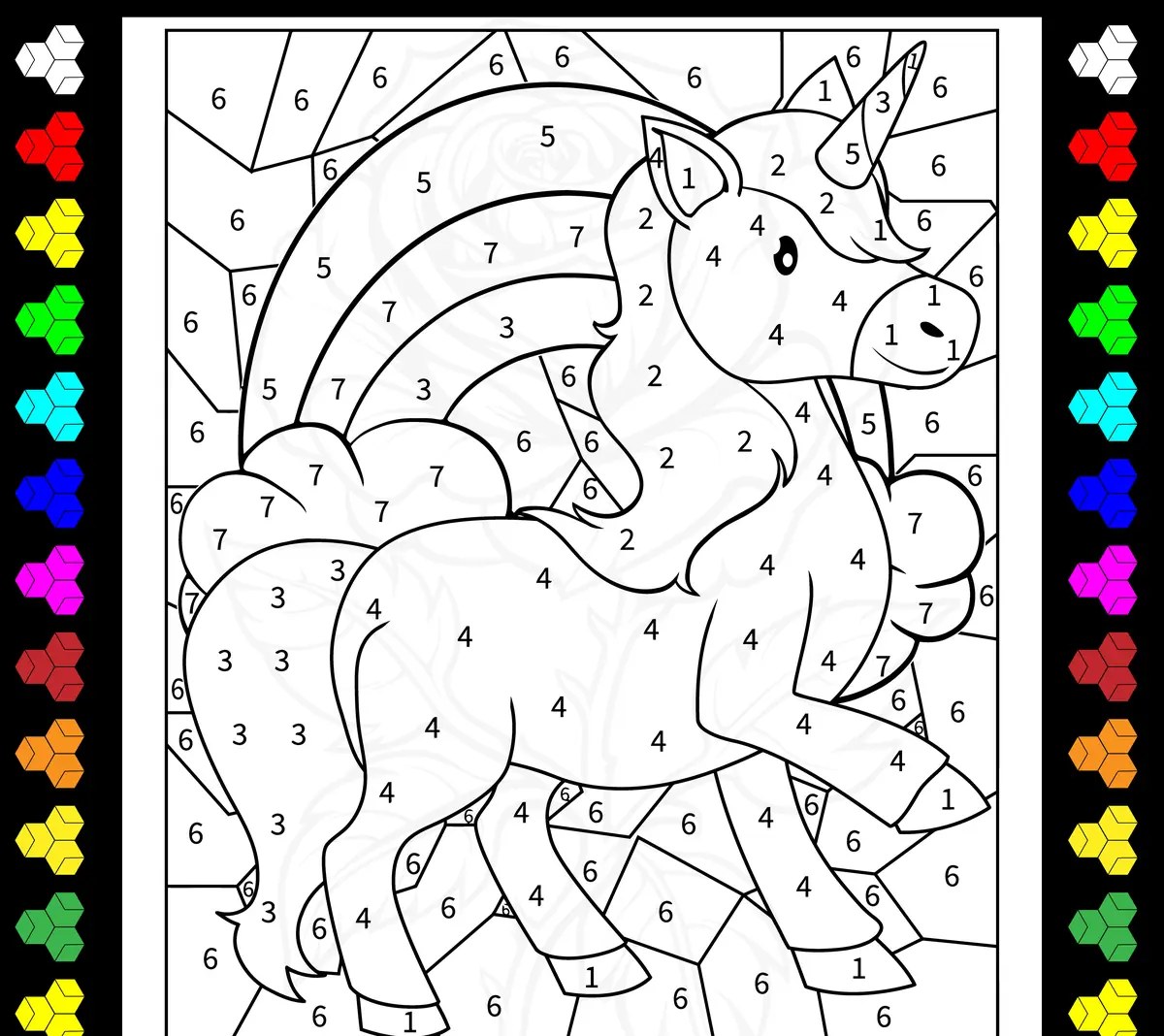
🌈 The rainbow unicorn: 7 colours
A joyful unicorn galloping in front of a big rainbow. Seven colours for a dazzling result and lots of areas to fill: this is a slightly longer sheet, ideal for children who like to take their time and care for every detail.
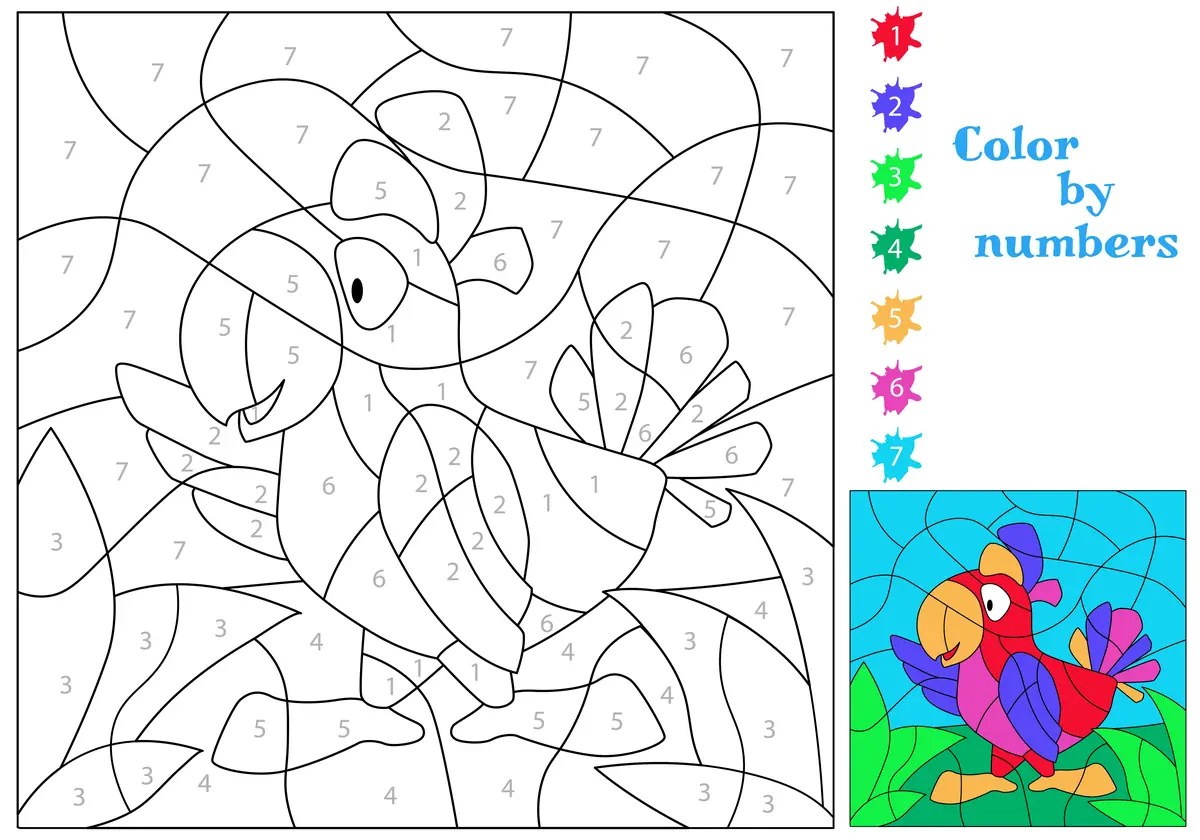
🦜 The funny parrot: 7 colours
An all-smiles parrot, with its colour model and a key of numbered stars. Seven bright, shimmering colours for a cheerful, exotic bird. The large areas of the body suit this age group’s pencil movements very well.
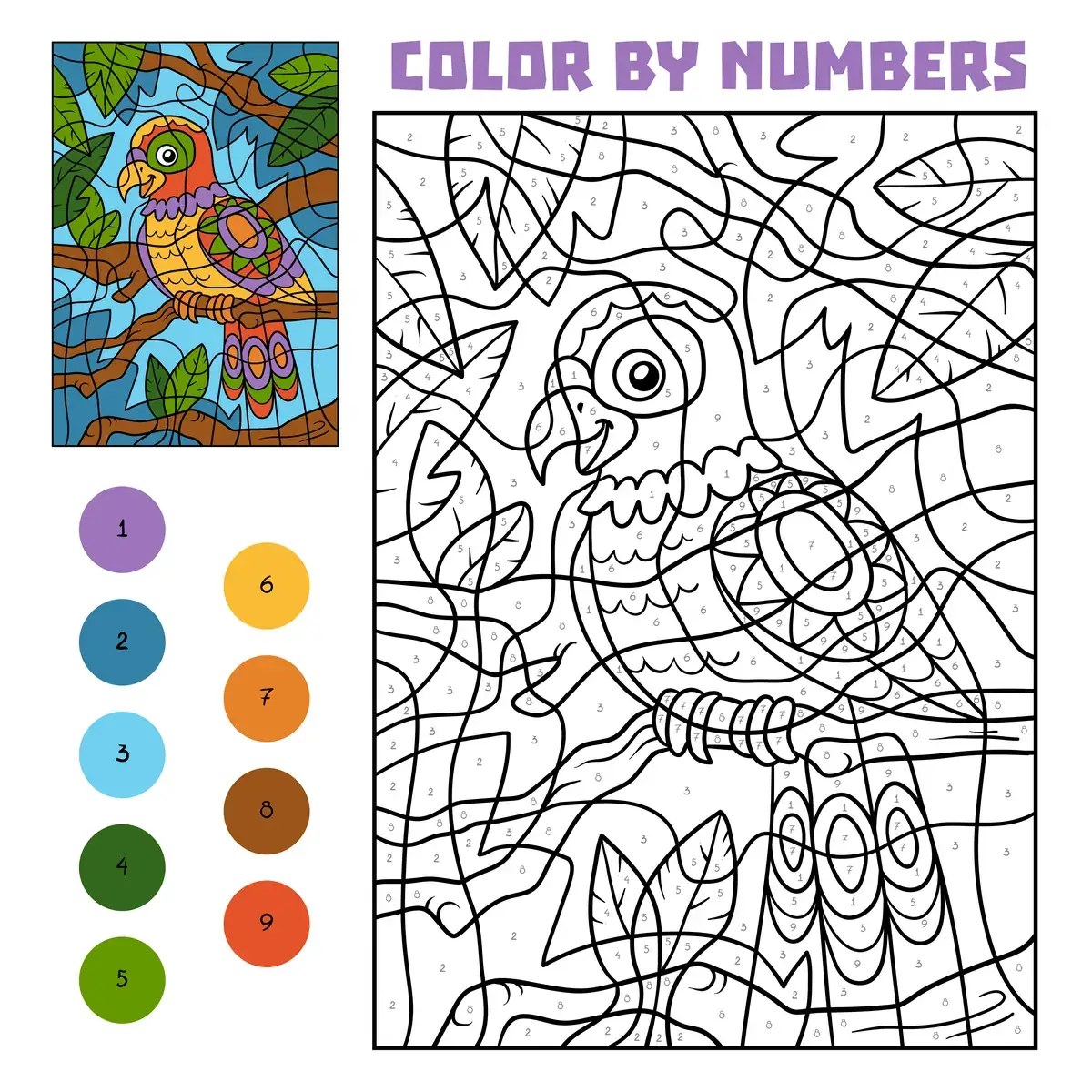
🌴 The jungle parrot: 9 colours
A parrot perched on its branch among the leaves, with its colour model and nine colours to spot. It’s one of the most detailed sheets: a lovely challenge for the end of this age range, or a two-handed activity with mum or dad.
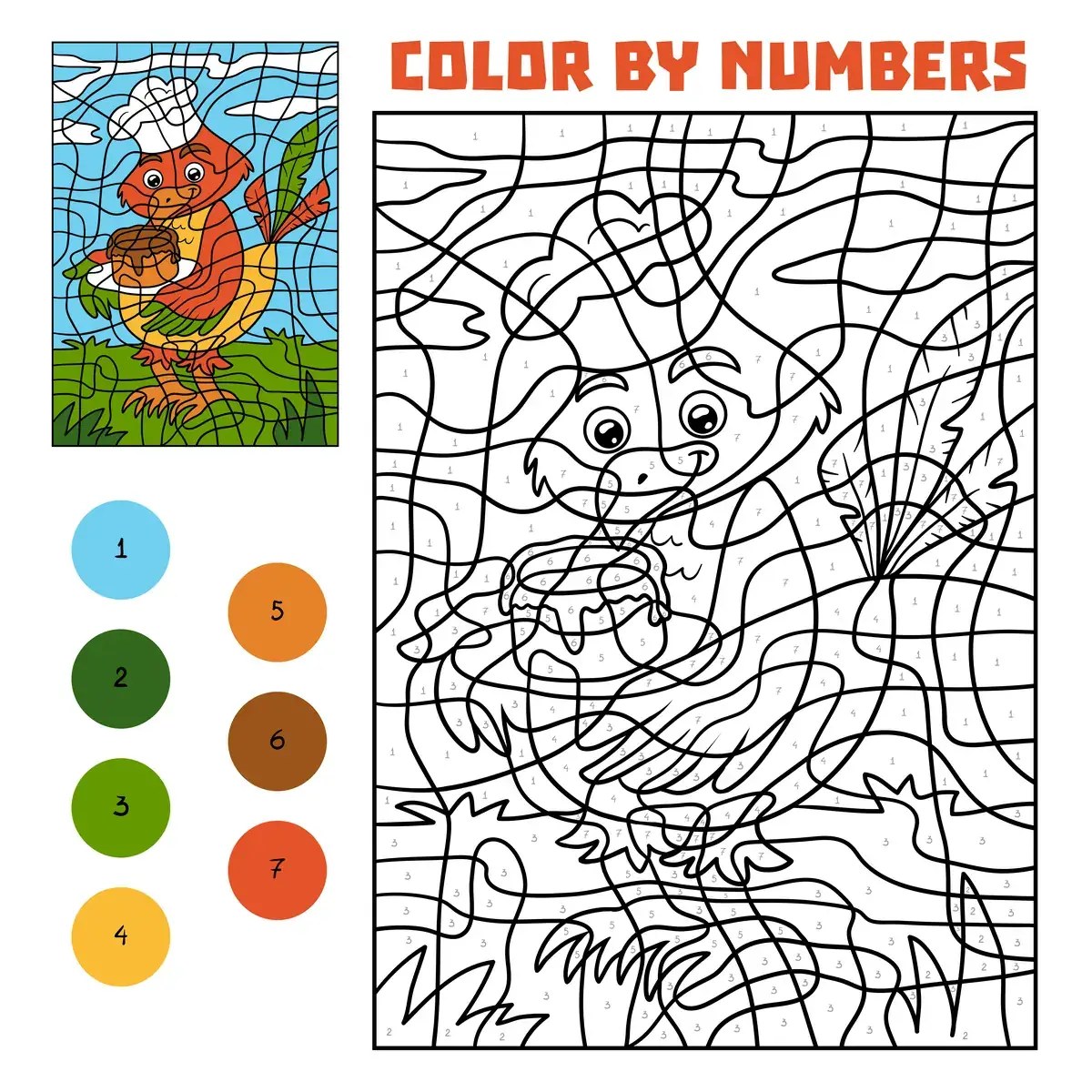
👨🍳 The little chef bird: 7 colours
A funny bird wearing a chef’s hat, carefully holding its pot of honey. Seven colours and a reference model: an amusing scene that raises a smile and makes you want to invent a little story while colouring.
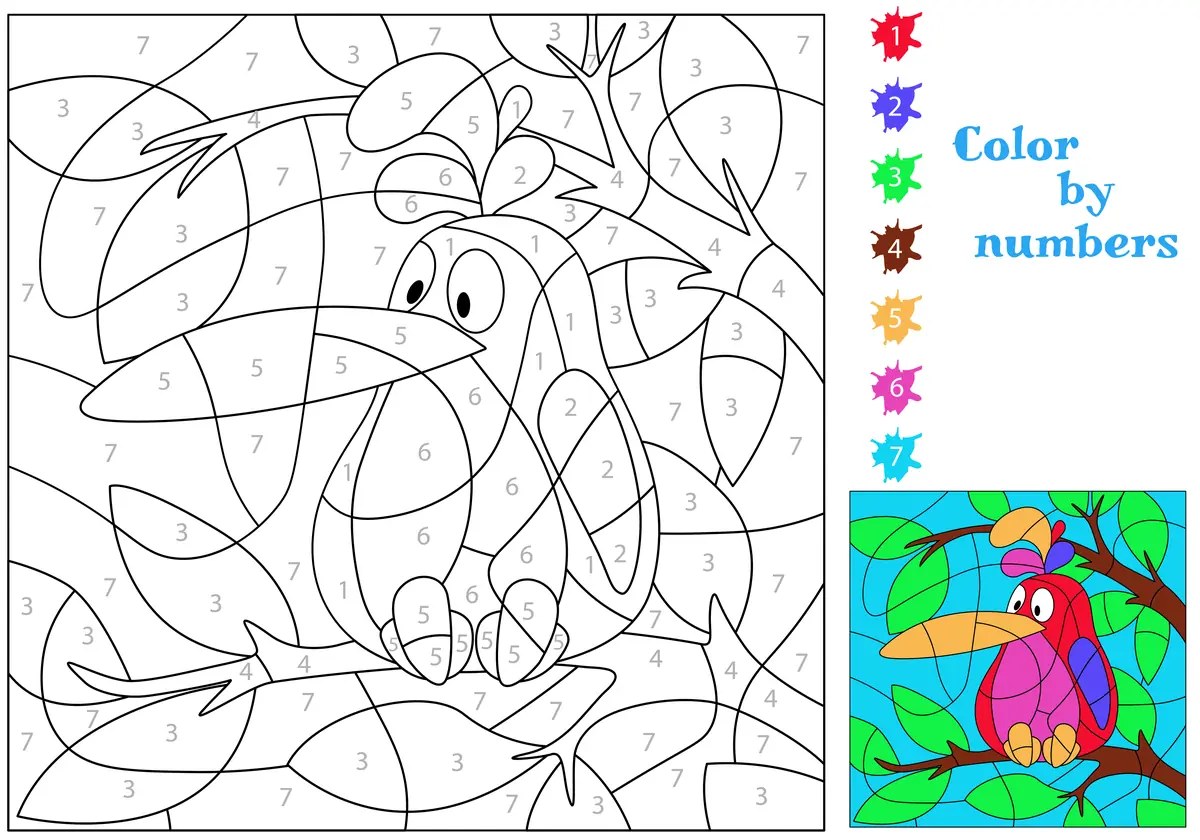
🐦 The big-beaked toucan: 7 colours
A bird with an enormous beak, perched in its tree, with its star key and colour model. Seven cheerful colours for a funny character. The many areas of the foliage help your child work on patience, little bit by little bit.
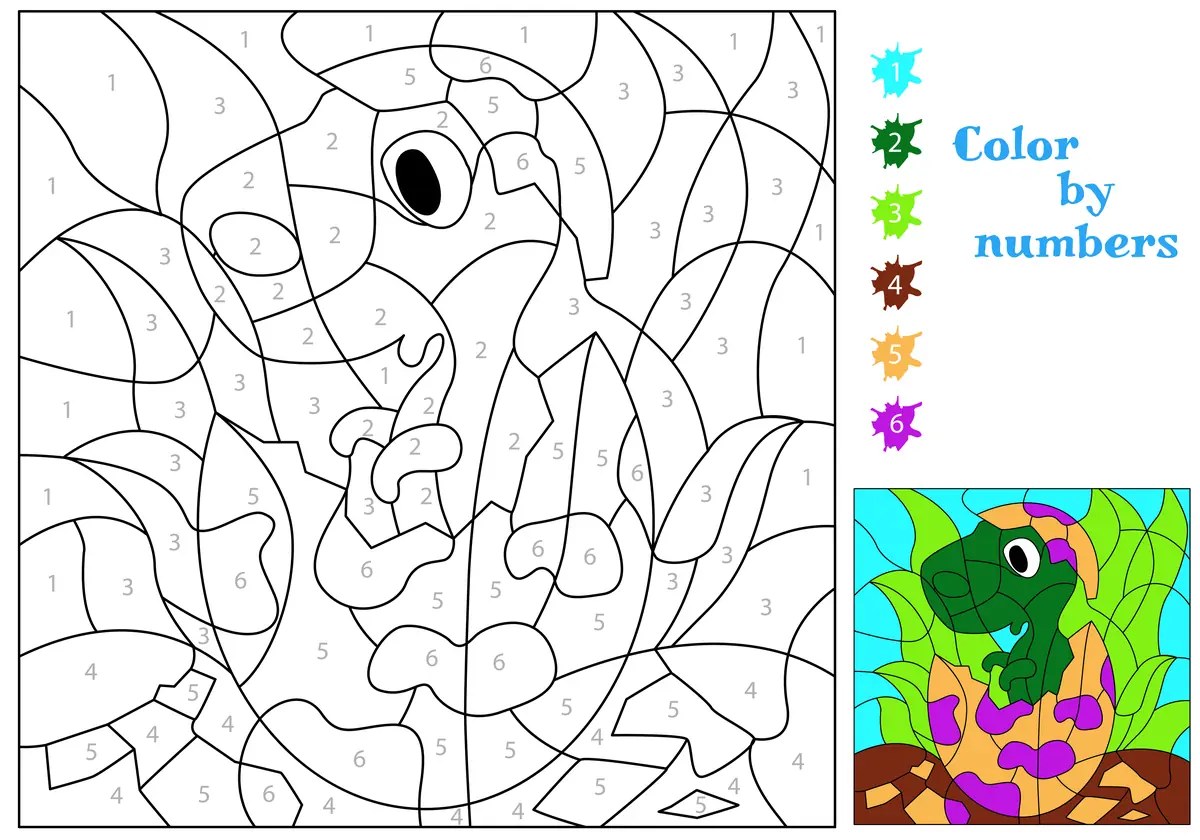
🥚 The baby dinosaur in its egg: 6 colours
A little dinosaur that has just come out of its shell, looking quite surprised. Six colours and a colour model: a heart-warming, accessible sheet, perfect for the heart of this age group. The large areas leave plenty of room to do a careful job.
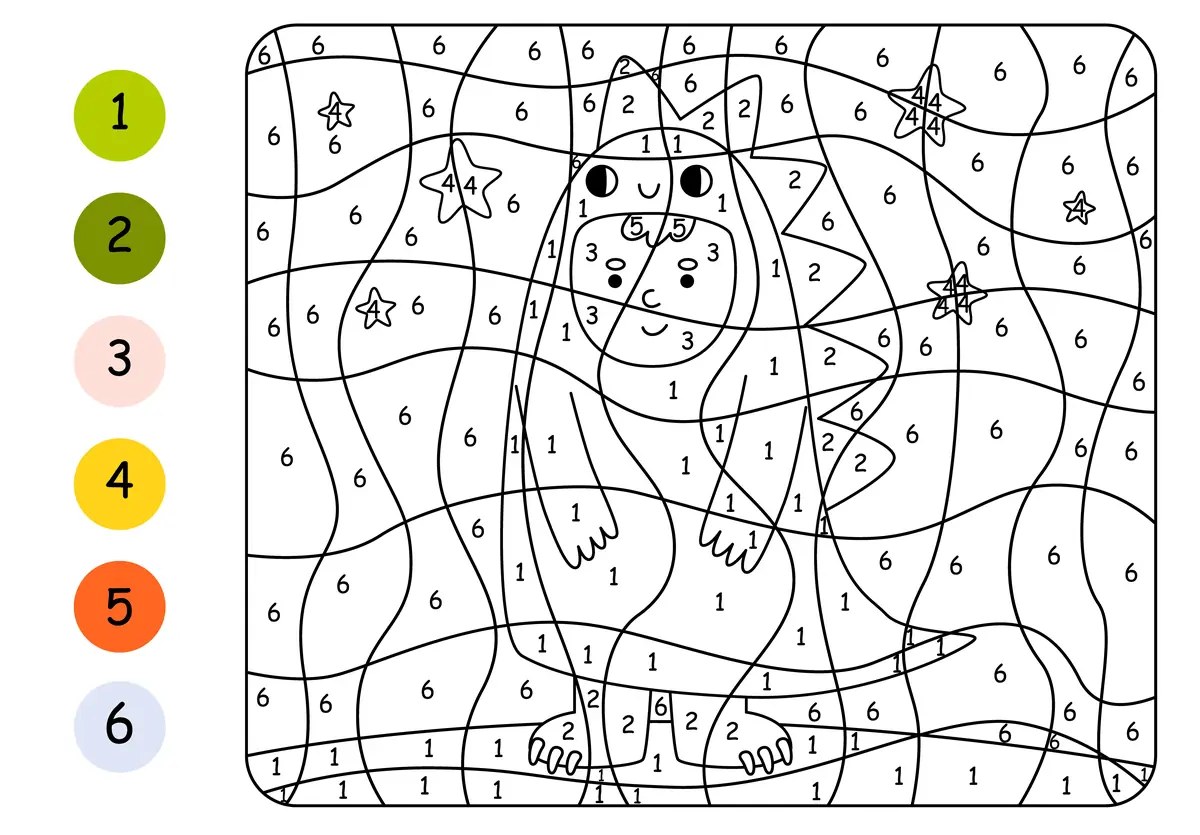
⭐ The starry dinosaur: 6 colours
A gentle dinosaur surrounded by little stars, to colour with six colours shown at the side of the sheet. The starry background, split into many areas, turns the page into a real sky to colour: a soothing sheet, ideal for the evening.
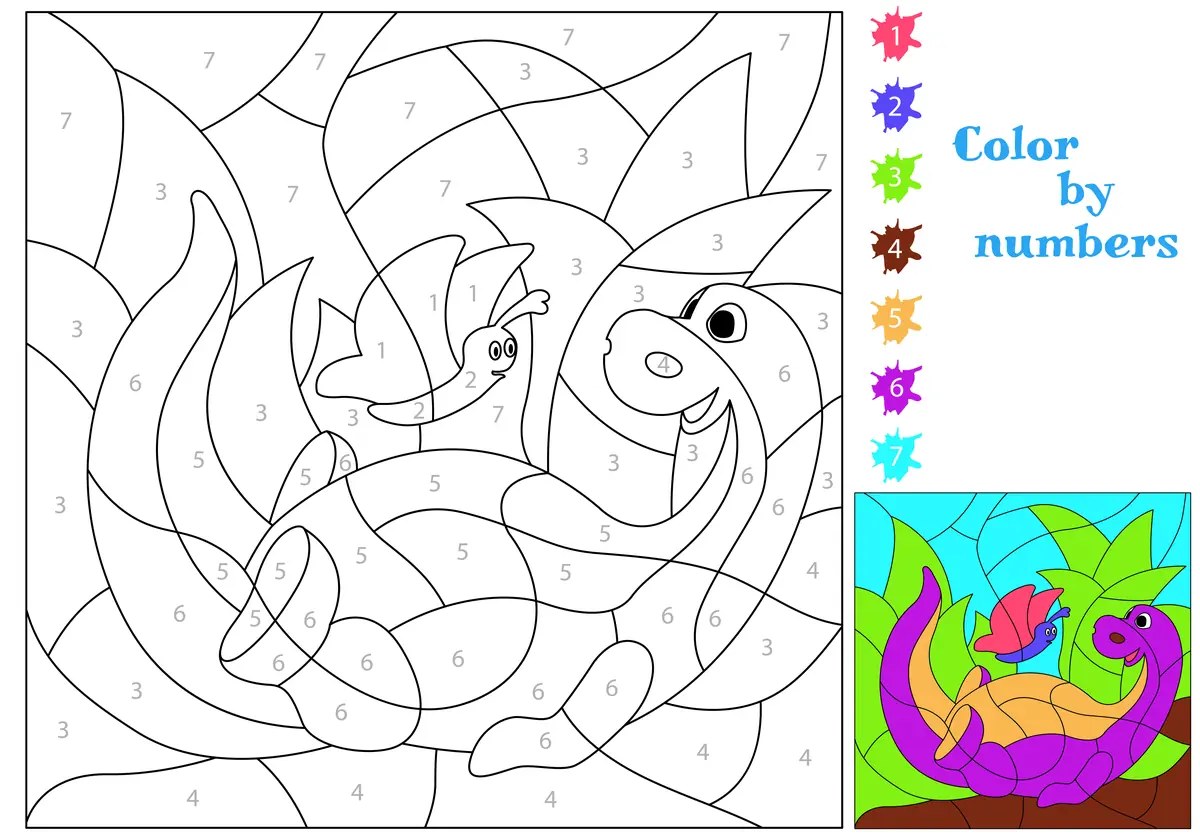
🦕 The dinosaur and the butterfly: 7 colours
A big, kind dinosaur playing with a little butterfly, with its colour model. Seven colours and a lovely friendship scene: just the thing for inventing a thousand stories while colouring and building up colour vocabulary.
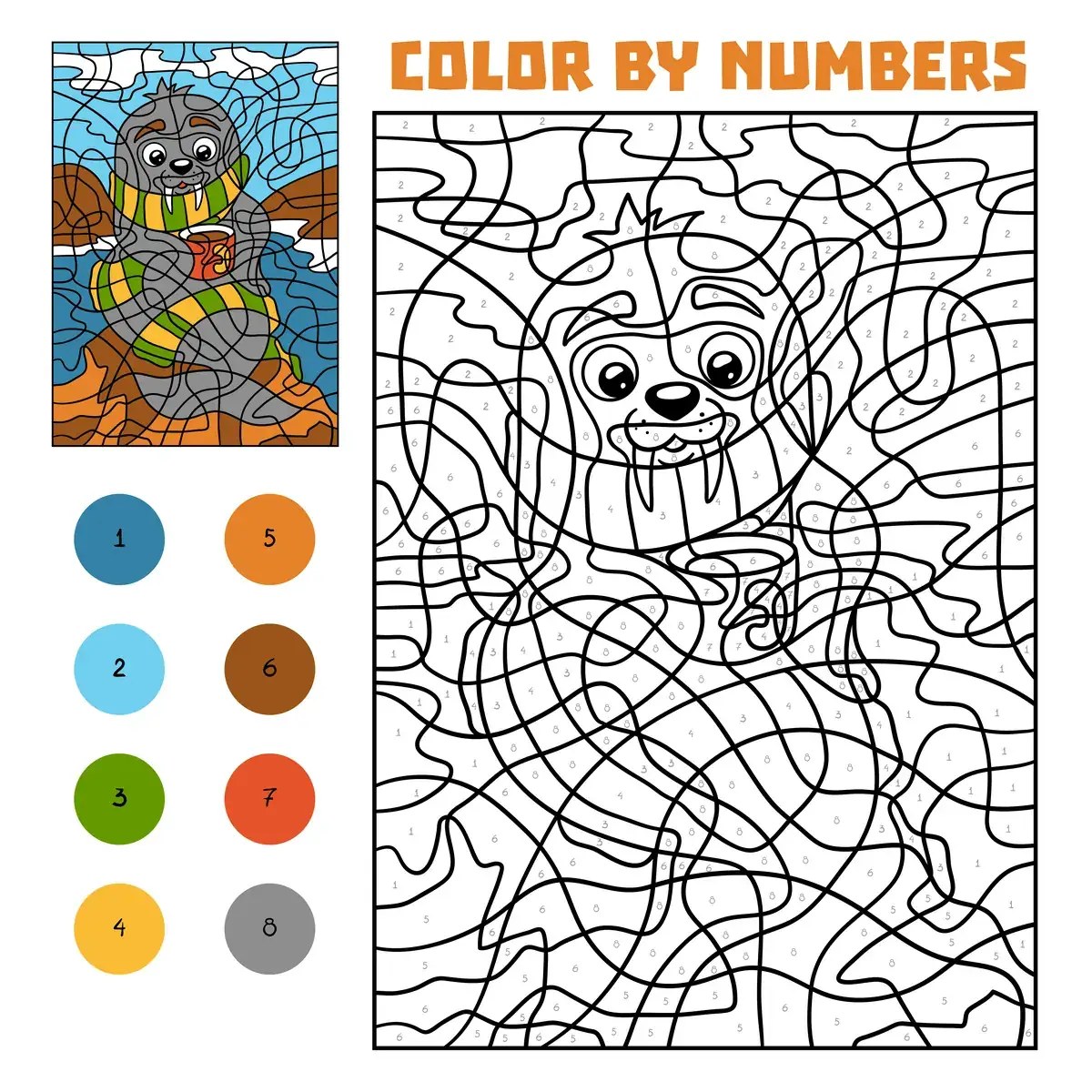
🦭 The walrus in a scarf: 8 colours
A funny walrus wrapped up in its scarf, sitting on the ice, with its colour model. Eight colours and plenty of detail: a dense, original sheet that’s a change from the usual animals and enriches your child’s vocabulary.
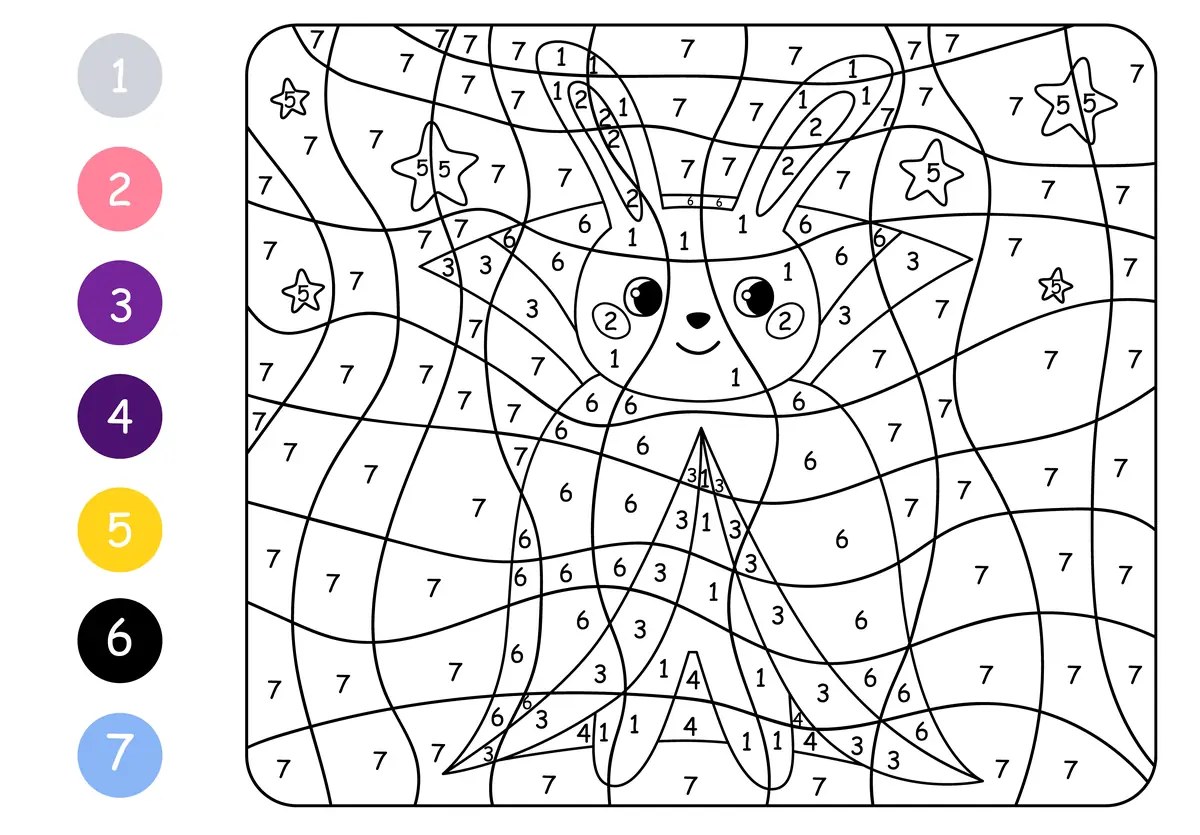
🐰 The little rabbit in fancy dress: 7 colours
A sweet little rabbit in its little cape, surrounded by stars, to colour in seven colours shown at the side. The background, split into big waves, offers plenty of areas to fill for a wonderfully gentle colouring session.
🌟 The benefits for your 4-to-5-year-old
At this age, magic colouring develops sharper skills than the very first sheets.
Number recognition is practised over and over in a real-world way. Each area calls for spotting a number and finding the matching colour. This link between the number and something concrete (a colour) strengthens the understanding of numbers as meaningful symbols.
Reading the code is a more abstract skill than simply recognising numbers. Your child has to keep the key in mind, apply it to each area and check that it all fits together. It’s a first exercise in structured decoding, close in logic to reading a text.
Patience comes naturally into play with sheets that take longer to complete. Your child learns to stop, start again and move forward area by area without rushing. This tolerance for delayed effort is precious for the school years ahead.
Finally, the richer result than on the first sheets brings deeper satisfaction. Your child can compare a sheet from this stage to an older one and see their own progress for themselves. Becoming aware of how far they’ve come is very rewarding.
💡 How to use the sheets effectively
Set your child up in a calm, well-lit spot. Put the printed sheet and the box of felt-tips or pencils in front of them. If the sheet has a colour model at the side, show it to them: that way they know what result they’re working towards.
Read the key together before starting. Point to each number, name the matching colour and ask your child to find the right felt-tip. This little starting ritual takes two minutes but saves a lot of mix-ups along the way.
Encourage the “one colour at a time” approach: your child takes the red felt-tip, colours every area marked 1, then puts it down; next they take the blue, colour every area marked 2, and so on. This method is more effective than swapping felt-tips for every area and cuts down on mistakes.
If they hesitate between two numbers, invite them back to the key rather than giving them the answer. Looking something up to solve a problem is a fundamental work habit you can start building right now.
As for equipment, washable felt-tips with a medium tip are ideal in the early years: the colour is bold, they glide nicely on the paper and wipe off fingers easily. Coloured pencils also work well, especially for practising pencil pressure. Avoid watercolours, which bleed through the paper and make the numbers impossible to read.
📈 Progression: from age 3 to age 6
Magic colouring follows a consistent progression throughout the early years. Here’s how to place the 4-5 stage within that journey.
Ages 3-4: 2 to 4 colours, numbers 1 to 4, wide areas, very simple pictures. The goal is to understand the idea of coding. Look for our magic colouring sheets for ages 3-4 for this first step.
Ages 4-5: 5 to 6 colours for the core of the level, and up to 8 or 9 colours for the challenge sheets, with medium-sized areas and more detailed pictures. The goal is mastering the code and pencil precision. This is the consolidation period for the idea, with tougher challenges that you adjust to how comfortable your child is.
Ages 5-6: the code can use letters (R, B, G, Y for red, blue, green, yellow), which creates a direct link with learning the alphabet. The areas are smaller, the pictures more complex, and some sheets introduce colours like purple or brown. Your child is ready for this level after mastering the 4-5 sheets.
🚀 Ideas for going further
Once the sheets are mastered, your child can move on to activities that stretch their skills even more.
Suggest pairing magic colouring with a gentle introduction to simple addition. On some homemade sheets, the areas carry the answer to a little sum: the “1+2” area should be coloured with colour 3. Your child, towards the end of this stage, can try this variant with your help, counting on their fingers.
In the classroom, magic colouring lends itself well to differentiation: the most confident children get an 8-colour sheet while others work on a 4- or 5-colour one. They all do the same activity, but each at their own level. If you’re a teacher or a parent helping out in class, these sheets are easy to adapt.
For independence, magic colouring is an ideal tool. Your child knows exactly what to do, can check for themselves whether they’ve followed the code and doesn’t need constant help. Bit by bit, they learn to work alone with focus — a very useful skill for starting reception and then primary school.
❓ FAQ
📈 How do you move gradually from the first sheets to these ones?
Start with a 5-colour sheet for this age group (the very simple butterfly, the unicorn) rather than an 8- or 9-colour one. Your child already knows the idea from the earlier sheets: all you do is add one or two extra colours and let their working memory adjust. If they often hesitate over the numbers 4 and 5, practise them first with counting games before moving on to the sheets.
🔢 My child mixes up 5 and 6 on the sheets: how can I help?
Before starting, play a little recognition game: show the numbers 5 and 6 on the key, ask your child to name them, then to show 5 fingers and then 6 fingers. Activating this kinaesthetic memory helps anchor the difference. You can also stick a little coloured sticker on the matching felt-tip box for a visual reminder.
🎨 How many colours should you choose for a first sheet at this age?
Aim for 5 or 6 colours with fairly wide areas: the very simple butterfly, the unicorn and its heart, or the baby dinosaur are perfect to start with. Once these sheets are completed with ease, your child can take on the 7-, 8- and then 9-colour sheets, which call for more focus and precision.
🏫 How can you use these sheets for differentiation in a 4-5 class?
Offer the 4-5-colour sheets to children who are just starting out, and the 7-9-colour sheets to more advanced children. You can also adapt the format by enlarging the sheet for children who need a broader movement, or shrinking it for those who already have good fine motor skills.
🤝 Are these sheets suitable for small-group support sessions?
Absolutely. Magic colouring is especially useful in support sessions because it lets children work on number recognition, working memory and focus in a motivating context with no sense of failure attached. Children who are struggling often accept this exercise more readily than a standard maths sheet, which makes it a valuable tool.
💪 How can I build my child’s independence with these sheets?
Explain the idea just once, then let your child start on their own. If they call for help, ask them a question first: “Have you looked at the key? Which number is in the area?” This question-based guidance encourages them to find the solution themselves rather than wait for the answer. Bit by bit, they learn to self-check and to work independently.
