
Working out which little winged visitor just flew off at the slightest sound can be a real puzzle for families. This article offers printable discovery sheets to recognise each species easily 🐦, from the robin to the shy redstart, using simple visual clues. You’ll learn to tell their songs apart and turn your garden into a welcoming refuge where you can watch these colourful feathers without ever disturbing them.
- Download your garden bird sheets to get started
- Spotting the most frequent visitors
- 3 secrets for watching without disturbing
- Telling apart species that look alike
- How to turn your garden into a refuge
- Listening and counting birds month by month
📥 Download your garden bird sheets to get started
After spotting a quick movement in the hedge, the urge to identify the bird exactly comes naturally, and that’s where our tools come in.
🔍 Identify birds with simple clues
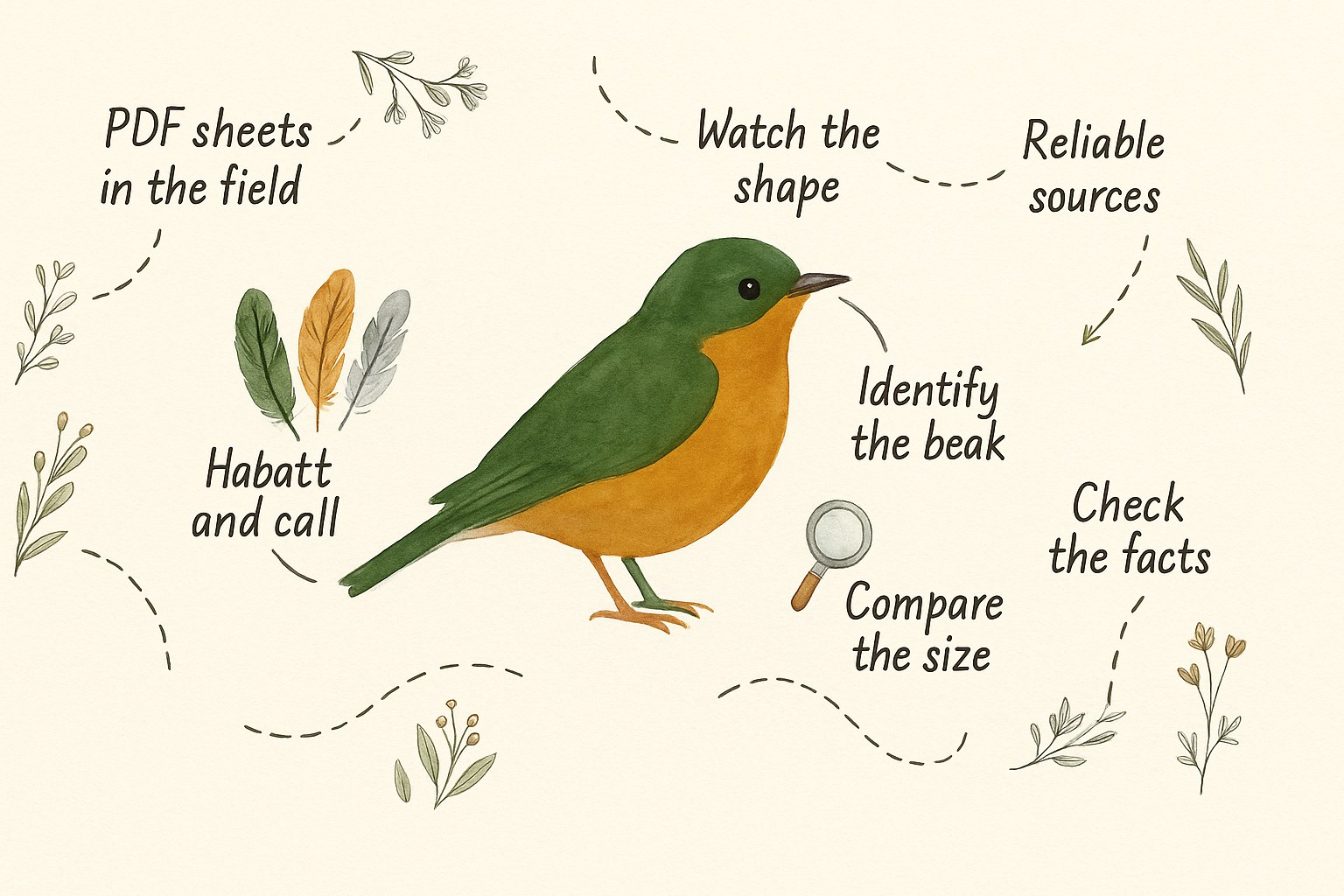
First, look at the overall shape and the form of the beak. These handy clues often reveal the wild bird’s diet. A thick beak points to a seed-eater.
Then focus on the main colours of the plumage. Note the patches on the throat or the wing bars. Compare the bird’s size with that of a familiar house sparrow too. It’s a solid basis for getting it right.
- Shape (slim, round)
- Beak type (thin for insects, thick for seeds)
- Relative size
📄 Use our printable identification sheets
The PDF format has a big advantage for use straight out in the field. It’s a tough, easy-to-carry tool you can take anywhere. Print it so you always have it handy on your outings.
Each sheet sets out the habitat, the call and the times of year when the bird is around. You can look up downloadable nature fact sheets to broaden your knowledge. These documents often include tips for setting up your garden.
Feel free to jot down your own observations right on the paper. Note the date, the time and the behaviour you saw. These personal notes turn your guide into a real family logbook.
🎁 Find free, reliable resources
Turn to well-known databases to confirm your sightings. Accuracy matters for beginners discovering the species. National bird protection groups offer go-to reference resources.
Always double-check a visual clue that feels doubtful. Cross-check two different sources every time before you draw a conclusion. Look carefully at the photos and the range maps available online.
There are also playful tools perfectly suited to children. Learning while having fun makes it easier to memorise the local species. It’s a great family activity for spending the weekend out in the fresh air.
🐦 Spotting the most frequent visitors
Once you’ve got your sheets, it’s time to put a name to these little shapes that liven up your branches.
🐤 Tits and their bright colours
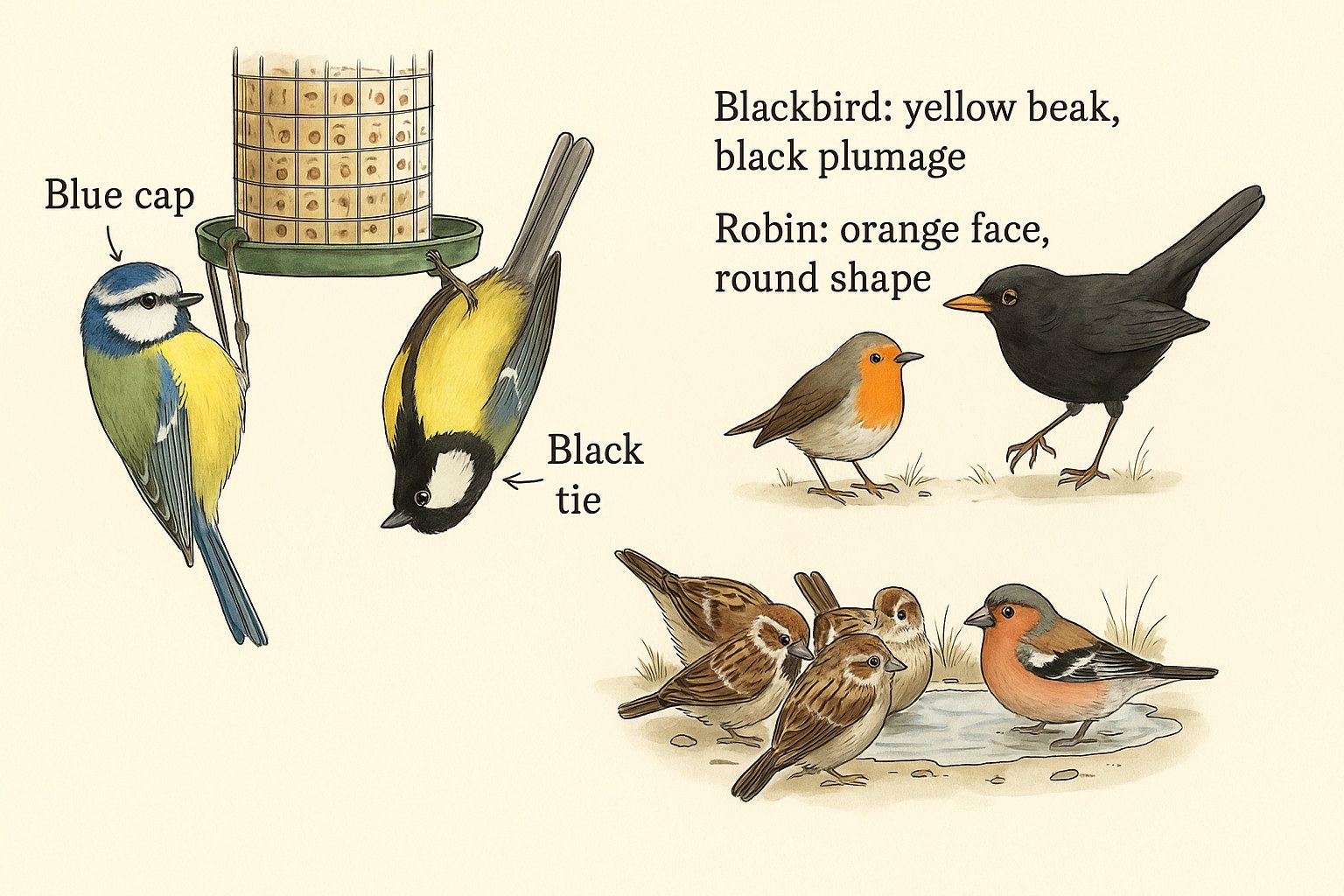
Telling a blue tit from a great tit is child’s play. The first wears a unique blue cap. The second shows a black tie on a yellow belly. They’re the undisputed stars of our gardens.
Watch their acrobatics on the feeders. They often hang upside down. This lively behaviour lets you spot them from far away with no mistake.
They love old trees. Well-placed nest boxes are also among their favourite homes for settling in with you for good.
The great tit is easy to recognise from the wide black vertical band running down its bright yellow chest.
🐦 The blackbird and the friendly robin
The robin is often seen on the ground. It follows the gardener closely as the soil is turned over. Its behaviour is very territorial and rather solitary.
The blackbird has a powerful song. It often perches up high to sing. The male is black with an orange beak. The female stays more discreet with her brown plumage.
Posture helps tell them apart. The blackbird hops about briskly while the robin stands nice and upright on its legs.
- Blackbird: yellow beak, black plumage
- Robin: orange face, round shape
🌾 Small seed-eaters like the sparrow
Sparrows lead an intense social life. They almost always move about in small, noisy groups. It’s a very sociable bird that isn’t easily scared day to day.
The chaffinch is more colourful. You often notice its two white wing bars. It looks for food mainly on the ground in gardens.
Their diet shapes their bodies. They have a short, powerful beak to crack seeds all winter long.
Water is vital for these species. They like to bathe together to keep their feathers in good shape. Don’t forget to fill the little water dishes.
Using printable garden bird discovery sheets turns every sighting into a fun, learning moment for the whole family.
🤫 3 secrets for watching without disturbing
Recognising the species is one thing, but knowing how to approach them without making them fly off takes a little technique.
🌅 Choose the right time to watch
Go for dawn to enjoy nature waking up. That’s when activity is at its busiest. The birds are actively hunting for their first meal of the morning.
Watch at the end of the day before sunset. Birds often gather before nightfall. It’s a calm time, perfect for quiet watching. The light is then just right for catching the details.
Fit your outings to the local weather. Avoid very windy or very rainy days. The birds then stay well hidden in the dense bushes.
🤫 Keep a low profile in the field
Wear clothes in neutral shades. Green, brown or grey are perfect. Absolutely avoid bright colours that frighten wild animals.
Learn to stay completely still for a few minutes. Sit against a tree trunk. Nature ends up taking over around you. That’s the key to successful watching.
Use good-quality binoculars. They let you keep a comfortable, safe distance. You’ll see details invisible to the naked eye on your discovery sheets.
📸 Take photos without scaring the feathers
Use a powerful zoom so you can stay far away. Never try to get too close to the nest. Respect for the animal comes before the picture.
Hide behind something natural that’s already there. A hedge or a window curtain make great hides. The birds won’t notice you’re there. Stay patient to get the best shot.
Switch off the electronic sounds on your camera. The shutter noise can send a bird flying instantly. Use silent mode if your camera allows it.
🔍 Telling apart species that look alike
Despite all your care, some birds play the impostor and need a more trained eye to be identified.
🔍 Avoid mix-ups between similar species
The black redstart and the common redstart look very alike. Their shapes are identical but their colours vary. Look closely at the shade of the chest so you don’t get it wrong.
Look for the subtle details on the wings. A small white patch can change everything. Check confusion sheets to help you decide. It’s a must-have tool for getting better.
| Species A | Species B | Main distinguishing sign |
|---|---|---|
| Blue tit | Great tit | Cap colour (blue vs black) |
| House sparrow | Tree sparrow | Cheek patches (none vs black) |
| Blackbird | Common starling | Plumage sheen (matt vs glossy) |
| Black redstart | Common redstart | Forehead colour (dark vs white) |
🗺️ Understand seasonal migration movements
Telling residents apart from partial migrants is useful. Some birds stay in your garden all year round. Others only pass through during the breeding or travelling seasons.
A lack of food is the main reason they leave. They fly south to survive the frost. It’s a natural cycle to follow with the children. Discovery sheets help you note these comings and goings.
Note the arrival of northern species during cold snaps. The brambling sometimes visits our feeders in winter. It’s a welcome surprise during the harshest months of the year.
⚥ Watch the differences between males and females
Sexual dimorphism is a simple idea to observe. In many species, the male is more colourful. This helps him attract a partner for the mating season.
The females’ plumage is often duller. This discretion is vital for camouflage at the nest. It protects her young from predators. Here, nature puts safety first.
Identifying juveniles from their markings is a good exercise. Their plumage is often speckled or less crisp. They sometimes look like females, but with clumsy, hesitant behaviour.
🏡 How to turn your garden into a refuge
For these birds to come back and see you, your garden needs to become a welcoming, safe stopover.
🥣 Set up suitable feeders and water dishes
Choose models that are easy to clean. Good hygiene stops diseases spreading between birds. A regular wipe is enough to keep things safe.
Place the water points up high. Predators such as cats shouldn’t be able to get near. Give your little visitors a clear view. They’ll feel far more at ease.
Offer good-quality sunflower seeds. It’s the favourite food of most small songbirds. Fat balls also help a lot during winter.
🏠 Choose the right nest boxes for each family
Match the size of the entrance hole. Each species has its own size needs. A hole that’s too wide would let in unwanted guests.
Face the opening east or south-east. This protects the chicks from the prevailing winds and the rain. The morning sun gently warms the shelter. It’s a detail that changes everything.
Fix the box firmly to a stable support. Avoid too much swinging in the wind. A well-anchored nest box reassures the parents when they move in.
🌳 Create hedges and wild areas
Plant local berry-bearing species. Elder or hawthorn are true natural larders. Birds love these fruits in autumn.
Leave a corner of the garden wild. Tall grasses shelter lots of essential insects. It’s a vital source of protein for the broods. Less mowing means more life.
Create different layers of plants. Alternate between lawn, bushes and tall trees. This structural variety offers varied nesting options.
To take your watching further, feel free to use printable garden bird discovery sheets to identify every little visitor, from the robin to the elegant goldfinch.
🎵 Listening and counting birds month by month
Beyond the picture, the garden is also a soundscape you can decode month after month.
🎶 Learn to recognise birdsong
Linking a tune to a precise shape quickly becomes a game. The song is often easier to pick out than the bird itself. It’s a unique, useful sound signature.
Using simple memory tricks helps a lot. The blackbird’s alarm call is very different from its song. Learn to tell urgency from pleasure. Your ear will sharpen over time.
Telling the display song from contact calls is instructive. The first is complex and tuneful. The second is short and keeps the link between individuals.
📊 Join in the counts with our sheets
Discovering the idea of citizen science is rewarding. Your help is precious to specialist researchers. Every sighting counts towards protecting biodiversity.
Noting the highest number of individuals seen together is the rule. This stops you counting the same bird more than once. Be careful during your sessions. The quality of the data matters most.
Sending in your results through dedicated platforms is a caring act. It’s a concrete way to help understand nature. You’re now part of a big community of watchers.
📅 Follow the yearly observation calendar
Looking ahead to nesting in early spring is exciting. That’s when the songs burst out across the garden. The pairs get busy building their nests with care.
Keeping an eye on the feeders during the freezing months is essential. Feeding then becomes a vital help for the songbirds. Watch the northern species that come to visit. It’s a winter show.
Printable garden bird discovery sheets help you never miss a single seasonal date.
The observation calendar lets you sync your passion with nature’s cycles, from the first spring song to the winter gatherings.
Download your printable garden bird discovery sheets quickly to turn your sightings into truly magical moments. By identifying shapes and songs, you’ll protect your little visitors better. Get your binoculars ready: nature is just waiting for your kind eyes to flourish fully! 🌿
❓ FAQ
📄 What information is on your printable bird sheets?
Each sheet is a real little ID card for our feathered friends. You’ll find precious details such as the bird’s weight, wingspan and length, plus its favourite diet and the times of year it’s in your garden. It’s the perfect tool for never hesitating between two species during your family watching sessions.
On top of the visual identification, these sheets give you tips on the setups that attract them to your place. They even spell out the differences between the male, the female and the juveniles, with a section to learn to recognise their unique songs.
🐦 How do I easily tell a sparrow from a dunnock?
It’s a very common mix-up, don’t worry! To tell them apart, just look at the beak: the dunnock’s is much thinner than the sparrow’s. What’s more, the dunnock often keeps its tail nicely upright, which is a great visual clue for spotting it for sure.
🦜 Which birds can you identify with these discovery sheets?
The list is long and varied, to delight little and big explorers alike! You’ll be able to identify the feeder stars such as the blue tit, the great tit or the friendly robin. But the sheets also cover more impressive species like the kestrel, the sparrowhawk, the jay and the hoopoe.
More discreet birds are on the programme too, from the tiny wren to the hawfinch, by way of the elegant goldfinch. Whether you cross paths with a brambling in winter or a barn swallow in spring, you’ll always have the right sheet to hand.
🔬 How can I help scientists with my garden observations?
It’s what we call citizen science, and it’s fascinating! By using our sheets to identify and count the birds, you can send your data to organisations such as national bird protection groups or a natural history museum. Just note the highest number of individuals of the same species seen at once to avoid duplicates.
🎵 Can you listen to birdsong through the sheets?
Absolutely, and it’s a fantastic help for identification! The resources mention the chance to listen to the songs so you can link a tune to each shape. It’s a great way to learn to recognise the birds even before you catch sight of them in the leaves.
