
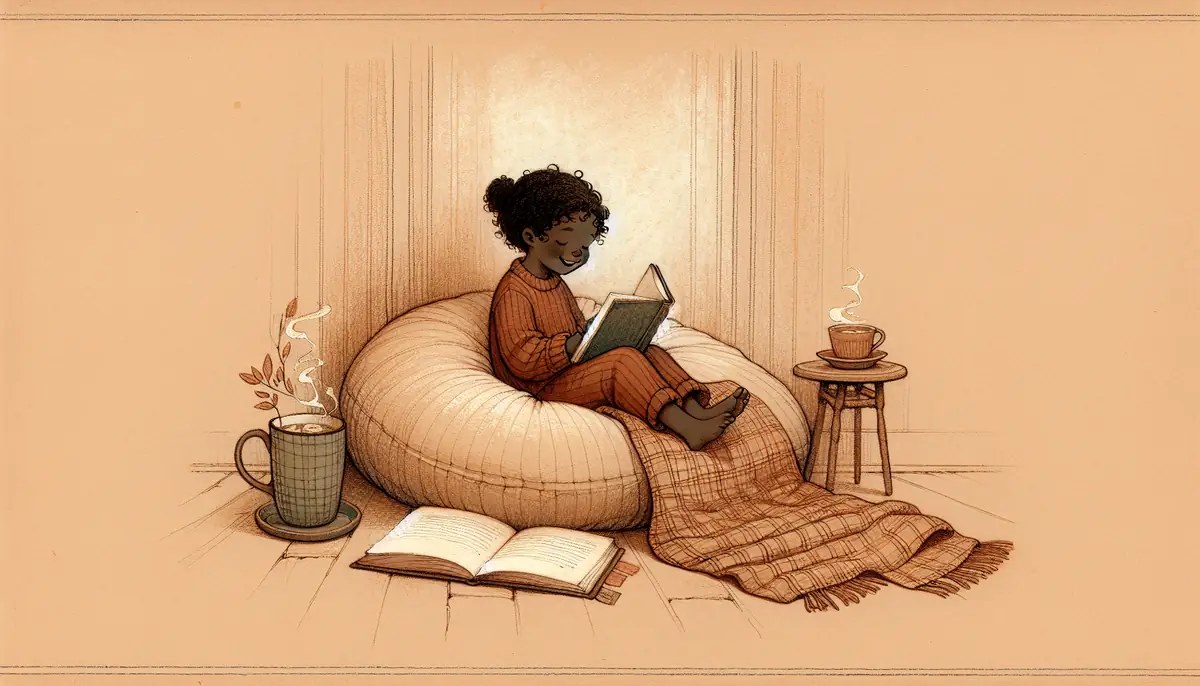
Your child pushes their book away, drags out the bedtime reading, or tells you flat out that they “hate reading”. As a parent, that’s rarely a small thing: you worry they’ll fall behind, you feel a bit guilty, you wonder what you got wrong. 😊 Good news, you’re not alone, and a child who doesn’t like reading at 7, 9 or 11 is not a child who is lost to books. In the vast majority of cases, this refusal is just a phase: a bad first encounter with books, decoding that’s still hard work, too much school pressure, or simply a taste they haven’t found yet. With the right moves, the click almost always comes. Here are 10 practical tips you can try this very evening, to give your child back the love of reading, without forcing them and without feeling guilty. You’ll also find the signs to watch for when the refusal goes deeper than a simple lack of interest.
🤔 Why doesn’t your child like reading? (the real reasons)
Before you act, you need to understand. A child who doesn’t like reading never makes that choice out of pure laziness. Behind the refusal there is almost always a specific cause, sometimes several combined. Spotting the right one is already half the journey. Here are the five big families you find most often in primary and early secondary children.
😓 Decoding still costs too much effort
This is the first reason to look at, and the most underrated. Many children at 7 or 8, sometimes even 9, decode words one by one, with no automation. Reading then becomes an exhausting activity: by the end of a page, the child no longer even knows what the start was about. For them, reading isn’t a pleasure, it’s an effort. Of course they avoid it. The right reflex: have their reading fluency checked by the teacher or a speech therapist. Until reading is fluent, no pleasure is possible.
😣 School or parental pressure has killed the pleasure
Reading to understand, reading to pass the test, reading because “the teacher said so”. When reading becomes an obligation tied to questions, summaries and a grade, many children file it mentally under “chore”. They can even link the book to a humiliation: a word they couldn’t read in front of the class, a misunderstanding that made everyone laugh, a sharp remark about their tone. This mild trauma is nothing unusual, and it weighs heavily. You’ll need to separate school-reading from home-reading.
👀 Nobody around them reads
Children copy what they see. If at home Mum and Dad never read (or are only ever seen with a phone), why would a book seem like a desirable activity? The parental model, in reading as in everything else, is huge. When a child has never caught their parents reading a novel, a magazine or a comic, they don’t see reading as a grown-up activity that you freely choose. They see it as a school thing, full stop.
📕 The books on offer don’t speak to them
Another very common cause: your child simply hasn’t found their genre. You offer them children’s classics, fairy tales, realistic novels, while they were dreaming of comics, pirates, mysteries, jokes, machines or horses. Many parents (and teachers) still rank reading and push aside comics, joke books, magazines and activity books. Yet for a reluctant child, these are precisely the best levers. The golden rule: any book they choose is a good book.
📱 Screens take up all the space
A child who spends two to four hours a day in front of a screen (tablet, console, TV, phone) can’t develop the slow, calm taste for reading. The brain gets used to instant stimulation, fast scrolling and frequent rewards. By comparison, the book looks dull. It’s not about the child’s willpower: it’s about the ecosystem. If you want reading to find its place, you have to physically make room for it, in the time and the space of your home.
💡 10 practical tips to bring back the love of reading
Here are ten tips you can test as soon as this week. None of them is magic on its own, but combined over two or three months, they often transform the relationship with books. No need to apply them all at once: start with the three that resonate most, and add the others little by little.
🗣️ 1. Read aloud to them, long after they can read alone
This is the first tip, and the most powerful. Many parents stop reading aloud as soon as the child can decode on their own, around 7. That’s a mistake. Carry on until 10, 11, sometimes 12. Reading aloud means offering your child stories that are richer than what they could read alone, without the effort of decoding. It’s also a shared, almost sacred moment of calm, which links reading to a lasting positive emotion. Twenty minutes in the evening, one chapter a day: that’s already huge. And they’ll listen, even if they say it’s “for babies”: let them say it and read anyway.
🤲 2. Let them choose their own books, with no judgement
Comics, joke books, children’s magazines, fact books, activity books, heavily illustrated novels: it all counts. Drop the idea of the “good book”. A child who devours comics for six months will almost always move on to novels afterwards. On the other hand, a child forced to read a classic they hate will switch off for years. Take them to a big bookshop or a library, give them a small budget or a borrowing quota, and let them choose alone. You may be surprised: what they pick is what they’ll actually read.
⏰ 3. Create a daily 10-to-15-minute ritual
Routine builds the habit, and the habit builds the pleasure. Choose a fixed slot: just before bed, after the afternoon snack, or in bed on weekend mornings. Always the same moment, always in the same quiet spot. At first, ten minutes is enough. Five, even. What matters isn’t the length but the regularity. After three weeks the ritual settles in and the child sometimes asks for it themselves. Avoid imposing it like homework: present it as a special time, your time together or their time alone.
🎯 4. Match the difficulty to their real level, not their official one
If your child is in Year 5 but decodes like a Year 2, give them Year 2 books. A class’s official level is only an average; your child is unique. A book that’s too hard discourages them in three pages. A book slightly below their level, on the other hand, lets them read fluently, build confidence and want to carry on. The simple rule: they should understand 95% of the words with no help. Below that, the book is too hard. Adjust without shame, you’re not “blocking” anything: you’re getting the engine running again.
🎧 5. Multiply the formats: audio, comics, illustrated novels, podcasts
Reading isn’t limited to the classic novel. Audiobooks are a wonderful way in for children who struggle with decoding: they finally get access to long stories, rich vocabulary and the shape of a narrative. The same goes for children’s podcasts. Comics and heavily illustrated novels build fluency and pleasure at the same time. All of this counts as reading, and opens up paths that the pure novel can’t open on its own.
🏡 6. Turn your home into a book-friendly place
Books should be visible, within reach, at child height, in several rooms. A reading corner in their bedroom, a small bookcase in the living room, books in the loo (yes, the loo), magazines in the car for long journeys. Your child should be able to stumble across a book by chance, open it, close it, pick it up again later. If books are only kept on the desk shelf “for homework”, they’ll never be linked to pleasure. Scatter them around like little pebbles to pick up.
📖 7. Read yourself, in front of them, visibly
The parental model is the most underrated lever. A parent who reads a novel on a Sunday afternoon while the child plays nearby sends a clear message: reading is a grown-up activity that you choose for pleasure. If you don’t have the time or the taste for a novel, read a magazine, a short biography, a comic. The book as an object must visibly exist in your daily life. Don’t tell them “go and read”. Read yourself, and they’ll come. It’s almost mathematical.
🏛️ 8. Go regularly to the library or the bookshop
The weekly or fortnightly trip to the library is a powerful family ritual. It takes reading out of the school context and puts your child in the position of a searcher, a discoverer. They wander between the shelves, they choose, they borrow. Children’s librarians are usually passionate: ask for their advice, they know dozens of books for reluctant readers. An independent bookshop with a well-kept children’s section has the same effect. Avoid shopping centres: too much stimulation, not enough calm to really look.
💬 9. Talk about the story afterwards, without quizzing like a teacher
When your child has read a book or a chapter, talk about it with them, but as a reader, not an examiner. Say “I think this character is strange, don’t you?”, “what would you have done in their place?”, “does it remind you of anything?”. Avoid “what did you understand?”, “summarise it for me”, “how many characters?”. The first stance sets up a conversation between readers; the second recreates school at home. Five minutes of lively chat are worth more than a quarter of an hour of questionnaire.
🕊️ 10. Be patient and never force it
This is the last tip, the hardest and the most important. Forcing installs rejection for years. If your child doesn’t like reading at 8, they may very well come to it at 10, 11 or even 14, sometimes after a chance meeting with a knockout book. Your role is to set the scene, to offer opportunities, to lead by example. Not to impose. Be ready to wait, sometimes several years, without panicking. The reading that comes slowly and freely is the one that lasts a lifetime. Forced reading evaporates on the first day of the holidays.
⚠️ When should you worry? The warning signs
Most of the time, a child who doesn’t like reading will come to it eventually. But in some cases, the refusal signals something else: a disorder, anxiety, a block that deserves a professional opinion. Here are the five signs that should put you on alert. If several are present at the same time and have lasted more than six months, don’t wait until the end of the school year to seek advice.
- Systematic refusal with strong emotion. Your child cries, shouts, has a meltdown as soon as reading is mentioned. This out-of-proportion reaction often reveals settled anxiety or a massive sense of failure around reading, sometimes linked to a specific event at school.
- Decoding that doesn’t become automatic, two years after learning began. Two years in, your child still reads syllable by syllable, mixes up sounds, hesitates over simple words, and there’s been no visible progress for months. This is one of the classic markers of dyslexia or of fluency that is very behind.
- Lasting confusion of letters or sounds. Beyond the first year of reading, your child still regularly swaps “b” and “d”, “p” and “q”, can’t tell similar sounds apart, skips syllables or makes them up. These signs point to a specific written-language disorder.
- Intense anxiety around reading assessments. Your child can’t sleep before a reading test, complains of tummy aches on assessment days, refuses to go to school when there’s a spelling test. The distress is real and calls for a response.
- A lasting drop in self-esteem. “I’m useless”, “I’m stupid”, “the others can do it and I can’t.” These phrases, if they settle in, should never be played down. Self-esteem in reading collapses fast and rebuilds slowly. It’s a signal that justifies an assessment, if only to reassure the child and set a steady framework.
Three signs or more, settled in for at least six months, and it’s time to make an appointment. Not to make an early diagnosis: to understand, and to find the right levers.
🩺 Which professional should you see?
If the warning signs are there, don’t stay alone with your doubts. Several professionals can help, each with their own field of expertise. The right reflex is to go in order, from the most accessible to the most specialised.
- The teacher, first. Ask for a formal meeting. Put three questions: “How do you see my child in reading?”, “Is their fluency around the class average?”, “Should we consider an assessment?”. The teacher has a precious view: of the group and of progress over time.
- The speech and language therapist. This is the key professional for everything to do with reading. They assess fluency, decoding and phonological awareness, and can diagnose dyslexia. Waiting times can be long, so plan ahead.
- The neuropsychologist or school psychologist. Useful when you suspect attention difficulties, an unspotted high potential, or broader cognitive issues that spill into reading. A psychometric assessment clarifies the child’s overall profile.
- A clinical psychologist if anxiety dominates. When the rejection of reading is above all an emotional block (fear of failure, school trauma), three to six sessions with a psychologist who specialises in children are often enough to untangle the situation. Never underestimate the impact of a psychological block on learning.
A practical tip: if the wait for an appointment is long, don’t sit still. Put the ten tips described above in place right now. Many children make progress even before the first assessment, simply because the framework at home has changed.
💬 Parents’ stories
Camille, mum of Noé (age 8): “For a year, Noé refused every book. I was in despair. A friend told me about a funny comic series, which he devoured in two weeks. Then another illustrated series, then another. Today he reads alone in the evening, without being asked. What changed is that I stopped ranking books.”
Mehdi, dad of Lina (age 9): “Lina would cry the moment we said the word reading. We had a speech therapy assessment, there was mild dyslexia. With the support and audiobooks alongside, within six months she found the pleasure again. The magic word for us was audio. She listened to her favourite story on a loop while she drew, and her vocabulary exploded.”
Sandra, mum of Théo (age 10): “Théo had never liked reading. I’d given up. And then one summer, in a holiday rental, there was a comic series. He read them all, one after another. Since then he’s switched over: comics, novels, graphic novels. The lesson for me: never despair, sometimes it unlocks on its own. My role was simply to have left books within reach.”
📚 Resources to go further
Here is a selection of reliable resources, books for reluctant readers and useful organisations to take things further.
- For reluctant 7-9s: short, funny comic series, easy first-reader collections, and silent (wordless) picture comics that build confidence with no decoding pressure.
- For reluctant 9-12s: heavily illustrated diary-style novels, comic-novel hybrids, adventure series and all-ages manga.
- For pre-teens (11-14): fast-paced fantasy series, darkly funny adventure novels, spy or action series, and accessible shonen manga.
- Children’s authors worth discovering: look for writers known for short, punchy stories that can be read in a couple of minutes, perfect for reluctant readers.
- Audiobooks: children’s audiobook platforms and apps, plus free children’s story podcasts.
- Dyslexia organisations: national associations that offer directories of professionals by region, practical fact sheets for parents and info on support at school.
- Parent support groups: associations for children with dyslexia, with phone helplines and parent workshops.
- Reading charities: organisations that produce book selections for reluctant teen readers and run events around reading.
❓ Frequently asked questions
👶 At what age should a child enjoy reading?
There’s no official age. Some children love books from nursery, others only switch over at 12 or 13, sometimes later. What matters isn’t the moment of the click but keeping a supportive environment around the child. As long as there are books within reach at home and you don’t force it, the click almost always comes in the end.
💭 My child only reads comics, is that really reading?
Yes, completely. Comics work on comprehension, vocabulary, inference (linking image and text) and anticipation. Recent studies show that heavy comic readers almost all become novel readers in time. Comics aren’t a lesser genre: they’re a perfectly valid way into longer reading.
🎁 Should you give books to a child who doesn’t like reading?
Yes, but by letting them choose. A book given without consultation has an 80% chance of ending up at the back of a shelf. A book chosen by the child in a bookshop or library has an 80% chance of being read, even if only in part. The ritual of the bookshop trip matters more than the book itself.
📱 My child prefers screens to books, what can I do?
Don’t try a head-on ban, you’ll lose. Set up screen-free time slots, especially after the early evening, and use those slots to bring reading to life (reading aloud, the bedtime ritual, an audiobook in the background). The goal isn’t for the child to choose the book over the screen, but for them to also live through moments when reading becomes the available pleasure.
🧒 My 13-year-old doesn’t read at all any more, is that serious?
It’s very common and most often temporary. Adolescence is a period when reading drops statistically, competing with social media, friends and screens. Keep leaving around books suited to their age (manga, young-adult novels, biographies), talk about your own reading, and be patient. Many adult bookworms went through a teenage near-stop.
🔤 How do I know if my child is dyslexic?
You can’t know on your own. The diagnosis is made after a speech therapy assessment with standardised tests. The signs that point towards dyslexia are fluency that is very behind, persistent letter confusions, syllable reversals, and above all a lack of progress despite effort. If you suspect it, make an appointment with a speech therapist.
⏱️ Should you impose a daily reading time?
Impose, no; establish, yes. The nuance is crucial. A calm ritual, at a fixed time, presented as a gentle moment and not as an obligation, works very well. A polite obligation along the lines of “no playing until you’ve read for twenty minutes” tends to turn reading into a punishment. Look for the ritual, flee the obligation.
🆘 And if nothing really works?
If after six months of kind efforts nothing moves, two paths. First, check there isn’t an underlying learning or attention disorder (a speech therapy assessment). Second, let go for a while. Keep reading yourself, leaving books around, suggesting the library, but with no pressure. Many parents report a click after a period of total relaxation. Reading doesn’t like harassment.
🎯 To sum up
A child who doesn’t like reading isn’t a child who is failing, and you’re not a parent who has missed something. The love of reading is a slow flower: it needs fertile ground, models around it, variety, patience, and above all the absence of forcing. The ten tips in this article are seeds to sow one by one. Some will take straight away, others will take months. Your role is to set the scene, not to get a result by a fixed date. And if, despite everything, you spot several warning signs, don’t hesitate to see a speech therapist: an early diagnosis changes the child’s whole path.
To go further, keep offering reading-comprehension activities to use at home with no pressure, alongside reading for pleasure. If your child is also struggling in other areas, remember that blocks often overlap, and a calm, supportive framework helps across the board. Above all, keep talking parent to parent: you’re not alone, every small gesture counts, and patience always ends up paying off. ✨
