
Does your child drag their feet in front of their school books or feel daunted by big blocks of text? 📚 Finding the perfect gem among the best books for children aged 6 to 8 can turn that chore into a magical moment of closeness. From castle mysteries to the antics of a hapless little dog, you’ll discover illustrated treasures and gentle tricks to feed their imagination with no pressure at all.
- How to find the best books for 6-to-8-year-olds
- A gentle way into reading: tender animal stories
- The funny anti-hero who makes everyone laugh
- A royal detective at the heart of history
- Secret-agent rabbits: a royal adventure
- The runaway lobster: an ode to freedom
- Mysteries and plots in the Renaissance
- Retold fairy tales: talking about bullying
- Extraordinary women: inspiring role models
- The Wonderful Adventures of Nils: a coming-of-age classic
- A wartime story told at a child’s level
- My secrets for a close, happy reading ritual
📚 How to find the best books for 6-to-8-year-olds
After watching your child leaf through their first picture books, you’re probably wondering how to take the next step without putting them off.

📏 Spotting their reading level
First, look at the layout. A large font and short sentences instantly reassure a young beginner. It’s less daunting for their little eyes.
Do the first-pages test. Read the opening lines together to gauge the flow. If your child stumbles on more than three words, the book may be too hard. That way you avoid frustration.
Tell decoding apart from understanding. A child can read the words without grasping the meaning. Choose a text that matches their real thinking skills so they truly enjoy it.
🎨 Valuing illustrations to feed the imagination
Pictures aren’t just a crutch. They help fill gaps in vocabulary. The image brings to life descriptions that can be hard for a growing brain to picture.
Varying the art styles matters. Offer watercolour, black line work or digital art. That gently trains their eye.
Pictures act as a bridge to abstraction. They let a child escape before they’ve mastered every subtlety of the text. They’re a powerful source of motivation to keep going with the story.
Here are a few things to watch for:
- Clear line work for smooth visual reading.
- Expressive faces to understand emotions.
- Consistency with the story to support the narrative.
❤️ Following your child’s natural passions
Start from what they already love. If they adore dinosaurs or space, look for stories on those themes. Personal interest often beats the technical difficulty of the words.
Dare to go off the beaten track. Offer a comic book or a wildlife fact book. Curiosity thrives on variety and regular surprises that keep the urge to discover alive.
Give them the final say in the bookshop. Choosing the cover is a strong act of ownership. If they pick their book, they’ll make the effort to finish it. That’s a golden rule for choosing the best books for children aged 6 to 8.
🐾 A gentle way into reading: tender animal stories
If you’re after a series that blends tenderness and simplicity to start with, gentle animal adventures are an excellent springboard.
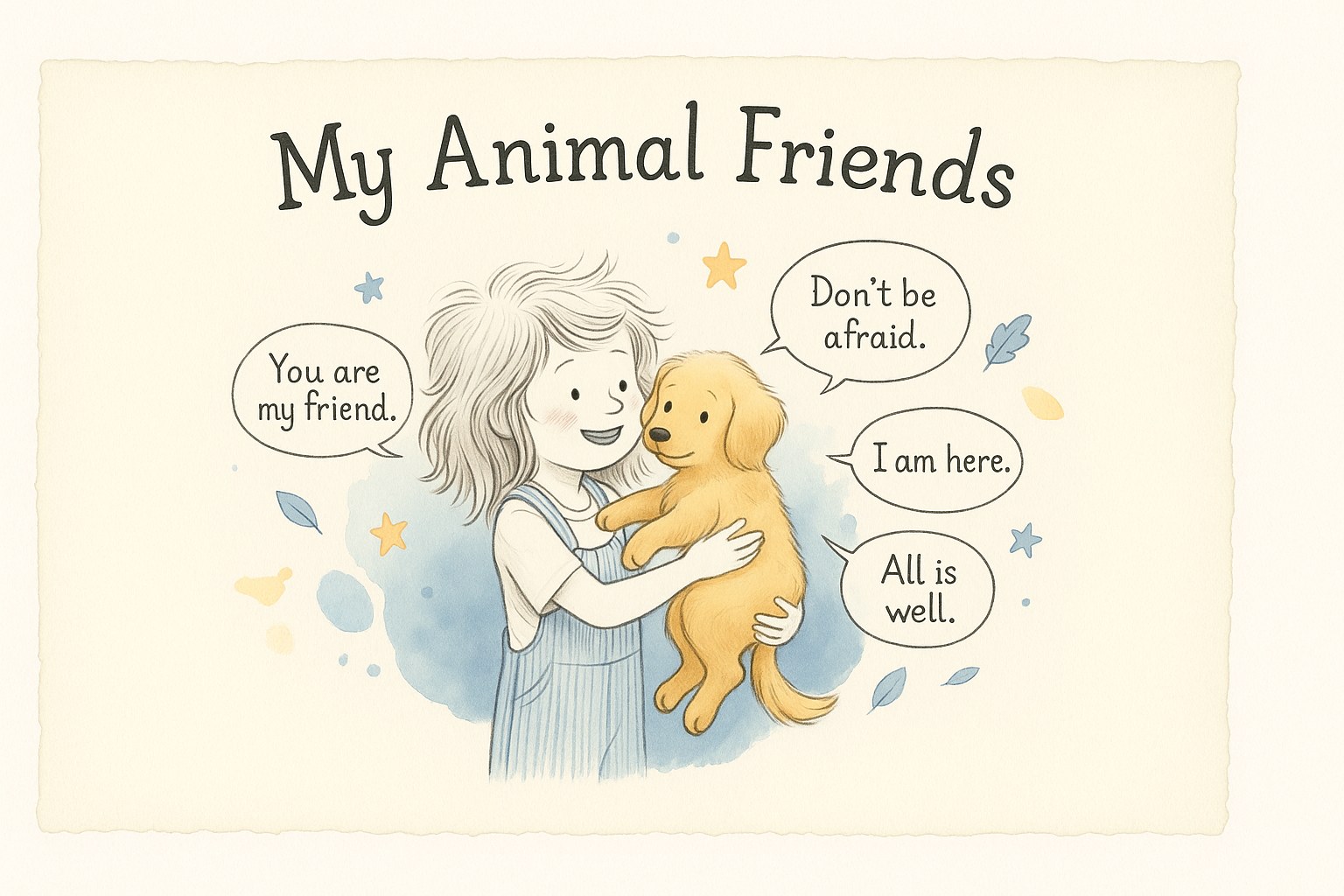
Picture a little girl who can talk to animals. These books use large type, which reassures children of six. The stories stay short and soothing for young readers.
The book is all about kindness. You step into a calm, positive world.

A perfect series for those first independent steps, where empathy towards animals guides every page of the story.
The vocabulary is very accessible. The sentences follow a clear, linear structure. That helps boost a child’s confidence with no roadblocks.
In this kind of story, the heroine uses her secret gift to rescue a small animal in distress. It’s a touching adventure, ideal among the best books for children aged 6 to 8. A real moment of gentleness.
🐕 The funny anti-hero who makes everyone laugh
For those who prefer slightly cheekier humour, a certain unlucky little dog is all the rage in the playground.
Meet a scruffy stray dog and his faithful flat-as-a-pancake cat friend. This unlikely duo lives in a bin but keeps an overflowing optimism. Their total innocence about the outside world is truly hilarious. You quickly grow fond of these heroes who see life through rose-tinted glasses.
This kind of series is a smash hit among the best books for children aged 6 to 8. The many puns greatly amuse young readers. Children love the contrast between their miserable life and their joy. It’s a clash that works every time.
The story is simple but effective. The little dog desperately searches for an owner or for love. Sadly, his legendary clumsiness always causes a memorable disaster. You laugh at his misadventures while hoping for a happy ending.
Bright, lively illustrations bring this dog with his old-carpet coat to life. Text and image form a perfect comic duo. It’s a visual treat that rounds out the story beautifully.
👸 A royal detective at the heart of history
Let’s swap the bins for the gilt of a palace, where mysteries are never in short supply for young readers.
Meet a brave young princess at a royal court. She leads thrilling investigations through the palace gardens. It’s a winning blend of history and detective intrigue. The suspense is always nicely judged.
The historical setting is superbly recreated. The author slips in real details about daily life at court. You learn a host of things without realising it. It’s truly enriching for 7-to-8-year-olds.
In her adventures, the heroine has to find a precious object that’s vanished just before an important ball. She shows relentless logic. Her determination and daring are impressive page after page.
A royal plunge that proves history can be as thrilling as a modern adventure novel for children.
🐰 Secret-agent rabbits: a royal adventure
Let’s stay in a royal mood, but this time with some very special agents.
The hero is a very shy little rabbit. Yet he becomes a true hero. He joins a secret organisation beneath a famous palace. This fast-paced adventure offers plenty of twists. The illustrations are truly gorgeous.
The story gently explores rising above yourself. The little rabbit proves that even the smallest can achieve great things. It’s a strong, kind message for children. You can’t help loving that determination.
The young rabbit has to foil a plot against the Queen. Helped by his new friends, he travels all over the city. Their mission is to save the crown. It’s a thrilling and very funny epic.
The book itself is of remarkable quality. The cover and the carefully chosen paper are a real pleasure to hold. It instantly makes you want to collect the whole series. It’s a gem for the bookshelf.
🦞 The runaway lobster: an ode to freedom
After the rabbits, let’s head out to sea for a modern fable that questions our relationship with the world. This original story stars a brave crustacean. He refuses to end up in a boiling pot. His journey to get back to the salt water is touching. The tone stays light and playful.
| Title | Main theme | Ideal age | Highlight |
|---|---|---|---|
| Tender animal stories | Nature | From age 6 | Reading aloud together |
| The unlucky little dog | Humour | From age 7 | Endearing hero |
| The royal detective | History | From age 7 | Detective mystery |
| The lobster | Freedom | From age 8 | Based on a true story |
The lobster escapes the restaurant and crosses the city with determination. He meets unexpected allies during his escape. This solidarity helps him reach the sea again.
The beauty of the writing is remarkable. The words are chosen with care to awaken little ones’ senses. It’s perfect for reading aloud at night.
🔮 Mysteries and plots in the Renaissance
The mystery continues, but this time we dive into the Renaissance with a most intriguing duo.
A young helper assists a famous scholar in solving puzzles. The historical backdrop is rich and well researched. It’s ideal for readers who love to think. The plot is solid.
The boy learns a great deal alongside the scholar. This passing-on of knowledge between master and pupil is a very positive side of the book. You feel a real closeness growing.
A plot threatens the court. The young helper must use his wits to unmask the culprits before it’s too late. The adrenaline rises page after page.
This read is perfect among the best books for children aged 6 to 8. The reading level is a little higher. It’s an excellent bridge towards the classic junior novel.
🛡️ Retold fairy tales: talking about bullying
Children’s literature also knows how to tackle serious subjects with a touch of irony and a lot of finesse.
This kind of book retells fairy tales with mischief. It tackles the theme of teasing at school very directly. The tone is quirky but the message stays crystal clear. It’s a precious tool for talking calmly with children.
Explaining the importance of empathy becomes easier thanks to a story like this. The heroine has to face the heavy gaze of the other princesses. You quickly warm to her strong, brave character. She refuses to be crushed by rejection.
Here’s the idea: a princess who’s the target of rumours decides to stop putting up with it. She finds original ways to fit in despite the criticism. This kind of novel is ideal among the best books for children aged 6 to 8.
- Self-confidence
- Respect for differences
- Social courage
- True friendship
👩 Extraordinary women: inspiring role models
Let’s step out of pure fiction to discover real lives that have shaped history.
This collection presents portraits of famous women. Every page is a new discovery. It’s perfect for reading in bits. You can read one life story each evening.
The book highlights a lovely range of profiles. You’ll find scientists, athletes and artists. That really opens up the field of what’s possible for children.
From Marie Curie to Rosa Parks, the book traces lives of struggle and success. Each portrait is carefully illustrated by talented artists. It’s a superb pick among the best books for children aged 6 to 8.
The educational value is undeniable. The story makes you want to know more about each figure. It’s an excellent starting point for future little research projects.
🦢 The Wonderful Adventures of Nils: a coming-of-age classic
Sometimes old stories haven’t aged a day and still take children on a journey.
Nils is a mischievous boy turned into an elf. He flies off on the back of a goose. It’s a great adventure across Sweden. The text here is adapted for young readers.
This read is a real gem among the best books for children aged 6 to 8. You discover a hero who genuinely changes.
A journey that turns a spoilt child into a responsible person, through encounters with the wild.
Nils flies over magnificent landscapes and learns about solidarity. He has to protect the wild geese from the fox. It’s gripping and very well written.
The book opens children’s eyes to the beauty of the wild. Its ecological side is striking. It’s a classic that stays very current in its themes.
🕊️ A wartime story told at a child’s level
To round off this selection, let’s look at a momentous period through the eyes of those who lived it up close.
This comic book follows three children during the war. They decide to resist in their own way. It’s gripping and very well explained. The teaching notes at the end are useful.
The story stands out for its realism. The hardships aren’t hidden, but hope is kept alive. It’s a powerful read that often raises a lot of questions.
In an occupied village, three young friends carry out secret missions. They hand out leaflets and help the allies. It’s a complete immersion in their daily life.
I strongly recommend reading it together. Parents can help place the events in context. It’s an excellent way to pass on historical memory to younger children.
📖 My secrets for a close, happy reading ritual
Once you’ve found the right books, all that’s left is to create the perfect mood so the magic happens every day.
🤝 Supporting reluctant readers with kindness
Never force it. If your child gets stuck, switch to a funnier or shorter book. Pleasure must stay the main engine.
Praise every word read correctly. Confidence is built in small daily touches. An encouraged child will want to start again the next day without fear.
Turn effort into a game. Use different voices for the characters. Laugh at your own reading slip-ups. It takes the drama out of learning and makes the moment joyful for everyone.
🗣️ Practising shared reading in two voices
Share out the roles. You read the narrator and your child reads the dialogue. This method makes reading lively and interactive. It’s rewarding teamwork.
Take breaks to chat. Ask how the character feels at that exact moment in the story.
Reading becomes a space for exchange. You share your feelings and your doubts. This emotional bond strengthens the urge to read alone later. It’s a precious investment.
Here are a few tips to liven up your evenings:
- Vary your tone to bring the story to life.
- Let your child choose their favourite character.
- Stop on a cliffhanger to build anticipation.
🏛️ Exploring the treasures of your local library
The library is a goldmine. You can try anything without spending a penny. It’s the ideal place to discover new genres or unknown authors.
Make the most of the free events. Storytelling hours captivate children. They learn to listen and to respect other readers’ silence. It’s formative.
Teach them to search for themselves. Show how the books are sorted by age or theme. Independence also begins with choice.
Borrow varied formats. Audio CDs or magazines nicely round out the novels. Variety keeps boredom away.
Finding the best books for 6-to-8-year-olds simply means listening to your child’s passions and putting shared pleasure first. Between laughter and discoveries at the library, these ritual reads build solid independence. Hand them these magic keys today to fling open the doors of the imagination.
❓ FAQ
📏 How do I know if a book suits my child’s reading level?
So you don’t put your young reader off, take a look at the layout. Short sentences, written in the present tense with a fairly large font, are perfect to start with. You can also do the first-pages test: if your child stumbles on more than three words, the book is probably still a little too hard for fully independent reading.
It’s also important to tell decoding from understanding. A child can read the words without necessarily grasping the whole meaning of the story. Don’t hesitate to choose linear stories, without too many flashbacks, so they keep hold of the plot with pleasure.
🖼️ Why are pictures still so important for 6-to-8-year-olds?
Illustrations aren’t just decoration; they act as crutches for the imagination! They help fill gaps in vocabulary and let children picture descriptions that can be tricky. It’s a great way for a child to stay hooked on the story, even if they tire a little on the text.
Pictures also act as a transition towards abstraction. They bring characters’ emotions to life and set the scene. By browsing the drawings, your child gains independence because they can follow the narrative visually before mastering every grammatical subtlety.
💭 What are children’s favourite themes at this age?
At this age, children love finding themselves in situations they relate to. Themes of school, friendship, family or animals are always a big hit. Little detective stories and adventure tales, like a royal mystery or secret-agent rabbits, also grab their attention.
Humour is a powerful engine too. Slightly wacky or quirky characters, like a hapless little dog, take the drama out of the reading effort through laughter. The key is to follow your child’s natural passions, whether they’re a fan of historical mysteries or animal fables.
💪 How do I motivate a child who doesn’t really like reading?
The secret is never to force it and to turn reading into a moment of closeness. You can try reading in two voices: you read the narrator and your child handles the dialogue. That makes the activity far livelier and less daunting for them.
Don’t hesitate to vary the formats either. A comic book, a children’s magazine or a fact book about their favourite animal are excellent ways in. Independence also comes through choice: let them pick their book at the library or the bookshop; it’s the best way for them to want to finish it.
🌙 Is it still worth reading bedtime stories at this age?
Absolutely! Reading aloud stays a special moment for language development and strengthening the emotional bond. It lets you tackle longer, richer texts than what a child can read alone. It’s a gentle transition towards sleep that reassures and soothes after a long day.
This ritual also lets you introduce new words and discuss the characters’ emotions. Even if your child is starting to read alone, this daily date stays a bubble of safety and shared pleasure that it would be a shame to give up.
