
Are your children still begging for the tablet while you’re dreaming of a bit of quiet? 😌 This article offers 10 screen-free activities to turn your living room into an adventure playground and spark their creativity far from the blue light. You’ll discover how a few simple cardboard tubes or an improvised treasure hunt can become magical tools for their growth.
- Organising the home for screen-free activities
- Recycling becomes art
- A warrior course in the living room
- The little reporters’ gazette
- Out come the board games
- The garden, an adventure playground
- Into the kitchen, mini-chefs
- The readers’ secret den
- The giant treasure hunt
- Curtain up on the puppets
- The library getaway
- Easing the return to calm
🏠 Organising the home for screen-free activities
For children to give up their tablets all by themselves, saying no isn’t enough. Their immediate surroundings need to become a constant invitation to do something hands-on.
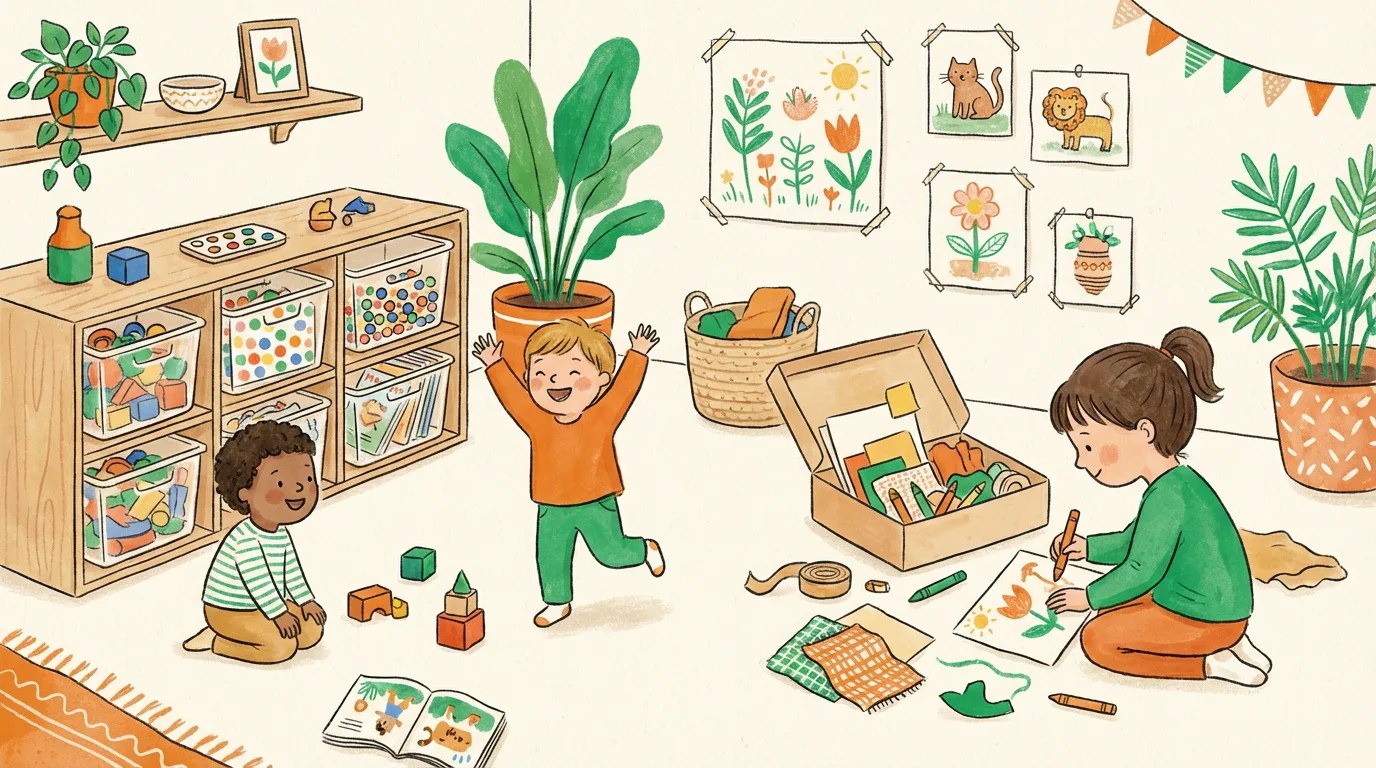
🧸 Setting up independent play corners
Putting the materials at eye level changes everything. Use low shelves so things stay within reach. Your child needs to be able to help themselves. That’s the basis of independent play.
Go for clear storage tubs. You can see what’s inside without tipping everything out. This makes choosing and tidying up easier after the activity.
Moving about is vital for development. Health experts remind us that children need to move and play more to grow up healthy. A clear space encourages these essential movements.
🎨 Preparing creative emergency kits
The “anti-boredom” box is a precious ally. It hides brand-new or forgotten objects. Only bring it out at peak moments of screen temptation to rekindle their interest.
Slip in some stickers, old magazines or beads. The element of surprise matters most here for grabbing their attention.
Anticipating tricky moments, like making dinner, stops you giving in to the easy cartoon option. Having a ready solution often saves the evening.
Here are a few themes for your 10 screen-free activities to keep children busy:
- The little detective with a magnifying glass.
- The artist with a box of watercolours.
- The builder with clothes pegs.
♻️ Recycling becomes art
If organisation is the framework, the raw material is often right there in your recycling bin, ready to be transformed.
Turning toilet roll tubes into characters is great fun. Using egg boxes to make crocodiles works too. Rubbish then becomes a precious resource. It sparks the imagination without spending a penny in a toy shop.
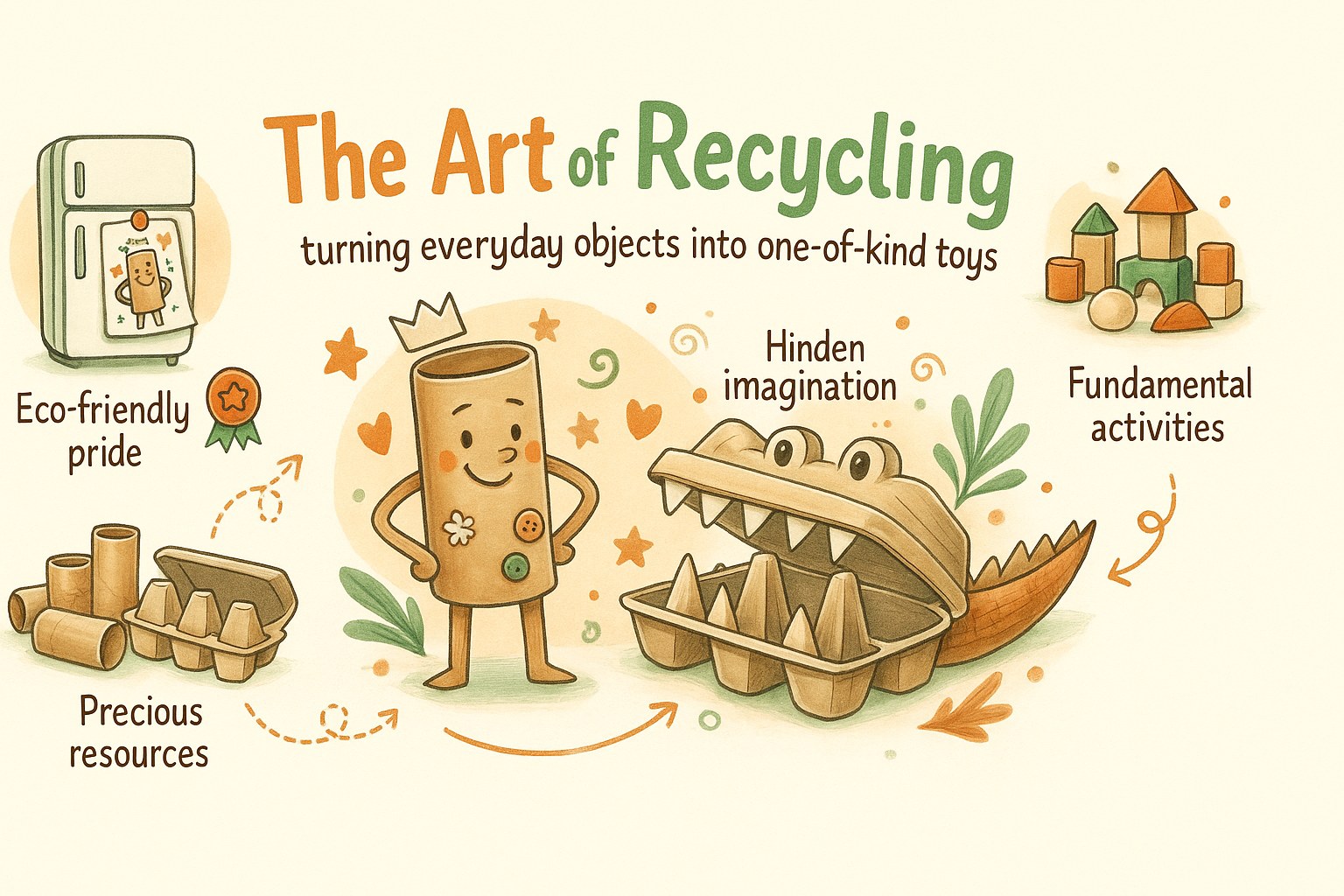
Showing off the finished object stays essential. You proudly display the masterpieces on the family fridge. Your child is happy with their eco-friendly creation. It’s rewarding for everyone, parents and little ones alike.
Creative recycling lets a child see the hidden potential in every everyday object, building up a precious kind of lateral thinking.
Education experts also encourage these fundamental activities. These hands-on moments help children grow up well, away from the usual screens.
🤸 A warrior course in the living room
Sometimes, creative energy has to make way for physical energy, especially when the walls of the house seem to be closing in.
Using the sofa cushions as islands is a foolproof trick. Above all, you mustn’t touch the floor. The rug then becomes a sea of imaginary lava. It’s simple and effective.
Adding chairs lets you crawl underneath as if through a tunnel. Using masking tape on the floor creates perfect balance lines. You time each run to add a bit of spice. Children love pushing their limits physically.
Moving about is vital for little ones’ health. Health experts even recommend 180 minutes of physical activity a day. It’s a major goal for their wellbeing.
| Obstacle | Equipment needed | Skill practised |
|---|---|---|
| The tunnel | Chairs | Flexibility and crawling |
| The ravine | Cushions | Jumping and precision |
| The beam | Tape | Balance |
| The mountain | Mattress | Climbing and strength |
Here’s one perfect idea among other 10 screen-free activities to keep children busy without turning the house into a permanent building site.
📰 The little reporters’ gazette
To channel all that energy into something calmer and more collaborative, why not document life at home?
Starting a weekly family newspaper is great fun for children. They can interview their parents or grandparents about their memories. Drawing the weather of the day rounds off this writing project nicely.
Then you add printed photos or cut-out collages. Every family member has their own dedicated column. This strengthens bonds while creating concrete, lasting memories.
Handing out the finished paper gives the little writers enormous pride. You can even post it to faraway cousins. It’s a brilliant alternative to the usual social media.
Here are a few ideas to mix things up and find 10 screen-free activities to keep children busy productively:
- The chef’s recipe
- Drawing of the week
- Interview with Dad
- Joke of the day
🎲 Out come the board games
If writing calls for concentration, board games bring a fun, strategic side that’s essential for social development.
Rediscovering classics like Ludo or Uno is a real pleasure. Board games teach children to follow clear rules. You also learn to handle the frustration of losing.
Choosing cooperative games for younger ones changes everything. You all win or lose together against the game. This avoids squabbles between brothers and sisters. It’s a great school of teamwork. You laugh far more this way.
These moments of parent-child interaction are essential. Researchers point out that the context of the exchange matters more than the time simply spent.
Children’s cognitive development and interactions are linked to the kinds of shared activities they take part in.
🌳 The garden, an adventure playground
Play doesn’t stop at the living room walls; the outdoors puts on a non-stop show for anyone who knows how to look.
Watching insects through a magnifying glass is a fascinating activity. Hunting for earthworms or ladybirds is great fun for little ones. Nature then becomes the greatest laboratory of all.
Gardening together lets you plant very simple seeds. Radishes or nasturtiums grow fairly quickly, too. This is how you learn patience and the cycle of plant life.
Collecting natural treasures like pebbles or leaves is a real pleasure. You can then sort them by colour or shape. It’s a gentle introduction to biology.
Direct contact with the earth and the natural elements is the best antidote to the digital sedentary habits of the new generations.
Looking for 10 screen-free activities to keep children busy often leads you to rediscover these simple outdoor pleasures.
👨🍳 Into the kitchen, mini-chefs
After exploring the garden, why not turn nature’s produce into sweet treats?
Making shortbread is a complete sensory experience. You handle the dough with pleasure and breathe in the lovely smells. You end up tasting the result with pride. Children really love getting stuck in.
Using cookie cutters lets you vary the shapes. It’s also a very sneaky maths lesson. You weigh the flour, then count the eggs. You learn to be precise while having fun. It’s rewarding to bite into your own creation.
Cooking really encourages everyday independence. Your child feels able to feed the whole family. It’s a powerful driver for their self-confidence.
Here are a few tasty ideas for 10 screen-free activities to keep children busy:
- Cinnamon shortbread
- Banana muffins
- Fruit skewers
- Homemade yoghurt
📚 The readers’ secret den
Once their tummies are full, a quiet moment is just the thing to let their minds travel far from screens.
Build a den with sheets and pegs. Add fairy lights for atmosphere. It’s a perfect cocoon for reading stories. The imagination unfolds freely there.
Read aloud to the youngest ones. Older children can read on their own beside you. It’s a quiet, precious moment of sharing.
Talk about how reading helps with sleep. Unlike blue light, a paper book soothes the brain. It’s the ideal preparation for a restful night.
It’s well worth remembering the importance of reading and singing as part of your 10 screen-free activities to keep children busy.
💎 The giant treasure hunt
To wake everyone up after a nap, nothing beats an epic quest through every room of the house.
The idea is to hide written or drawn clues everywhere. Each step naturally leads to the next. The final treasure can be a simple snack or a little sticker, because the excitement is always there.
You just adapt the difficulty to suit the age. For little ones, you use photos of the hiding places. For older ones, you make up riddles or rebus puzzles. This works their logic and keeps children busy for a good while.
You can even give the hunt a theme based on their tastes. Pirates, fairies or space explorers, anything goes. Dressing up then adds an extra layer of magic.
This activity, one of the best ideas among 10 screen-free activities to keep children busy, builds togetherness. They have to listen to each other and help out to succeed as a team.
🎭 Curtain up on the puppets
Role play is another wonderful way to escape, by becoming the director of your own stories.
Using old socks lets you create unique characters. A simple upturned box then turns into a makeshift theatre. You make up funny dialogue and really wacky situations.
Puppets are even used in awareness campaigns to help children think about screen habits in a playful way. It’s a perfect option for keeping little ones busy.
Theatre also makes it easier to express feelings. A child projects their fears or joys onto their puppet. It’s a very powerful teaching and even therapeutic tool.
Live performance, even by amateurs, creates an emotional connection that a screen could never match in a child’s heart.
By varying the stories, you boost language while having fun. It’s one of the best ideas among the 10 screen-free activities to keep children busy at home. In short, let imagination take over!
📖 The library getaway
Leaving the house is sometimes the best way to refresh your stock of ideas and fun resources.
The library is a magical, free place. You’ll find thousands of stories to borrow. It’s also a quiet space that sets a different pace.
Let your child choose their own books. Even if they always go back to the same one, it’s their choice. You also discover comics, magazines or non-fiction. It’s an incredible window onto the world. You take the time to browse on the spot.
Join the story times if they’re on offer. It’s a chance to meet other children. You socialise around culture.
Remember that reading is a fundamental activity. It builds vocabulary and critical thinking from a very early age.
In this quest for 10 screen-free activities to keep children busy, a detour past the bookshelves is always a safe bet. In short, it’s a breath of fresh air that does everyone good.
🧘 Easing the return to calm
Despite all these ideas, there will always be moments when a screen is demanded, and that’s when your strategy needs to be at its sharpest.
📵 Wrapping up screen time well
Giving a warning five minutes before the end is a good habit. This way you avoid the abrupt cut-off and the meltdowns. Your child can mentally prepare to stop what they’re doing.
Using a visual timer helps make time feel real. When it rings, it’s over, no arguments. You move straight on to a fun activity. A quick little game or a hand in the kitchen. The transition needs to be smooth and positive.
There are simple ground rules: no screens before school or in the evening. Setting a few clear screen-use rules helps shape daily life better.
💡 Turning boredom into a creative engine
Don’t be afraid of “I’m bored”. It’s in that emptiness that imagination is born. A child always ends up inventing their own game. It’s a vital skill.
Valuing free play with no adult input is beneficial. You watch from a distance without directing. The child develops their own independence of thought. They become the author of their own time.
Researchers remind us that excessive screen use harms essential activities. Leaving room for emptiness is therefore beneficial. It’s a gift for the brain. A child learns to self-regulate. It’s the key to healthy development.
Here’s why boredom is useful:
- Greater creativity
- Better self-reflection
- Problem-solving
- Stronger independence
Looking for 10 screen-free activities to keep children busy then becomes child’s play once you leave room for the unexpected.
Between cooking sessions, sporty courses and reading under a den, these screen-free activities turn everyday life into an adventure. Set up your play corners soon to spark your little chefs’ imaginations. Give them this precious gift right now: the joy of creating and growing up far from tablets.
❓ FAQ
📺 What are the official recommendations for young children’s screen time?
Health experts suggest avoiding screens entirely before the age of 2. For children aged 2 to 4, it’s better not to go beyond one hour a day, and less is even better! The idea is to favour moments of reading and singing when they aren’t busy running around.
🏃 How long should a child move each day?
For children aged 1 to 4, the goal is to reach 180 minutes of varied physical activity across the day. For those over 5, experts recommend at least 60 minutes of moderate to vigorous activity. It’s perfect for their development and, let’s be honest, it also helps with better nights.
🍽️ Why is it advised to switch off the television during meals?
Researchers have observed that a television left on during meals can slow down language development. The background noise stops a child from properly decoding sounds and, above all, it grabs the attention that should go to family conversation. Nothing beats a little chat for learning new words!
😌 How can I help my child come off screens without a meltdown?
The key is to anticipate the end by giving a warning five minutes ahead. Using a visual timer also helps a lot, letting your child understand that time is up. You then try to move straight on to something nice, like making a snack or getting out a creative kit, so the transition stays gentle.
😴 Is it a problem if my child gets bored sometimes?
Not at all, it’s actually a wonderful thing! Boredom is the engine of imagination. It’s in these moments of “emptiness” that a child starts to invent their own games and become independent. Letting them find their own resources without a screen is a real gift for their brain.
🎲 What simple activities can replace tablets?
You can dip into classics that work every time: baking biscuits, organising a treasure hunt in the living room, or building a den with sheets. Hands-on activities with recycling, like turning cardboard tubes into characters, also hugely boost creativity without costing a penny.
