
Do you ever wonder why cats start purring the moment you stroke their soft little tummy? This tiny built-in engine is far more than a simple sign of happiness — it hides surprising secrets about communication and even physical healing. 🐱 Discover how these soothing vibrations strengthen their bones, and why that gentle rumble is a real gift for your own everyday calm.
- Why your cat purrs when you come home
- The secret behind this little engine
- 3 key stages of mother-kitten talk
- Vibrations that heal little aches
- Purr therapy to stay calm at home
- When silence or noise hide something else
🐱 Why your cat purrs when you come home
After a long day, that little engine sound greeting you isn’t just a random noise — it’s a real language.
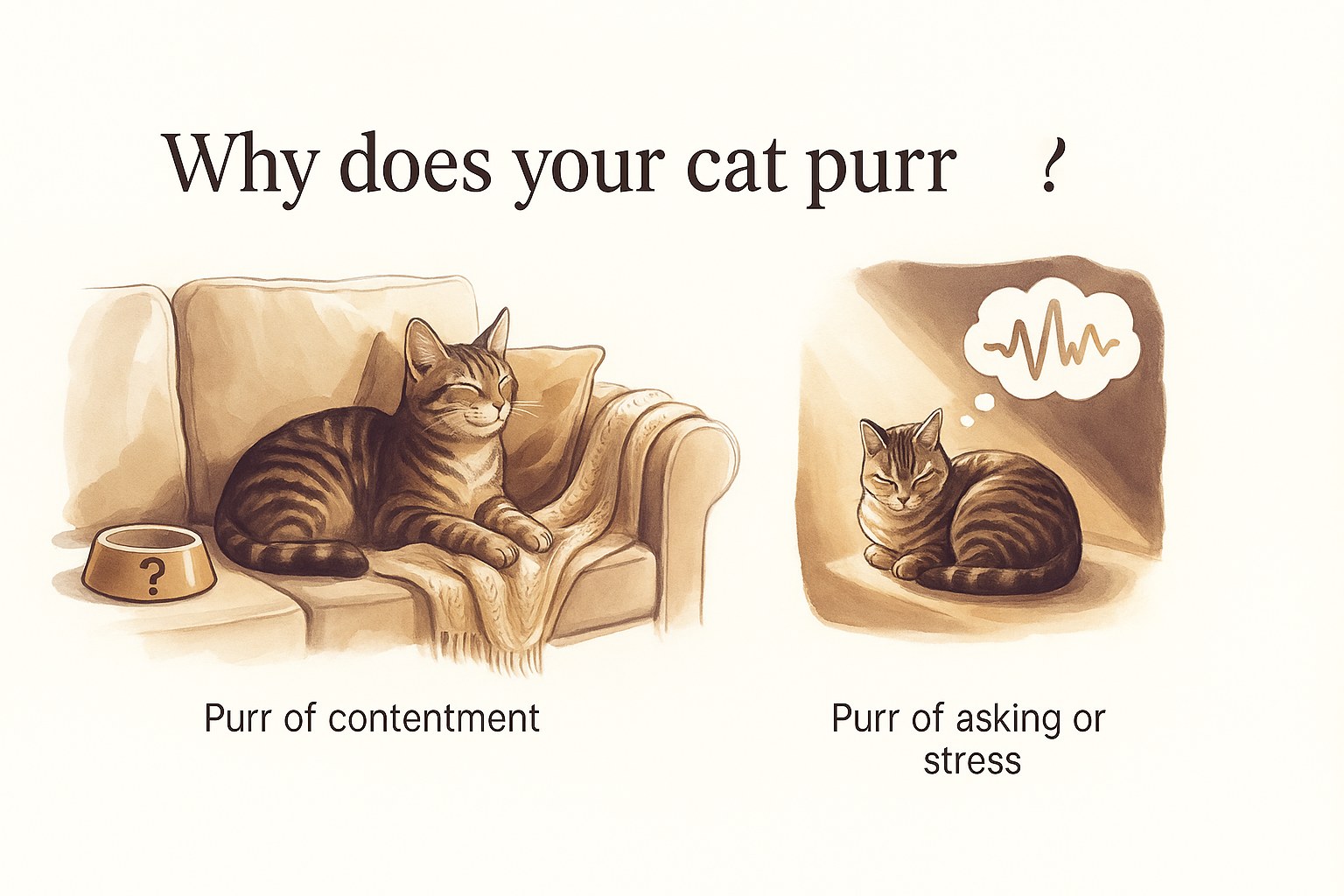
😊 The classic sign of happiness and wellbeing
A contentment purr means a cat is completely relaxed. It simply feels at ease in its home. Often, this gentle motor comes with a rhythmic kneading of the paws.
Watch its little body signals closely. Its ears stay upright and alert. Its face looks completely peaceful. You can really see it when it settles in for a cuddle on the sofa.
That’s when you soak up a feeling of pure calm. It’s a precious moment to share. The bond between human and animal is at its strongest.
🍽️ A very precise request for attention or food
There’s also a request purr. This sound becomes higher to grab your attention. It oddly resembles the cries of a human baby.
Watch a cat in front of its bowl — it says it all. The cat uses this special frequency to ask for things. It’s hoping for its dinner or a treat.
This communication trick works brilliantly. We’re biologically wired to respond to it. That urgent sound makes us react straight away.
- Higher frequency than the calm purr
- A hidden “cry” tucked inside the engine
- Keeps going until it gets the food
- Eyes fixed on the owner
⚖️ The difference between a happy purr and a distress purr
Purring doesn’t always mean happiness. It’s sometimes more complicated than that. Cats also purr when they’re hurt or in pain.
In that case, it’s a clever self-soothing tool. Under stress, the vibration helps the animal. It directly calms its own nervous system.
So you need to look at the whole picture. A hunched-up cat that purrs is showing discomfort. It’s simply trying to manage its own physical pain.
Cats don’t always purr out of happiness — they can also do it when they’re hurt or stressed, to soothe themselves.
⚙️ The secret behind this little engine
To understand how such a small creature makes such a deep hum, you have to look closely at its unique anatomy.
🗣️ The role of the larynx muscles and vocal cords
The larynx muscles work in a surprising way. They make a quick wobble, opening and closing. This movement controls the airflow as the cat breathes.
Scientists have found little pads of soft tissue on the vocal cords. This anatomical detail is key. It naturally lowers the frequency of the sounds the animal makes.
The whole thing seems to be mostly automatic. The larynx vibrates without the brain having to think about it all the time.
🦴 How the hyoid bone helps it resonate
The hyoid bone plays a major role in our little felines. Unlike in other species, this part is completely stiff and bony. That stiffness is what keeps the vibration going — the sound we love to hear from our companions.
The contrast with the lion is striking. In this big cat, the bone is replaced by a stretchy ligament. That flexibility lets it roar powerfully, but it makes a continuous purr technically impossible.
It’s a major split in evolution. Nature made a clear choice. You can’t have an impressive roar and a soothing purr at the same time.
💨 Non-stop breathing, in and out
The cat has a unique ability to purr through its entire breathing cycle. Unlike a normal meow, the sound never stops. The hum carries on even when the little feline breathes in.
The base frequency of this sound stays very low. It usually sits between 20 and 30 Hz. This very steady rhythm is the true sound signature of most small cats.
So why do cats purr? This often happens with the mouth shut. It’s a deep, internal sound. The vibrations then spread gently through the animal’s whole body.
👩👧 3 key stages of mother-kitten talk
Long before hunting or playing, a kitten already uses this inner engine to build a vital bond with its mother.
👶 The first way blind kittens communicate
Kittens are born blind and deaf. They head towards the source of warmth. The powerful vibrations of their mother’s body guide them with great precision.
The little ones reply with vibrations straight away. From just two days old, they can purr. It simply tells mum that everything’s fine.
This touch-based exchange goes on all the time in the nest. It’s a constant, invisible conversation. It keeps the first fragile steps of their lives safe.
🛡️ A safety signal to guide the litter
The purr acts like a beacon of reassurance. The mother often uses it. She calms her kittens during feeding or rest.
These vibrations show the kittens where the food is. They also mark the safe zone. It’s an essential sensory beacon in the dark of the cosy basket.
This feeling of safety is so important. A silent nest is often a bad sign. It can point to stress or a looming danger.
📈 How the sound changes from birth to adulthood
The tone changes as the kitten grows. The thin, squeaky purr of a kitten develops. It becomes deeper and steadier as the larynx finally matures.
A survival cry turns into a social exchange. What was once vital for feeding transforms. It now becomes a rich, complex communication tool.
This behaviour stays with the adult cat. The cat keeps this kitten-like habit. It uses it to interact with its favourite humans every day.
💗 Vibrations that heal little aches
Beyond the social side, these sound waves hide an almost medical healing power for the cat itself.
🎵 How frequencies in Hertz affect the bones
The purr gives off a precise range of frequencies, between 25 and 50 Hertz. These special vibrations are known to boost the regrowth of living tissue. It’s a fascinating inner mechanism.
These mechanical waves strengthen the skeleton and help broken bones knit back together. They explain the exceptional bone density of cats. It’s a true built-in therapy for their bodies.
This system also makes up for long periods of rest. The cat literally heals itself while napping. Why do cats purr? To stay strong without any effort.
💪 A precious help for repairing muscles
The vibrations actively help repair damaged tissue. They improve blood flow nearby. This helps muscles and tendons heal well after effort.
How quickly cats recover from injury is often surprising. A cat that purrs often heals faster than a silent one. Its body uses that hum as a healing engine.
These low frequencies might also strengthen natural defences. They act on the whole immune system. It’s a quiet shield against everyday infections.
💊 Purring as a natural painkiller
Mother cats purr during birth. It helps them cope with the intense pain of the moment. They manage to stay calm throughout the whole process.
The vibration releases endorphins into the nervous system. These hormones act like a powerful natural painkiller. The soothing effect is instant for an animal in distress or pain.
| Frequency (Hz) | Biological effect | Use in cats |
|---|---|---|
| 25-50 Hz | Bone strengthening | Healing fractures |
| 50-100 Hz | Tissue repair | Muscle recovery |
| 100-150 Hz | Wound healing | Caring for skin and tendons |
| 16-40 Hz | Muscle stimulation | Keeping muscle tone |
🧘 Purr therapy to stay calm at home
What heals the cat also seems to have unexpected benefits for our own mental and physical health.
🧘 A natural drop in stress and tension
Listening to a cat purr lowers cortisol in humans. This soothing sound instantly reduces the stress we feel. It’s a simple, effective everyday remedy.
The sound waves also steady your blood pressure. They bring on a deep relaxation of the body. Your heart rate then settles down all by itself.
Purr therapy also helps fight low moods. It offers a precious emotional balance. It’s a complementary approach that’s even studied by veterinary researchers.
😴 A positive effect on sleep quality
Having a cat on your bed makes falling asleep easier. Its warm presence creates a feeling of safety. You drift off to a peaceful rest more quickly.
This steady purr works like white noise. It masks the little annoying sounds of the house. Your sleep then becomes far deeper and more restful.
It’s a huge ally against long-term insomnia. Many owners can’t sleep without it anymore.
💕 Sharing happy hormones between animal and human
The sound-and-touch interaction releases endorphins. This positive chemical reaction touches both the cat and the human. It’s a true shared moment of wellbeing.
This unique sound strengthens the emotional bond. It creates a deep closeness at home. Why do cats purr? It’s often to show this happiness.
The connection between the two species becomes complete. This mutual gift makes life better for the whole family. It’s a welcome bubble of softness.
Purr therapy uses a cat’s presence to support stress and low-mood treatments, thanks to its soothing vibrations.
🤐 When silence or noise hide something else
Despite all these explanations, some behaviours can still puzzle or worry us.
🩺 Why does it purr at the vet’s?
On the examination table, that loud engine often means sheer fear. It’s a natural defence reaction to the unknown. The cat is simply trying to manage its stress.
The little feline switches on its vibrations to try to calm down. It’s attempting to slow its own heart rate. It’s a real internal relaxation method for it.
Stay alert during your visits. Don’t mistake this stress sound for pleasure. Here, your companion is showing real discomfort, not satisfaction.
🤫 Why some cats stay silent
There’s no need to worry about naturally quiet cats. Some individuals almost never purr. It doesn’t mean they’re unhappy or in pain.
Every cat personality shows itself differently. Some prefer kneading or little head bumps. These gestures show an affection just as deep and sincere.
Genetics also play a big role. Studies show that certain genes affect how loud the sounds are. Why do cats purr? The answer is sometimes hidden in their DNA.
⚠️ Spotting the warning signs of illness
Pay attention if the tone of the sound suddenly changes. Unusual hiding should also alert you. A hunched, withdrawn posture is often a major alarm signal for its health.
Always read the body language as a whole. The position of the ears and the tension in the tail are essential. These clues often confirm a hidden state of suffering.
If you stay unsure, get advice quickly. Only a vet can rule out a serious underlying illness.
- Purring outside of rest times
- Loss of appetite at the same time
- A glassy or absent stare
- Refusing to be touched despite the sound
Purring is a fascinating tool for wellbeing, communication and bone healing. Listen closely to your little engine to read its real needs and to soothe your own stress. Enjoy this natural purr therapy right now to turn your home into a true haven of peace. A cat that vibrates is a heart that heals. 💕
🎬 Watch the video
❓ FAQ
🏠 Why does my cat start purring as soon as I get home?
It’s often its own way of saying “hello” and showing how glad it is to see you. That little engine expresses its attachment and its sense of safety beside you after you’ve been away.
On top of this soothing sound, it might rub against your legs or blink slowly. It’s a real sign of shared happiness and a way to strengthen your special bond.
😊 Does a cat only purr when it’s happy?
Well, no — it’s not always a sign of pure pleasure. Cats also use purring to soothe themselves when stressed, in serious pain, or even during a trip to the vet.
So you need to watch the rest of its body. If its ears are flattened or it seems hunched up despite the sound, it’s probably trying to calm an anxiety or a physical pain.
🎵 How do cats manage to make this non-stop purr?
It’s a fascinating little anatomy secret involving the larynx muscles and pads on their vocal cords. They make the air vibrate very fast, which creates that very special low frequency.
Unlike us, cats have the incredible ability to purr both when breathing in and breathing out. The sound never stops, forming a constant loop of vibration.
💆 What are the real benefits of purr therapy for us humans?
Listening to that gentle hum really does help chase away the worries of the day. The vibrations act like a natural de-stressor that lowers our blood pressure and heart rate.
As well as reducing cortisol, the stress hormone, purring helps release happy hormones. It’s a precious help for sleeping better and feeling more cheerful.
🐈 Why do kittens start purring so early after birth?
Since they’re born blind and deaf, kittens use the vibrations of their mum’s body to find their way to her. It’s their very first way of communicating, to say everything’s fine.
From just two days old, this mechanism lets them stay in constant touch with the litter. It’s a vital bond that reassures and protects them during their first weeks of life.
💊 Is it true that purring can help a cat heal faster?
It’s absolutely true — nature is well made! Frequencies between 25 and 50 Hertz boost tissue regrowth and even strengthen the cat’s bone density.
These vibrations work like a session of inner physiotherapy. They help repair muscles and tendons, which explains why our little companions often bounce back so quickly from their injuries.
