
🔢 Does your child love mazes and is learning their numbers? Here is a selection of number-shaped mazes to print: six free drawings where the outline of the number forms the path to solve. An original activity that mixes a logic game with number recognition, from 0 to 9.
These sheets download and print in a click from your home printer. They suit children from reception up to Year 3 depending on the number chosen. Your child plays, observes and exercises their concentration while revising their numbers. ✏️
- Why number-shaped mazes
- Our 6 number mazes to print
- How to solve these mazes
- The benefits of this activity
- Tips for parents on supporting
- Extending the activity
🔢 Why number-shaped mazes
The number-shaped maze is an original visual puzzle. The outline of the number draws the walls and the child has to find the way through. This staging makes discovering numbers far more playful than a classic exercise.
🎯 A very motivating graphic approach
Seeing the number itself turn into a game makes a real impression. The child remembers the shape of the number better after solving its path. This visual memorisation lastingly anchors number recognition.
The format instantly intrigues children as soon as they spot it. They want to trace the path even before understanding the rule. This natural curiosity is enough to launch the activity without any effort on your part.
👀 A game that exercises observation
The outline limits the play space and forces close observation. The child spots the dead ends and anticipates the right junctions. This visual discipline builds up naturally, maze after maze.
Solving a stylised number also calls for patience. Your child learns to take their time and to try several trails. This mental stamina will serve them in all their future learning.
🖨️ Our 6 number mazes to print
Our selection brings together six numbers from 0 to 9 in varied styles. Some have a pared-back design, others include a solution to check success. Save and open each image, then print in A4.
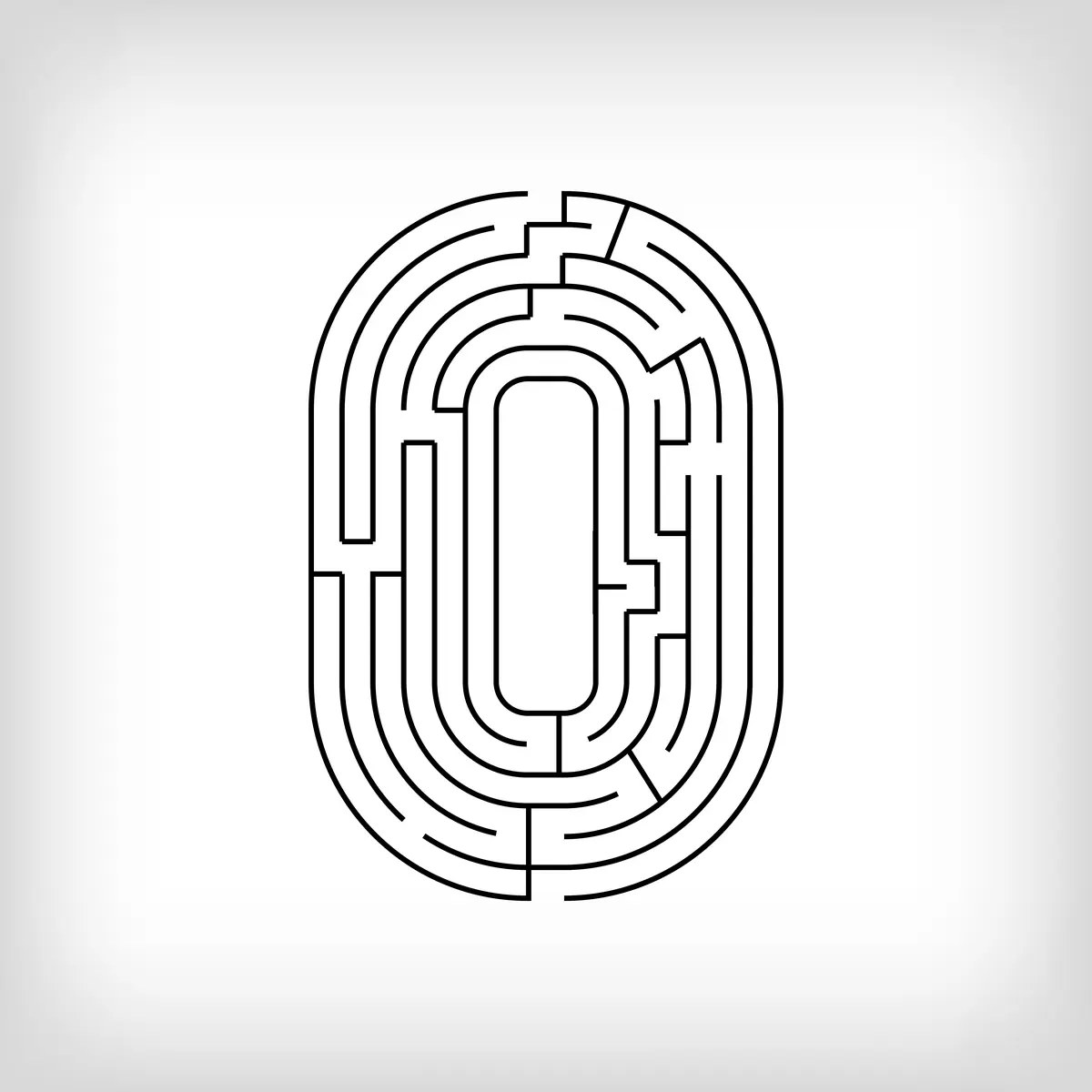
0️⃣ Oval and pared-back number 0 maze
Our first maze draws a lovely oval zero. The corridors coil in a very clean design that appeals to the youngest. The layout is ideal for starting out in reception or Year 1.
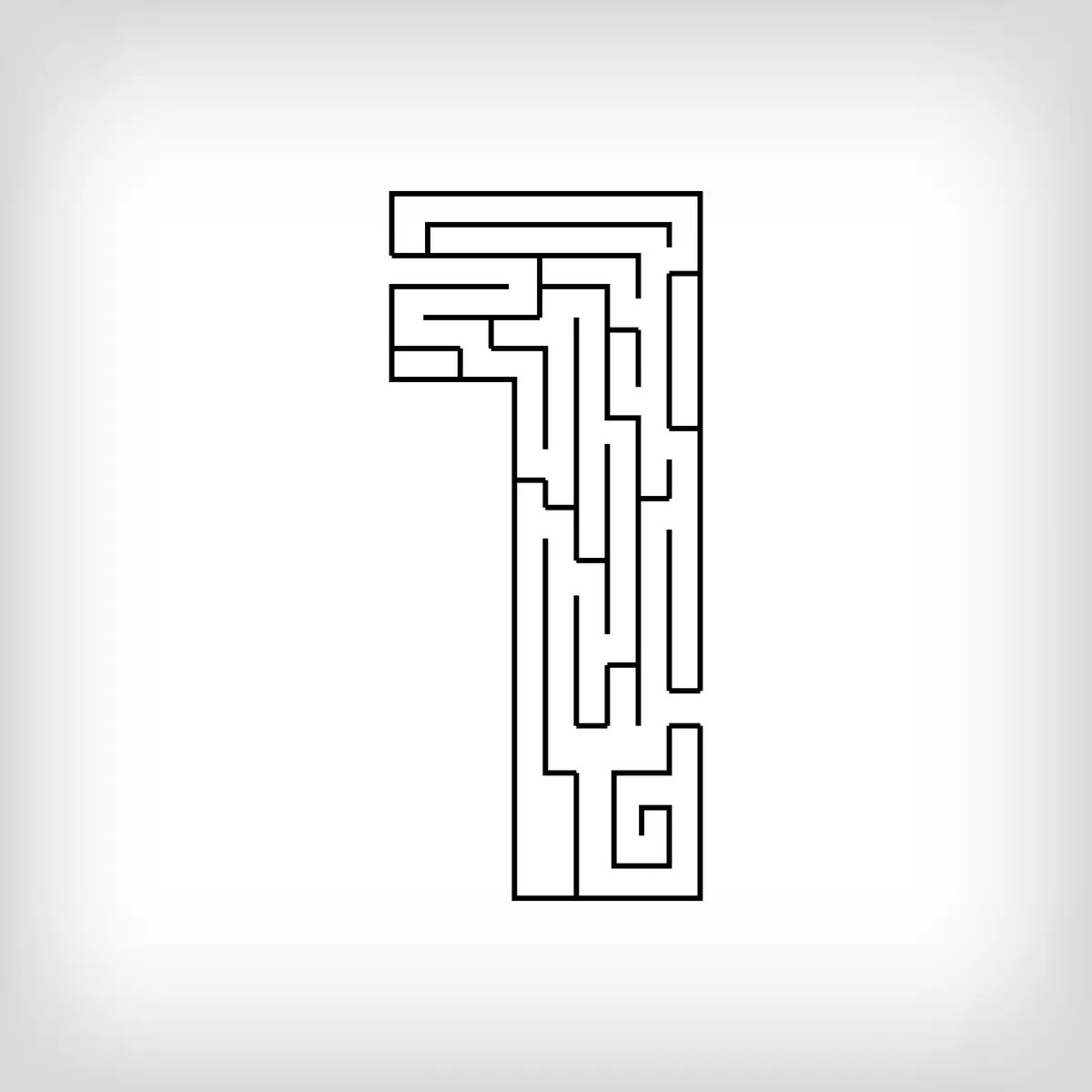
1️⃣ Vertical and easy number 1 maze
The number 1 offers a vertical path that is simple to tackle. The straight corridors reassure children who are discovering mazes. It is the perfect sheet for a very quick first success.
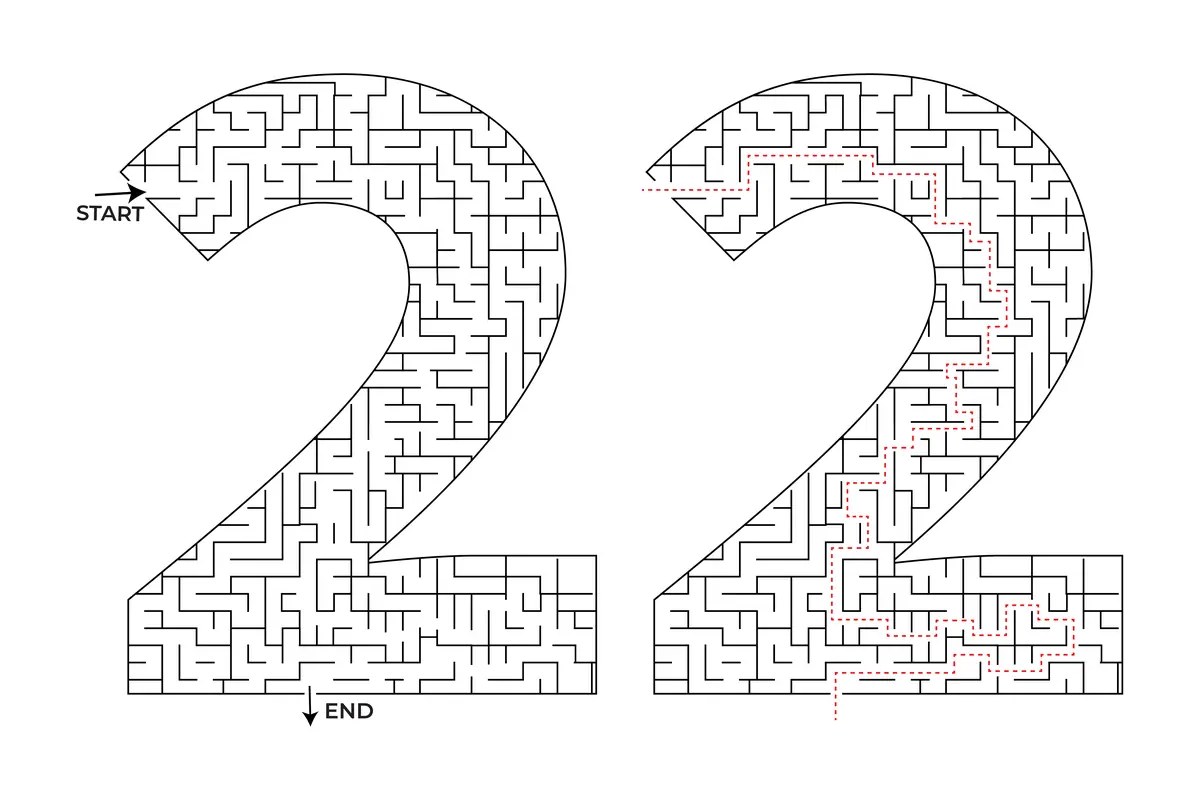
2️⃣ Number 2 maze with solution
This number-2 maze offers the path and its solution side by side. The child first looks on their own, then checks with the route traced in red. This structure helps children who like the reassurance of a solution when they get stuck.
5️⃣ Elegant number 5 maze
The stylised number 5 offers an intermediate path with its soft curves. Children in Year 1 and Year 2 find a lovely challenge here without frustration. The pared-back design makes for a crisp print even on ordinary paper.

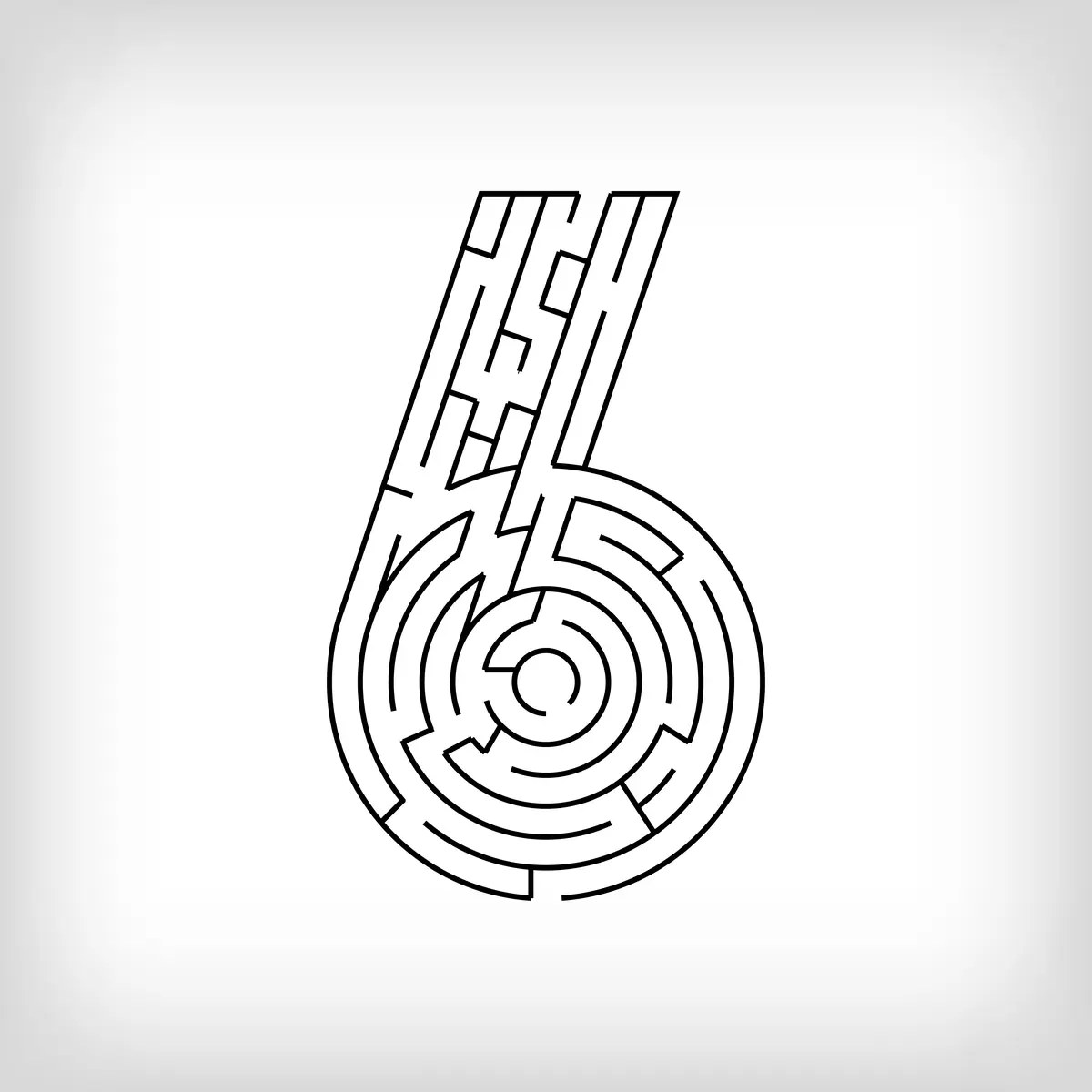
6️⃣ Artistic number 6 maze
Our 6 offers a more artistic design with its round loop and its vertical stem. The contrast between the two zones creates an interesting path to explore. Children in Year 2 and Year 3 particularly enjoy this decorative style.
9️⃣ Number 9 maze and its mirror
The 9 forms the perfect mirror of the 6 with its loop at the top. It is a chance to discuss the symmetry between certain numbers with your child. This visual comparison between 6 and 9 really reinforces their memorisation.

🗝️ How to solve these mazes
The rule is universal: find a continuous path from the entrance to the exit. When the maze offers a START point and an END point, follow them. Otherwise, the child chooses their own starting point and finishing point.
🧰 The ideal materials
A pencil remains the best choice for starting out calmly. Your child can rub out their attempts and start again without waste. Wipe-clean felt-tips on a laminated wallet even avoid using up paper.
📋 The step-by-step method
Begin by observing the whole maze before tracing. This pause for thought avoids hasty, frustrating dead ends. Anticipation often makes the difference between success and giving up early.
Sometimes starting from the exit towards the entrance works better. Some paths solve more easily backwards. This simple tip often unblocks children who are going round in circles.
✨ The benefits of this activity
🧠 Concentration and logic
Tracing a path through a maze calls for sustained attention. Your child holds their focus for several minutes in a row. This mental stamina then transfers to classic school learning.
Planning the route exercises logical reasoning. The child learns to anticipate, to compare several options, to choose the best one. This cross-cutting skill will serve them in every area of life.
🔢 Number recognition
Seeing and tracing the outline of a number lastingly anchors its shape. The child memorises the 6, the 9, the 5 by movement as much as by eye. This kinaesthetic memorisation truly complements visual school learning.
✋ Fine motor skills
Precise tracing between narrow walls exercises the hand and the wrist. This fine movement prepares for writing, drawing and colouring. A few minutes a day are enough to develop this key skill.
💡 Tips for parents on supporting
🔍 Letting them search on their own
Resist the temptation to show the way too quickly. The child needs time to search for themselves. This independence truly builds confidence and the satisfaction of succeeding.
💡 Giving hints, not the solution
If your child is really stuck, offer a discreet hint. Pointing to a promising direction or reminding them of the rule is often enough. These little nudges preserve the joy of finding it themselves.
🎉 Celebrating every success
When your child finishes their maze, really celebrate their victory. This shared joy fuels the motivation for the next ones. Display the solved maze on the fridge or a wall of their bedroom.
🎨 Extending the activity
Once the six numbers are solved, your child will want to go further. You can round it off with other games and puzzles or our themed colouring pages. Our printables and games section is brimming with ideas to keep the fun going.
Also suggest your child creates their own number-shaped mazes. They choose a number, draw its outline, then trace the corridors. This author’s stance completely changes their relationship with the game.
❓ FAQ
👶 From what age can children try these mazes?
Our number-shaped mazes are suitable from reception. The numbers 1 and 0 are accessible to the youngest, from age five. The more complex numbers like the 6 and the 9 keep children busy right up to Year 3.
🎁 Are the mazes free?
Yes, all our mazes are completely free and freely printable. You can use them at home or in class with no restriction whatsoever. They can be reprinted as many times as needed.
⏱️ How long does a maze take?
Between five and fifteen minutes depending on the number and your child’s age. The 1 solves very quickly, the 6 or the 9 call for more patience. This variable duration lets you adapt to the time available.
🖨️ How do I print in the best quality?
Open the image at full size, then use your browser’s print button. Choose A4 portrait format for an optimal result. Ordinary 80 gsm paper works perfectly; there is no need to invest in special paper.
🤷 What should I do if my child gives up?
Offer a simpler maze like the 1 or the 0. It is better to step down in difficulty than to force frustration. Self-confidence must stay intact so that the fun comes back.
📚 Are there other maths games on the site?
Yes, we offer many free games and puzzles around numbers and logic. Sudoku for kids, dot-to-dots and hidden additions are waiting for your child. Explore our collection to find other activities to print.
