
Animal crosswords are a great classic of the word game for children aged 8 to 11. 🦊 The idea is more demanding than a word search: the grid is empty, and the child has to guess each word from a short clue before writing it in the squares. It is a wonderful way to build animal vocabulary, sharpen reading-and-reasoning skills and practise spelling while having fun. On this page you will find 4 animal crossword grids to print free of charge, organised by habitat: farm, jungle, ocean and forest. Each grid contains 6 to 8 words that cross one another, and its across-and-down clues are printed under the grid. Just right to keep your child busy for 15 to 30 minutes per grid.
🖨️ My 4 animal crosswords to print
Each grid is 12 squares by 12. The black squares separate the words, and the numbers mark the start of an across or down word. The clues, short and aimed at ages 8 to 11, sit under the grid in two columns (“across” and “down”). Print the page from your browser to keep just one grid. Perfect for a homemade holiday workbook, a class activity or a car trip.
🐮 Farm animals crossword
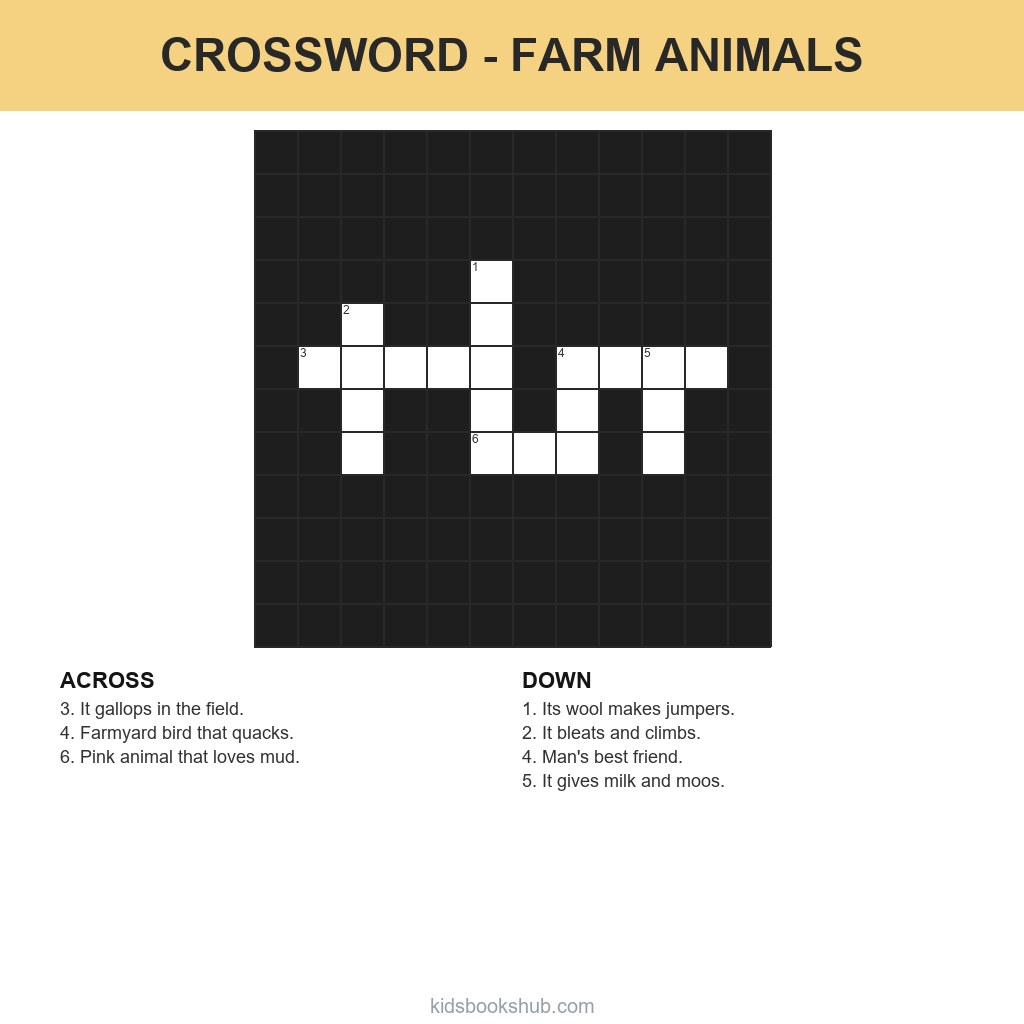
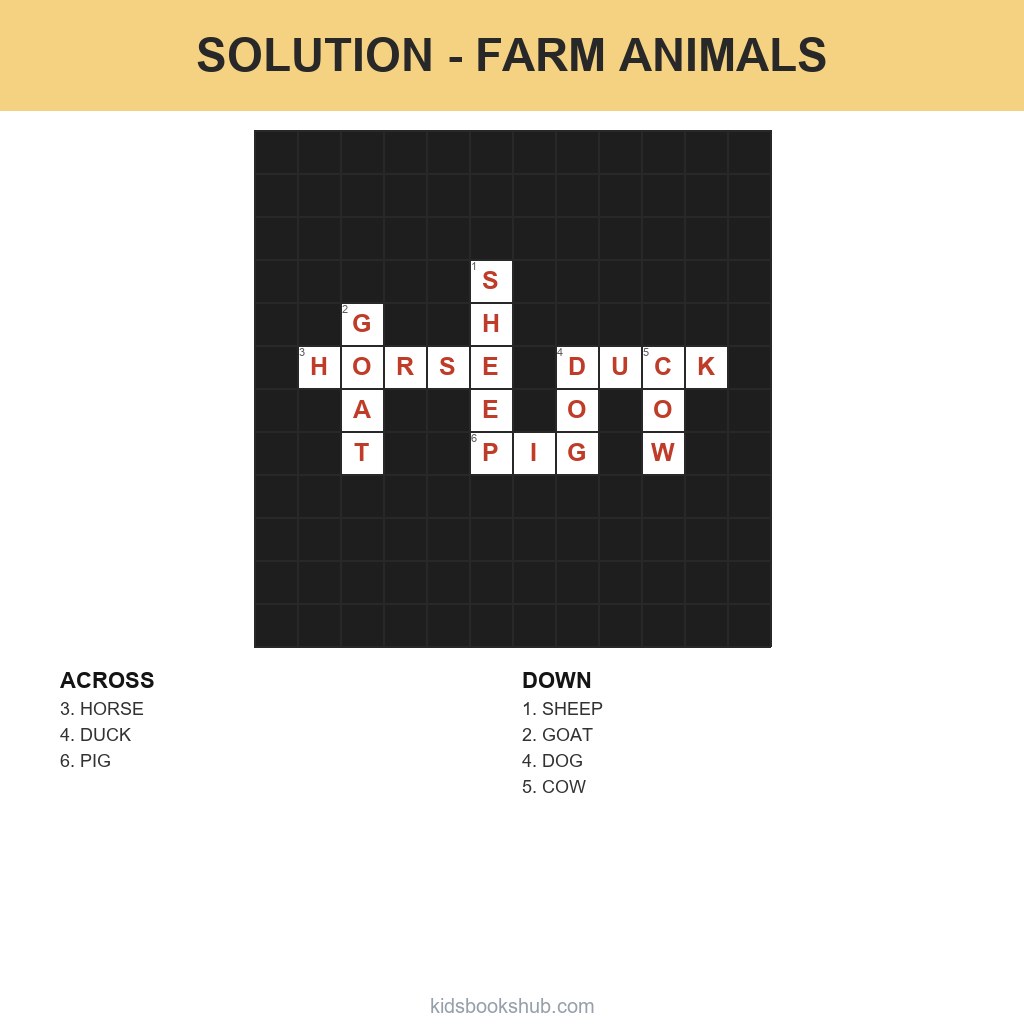
The first grid features animals your child knows well: the cow, the sheep, the pig and the horse, along with the faithful dog, the duck that quacks and the goat that climbs. The vocabulary is familiar, which makes this a perfect grid for an easy start.
🐯 Jungle animals crossword
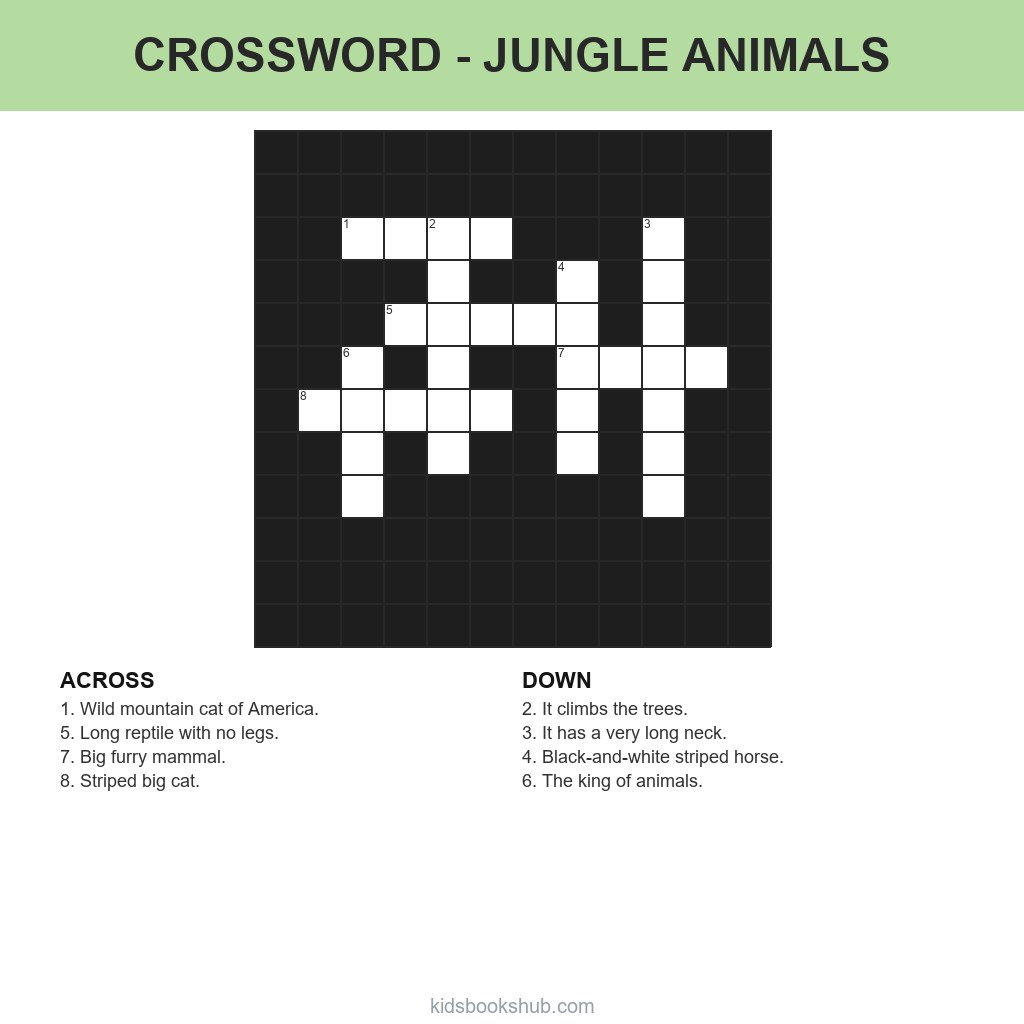
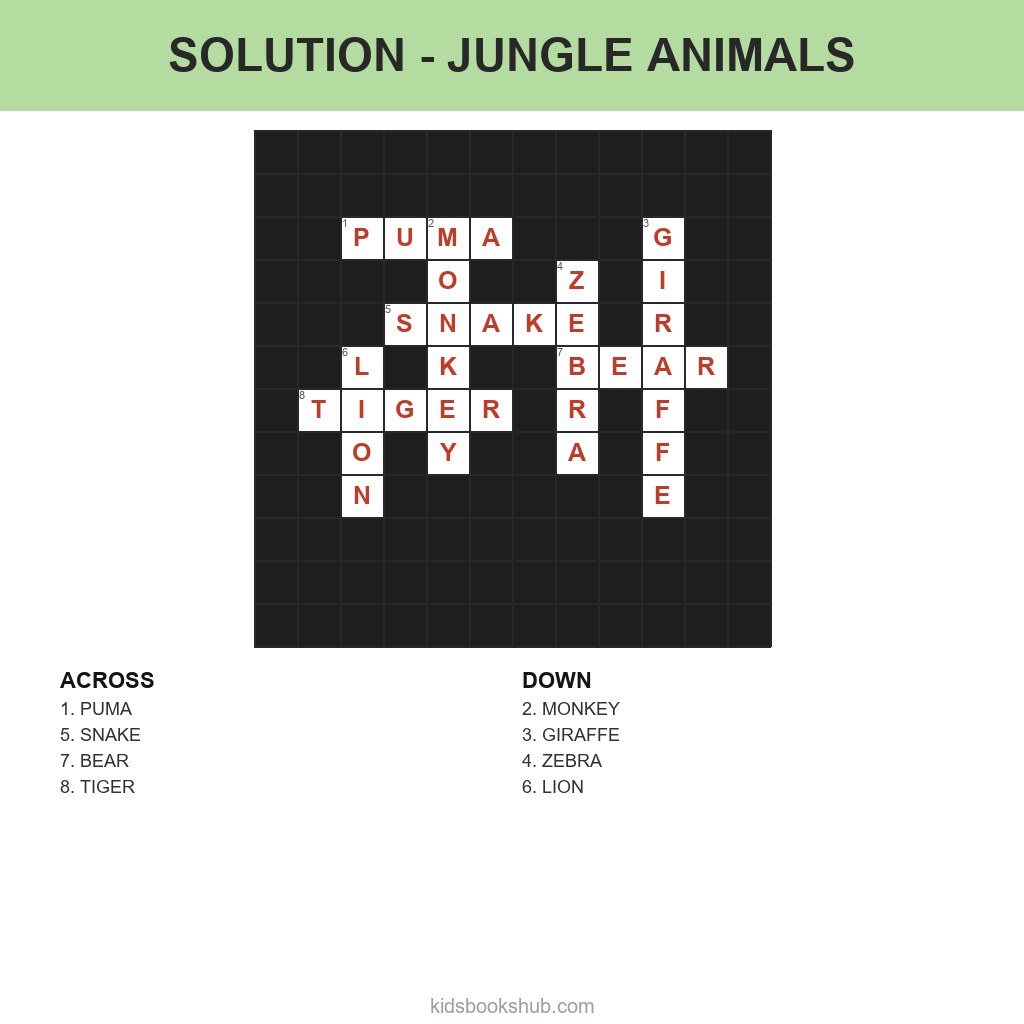
Off to the jungle for this second grid: the lion, the tiger, the zebra, the giraffe and the monkey are all here, along with a bear, a puma and the mighty snake. The clues invite your child to look at each animal through its main feature (stripes, length of neck, way of moving). A perfect grid after a wildlife documentary or a trip to the zoo.
🐬 Sea animals crossword
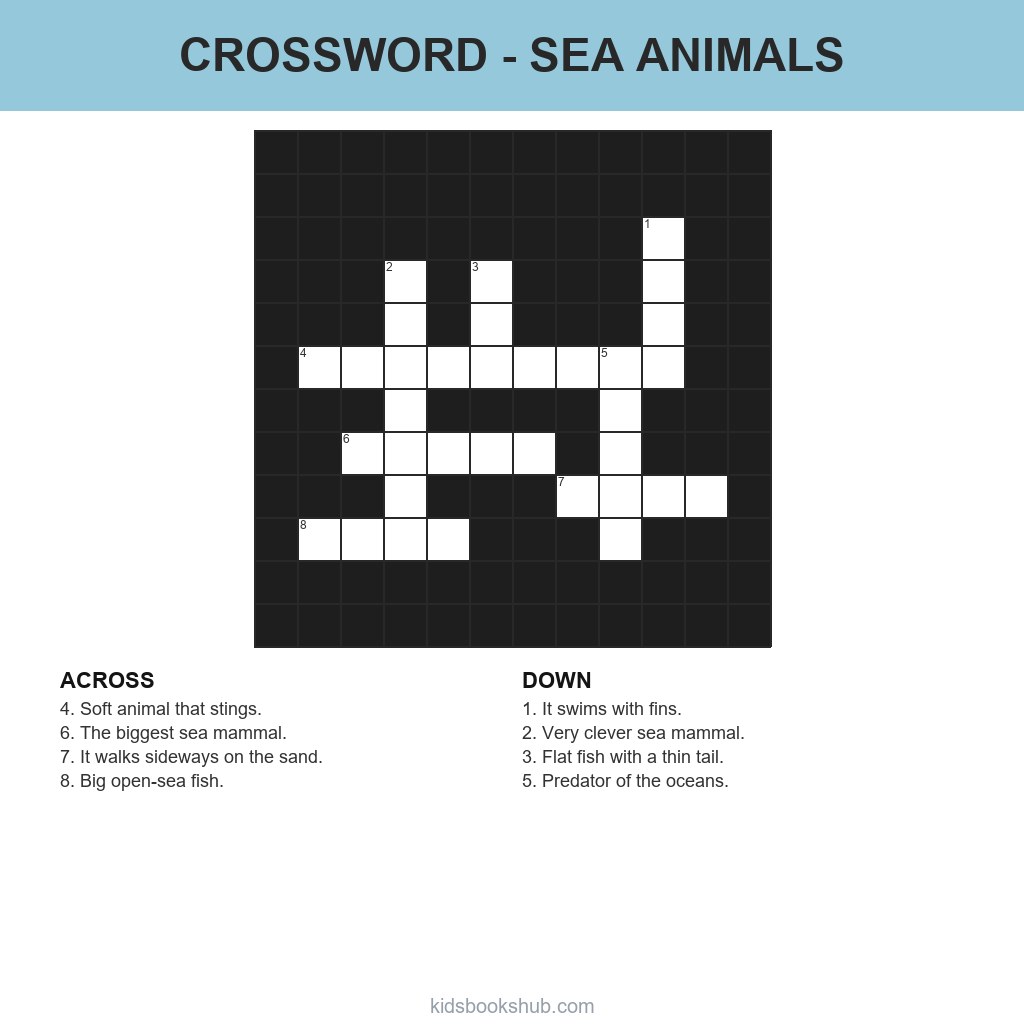
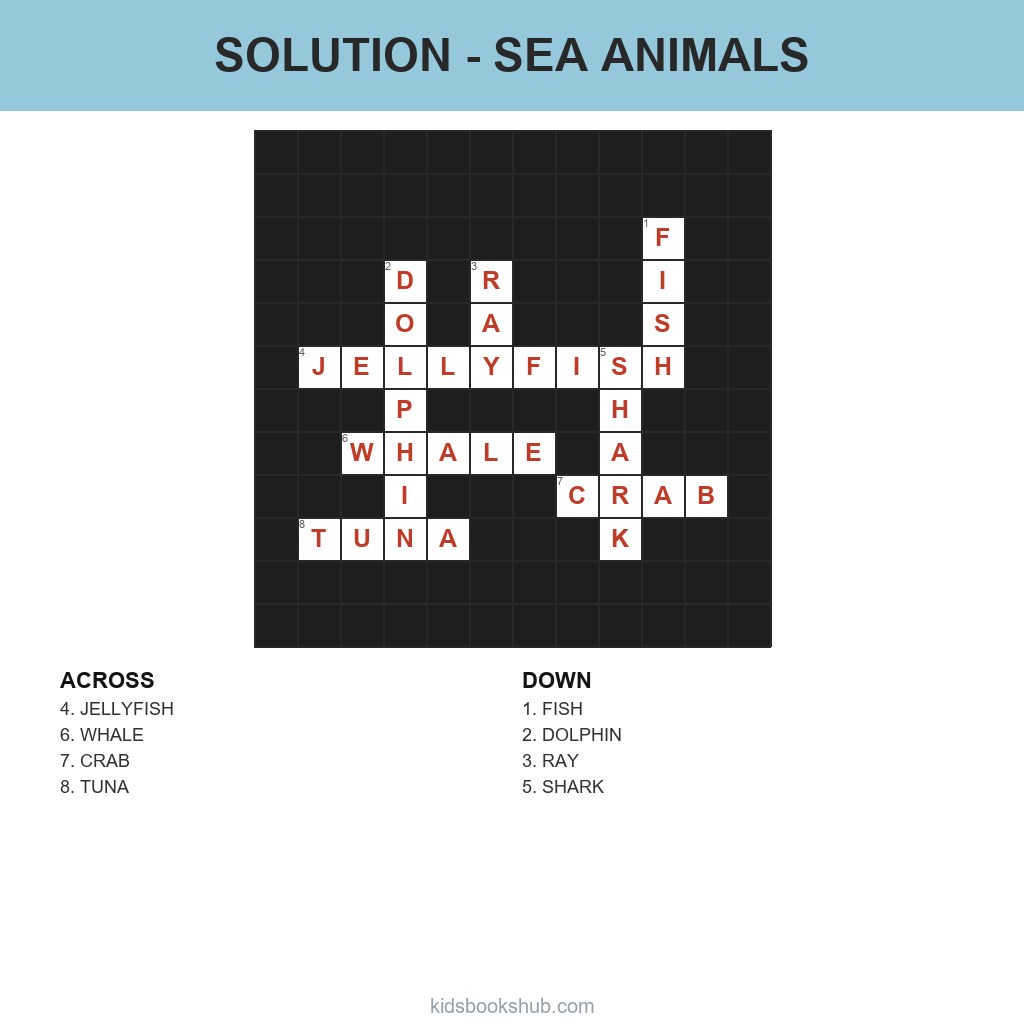
A dive into the ocean with the third grid. The clever dolphin, the predator shark, the huge whale, the jellyfish that stings and the fish that swims cross paths with the crab, the ray and the tuna. An ideal grid to get ready for an aquarium outing or to round off a science lesson on marine biodiversity.
🦌 Forest animals crossword
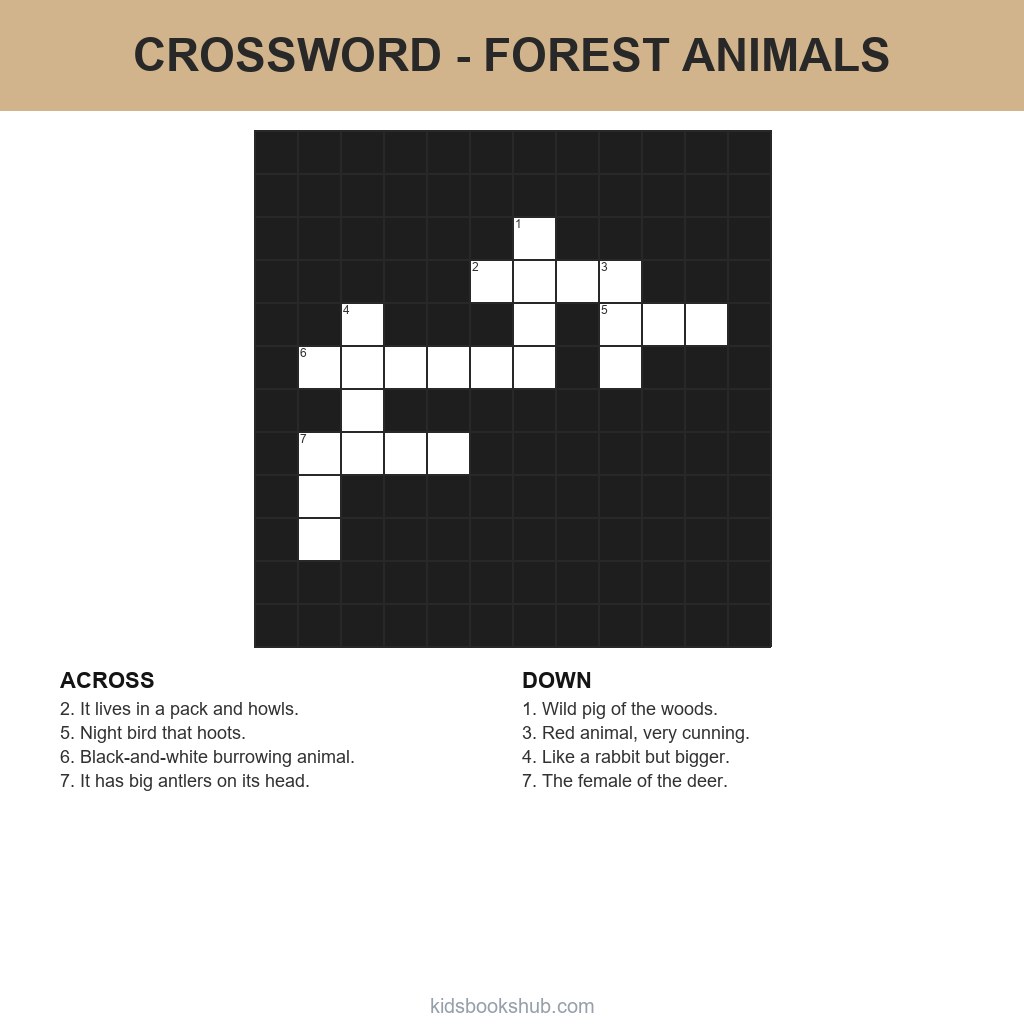
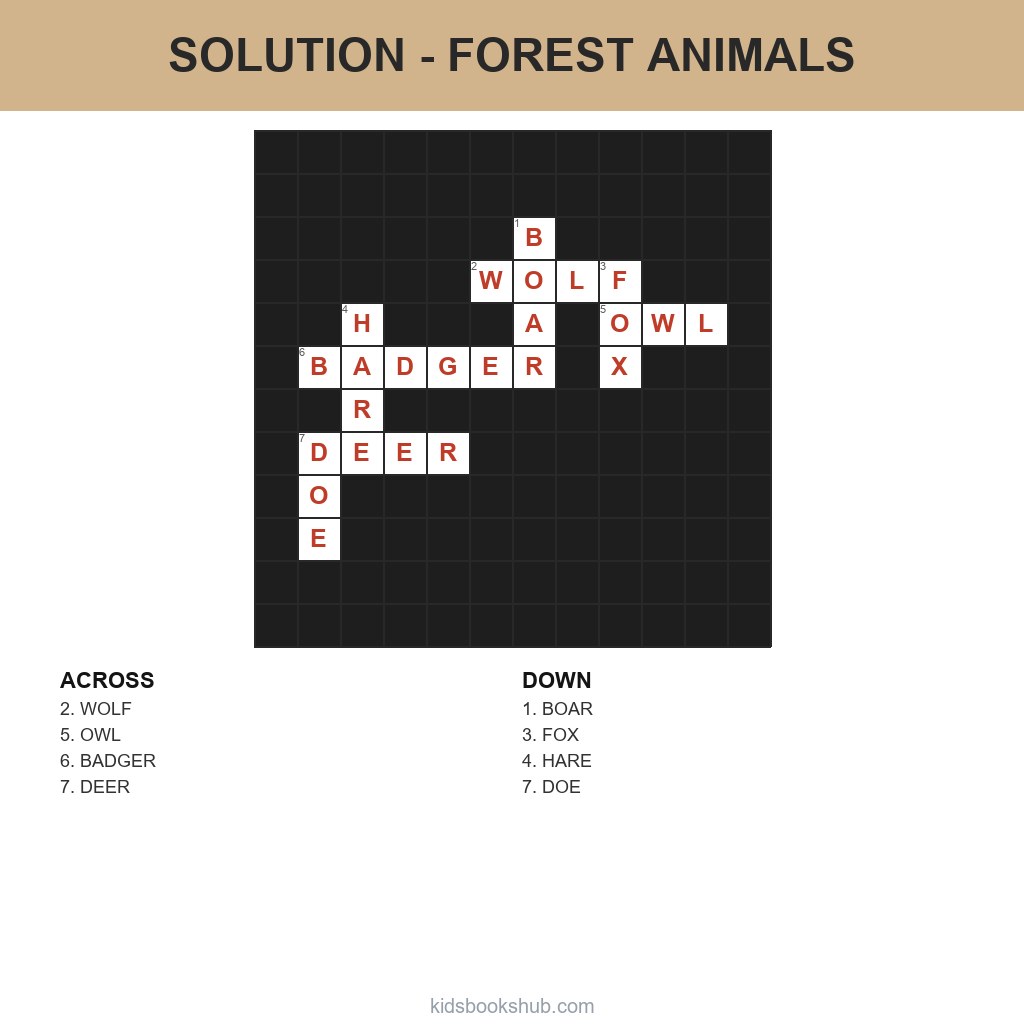
The fourth and final grid is about the creatures of the woodland: the cunning fox, the night owl, the graceful doe, the wild boar and the speedy hare, along with the wolf in its pack, the deer with its great antlers and the badger that burrows. This grid echoes forest walks and discovery books about wildlife.
🧠 Why are crosswords good for children?
Beyond the fun, animal crosswords bring real benefits to children aged 8 to 11. Here is what this activity works on quietly while your child is having fun.
Animal vocabulary grows through play. To find the right word, the child has to link a short clue to a mental image (a horse galloping, a snake squeezing its prey, a giraffe with its long neck). This back-and-forth between clue and word anchors vocabulary far more deeply than a list learnt by heart. A grid of 6 to 8 words is like a mini themed vocabulary lesson, without the schoolwork feeling.
Reading-and-reasoning gets stronger. Reading a short clue and working out the word it points to is an exercise in fine comprehension. It is exactly what school works on at ages 8 to 11 under the name “inferential reading”. Crosswords are one of the most motivating ways to practise it, because the reward (finding the word) comes straight away.
Spelling is reinforced. Once the word is guessed, it has to be written correctly, letter by letter, in the grid. If one letter is wrong, the crossing word next to it will not work out. This self-checking makes crosswords a great spelling ground: the child spots their own mistakes without an adult having to correct them.
Concentration lasts longer. A crossword grid asks for 15 to 30 minutes of steady attention. That is exactly the time teachers recommend for training focus without tiring the child out. And unlike a screen, the child stays in control of the pace: they can pause at any moment and pick it up again later.
Your child feels a real sense of pride. Finding a word and seeing a letter land exactly in the right spot of the crossing word brings a little victory each time. For a child who gives up easily, crosswords are a great way to rebuild confidence in their own reasoning.
👶 What age should you offer these grids?
Crosswords are more demanding than word searches. Here is a rough guide by age, to adjust to your own child’s pace.
Ages 8-9. This is the ideal age to start with these grids, as long as you help with the first few clues. The “Farm animals” grid is the best way in: the vocabulary is familiar and the words are short. Read the first clue out loud, show where to place the letters, and let your child carry on alone.
Ages 9-10. Children who read fluently can handle every grid on their own, in 20 to 30 minutes. The “Sea animals” grid and the “Forest animals” grid call for a slightly richer vocabulary (jellyfish, boar, owl) and suit this age particularly well. It is also the time when a child starts to enjoy searching alone, without asking for help.
Ages 10-11. Every grid becomes easy to manage, and the “Jungle animals” grid can be timed for an extra challenge. Confident children can even make up their own crosswords from a list of animals: a great creative follow-up and good spelling practice.
🤝 How to help your child get started
Crosswords are an independent activity, but a few simple moves from a parent or helper make all the difference for a child who is just starting out or losing heart.
Start with the easiest clues. There is no need to tackle the grid in number order. Tell your child to read all the clues and pencil in, beside each number, the words they know straight away. Once these “easy words” are in the grid, the others often become obvious thanks to the letters already in place.
Encourage using the crossings as clues. If your child is stuck on a down word, ask them to look at the letters already placed by the across words that cross it. Those letters are precious hints. It is exactly the technique crossword fans use: combine the clue with the neighbouring letters.
Never give the answer straight away. If your child has been stuck on a word for 5 minutes, give them the first letter instead, or suggest a category (“it is an animal you can meet in the countryside”). The joy of “I found it all by myself” really matters in the long run.
Accept rubbing out. If your child puts a wrong answer and their down words no longer work out, encourage them to rub it out and try again. That is exactly what adults do. Far from being a failure, it is the most valuable lesson of crosswords: a mistake is information, not a disaster.
Print several grids ahead of time. You can slip a grid in the car, one in the pencil case for the doctor’s waiting room, another in the beach bag. It turns dead time into mini reading-and-reasoning sessions with no screen, which is especially handy in summer.
❓ Frequently asked questions
What is the difference between a crossword and a word search?
In a word search, the words are already there in a grid of letters and you find them from a given list. In a crossword, the grid is empty: the child has to guess each word from a short clue, then write it in the squares. Crosswords are more demanding because they call for vocabulary and deduction, whereas word searches mainly rely on visual recognition.
From what age can a child do these grids alone?
Around ages 9-10, a child who reads fluently can complete a 12×12 grid alone in 20 to 30 minutes. At 8, it is better to help with the first grids to explain how it works (numbers, crossings, across/down direction) and to read the harder clues. Beyond age 10, they are fully independent.
How do I print a single grid?
Print the page from your browser. On a computer, you can also right-click the image and choose “Save image as…” to keep it as a PNG and print it later.
My child cannot find a single word — is that normal?
At the very start, it is common. Sit beside them for the first grid, read the clues together, and place the two or three most obvious words together. Once the first letters are in the grid, the knack kicks in and the other words come more easily thanks to the crossings.
Can these grids be used in the classroom?
Yes. Teachers of the 8-11 age range can print them for an independent activity, a vocabulary ritual or an end-of-lesson task. The animal theme fits especially well into a class project on biodiversity, habitats or wildlife documentaries.
What if a clue seems too hard?
Reword the clue in your own words, or add an extra hint (“it is an animal that lives in salt water”, “it has a thick coat of fur”). You can also suggest your child look it up in a fact book or online: that is a way of learning how to find information too.
✅ The solutions to the 4 grids
No cheating — we only look once we have really tried 😉 Here are the 4 completed grids, with the list of answers under each one. Perfect for your child to check their own work, all by themselves like a grown-up.
🐮 Solution — Farm animals
🐯 Solution — Jungle animals
🐬 Solution — Sea animals
🦌 Solution — Forest animals
Enjoyed these grids? Happy puzzling, and see you soon for more animal challenges! 🐾
