
Word searches are one of the most popular ways to keep a child busy on a rainy afternoon, on a terrace table in summer, or during a long car trip. 🌿 The idea is simple: find the hidden words from a list inside a grid of letters, looking across, down or diagonally. It is calm, rewarding, it builds vocabulary and it keeps a child happily occupied for 15 to 20 minutes on average. On this page you will find 5 themed grids to print, free of charge, all about nature and the seasons: spring, summer, autumn, winter and a forest bonus.
🍂 5 word search grids to print (every season)
Each grid hides 8 words to find. The words can run across, down or diagonally, always in the normal reading direction. The list of words to look for is printed under each grid. Pick a grid that matches the season or your child’s mood, then print the page and grab a coloured pen to circle each word.
🌸 Spring word search
A gentle grid all about spring: 8 words to find about the flowers, insects and birds that wake the gardens up. Perfect for getting ready for a nature walk or for filling a quiet afternoon in March.
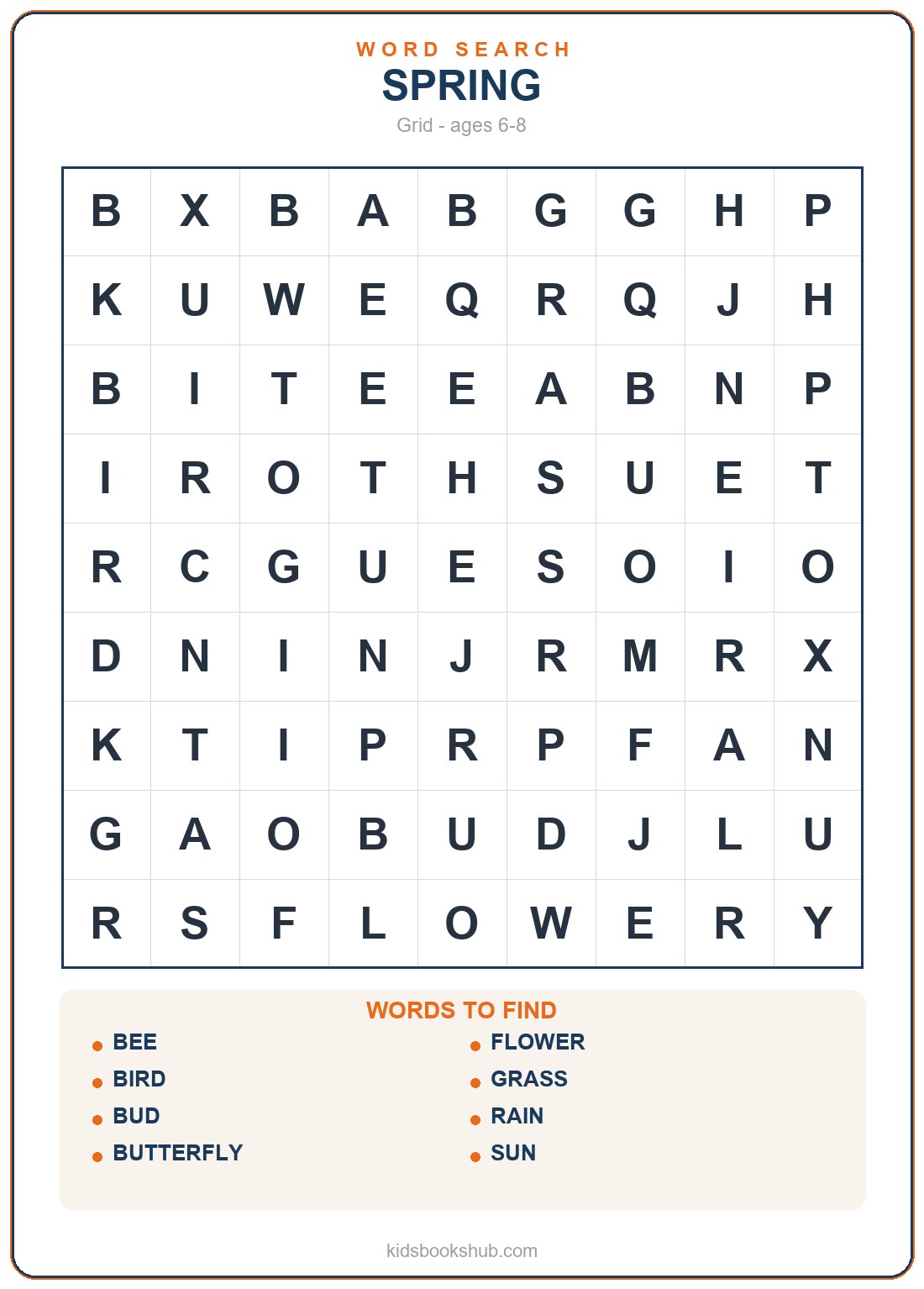
Words to find: BUTTERFLY, FLOWER, RAIN, BEE, BUD, BIRD, SUN, GRASS.
☀️ Summer word search
The summer grid heads off to the beach. 8 words about sand, sunshine and fruit bursting with light. Just right for the long days of July or a holiday activity table.
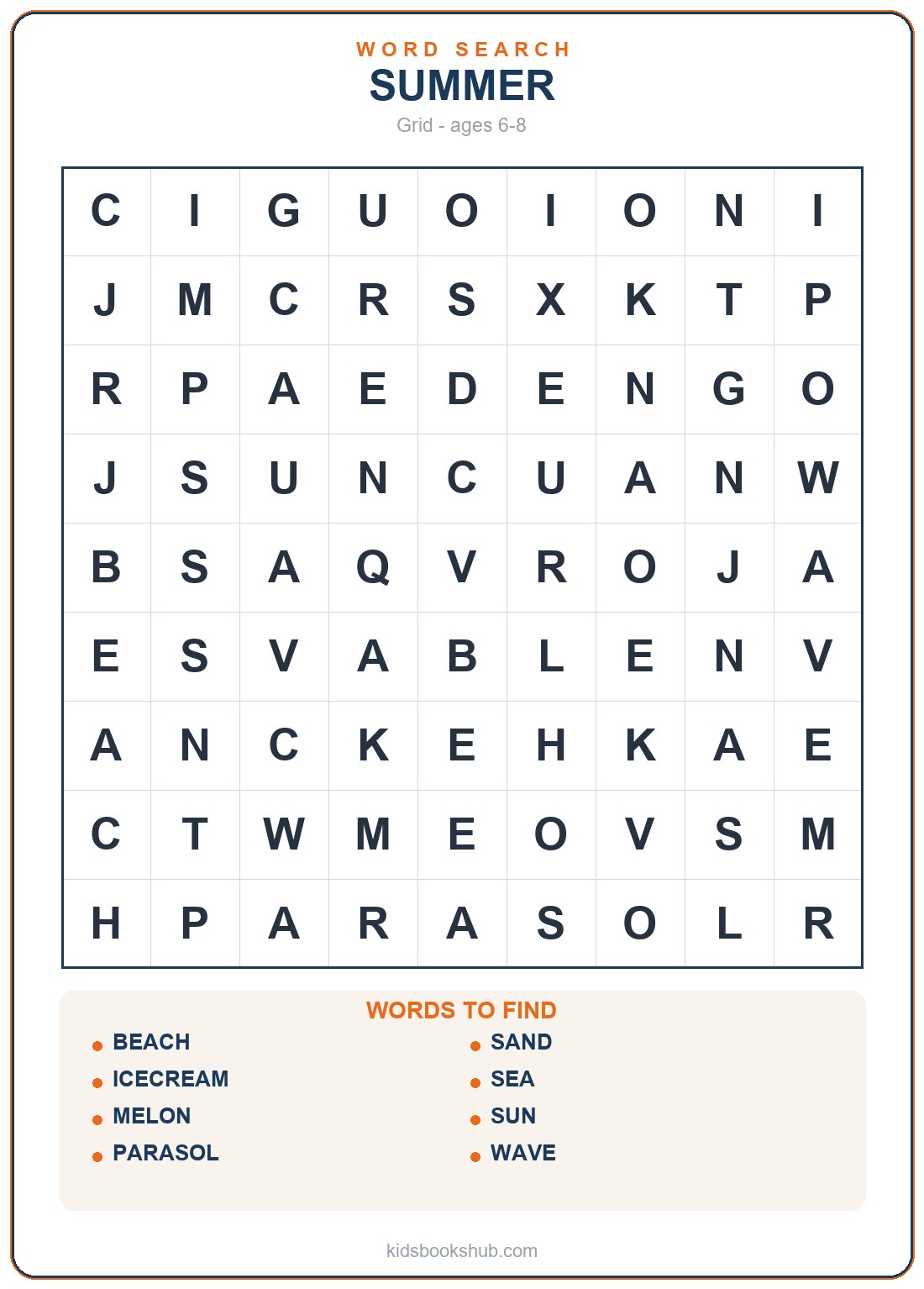
Words to find: BEACH, SUN, ICECREAM, SEA, PARASOL, SAND, WAVE, MELON.
🍁 Autumn word search
Autumn is the richest season for nature words: leaves drifting down, treasures gathered in the woods, the first cold snaps. 8 words to find that go hand in hand with forest walks in October and November.
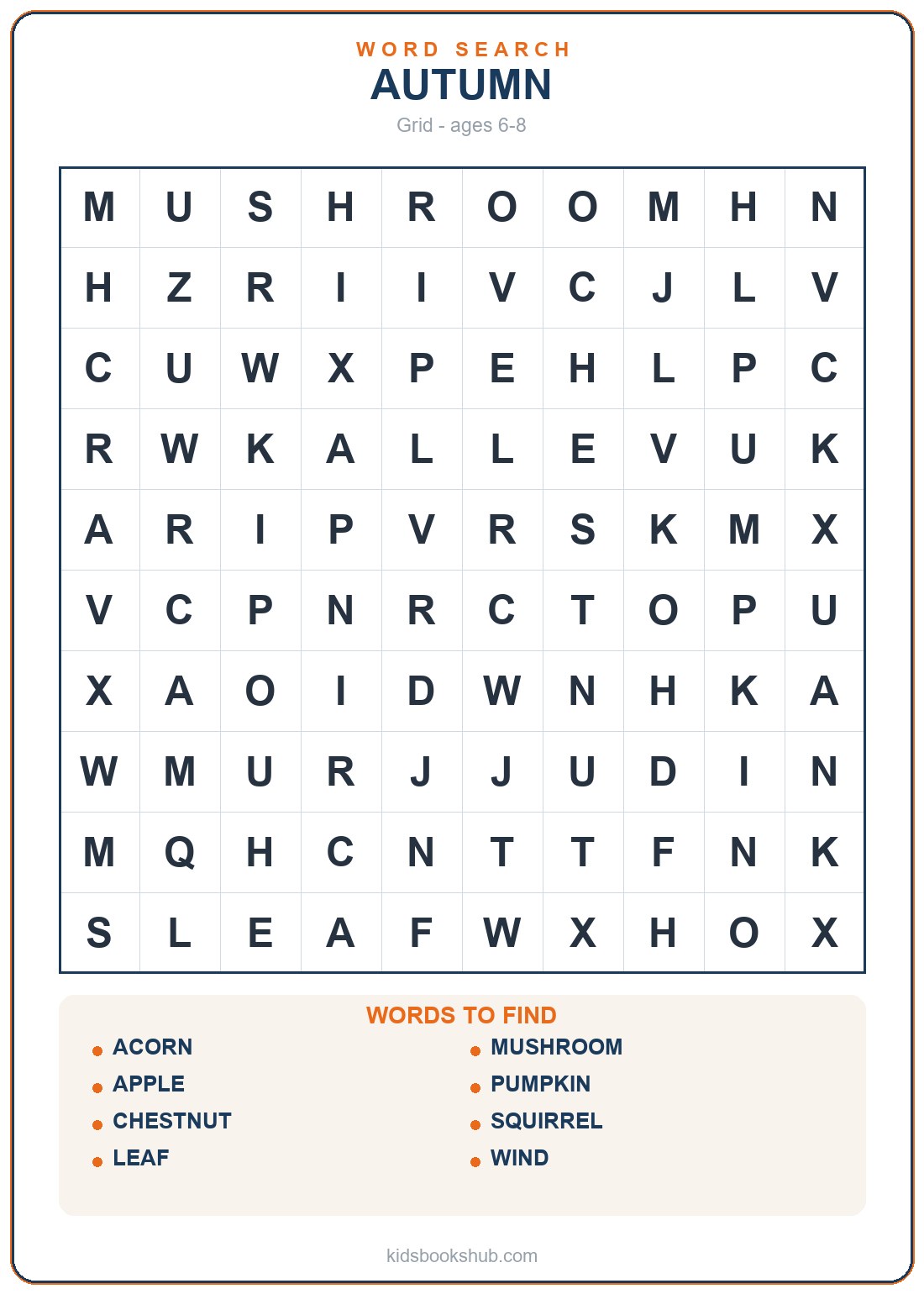
Words to find: LEAF, CHESTNUT, PUMPKIN, WIND, SQUIRREL, ACORN, MUSHROOM, APPLE.
❄️ Winter word search
For cosy afternoons by the fire or a Christmas snack, here are 8 winter words to track down in the grid: snowflakes, cold-weather animals and lovely warm clothes.
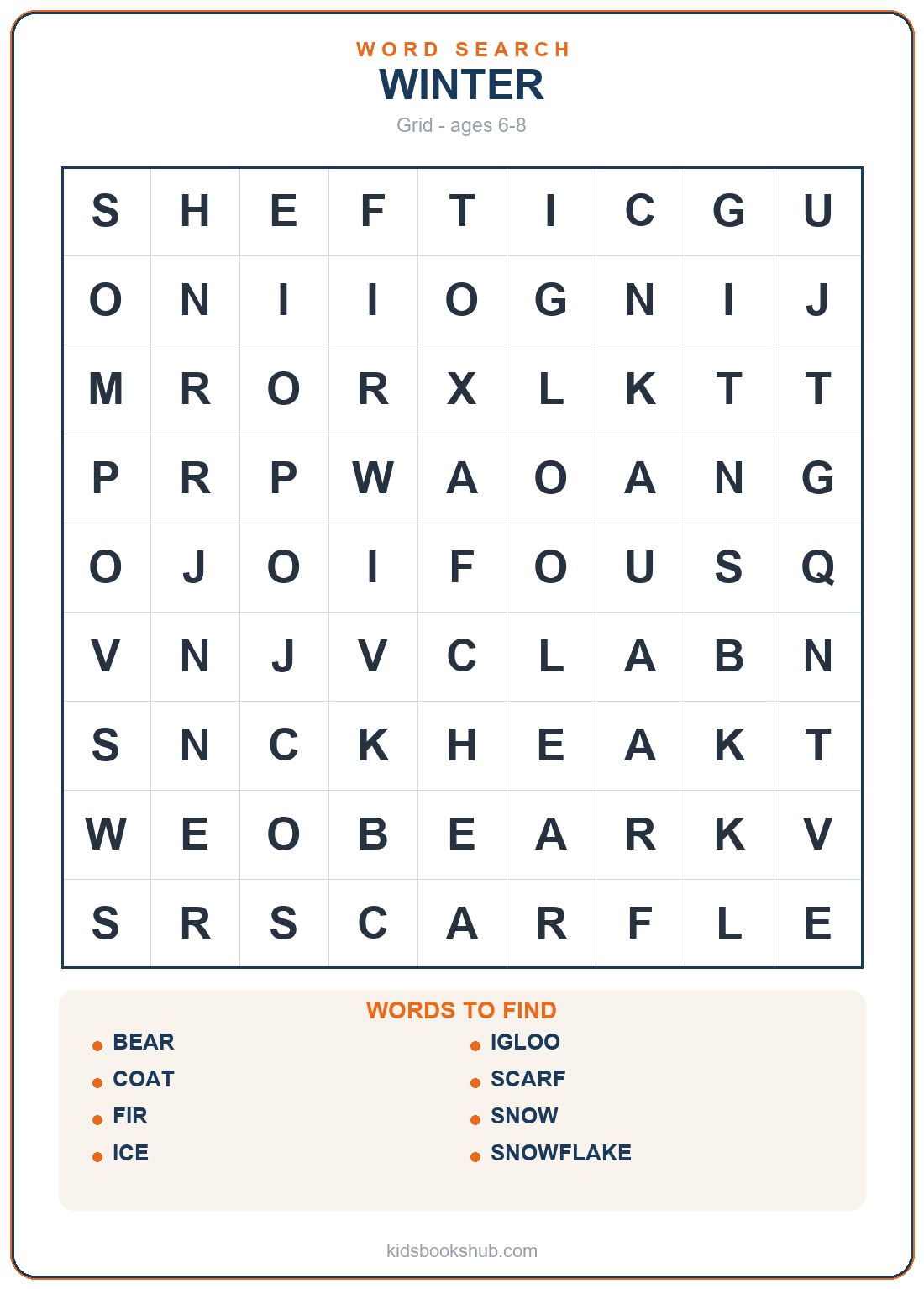
Words to find: SNOW, SNOWFLAKE, FIR, ICE, COAT, SCARF, BEAR, IGLOO.
🌲 Forest word search (bonus)
A bonus grid, out of season, to explore the forest and the creatures that live there. Perfect for getting ready for a nature outing or rounding off an activity book about wildlife.
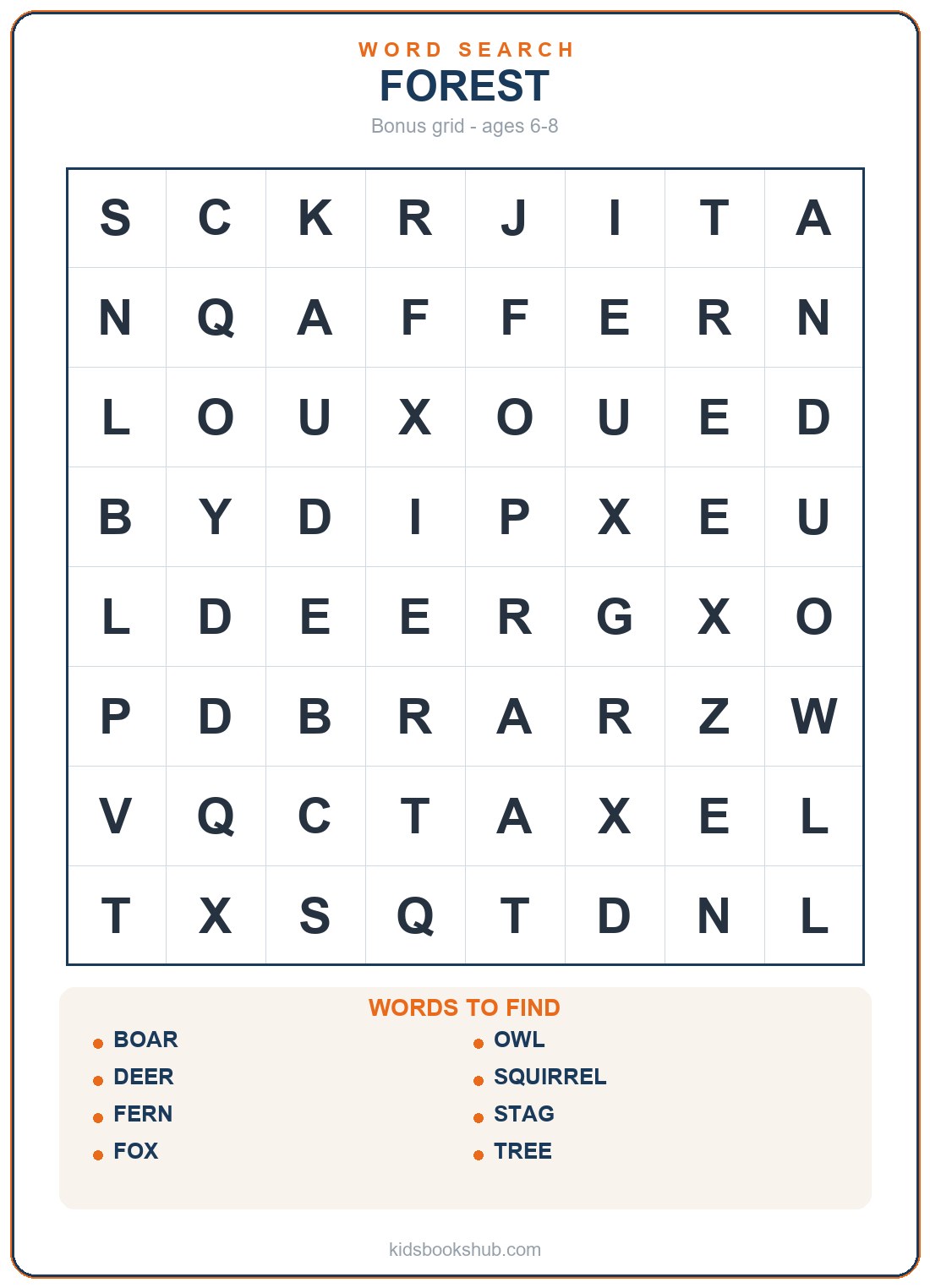
Words to find: TREE, DEER, FOX, STAG, SQUIRREL, BOAR, OWL, FERN.
🧠 Why are word searches good for children?
Behind their simple letter-game look, word searches call on several skills that really matter for a child’s development between the ages of 5 and 10. Here are the concrete benefits you can expect.
Vocabulary grows without any effort. As your child hunts for a particular word in the grid, they read it, decode it and remember it. A themed grid of words is like a mini vocabulary lesson, but without the schoolwork feeling. Seasonal words such as “bud”, “melon” or “chestnut” stick in the memory far better when they are tied to a picture and a fun activity.
Reading becomes smoother. To spot a word in a grid, your child has to read strings of letters in every direction. This practice in recognising syllables by sight is precious at ages 6 to 7, the time when reading stops being a struggle and turns automatic.
Concentration gets stronger. A word search asks for 10 to 20 minutes of steady attention. That is exactly the length teachers recommend for training a primary-school child’s focus without tiring them out. And unlike a screen, your child stays in control of the pace.
Your child feels a real sense of pride. Finding a hidden word brings a little victory with every line. For a child who gives up easily at school, word searches are a wonderful way to rebuild confidence as a reader.
👶 What age should you offer word searches?
It all depends on the size of the grid and the length of the words. Here is a rough guide by age, to adjust to your own child’s pace.
Ages 5-6 (starting to read). At this age, children are only just beginning to link letters with sounds. Go for small 6×6 grids with 4 or 5 short words (3 to 5 letters) placed across or down only. The “winter” grid on this page can be made easier by highlighting the shortest words in advance (“sea”, “bear”, “ice”).
Ages 7-8 (reading more confidently). Grids of 10×10 to 12×12 with 8 to 10 words, without diagonals, become easy to handle. That is the format of our grids. Check that your child understands the reading direction before they start.
Ages 9-10 (fluent readers). Children can cope with 14×14 grids where words run diagonally and even backwards. For the keenest, you can add a timer for an extra challenge, without turning it into a contest.
💡 Tips to help your child
Word searches are an independent activity, but a few simple moves from a parent or helper make all the difference for a child who is just starting out or losing heart.
Read the list out loud before you begin. This stops your child hunting for a word they cannot say. It is also a chance to slip in a little explanation of any unknown words (“a bud is the new growth on a branch in spring, before the flower opens”).
Suggest crossing off the words once found. Either by highlighting them in the grid or ticking them off the list. Watching the list shrink is very motivating, and it helps your child keep track.
Give a clue without giving the answer. If your child has been stuck on a word for 5 minutes, point to the area (“try looking more towards the top right”) or give the first letter. Avoid pointing straight at the word: the joy of “I found it all by myself” really matters.
Print several grids ahead of time. You can pop one in the beach bag, one in the car, one in the pencil case for the waiting room. It turns dead time into mini reading sessions with no screen.
Combine it with other activities. After the word search, your child can circle all the words they found in a colouring page, or write a short sentence using three of them. That helps the vocabulary stick.
❓ Frequently asked questions
What is the difference between a word search and a crossword?
In a word search, the words are already there in the grid and you have to find them from a list. In a crossword, the grid is empty and the child has to guess the words from clues, then write them in. Crosswords are harder and usually come along after the ages of 7 to 8.
Can I use these grids in the classroom?
Yes. Teachers can print these grids for an independent activity, a reading ritual or an end-of-lesson task. The seasonal themes fit beautifully into a class project running across the school year.
How do I print a single grid?
Print the page from your browser, or on a computer you can right-click the image and choose “Save image as…” to keep it as a PNG and print it later.
My child cannot find a single word — is that normal?
At the very start, yes. Sit beside them for the first grid, spot the first word together and show the reading direction. Once they have found just one, the knack kicks in and the others come more quickly.
How long does one grid take?
A 12×12 grid with several words takes 10 to 20 minutes on average, depending on the child’s age and experience. It is an ideal activity for a journey, a waiting room or a quiet afternoon.
Enjoyed these grids? Happy word hunting! 🔍
