
Do you ever feel bloated or heavy after a meal without knowing why? This article explains how digestion works, from the meal to the tummy, breaking down every mechanical and chemical step to help you feel comfortable again. You’ll discover the secrets of salivary amylase and peristalsis so you can change your habits and finally pamper your gut microbiome.
- The first stop in the mouth
- 6 seconds to slide down the oesophagus
- How does your stomach transform your meals?
- The selective sorting of the small intestine
- The hidden role of the gut microbiome
- 3 habits for a light tummy
👄 The first stop in the mouth
Once you’ve savoured your first mouthful, the journey begins straight away with a mechanical and chemical step that often goes overlooked.
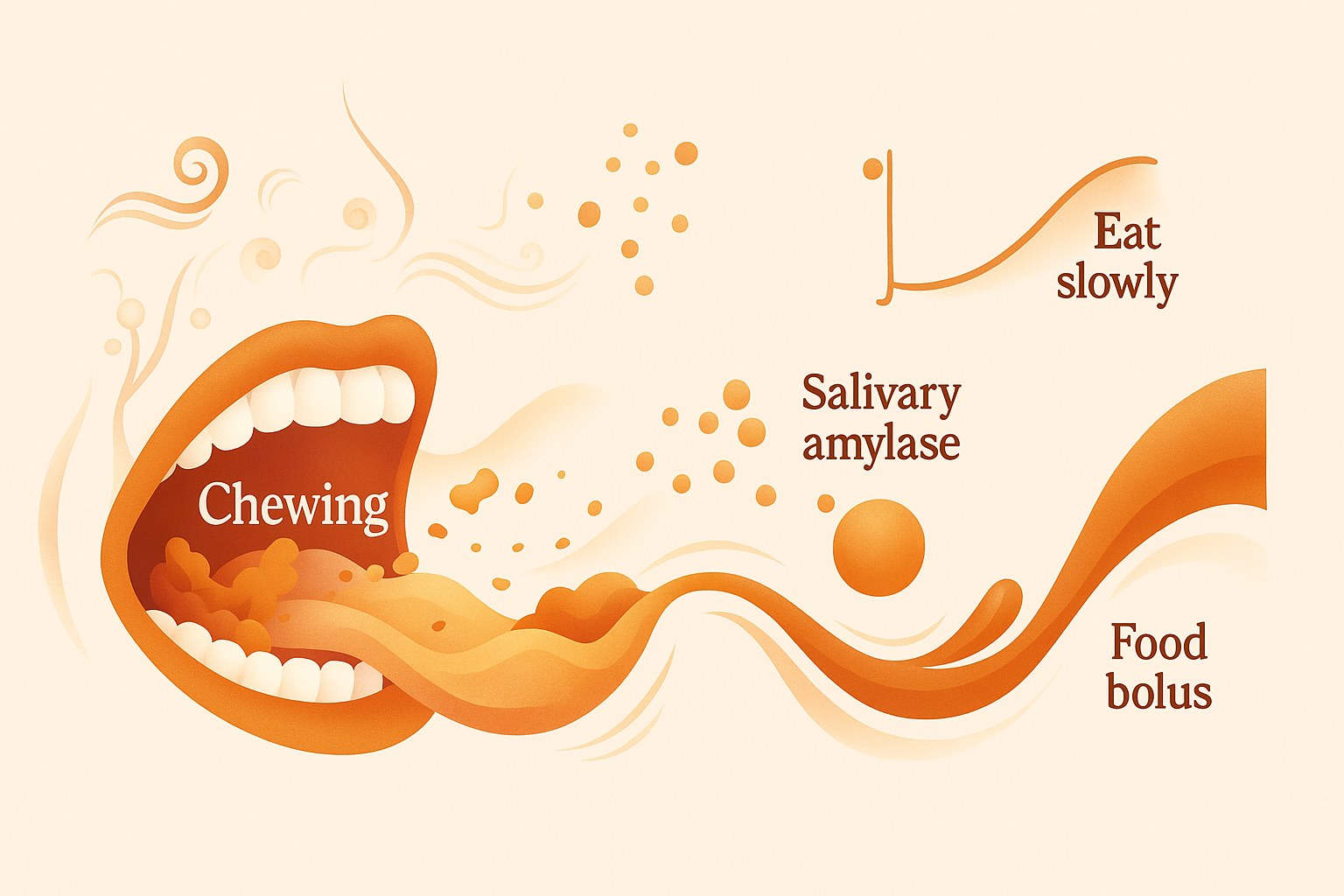
🦷 Chewing to make the work easier
Your teeth play a leading role. They tear and grind every piece with care. This action carries out the molecular simplification of food that the rest of the process needs.
The tongue then takes over. It moves the pieces around to form the food bolus. This smooth mixture sets the stage perfectly for the rest of the digestive tract.
Without this effective grinding, the stomach tires quickly. It has to put in far too much effort. Good physical preparation is the key.
💧 Salivary amylase and carbohydrates
Salivary amylase goes on the attack. This enzyme already starts breaking the chains of complex carbohydrates. Saliva isn’t just water. It contains active agents from the very first seconds.
The moisture then turns the food into a paste. This slippery texture is a blessing. It helps the food slide down to the pharynx without any uncomfortable pain.
Your salivary glands are very responsive. Sometimes they kick in just from the smell of a dish. It’s the official starting signal for the whole system.
😋 The link between chewing and feeling full
There’s a fascinating nerve connection at work. The jaw muscles talk directly to the hypothalamus. The brain needs time to register that you’ve eaten.
Eating slowly changes everything. You feel full well before you’ve eaten too much. It’s a free, natural way to manage your weight.
Put your cutlery down between mouthfuls. It takes about twenty minutes for the signal to arrive. Chewing then becomes your best ally for staying slim.
- Take the time to chew 20 times per mouthful
- Wait for the feeling of fullness
- Focus on the taste rather than the speed
⏱️ 6 seconds to slide down the oesophagus
Once the food bolus is properly prepared, it leaves the mouth for an express but ultra-safe descent.
🛡️ The safety valve of the epiglottis
The epiglottis snaps shut instantly to close off the windpipe. This little cartilage flap acts like a vital shield. It stops food from going down the wrong way.
The food bolus then slides from the pharynx to the top of the oesophagus. The muscles spring into action with surgical precision. This coordination is a true feat of our biology.
This mechanism pauses your breathing for a split second. The food gets priority. The body orchestrates it all perfectly.
🌊 The muscular waves of peristalsis
Peristalsis is a series of circular contractions. The muscles tighten just above the food. They then relax further down to open the way.
Gravity isn’t needed to send your meal down. In theory, you could eat upside down without any trouble. It’s the muscle contractions (peristalsis) that steer everything.
The trip takes about six seconds. It’s an efficient slide. The meal reaches the stomach quickly.
🍼 How it differs in babies
In a baby, the cardia is still quite immature. This valve between the oesophagus and the stomach lacks tone. It doesn’t yet close tightly.
This is why babies often bring up milk after a feed from the breast or bottle. It’s a normal, passing phase. Everything settles down as they grow.
Adults have far stronger muscle tone. The digestive system needs time. It has to mature step by step.
🫃 How does your stomach transform your meals?
After this quick descent, the food lands in a real chemical and mechanical processing tank.
🌀 Churning proteins and fats
The stomach works like a powerful muscle. It kneads the food bolus energetically as it arrives. Its walls contract hard to mix everything together.
The gastric juices then come into play. They go mainly after the proteins. This is where the large molecules begin to break apart.
This mechanical churning is essential. It turns the food into fine particles. That makes the next stage easier.
🧪 Hydrochloric acid to dissolve it all
The stomach’s extreme acidity is impressive. It kills most of the bacteria you swallow. It’s an effective barrier against infection.
This acid also activates pepsin. This enzyme digests proteins. Without a low pH, it would stay inactive.
Luckily, protective mucus lines the wall. Without it, the organ would digest itself. The acid forgives nothing.
⚗️ The chemical change into chyme
Chyme is a grey liquid mush. It’s the result of the stomach’s work. The original dish becomes unrecognisable.
Emptying happens gradually through the pylorus. The stomach releases only small amounts at a time. This allows an orderly next stage of processing.
Protein digestion starts in the stomach thanks to pepsin and carries on in the small intestine.
The time spent here depends on the fats. A rich meal stays longer.
🧬 The selective sorting of the small intestine
The chyme leaves the stomach to enter the longest and most strategic part of the journey.
🫀 The valuable help of the liver and pancreas
The liver produces bile to break up fats. This fluid acts like a natural detergent. It splits the fats into tiny, easy-to-reach droplets.
The pancreatic enzymes then take over. They break down sugars, fats and proteins. The chemical chopping is almost done.
These secretions also neutralise the stomach acid. Sodium bicarbonate softens the environment. The intestine then becomes a far more welcoming place.
💎 The massive absorption of nutrients
Millions of tiny intestinal villi line the inner wall. These microscopic folds are essential for the body. They multiply the surface in contact with the food.
The vitamins and minerals then pass into the blood. This is where the body recovers its vital energy. The nutrients cross the barrier to feed your cells.
The small intestine is several metres long. It’s a huge exchange centre thanks to the villi and microvilli that increase the surface area.
📡 The digestive hormones in control
Gastrin and secretin act like true conductors of an orchestra. These hormones travel quietly through the blood. They give precise orders to the organs.
They carefully manage the speed of digestion. These signals tell the pancreas to send out its enzymes. Everything arrives at exactly the right moment.
The conversation between the gut and the brain never stops. These chemical messages keep perfect harmony across the whole system.
🦠 The hidden role of the gut microbiome
Everything that hasn’t been absorbed finally reaches the large intestine, where billions of residents are waiting for you.
🫧 Fermentation in the large intestine
Dietary fibre often resists our own enzymes. Our resident bacteria then take over. They break it down through a natural fermentation process.
The body then recovers the last of the fluids it needs. Water and mineral salts are reabsorbed through the wall. This helps to prevent dehydration inside the body.
The leftovers then slowly thicken. This is the compacting phase. Stools form before they’re passed.
🛡️ The link between gut flora and immunity
Your good bacteria act like little soldiers. They take up the ground to stop intruders from settling in. Your defences depend on this living barrier.
These microbes also make vitamins K and B. They work for your health for free, in exchange for food. It’s an effective give-and-take.
Yet this ecosystem stays fragile. A poor diet can upset this harmony. That risks weakening your overall immunity.
The enteric nervous system, nicknamed the second brain, controls gut movement all on its own.
📊 What’s a normal transit rhythm
Every body has its own rhythm. Going to the toilet three times a day or three times a week can both be normal. What matters is feeling no discomfort day to day.
Bloating often comes from too much gas. It’s a sign of a meal that was too fast or too rich. Your body is simply talking to you.
The full trip can take fifty hours. Be patient with your body.
| Stage | Average time | Main job |
|---|---|---|
| Mouth | Seconds | Grinding |
| Oesophagus | Seconds | Transport |
| Stomach | 2 to 4 h | Churning |
| Small intestine | 3 to 7 h | Absorption |
| Large intestine | 10 to 53 h | Elimination |
✨ 3 habits for a light tummy
Now that you know the route, here’s how to make the most of this process and avoid everyday trouble.
💭 The direct influence of our emotions
Stress often triggers uncomfortable gut spasms. Your tummy reacts instantly to how you’re feeling. These contractions disrupt the smooth flow of food.
The enteric nervous system (ENS) talks directly to your brain. They communicate non-stop through the vagus nerve. This connection explains the physical sensations you feel in your gut.
Take a few deep breaths before you eat. This calm encourages the best release of digestive juices. Your body will thank you.
🕐 Regular habits and your body clock
Set regular mealtimes to tune your internal clock. The body loves predictability so it can ready its enzymes. This keeps your energy steady all day long.
Constant snacking has a negative impact on your transit. The digestive system needs real breaks to clean itself properly. Give it time to catch its breath.
Sleep and digestion are closely linked. A meal that’s too late or too heavy often spoils the quality of your night’s rest. Eat light in the evening.
💧 The importance of fibre and water
Go for green vegetables and wholegrain cereals every day. This fibre acts like a natural broom for your gut. It helps to clear out the leftovers.
Water is essential for making this plant fibre swell. Without enough fluid, it can actually slow down digestion. Drink regularly in small sips.
Avoid ultra-processed foods that wear the body out. Choose whole foods to respect the natural workings of your tummy.
- Drink 1.5 L of water a day
- Eat fibre with every meal
- Get regular physical exercise
The journey of food combines mechanical grinding, a chemical change into chyme and vital absorption. For a light tummy, chew for a good while and stay hydrated to help your fibre. Understanding how digestion works lets you finally listen to what your body really needs. Your future wellbeing starts with your very next mouthful.
❓ FAQ
🔄 How does the digestion process actually work?
Digestion is an adventure that combines mechanical actions, like chewing, with chemical reactions powered by enzymes. It all starts in the mouth and ends with the leftovers being passed, going through the stomach and the intestines along the way.
The goal of this great journey is to turn your meals into tiny nutrients. These are then absorbed at more than 90% to feed your cells and give energy to the whole family.
🛡️ What exactly does the epiglottis do when you swallow?
The epiglottis acts like a super-efficient little safety valve. The moment you swallow, it tips downwards to close off the airways and send the food bolus towards the oesophagus.
This reflex mechanism stops food from going down the wrong way into the windpipe. It’s a real biological feat that protects your lungs with every mouthful.
🌊 What is peristalsis and what is it for?
Peristalsis is the name for the wave-like muscle contractions that push food along the digestive tract. These coordinated movements work in one direction only, from the mouth to the exit.
This process is run by the enteric nervous system, our famous second brain. Thanks to it, food keeps moving smoothly and automatically all along the digestive route.
⏰ How long does food stay in the stomach?
The time spent in the stomach varies, but it’s essential for turning the food bolus into a liquid mush called chyme. This is where hydrochloric acid and enzymes start to break down the proteins.
Emptying into the small intestine then happens gradually through the pylorus. The time often depends on what the meal is made of: a fat-rich dish will ask your stomach for a little more patience.
🧬 Where does nutrient absorption happen in the body?
It’s in the small intestine that the crucial stage of absorption takes place. Thanks to the villi lining its wall, vitamins, minerals and other nutrients cross the intestinal barrier and reach the blood.
The liver then takes over to process these precious resources before sending them around the body. It’s the strategic sorting centre that makes sure your body gets everything it needs.
🔚 What does the large intestine do at the end of the route?
The large intestine takes care of recovering the water and mineral salts from the undigested leftovers. It’s a key step for avoiding dehydration and compacting the matter before it’s passed.
It’s also the kingdom of the microbiome, where billions of good bacteria ferment the fibre we can’t digest on our own. They work hand in hand with our immune system.
