
Does explaining the mysteries of the pharaohs to your little explorers feel as daunting as building a pyramid with your bare hands? 🐪 This guide to Egypt for kids — pyramids, pharaohs and hieroglyphs — turns that mountain of knowledge into a fun, easy adventure the whole family can enjoy. You’ll find out how to crack the scribes’ secrets and plan a memorable expedition between the Nile and the desert, without the slightest stress.
- Why choose Egypt for your next family holiday?
- 3 steps to get ready, stress-free
- How to explore the Giza pyramids with little ones
- Sailing the Nile and uncovering the secrets of Luxor
- Learning while having fun along the water
- 3 tips to end the trip gently
🇪🇬 Why choose Egypt for your next family holiday?
Egypt isn’t just a string of dusty dates for historians. It’s a thrilling adventure that turns every child into a passionate explorer from the very first glance.

🏛️ A huge historical playground
Forget the boring textbooks. Here, the scenery is life-sized. Stories of kings and hidden treasures come alive before their wide-eyed gaze.
The fun side quickly takes over. Every temple feels like a giant maze. Little imaginations run wild among the thousand-year-old columns.
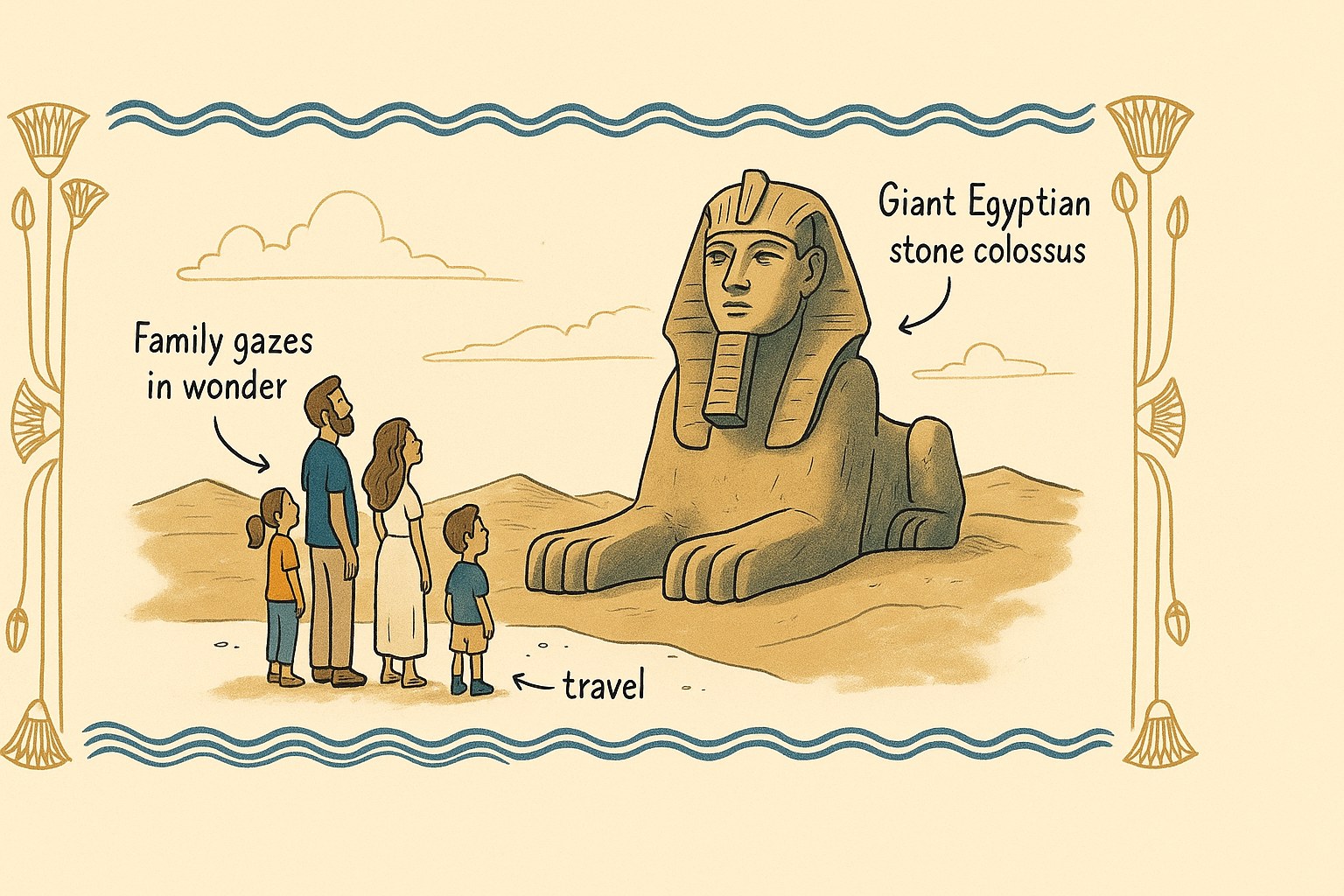
Watching a child marvel at a stone colossus is magical. It’s a living, moving history lesson. You don’t recite a lesson — you live a real epic. Egypt for kids — pyramids, pharaohs and hieroglyphs become a real, tangible thing.
🏺 Museums designed for the youngest visitors
The Grand Egyptian Museum is a game-changer, with its space just for children. It’s a small local revolution. At last, little ones can touch and handle replicas without worry.
Workshops let them make papyrus or mould little statues. It’s hands-on and genuinely rewarding for them. They leave proud, with a new skill under their belt. The museum turns into a place of pure creation.
Boredom doesn’t stand a chance. The spaces are big and reassuring for parents.
📅 The perfect age to go
The ideal age is often around 6 or 7. Curiosity is sky-high by then. They also walk more easily over the sandy sites of the Giza pyramids.
For younger ones, leave the pushchair at home. An ergonomic baby carrier is your best ally on the uneven cobbles.
Pack water and sun hats to take on the heat.
You don’t just visit Egypt, you feel it — especially through the pure gaze of a child discovering their first pyramid.
🧳 3 steps to get ready, stress-free
Moving from the excitement of choosing to the careful planning that logistics demand helps you avoid nasty surprises once you’re there.

☀️ Pick the right season to dodge the heatwave
Aim for the October to April window. The climate is mild and bearable then. Absolutely avoid the summer, or you’ll turn the trip into a heat ordeal.
Mornings are cool, perfect for sightseeing. The afternoon stays pleasant for a nap or a swim.
| Season | Average temperature | Crowds | Family verdict |
|---|---|---|---|
| Winter | 13°C – 22°C | High | Ideal ⭐ |
| Spring | 15°C – 30°C | Medium | Very good ⭐ |
| Summer | 24°C – 37°C | Low | Too hot |
| Autumn | 21°C – 32°C | Medium | Perfect ⭐ |
💊 Health and the right travel insurance
Check your routine vaccinations before you pack. Solid travel insurance is non-negotiable to cover any medical surprises. Peace of mind is priceless.
- Anti-diarrhoea medicine
- Rehydration sachets
- High-protection sunscreen
- Gentle mosquito repellent
- Ordinary plasters
Drink only bottled water. That’s the golden rule against traveller’s tummy.
📚 Learning materials before the flight
Set the scene with picture books. Comic-style Egyptian adventures or simple documentaries work a treat. The journey already begins in the living room.
Use card games about mythology. Knowing Anubis or Isis will make the visits far more exciting.
Watch a short film together about how the pyramids were built. It gives a sense of scale. Children love the ancient engineers’ technical challenges.
🐪 How to explore the Giza pyramids with little ones
Once the bags are packed, head to the Giza plateau to face the stone giants.
🗿 Admiring the Sphinx and the great tombs
Arrive early to beat the dense crowds. The Sphinx never fails to impress with its thousand-year-old calm. Explain its role as a guardian in simple, vivid words.
Don’t try to see everything on foot. The site is enormous and exhausting for little legs.
Focus on the Great Pyramid of Khufu. Its base alone is enough to make your head spin. It’s a moment of pure family wonder, far from the bustle.
🐪 Riding a camel in front of the pyramids
A ride on a dromedary’s back is the highlight of the show. Pick a camel handler who is gentle with his animals. Safety must stay your absolute priority when climbing on.
It’s the perfect moment for photos. The distance across the plateau gives you an outstanding panorama. Children feel like desert explorers. The emotion is often very real at that exact moment.
Agree the price before you get on. That saves pointless arguments at the end of the ride.
💧 Staying hydrated on the plateau
The sun beats down hard on the white limestone. Bring insulated bottles to keep the water cool. Get the children to drink every twenty minutes, before they even feel thirsty.
A wide-brimmed hat is a must. Don’t forget sunglasses to protect their delicate eyes.
Seek out shade whenever you can, under the covered structures. A break in the shelter lets everyone bounce back. Managing energy is the key to success.
⛵ Sailing the Nile and uncovering the secrets of Luxor
After the dust of the desert, the cool of the Nile offers an enchanted pause as you head south.
🚢 Comparing the types of cruise
The dahabeya is perfect for family intimacy. It’s a large, very comfortable traditional sailing boat. You moor where the big boats can’t go.
- Dahabeya for calm and luxury.
- Felucca for rustic adventure.
- Large cruise ship for pools and buffets.
Each option has its perks. It all depends on your budget and how much comfort you need.
👑 A treasure hunt in the Valley of the Kings
Turn the visit into a giant scavenger hunt. Ask the children to spot the god Horus or the sacred scarabs. The colours of the tombs will leave them speechless.
Limit yourselves to three tombs at most. Beyond that, visual fatigue sets in and the youngest lose interest.
Tell the story of Tutankhamun, the boy pharaoh. His young age and tragic fate especially touch children. He’s a figure they easily relate to.
🌅 Balancing culture and downtime
Don’t overload the daily schedule. One visit in the morning is plenty. The afternoon should be set aside for complete relaxation by the pool.
Watching the banks of the Nile glide by is an activity in itself. It’s soothing for the whole family.
The secret to a great trip to Egypt lies in the delicate balance between the thirst for knowledge and the need to do nothing at all.
🎒 Learning while having fun along the water
The trip is also a one-of-a-kind chance to discover local customs through play and good food.
📜 Decoding hieroglyphs the fun way
Teach them to recognise the basic signs. A bird, an eye or a snake all have precise meanings. It’s like cracking a secret language reserved for the initiated.
Buy a little hieroglyph alphabet chart on papyrus. They’ll then be able to write their own first name in hieroglyphs. It’s a calm, absorbing activity for the journeys. They love comparing their drawings with the temple walls.
Mythology suddenly becomes very real. The animal-headed gods make it far easier to remember.
🍽️ Local food the little ones will love
Egyptian cooking is often mild and fragrant. Koshary, a mix of pasta and lentils, is a guaranteed hit. It’s filling, simple and very cheap.
Offer them crispy falafel at breakfast. The mezze let them taste a bit of everything without any risk.
Finish with a fresh mango juice. It’s the best in the world, no exaggeration. Local fruit is a healthy source of energy for little explorers.
📓 Making an interactive travel journal
Encourage them to keep a daily logbook. They can stick in entry tickets or dried flowers. It’s a precious keepsake they’ll treasure all their lives.
Let them draw whatever struck them most. Their sketches often say more than long sentences.
Add little anecdotes about the people they met along the way. A smile, a word in Arabic, or a chat with a local child. This journal becomes the record of their opening up to the world.
🌴 3 tips to end the trip gently
To wrap up this epic, nothing beats slowing the pace before going back to real life.
🏖️ Beach time on the Red Sea
Finishing in Hurghada or Marsa Alam is an excellent idea. The seabed there is exceptional and accessible even to beginners. Snorkelling becomes an unforgettable underwater adventure.
The resorts often offer quality kids’ clubs. That lets parents catch their breath a little. You soak up the sun and the warm sea. It’s the perfect reward after intense cultural visits.
The Red Sea is a giant aquarium. The colourful fish will amaze the little swimmers.
🚐 Getting around inside the country
The night train to Luxor is an experience worth having. It’s a journey through time that children find great fun. You fall asleep in Cairo and wake up somewhere else.
For short trips, go for private drivers. It’s more flexible and safer, with proper car seats.
Here are a few tips for getting around:
- Book train tickets in advance
- Use ride-hailing apps
- Favour domestic flights to save time
👨👩👧 The value of family-friendly guides
A good guide completely changes how you experience the trip. Choose someone used to children, able to make things simple without dumbing them down. Human interaction is the spice of Egypt.
An English-speaking guide makes the logistics much smoother. They handle the unexpected and the sometimes long waits at the entrances.
They’ll know how to find the quiet corners for snack breaks. Their expertise lets you get off the beaten track in complete safety. It’s an investment you absolutely won’t regret.
Get your little explorers ready for an adventure among pyramids, pharaohs and hieroglyphs. Between workshops at the Grand Egyptian Museum and cruises on the Nile, this trip promises unforgettable memories. Book quickly between October and April to give your family this living history lesson under a gentle sun. Egypt is just waiting for your wonder-filled eyes.
🎬 Watch the video
❓ FAQ
👶 From what age can you take a child to discover Egypt?
The ideal age to fully enjoy the mysteries of the pharaohs is usually between 6 and 12. At this age, curiosity is overflowing and children start to really understand the historical tales and the legends of the gods. It’s also a time when they walk more easily over the sandy sites, though you should always bring good shoes and plenty of water.
For younger ones, the trip is still possible but calls for a different setup. Skip the classic pushchair in favour of an ergonomic baby carrier, far handier for climbing over temple cobbles or weaving between stone colossi.
🏛️ What are the must-do family activities in Luxor?
Luxor is a real playground! You can explore the craftsmen’s tombs at Deir el-Medina, which look like genuine colourful comic strips. The Valley of the Kings is also a must for playing junior Egyptologists, hunting for Horus’s falcon or Maat’s feather on the walls. For a touch of magic, a mini felucca cruise on the Nile or a visit to Luxor Temple lit up at night will leave unforgettable memories.
If your children love animals, a visit to the ACE animal care centre is a lovely idea. For the braver ones from age 6, a hot-air balloon ride offers an incredible view. Lastly, the mummification museum is very well done, explaining this fascinating process in a clear way suited to young, curious minds.
🚢 How do you choose between a dahabeya cruise and a large cruise ship?
It all depends on how much comfort you want and your budget. The classic cruise ship is a real “floating hotel” with a pool and buffets, which children love for relaxing after the visits. It’s often a cheaper option and very simple to manage for a first family trip.
The dahabeya, that large traditional sailing boat, offers a far more intimate and peaceful experience, a bit like a private yacht. You sail at the pace of the wind, which lets you moor in small villages the big boats can’t reach. It’s perfect for a calm immersion, even if the budget is usually higher and there’s no big pool on board.
🏺 What does the Grand Egyptian Museum (GEM) offer for younger visitors?
The GEM is a small revolution, because it has a space entirely of its own: the Children’s Museum. This interactive place lets them learn the history of Egypt while having fun. Children can discover how the Nile’s irrigation worked, try their hand at writing hieroglyphs, or even simulate archaeological digs in a special gallery.
It’s a place designed so the little ones can touch, handle replicas and join creative workshops. Between two discoveries, the outdoor Palm Garden is perfect for resting and running around a bit. It’s the guarantee of a visit with no risk of boredom!
🥤 What are the best tips to beat the heat and stay healthy?
The golden rule is to travel between October and April for a mild climate. During the visits, you must aim for very early mornings to avoid the crowds and the blazing sun. A wide-brimmed hat, high-protection sunscreen and insulated bottles are your best allies to keep everyone well hydrated.
On the health side, drink only bottled water to avoid little tummy troubles. Don’t hesitate to alternate a morning of culture with an afternoon of complete relaxation by a pool. In Egypt, knowing how to slow down is the secret to a great trip.
