
Printable animal word searches are a brilliant way to keep your child busy while building their vocabulary. 🐾 In these letter grids, animal names hide in every direction: your child finds them by scanning the rows. It’s playful and educational at once — perfect for a school bag, a journey or a rainy afternoon.
On this page you’ll find a selection of grids for every age, with short, picture-friendly puzzles for the youngest and bigger, trickier grids for confident readers. Just print, grab a pencil and off you go! ✏️
🧠 Why word searches are good for your child
Word searches aren’t just a pastime. They’re a quiet but effective teaching tool. When your child hunts for a word, they do far more than look at letters: they analyse, compare and memorise.
For vocabulary, each grid introduces or reinforces names your child may know by ear but has rarely seen written. Finding the word ‘kangaroo’ in a grid sticks far better than simply reading it in a list.
Visual spelling gets a workout too. To spot a word, your child must hold its exact written form in mind: letter order matters. This is orthographic memory, and word searches train it pleasantly.
Finally, the activity builds focus and perseverance. Your child scans the grid methodically, row by row, without giving up. These small efforts build attention skills that are very useful at school.
📋 Our printable animal word searches
We offer six levels of grids, progressive and suited to different ages. Each grid focuses on one animal family, which makes it easier to memorise vocabulary by theme.
🐶 5×5 grid: familiar animals
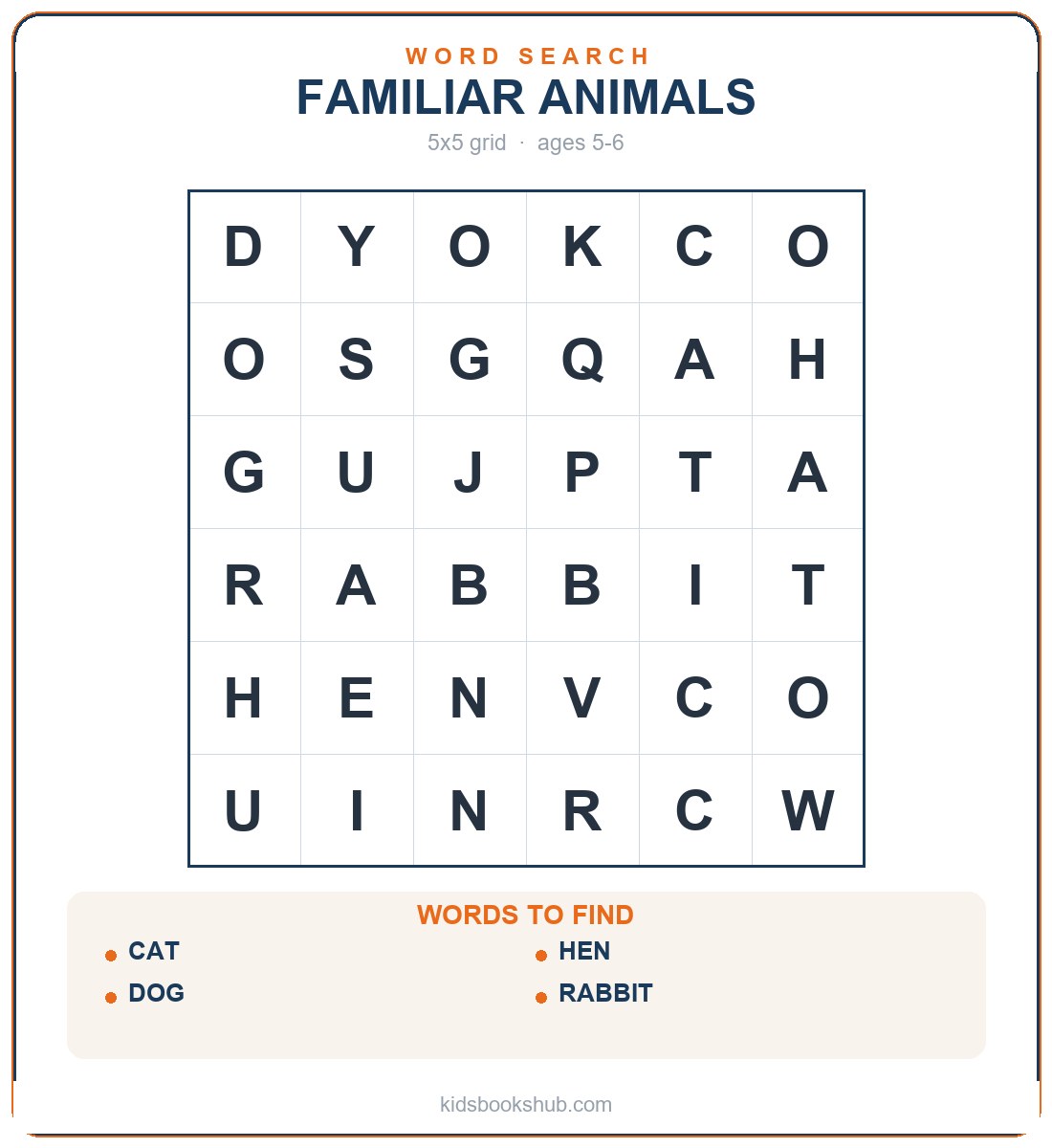
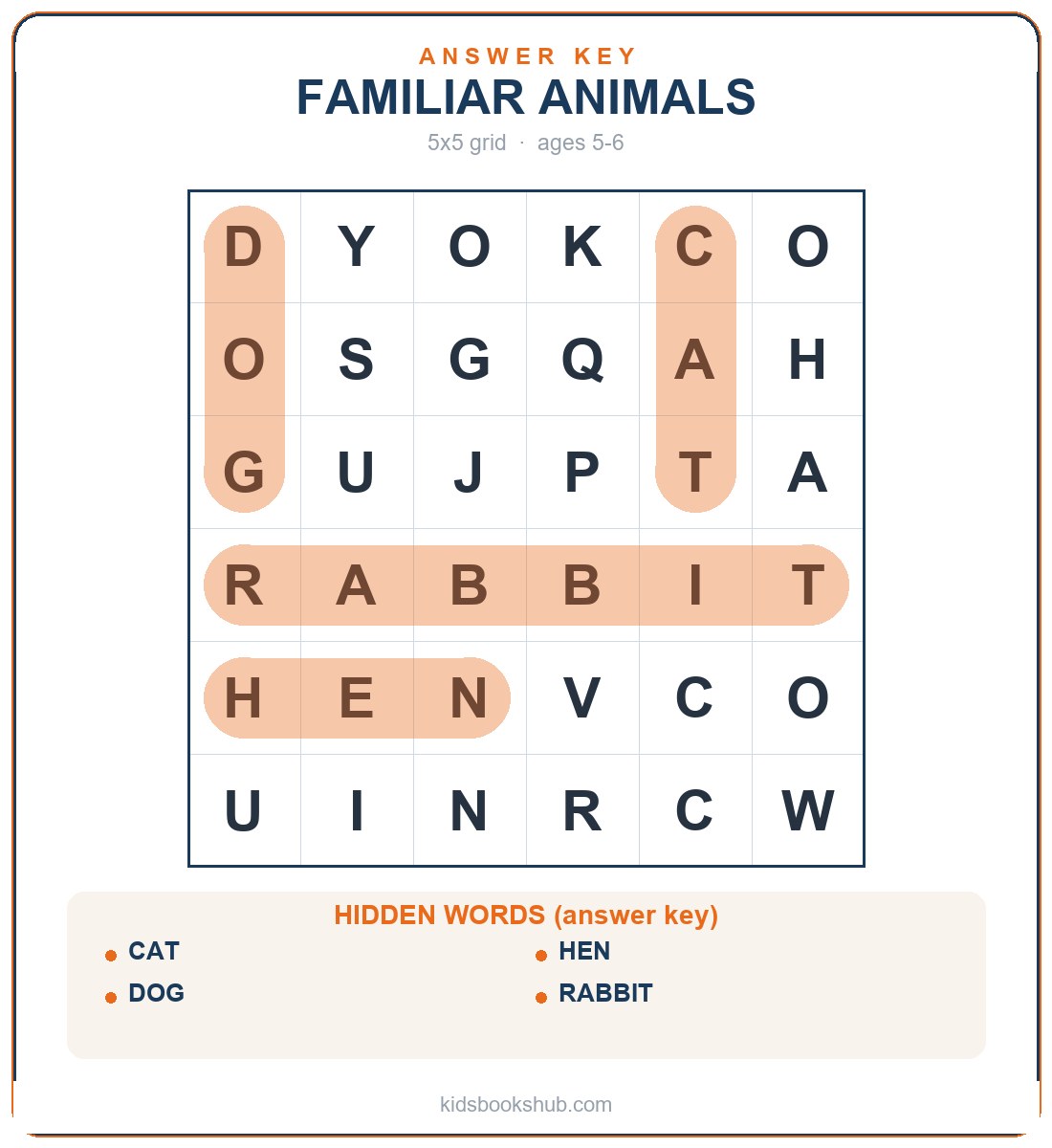
This tiny 25-square grid is perfect to start with. Your child looks for short words like CAT, DOG, RABBIT, HEN, hidden only across or down. The letters are big and the spacing is airy, so success comes fast: ideal for building confidence and the wish to carry on.
🐮 Farm-animals grid
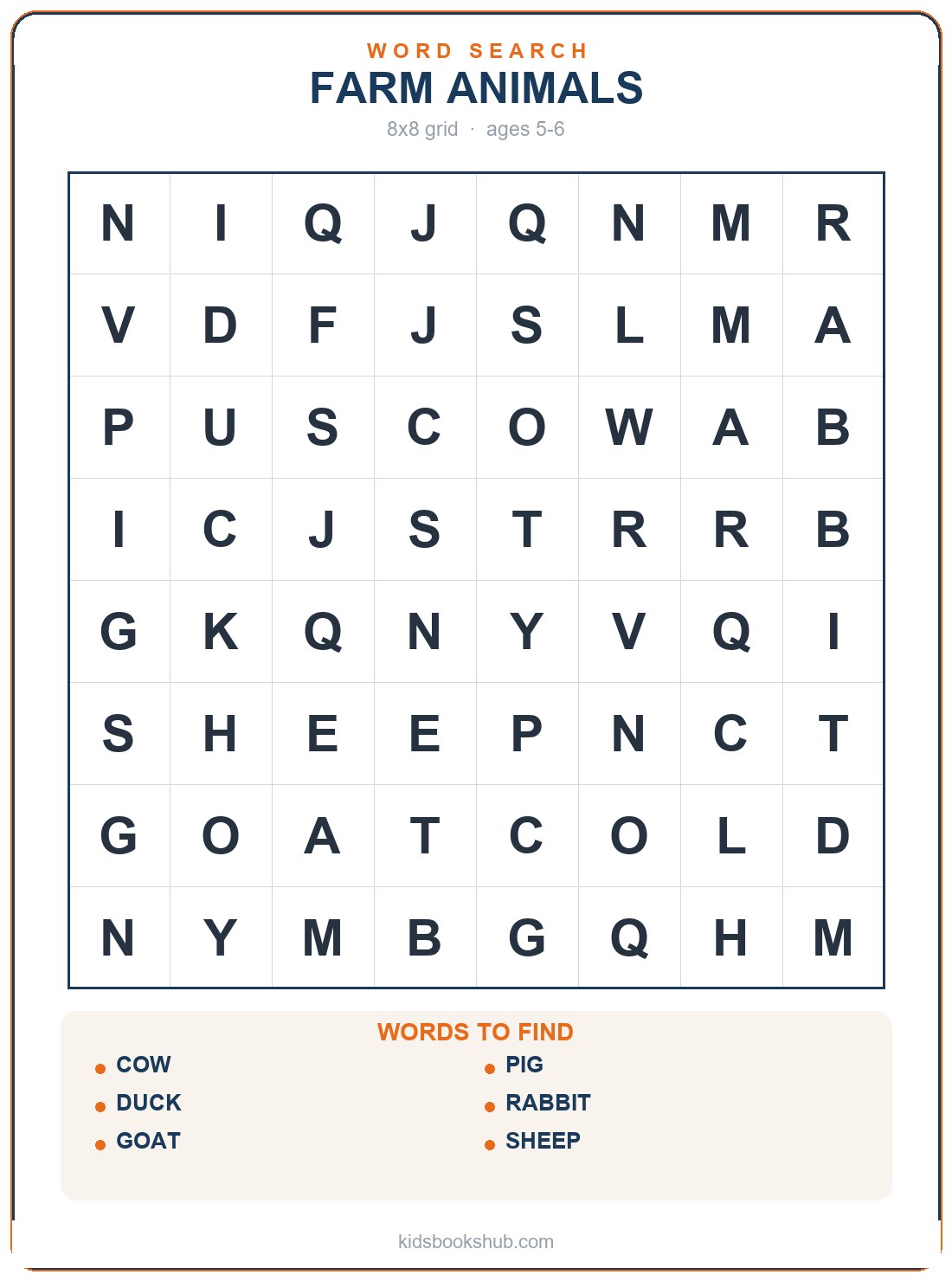
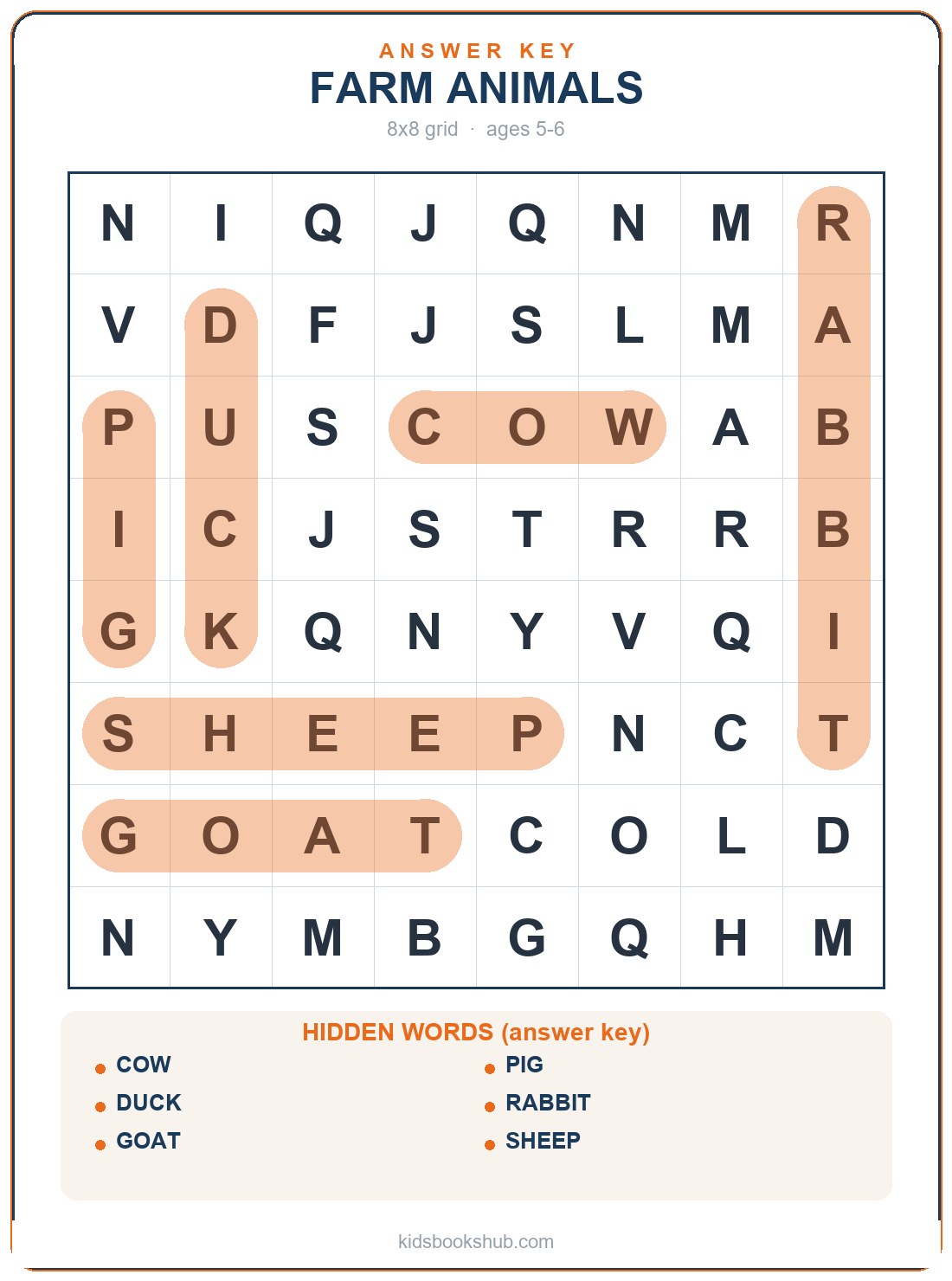
A little bigger, this grid brings in words of 4 to 6 letters: COW, GOAT, SHEEP, PIG, DUCK, RABBIT. Your child starts hunting in several directions. It’s the grid we recommend for children who can read syllables but are still discovering some written words.
🐯 Jungle-animals grid
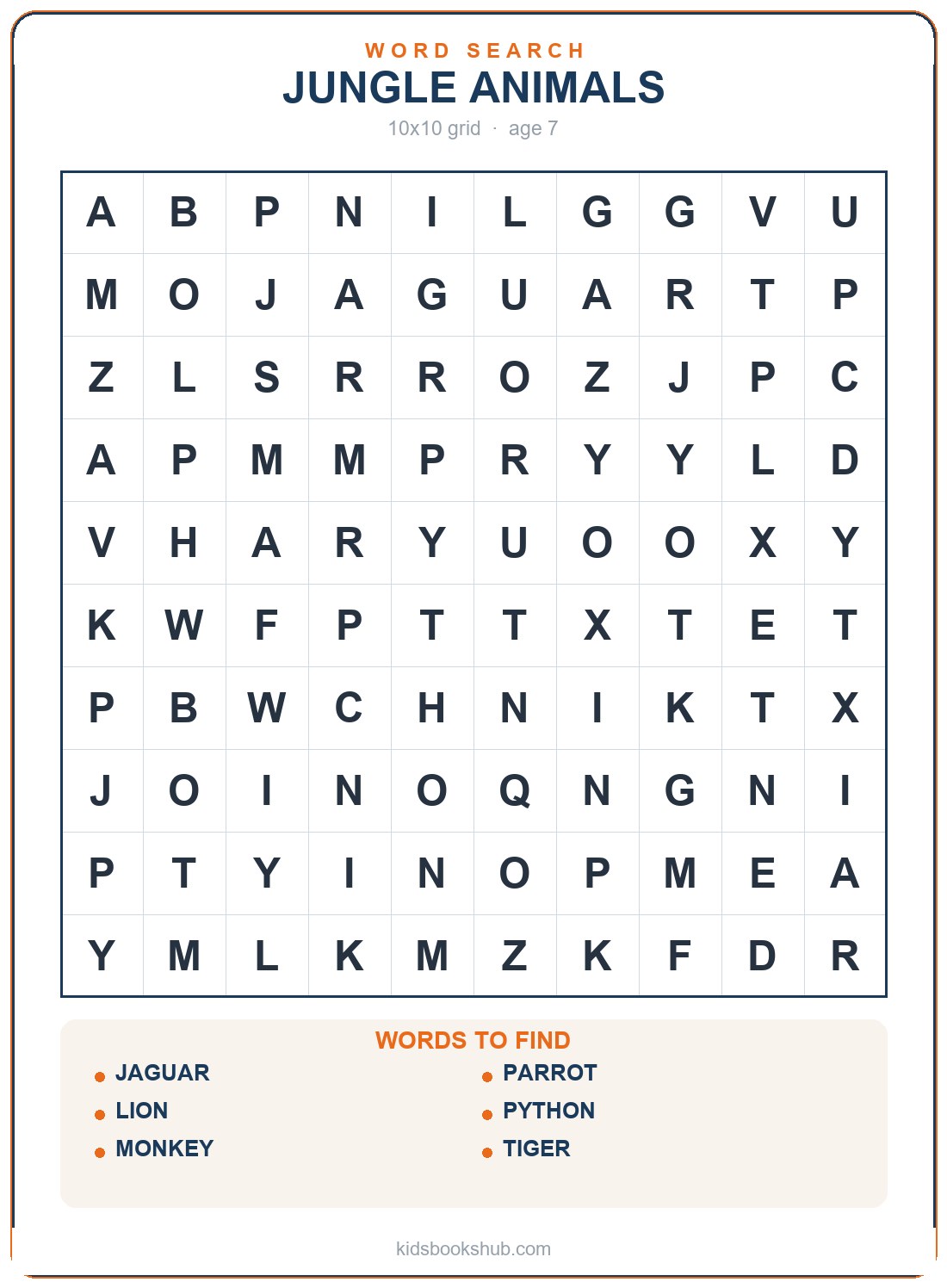
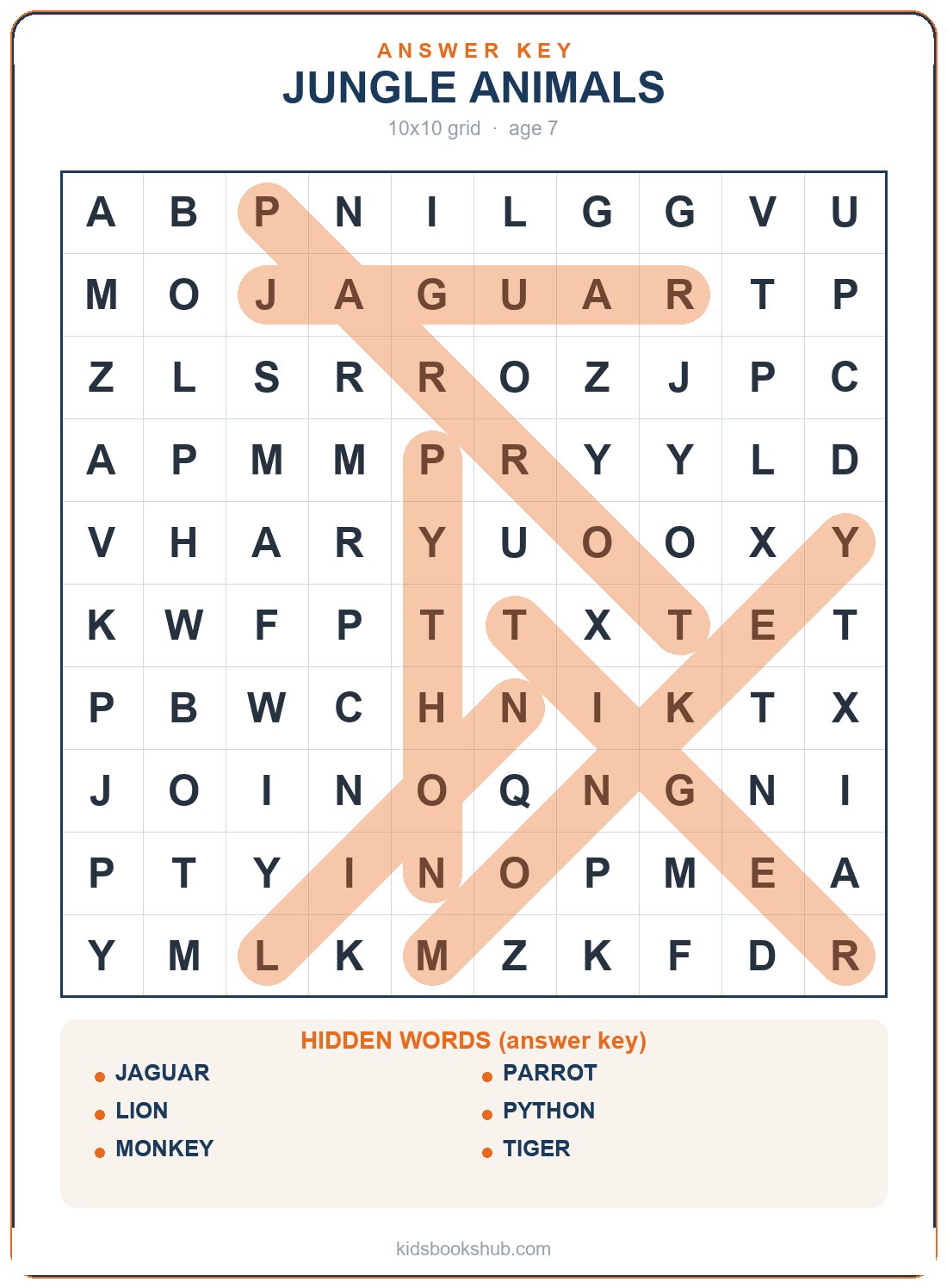
LION, TIGER, MONKEY, JAGUAR, PYTHON, PARROT… This medium grid features less common animals, which truly grows vocabulary. Words can hide across, down and diagonally. It suits children who read fluently.
🐬 Themed grid: sea animals
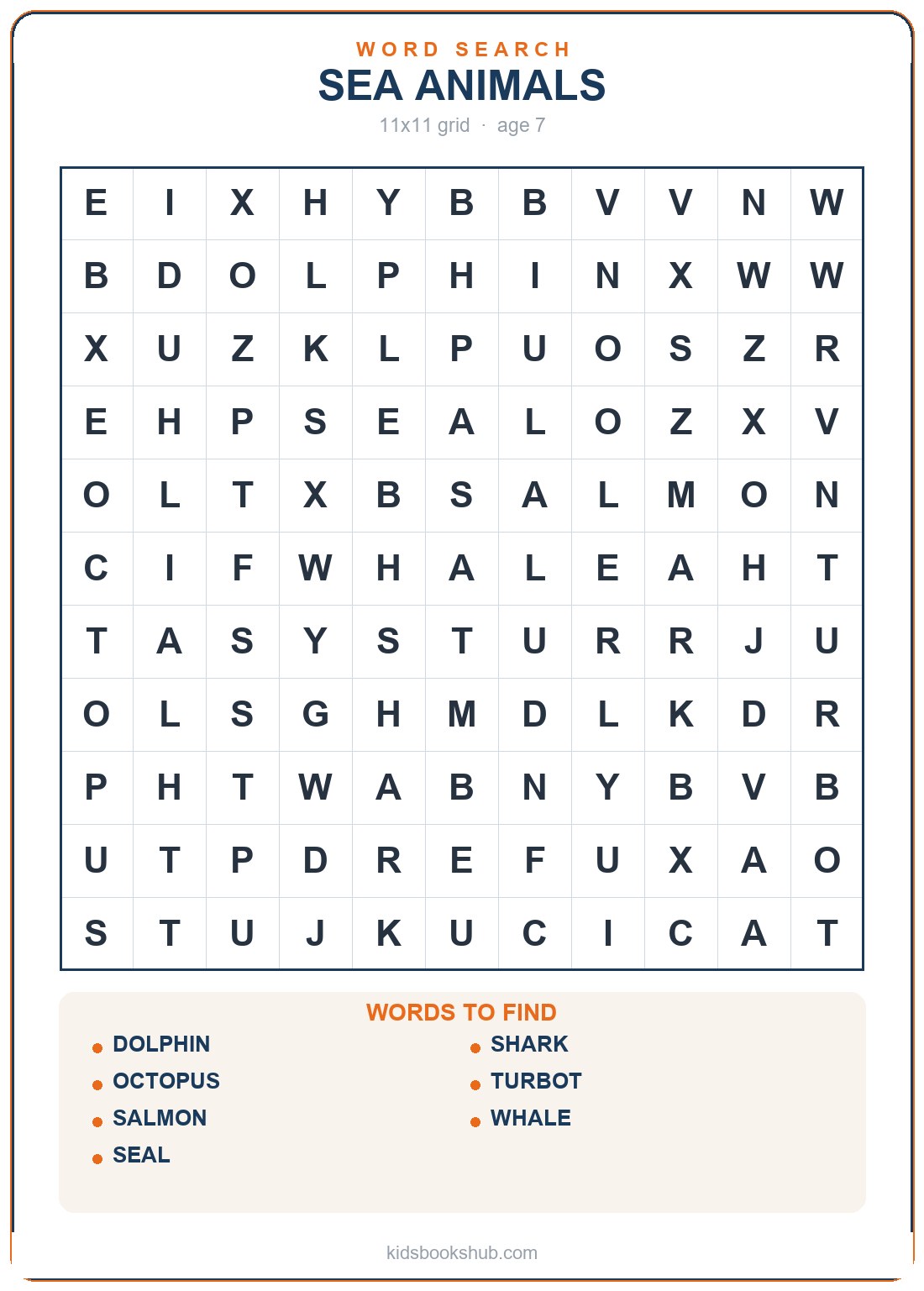
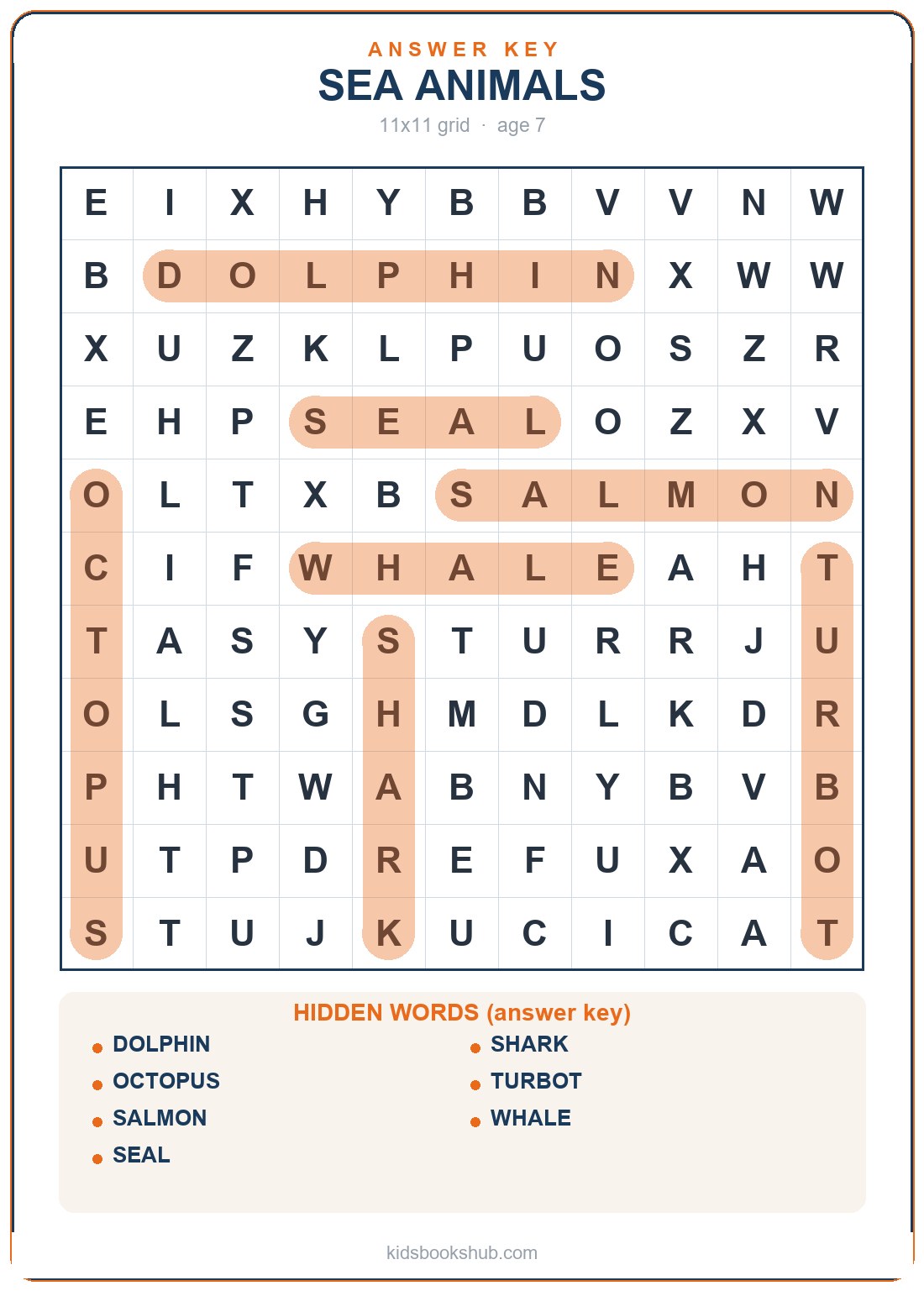
SHARK, DOLPHIN, WHALE, OCTOPUS, SEAL, SALMON, TURBOT. This grid sticks to across and down only, to stay accessible. The sea theme often fascinates children and pairs nicely with an aquarium trip or a wildlife documentary watched together.
🦊 Grid with diagonals: forest animals
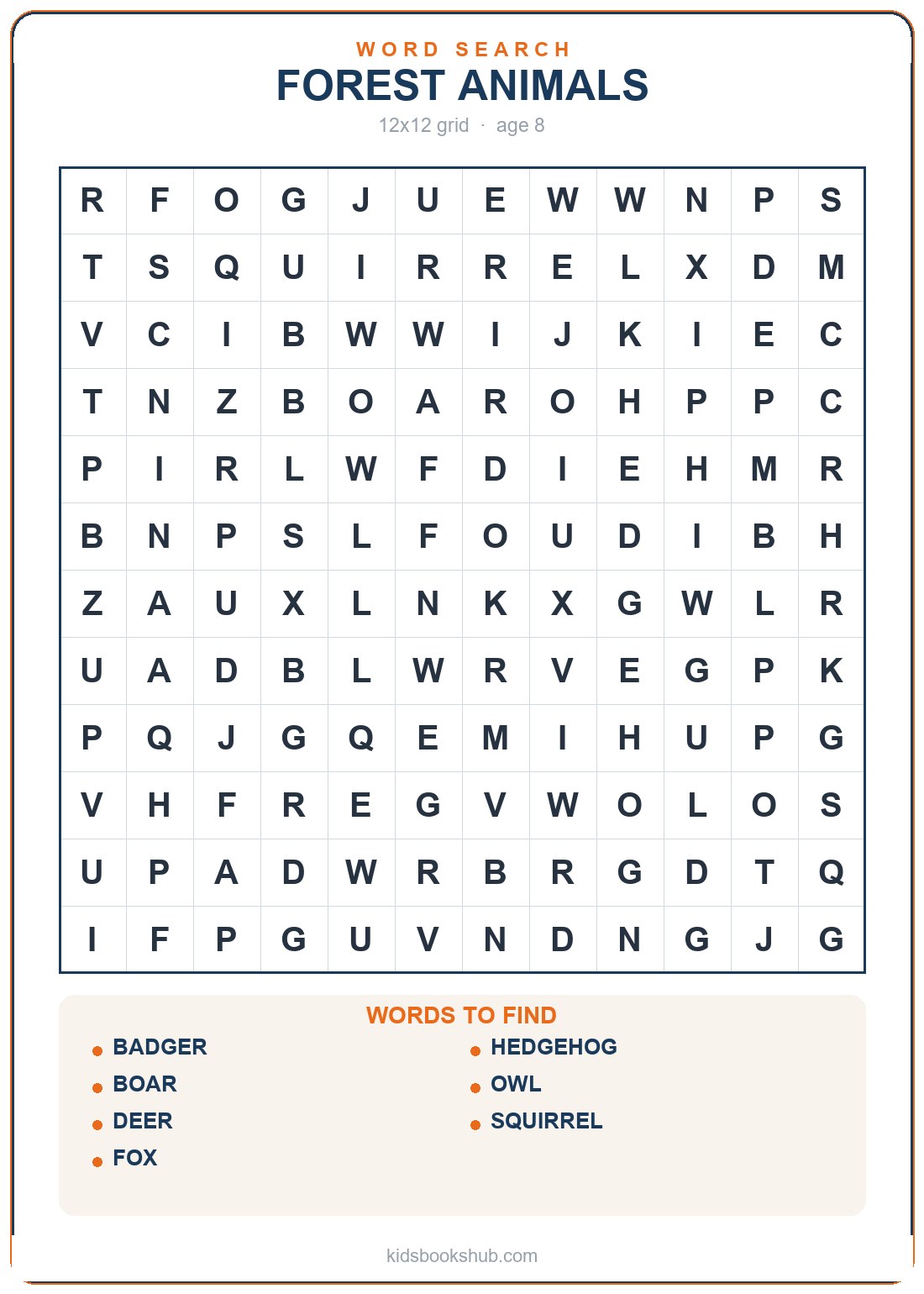
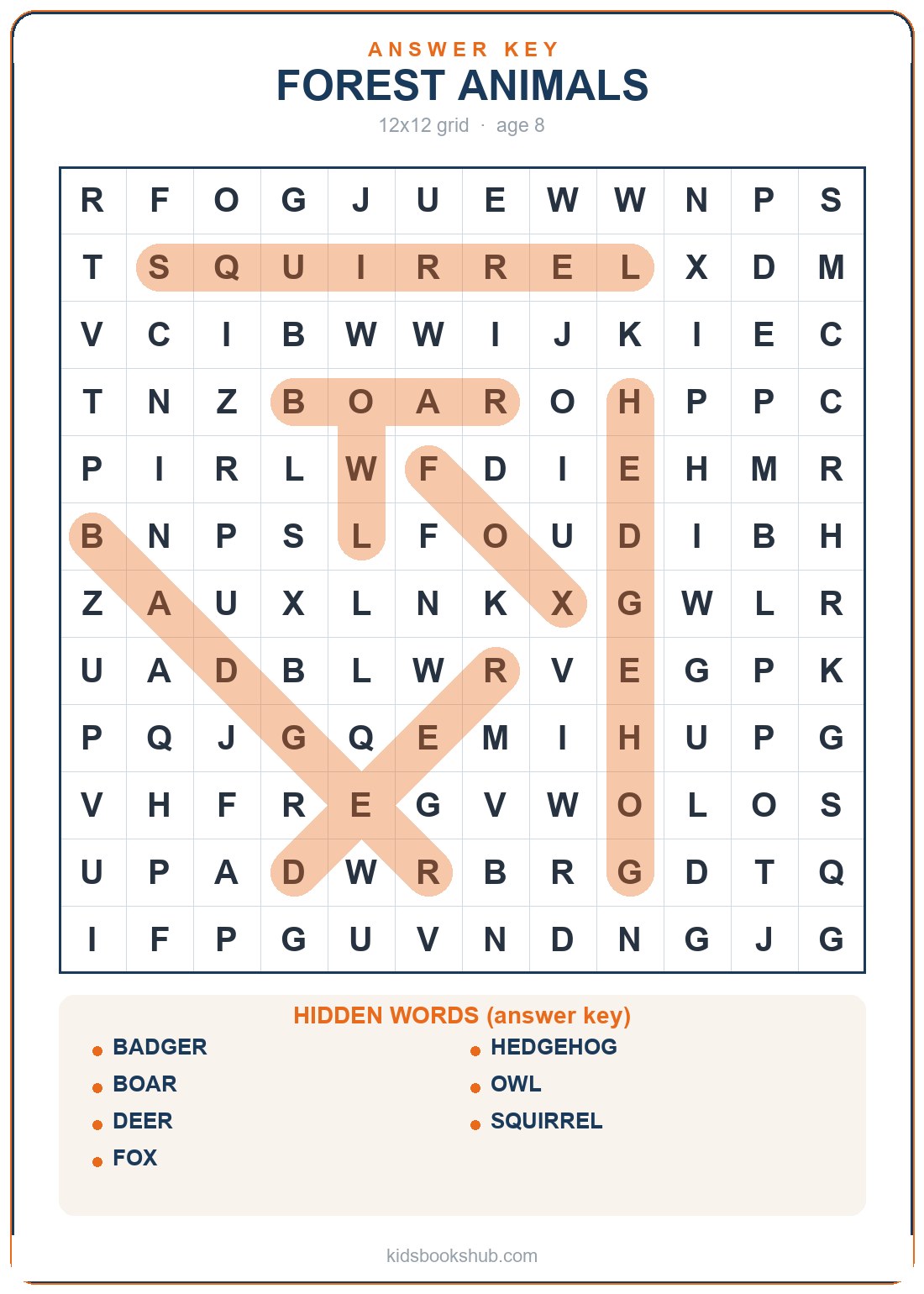
FOX, DEER, BOAR, SQUIRREL, BADGER, HEDGEHOG, OWL. Here the words can hide in every direction, including diagonally. It’s an extra level of difficulty that calls for patient, systematic looking. Your child will be proud to finish this one.
🦁 Mega 15×15 grid: all the animals
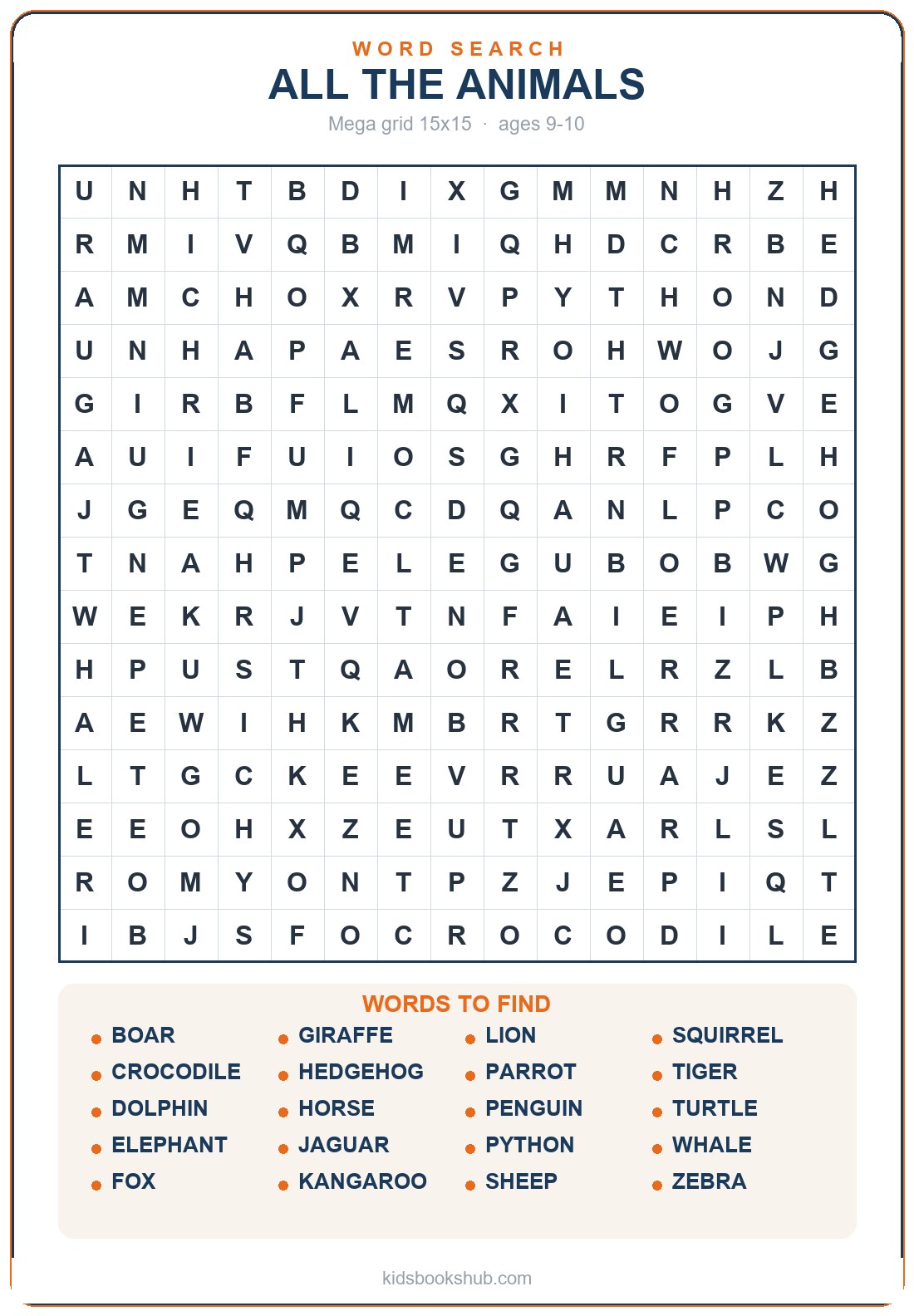
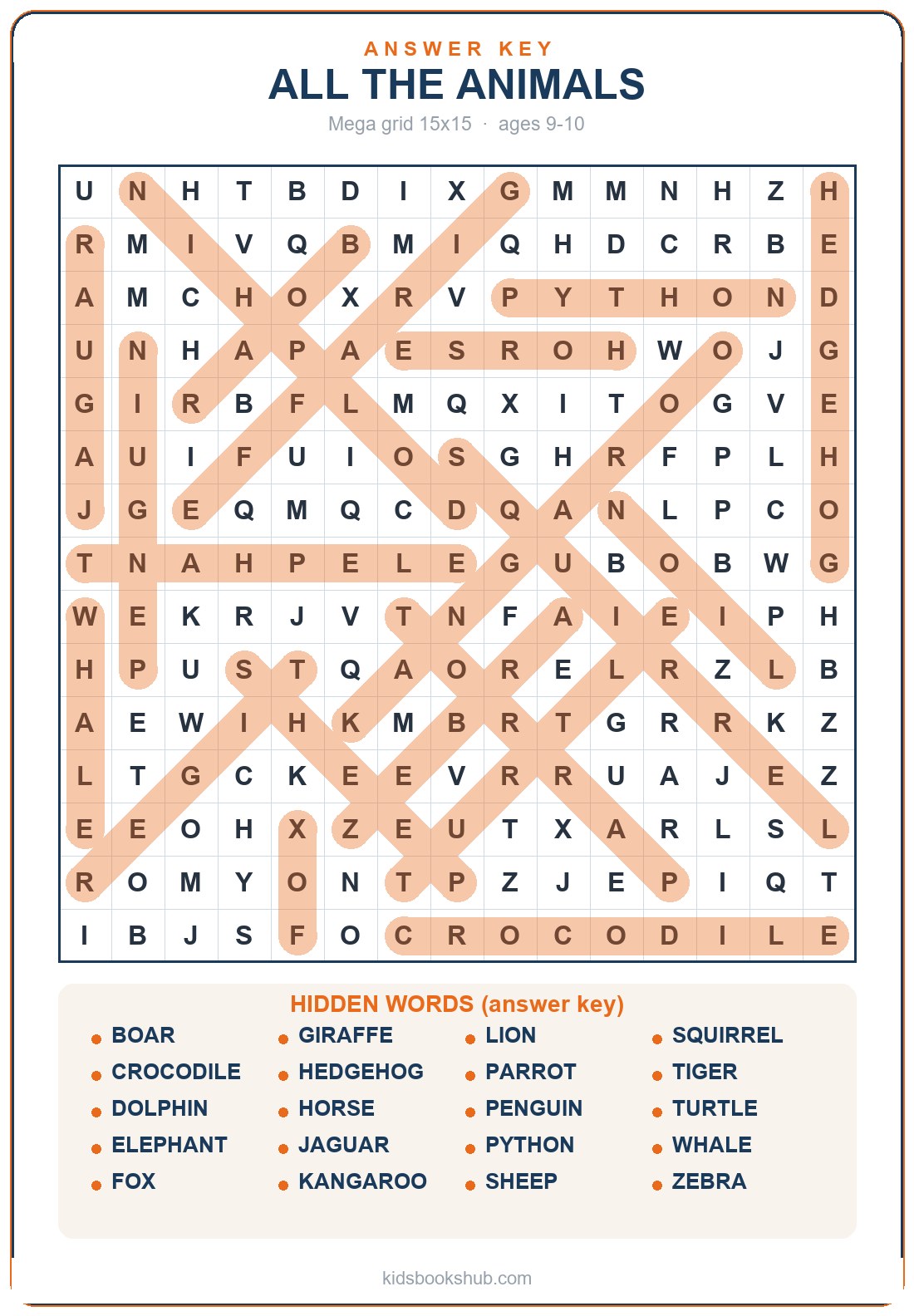
The queen of grids. It hides twenty animal names from every family in one big multi-directional puzzle. It can keep a child busy for half an hour and is a real challenge for ages 8-10. Some parents do it as a family, each hunting for their favourite word.
📖 The benefits for reading and spelling
Hunting for words in a grid calls on a particular kind of reading: analytical reading. Unlike reading text left to right, searching a grid makes the eye move in every direction. This eye-work strengthens visual decoding, very useful for fast reading.
For spelling, your child faces the exact form of words. If they look for GIRAFFE and see GIRAFF, they notice the error with no need to be told. This implicit self-correction gradually builds solid spelling memory.
Word searches also develop an analytical eye: your child learns not to rush, to check each letter, to backtrack. These cognitive skills transfer to many other school subjects.
Finally, patience comes into play. Finding a word hidden in a big grid can take time. Your child learns to persevere, to change strategy when a lead goes nowhere, and to feel the satisfaction of success earned through effort.
💡 The rules, explained simply
So your child can play on their own, here’s how to explain the rules clearly.
Each grid comes with a list of words to find, shown beside or below it. The goal is to spot each of those words in the letter grid. When your child finds a word, they highlight or circle it in the grid, then tick it off the list.
Words can read left to right (across), top to bottom (down), and in some grids diagonally. In advanced grids, a few words may even read backwards. It helps to look first for the first and last letter of the word, then check the letters in between.
A good strategy is to scan the grid row by row, looking for the word’s first letter. Once found, you check the eight possible directions to see if the next letters match. This method stops you looking at the grid randomly and missing words.
There’s no time limit. Your child can stop, come back later, or find the answers with you. The idea is to keep the activity enjoyable, with no pressure of time or performance.
👶 Choosing the right level for your child’s age
Picking the right grid matters so the activity stays stimulating without discouraging your child. Here are our recommendations by age.
Ages 3-4: children this age can’t read yet. Word searches can still be introduced visually: swap the word list for little animal pictures. Your child copies the letter sequence visually, letter by letter. It’s an excellent letter-recognition exercise.
Ages 5-6: the 5×5 grid with very short words is a perfect fit. Your child recognises simple words and starts searching with enthusiasm. Keep grids to across and down only.
Ages 7-8: the 10×10 grids with diagonals work very well. Your child reads fluently and can tackle longer words. Searching diagonally is a new challenge they gladly take on at this age.
Ages 9-10: the mega 15×15 grid, or grids with rare words hidden backwards, are a real challenge. These children enjoy a bit of competition: you can time them, play as a family, or offer themed grids linked to a science lesson.
🎨 Ideas to extend the activity
Word searches can be the starting point for many other rewarding activities.
Invite your child to create their own grid. They pick a theme (dinosaurs, fruit, countries), write the words to hide, place them in the grid, then fill the empty squares with random letters. It’s a creative activity that takes real thought and reinforces spelling even more. Your child can then challenge friends or siblings.
You can also pair word searches with animal card games: after finding an animal in the grid, your child looks for its card in a memory or sorting game. You can even ask them to share a fact about that animal: what it eats, where it lives, whether it’s wild or tame.
To go further, the words found in the grid can serve as a list for an illustrated dictation: you draw the animal and your child writes its name. This multi-sensory approach (see, write, draw) really cements the learning.
🔑 Answer keys
🧩 Here are the solutions to the six grids. Look once your child has had a good hunt, or to check the circled words together. Each hidden word is highlighted in orange.
🐶 Answer key — 5×5 grid: familiar animals
🐮 Answer key — farm-animals grid
🐯 Answer key — jungle-animals grid
🐬 Answer key — sea-animals grid
🦊 Answer key — forest-animals grid
🦁 Answer key — mega 15×15 grid: all the animals
❓ FAQ
👶 From what age can children start word searches?
From around 5-6, your child can get started with 5×5 grids holding very short words. Before that age, you can use picture grids where the child copies letter sequences visually from an image, without reading in the strict sense.
🔄 Can words read backwards in these grids?
It depends on the grid’s level. Beginner grids don’t hide words backwards: directions stay intuitive (left-right, top-bottom). Advanced grids, for ages 9-10, may include words read backwards to make the search trickier.
👀 Is it better to read the word list before or after looking at the grid?
It’s best to read the word list first, take in its written form, then search the grid. That lets the eye target the first letters efficiently. Your child can also point to the word in the list while hunting for it, to remember each letter.
🗣️ Do word searches help learn vocabulary in another language?
Yes, absolutely. Many language teachers use word searches to reinforce vocabulary. You can make a grid with animal names in the language being learnt and ask your child to find them after a vocabulary lesson. It’s effective, enjoyable revision.
