
Are your children bouncing off the walls at home while screens gobble up all their attention? To bring back a bit of calm and a lot of energy, dip into these 20 outdoor activities for kids that turn every outing into a sensory and sporty adventure. 🌳 Use this guide to boost their immune system and spark their creativity through free play out in nature.
- Outdoor activities for kids: why they are so good
- 5 nature activities to explore your surroundings
- How to move more with sporty obstacle courses
- 5 creative activities for expressing yourself outside
- Traditional games and little garden joys
- Practical tips for stress-free outings
🌳 Outdoor activities for kids: why they are so good
After hours spent indoors, it’s time to rediscover why simply stepping out of the front door changes everything for our children.
💪 The physical and immune boost of fresh air
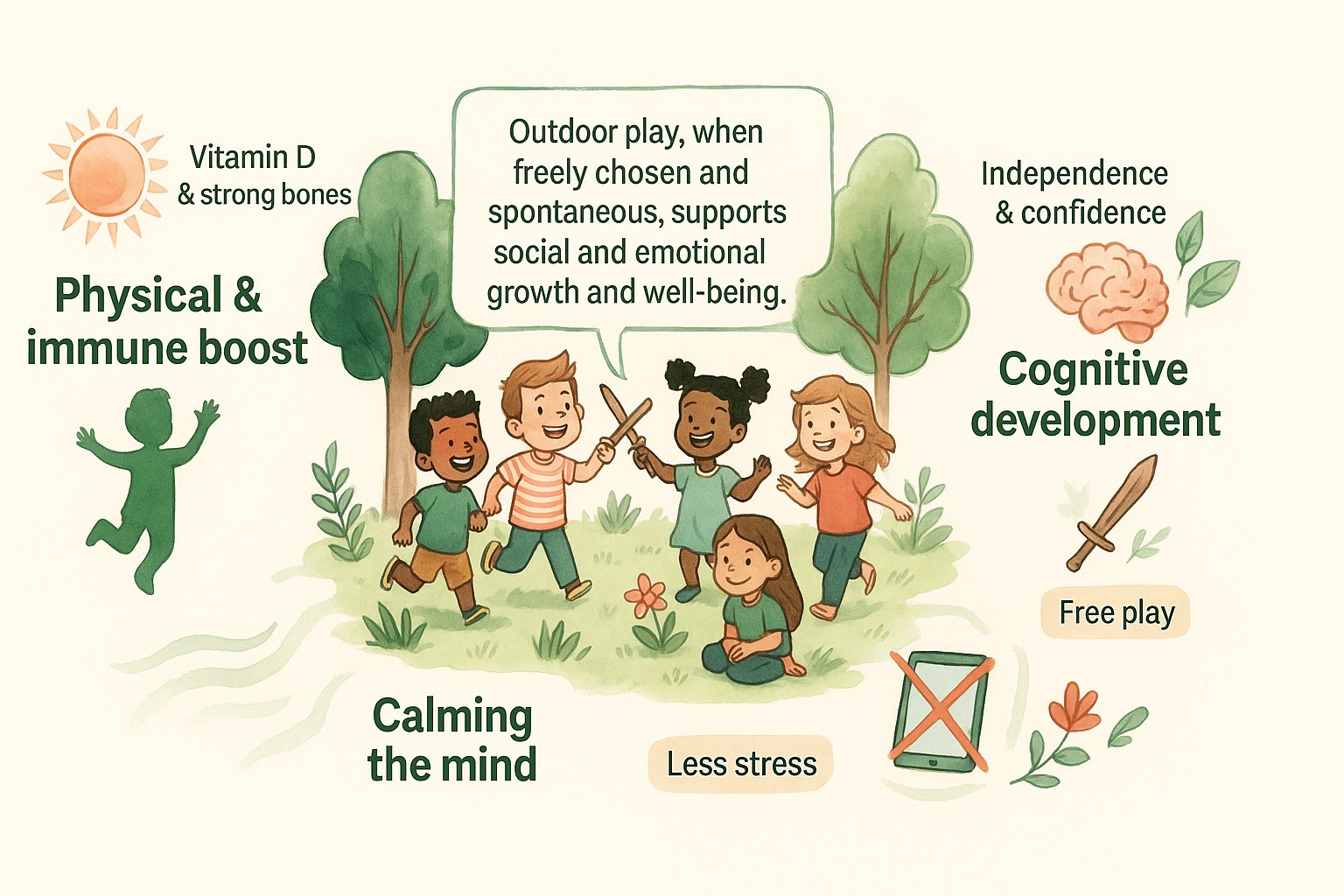
Natural light helps the body make vitamin D. This process strengthens bones and teeth. It also helps keep their mood bright every single day.
Clean air protects the airways from constant irritation. Contact with nature builds up the natural defences of these little explorers. Regular activity also keeps their hearts healthy for the long run.
According to the WHO, regular outdoor physical activity lowers the risk of illness in children. That’s a major scientific finding.
🧠 Brain growth through free play
Playing without strict rules builds children’s independence. They lead their own movements, following their own ideas. This builds real, lasting self-confidence.
A simple stick turns into a magic tool. These natural objects fire up an imagination with no limits. That’s where true creativity is born, with no gadgets at all.
Climbing over uneven ground helps them weigh up real risks. Making these choices on their own gets their thinking minds ready for the future.
📵 Calming the mind and unplugging from screens
The green of the trees instantly soothes a busy mind. Built-up stress melts away the moment you walk in a forest. Nature works like a free, natural stress-buster.
Switching off the tablets lets the nervous system rest. Concentration gets so much better after a trip outside. The brain finds its usual calm again.
Outdoor play, when it is freely chosen and spontaneous, supports children’s social and emotional growth and their overall well-being.
🌿 5 nature activities to explore your surroundings
The benefits are clear, so let’s get practical with hands-on ideas to turn every outing into an adventure.
🐞 Treasure hunts and watching insects
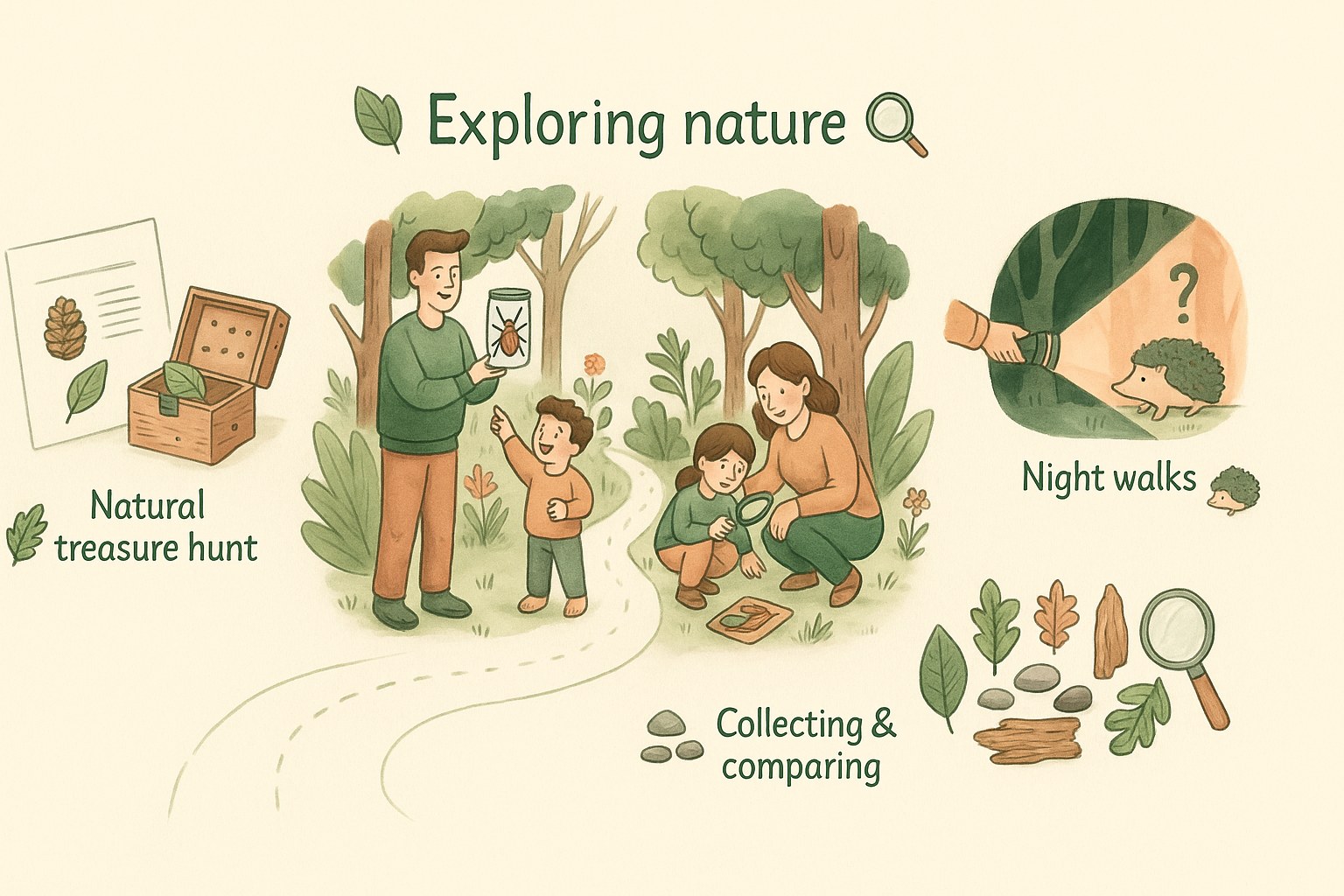
Make a list of specific things to find, chosen to match the season. Go and hunt for brown pine cones or light, fluttery feathers. This instantly turns a walk into a thrilling mission.
Use a small clear box to watch hard-working ants. Look closely at their nimble legs and their jerky movements. It’s a real, living science lesson.
Teach children to treat every little creature with great care. You watch without ever hurting, then you let everything go back into the grass. Here’s the perfect kit for success:
- A sturdy magnifying glass
- A box with air holes
- A sketchbook
- A guide to local insects
🌙 Night walks and waking up the senses
Head out with a strong torch as soon as night falls. The family garden looks completely different in the shadows. Night-time mysteries finally come to life before your wide eyes.
Listen for the odd sounds hidden in the thick bushes. Is it a little hedgehog or simply the cool breeze? Pick out the sharp calls of the night birds. It’s a truly amazing listening exercise.
Breathe in the sweet scent of flowers that open very late. Total darkness sharpens your sense of smell and hearing. Adventure is often right at the end of the familiar path.
🪨 Collecting and comparing natural treasures
Gather colourful leaves, smooth pebbles or rough pieces of bark. Look for the strangest, most unusual shapes. Every find tells an ancient geological story.
Sort your finds by bright colour or by shrinking size. Compare the softness of green moss with the roughness of a stone. This builds a sharp sense of observation. It’s a fascinating sorting game.
Learn the exact names of the trees around you together. Identify the local rocks with a handy little guide. Knowledge makes nature even more precious.
🏃 How to move more with sporty obstacle courses
Exploring is great, but getting physical lets out the energy that’s often bottled up between four walls.
🤸 Balance and homemade obstacle courses
Use tree stumps to test their balance. Walking along a log takes real concentration. It’s a fun physical challenge.
Build a circuit with buckets and ropes. Jump over the obstacles without touching a thing. Crawl under a low branch. These moves work the whole body’s coordination.
Physical activity from a young age really matters for keeping kids active and avoiding too much sitting still. That’s a key point for their health.
🎯 Lively games of throwing and speed
Aim at a target with pine cones. It’s a brilliant exercise for accuracy. Who will hit the centre of the trunk?
Play freeze tag to sharpen reflexes. Run, then stop dead at the signal. This game works on coordination and listening. Laughter is guaranteed at every stop.
Set up relay races on the grass. Even in a small garden, the effort is real. Speed becomes a team game. It’s simple and very effective.
🏅 Setting up family garden games
Plan out long-jump challenges. Jump as far as you can on the soft grass. Mark the records with little twigs.
Set up a kind, gentle points system. Reward the effort just as much as the final win. What matters most is taking part all together. The competition should stay pure fun.
| Event | Equipment needed | Skill worked on |
|---|---|---|
| Sack race | Cloth sacks | Coordination and strength |
| Toy archery | Plastic bow | Accuracy and focus |
| Balance beam | Wooden plank | Body stability |
| Target throwing | Weighted balls | Aim and precision |
🎨 5 creative activities for expressing yourself outside
After all that physical effort, let’s make room for imagination with workshops where nature becomes the raw material.
🖍️ Land art and chalk drawings
Make faces out of petals and leaves. Sand and pebbles finish off your creations. It’s free, fleeting art.
Turn the pavement into a giant mural. Coloured chalk lets you draw without limits. It’s a great way to build fine motor skills. The colours burst out in the sunshine.
Let the children express themselves on big surfaces. The street or the terrace becomes their canvas. The rain will wash it all away so they can start again.
🥧 Mud kitchen and sun prints
Set up a mud kitchen with old dishes. Mix a bit of soil with a little water. It’s messy-play heaven.
Try sun printing for bluish pictures. Place a leaf on the light-sensitive paper. The sun makes the plant shapes appear. It’s a magical, very visual experiment.
Handling these natural materials wakes up all the senses. The smell of wet earth is impossible to replace. Creativity has no barriers left.
🏕️ Building dens and insect hotels
Tie together dead branches and old sheets. Create a secret hideout at the bottom of the garden. It’s the start of every adventure game.
Make an insect hotel out of straw. Use upside-down terracotta pots. Give a roof to the bees and ladybirds. It’s a real, hands-on gesture for local wildlife.
Protecting nature starts with these small acts. Looking after the planet becomes an exciting building game. You learn while making useful shelters.
🌻 Traditional games and little garden joys
Sometimes the simplest ideas are the ones that last the longest, passing through the generations without ever getting old.
🤾 The timeless playground classics
Get a game of hopscotch or hide-and-seek going again. Statues (where you freeze on the spot) always works a treat. These are timeless favourites you can count on.
These games teach respect for shared rules. They also help children make friends in a happy, healthy way. You learn to wait your turn patiently. The give-and-take between children is what really matters here.
Adapt the rules so you can play with just two people. One parent and one child are plenty. Keeping it simple is the key to having fun.
🌱 First steps in the veg patch and the life cycle of plants
Plant radishes or colourful nasturtiums. These grow fast and keep little ones keen. It’s so rewarding to watch life pop up.
Follow every stage from seed to harvest. The daily watering becomes a very important job. You finally understand where our food comes from. The rhythm of the seasons sets the pace.
- Radish seeds
- Small pots
- Organic compost
- A child-sized watering can
- Wooden labels
💦 Water games and team activities
Offer pouring trays for the youngest ones. Pouring water from one container to another is fascinating. It’s a very gentle way to wake up the senses.
Invent challenges that call for teamwork. Fill a leaky bucket by working as a team. Here, cooperation takes the place of individual competition. You all win or lose together.
Learn not to waste precious water. Use the water from the games to water the flowers. It’s a fun lesson in responsibility.
🧘 Practical tips for stress-free outings
To keep these moments enjoyable for everyone, a little organisation helps you avoid the small logistical dramas.
🎒 The survival kit for budding adventurers
Always pack a water bottle and a magnifying glass. A small first-aid kit is also a must. Better safe than sorry with little scrapes.
Slip some spare clothes into your bag. An empty bag will come in handy for the treasures they find. Pack this bag together with your child. It gives them a sense of responsibility before you even leave.
A well-equipped child is a calm explorer. The adventure begins as soon as you start packing.
📏 Adapting activities to age and space
Keep the courses simple for the youngest ones. Let them explore the grass at their own pace. Discovery happens through touch.
Turn a small balcony into a study zone. Set up tubs of soil and a few plants. For older children, make the puzzles trickier. The challenge should always match their age.
Every space, even a tiny one, offers opportunities. All it takes is a bit of imagination.
☔ Having fun despite the rain or bad weather
Get out the wellies and the yellow raincoats. Jumping in puddles is a huge thrill. Rain is not the enemy.
Go on a hunt for snails out and about. Listen to the drumming of raindrops on the leaves. The whole sensory experience is completely different and rich.
Bad weather also makes memories. Changing weather makes the adventure feel more real.
Exploring nature boosts the immune system, sparks creativity and calms the mind far from screens. Get your adventurer’s kit ready and try these outdoor activities for kids this very weekend. Give them these precious memories out in the sunshine: every outing is a win for their happiness and growth.
❓ FAQ
🌟 What are the real benefits of outdoor activities for my child’s development?
Spending time outdoors is a true magic potion for our little ones. On the physical side, it boosts their immune system thanks to vitamin D and improves their motor coordination. It’s also a great way to prevent childhood obesity by keeping them active in a fun way.
On the mental side, nature works like a natural calmer that reduces stress and worry. Free play outdoors sparks their creativity and independence, while improving their concentration once they’re back home. It’s a perfect balance for their overall well-being.
🗺️ How can I easily set up a nature treasure hunt in my garden?
You don’t need a complicated treasure map to have fun! Just prepare a short list of seasonal items to find, like a feather, a smooth stone, a jagged leaf or a pine cone. This turns a simple walk into a thrilling exploration mission.
To spice up the adventure, you can give the children a magnifying glass or a box with air holes. The idea is to let them watch the little creatures or the details of the plants before letting everything go. It’s a living science lesson that happens gently.
⚽ Which sporty activities can help my child move more?
You can easily turn the garden into a family Olympic playground. Test their balance on tree stumps or build an obstacle course with buckets and ropes. Freeze tag, where you stop still at a signal, is also perfect for working on reflexes and coordination.
Throwing games, like aiming at a tree trunk with pine cones, are excellent for accuracy. These activities let them release built-up energy and fight against too much sitting still, all while sharing a real moment of laughter together.
🌻 How can I introduce my child to gardening in a fun way?
The secret is to choose varieties that grow quickly so our impatient little ones don’t get discouraged. Radishes and nasturtiums are perfect for this. Give them tools that fit their size and trust them with the very important job of daily watering.
It’s a wonderful chance to help them understand the cycle of life, from seed to harvest. By watching life rise from the soil, they develop natural patience and a huge respect for the food they later find on their plate.
🌧️ What outdoor activity can we do when it starts to rain?
Rain is not the enemy, it’s just a new adventure! You pull on your wellies and raincoat and go jumping in puddles, a timeless thrill. It’s also the perfect time to go hunting for snails poking their noses out.
The whole sensory experience changes in the rain: the smell of wet earth is stronger and the sound of drops on the leaves is soothing. These “wet” outings often make the funniest and most genuine memories of childhood.
🍃 How can I spark my child’s creativity with natural materials?
Nature is a giant toolbox! You can try land art by making faces with petals and leaves, or set up a “mud kitchen” with old dishes to make earth cakes. It’s messy, yes, but so freeing for their imagination.
For a more artistic touch, sun printing lets you create bluish prints of plants thanks to the sun’s rays. Using chalk to draw on the ground or building a den with dead branches are also great ways to let their artistic side shine on a big scale.
