
Does your child love watching the little insects of the garden? 🐞 Our selection of bee and ladybird colouring pages offers ten free drawings to print. Six hard-working bees and four lucky ladybirds are waiting for their favourite pencils.
These colouring pages print in a few seconds from your home printer. They are perfectly suited to children from nursery to primary school. Your child thus discovers two iconic insects of spring while having fun. ✨
- Why colour these little insects
- Our bee colouring pages to print
- Our ladybird colouring pages to print
- The benefits of colouring for your child
- Which colours for these little insects
- Ideas to extend the nature activity
🐞 Why colour these little insects
The bee and the ladybird are children’s two favourite insects. Their simple shapes and bright colours make them immediately endearing. They are perfect gateways to discovering the living world.
🌼 Two useful, friendly insects
The bee forages flowers and makes the honey we love. The ladybird devours aphids and protects the garden plants. These two insects have a very positive reputation with children.
Unlike other insects, bees and ladybirds are not frightening. Their image is associated with gentleness and usefulness. Parents can talk about them with complete peace of mind to their little ones.
✨ Simple, expressive shapes
Bees and ladybirds have round bodies and wings that are easy to draw. Their proportions are well balanced for a successful colouring page. The child quickly gets a satisfying, rewarding result.
The bee’s yellow and black stripes are very recognisable. So are the black spots on the ladybird’s bright red. These simple patterns are great fun for children of every age.
🌷 A perfect theme for spring
Spring is the season when insects first come out. Bees and ladybirds appear together in sunny gardens. This time of year is ideal for offering this kind of colouring page.
The child can observe these insects outdoors and then colour them at home. This alternation enriches their experience and understanding. Nature and creation reinforce each other in their discovery.
🐝 Our bee colouring pages to print
Our six bee colouring pages feature this pollinating insect in varied moods. From the simple kawaii style to the more detailed drawing, there is something for every age. Your child thus discovers the whole fascinating world of the hard-working bee.
😊 The smiling kawaii bee
Our first colouring page features an all-round bee in the kawaii style. Its big smile and expressive eyes immediately win over the littlest ones. It is ideal for a first successful colouring experience.
The thick lines leave the child a wide margin. They colour without stress and quickly finish their work. This quick success truly builds their self-confidence.
The little stylised flowers around invite them to play with colours. The child can choose freely for each one. This freedom feeds their budding creativity.

🌸 The bee foraging a big flower
This colouring page shows a cute bee resting on a big flower. It gathers the nectar carefully in the open petals. The scene tells the whole daily work of the forager.
The drawing suits children of around five to seven. It offers several areas to colour with varied choices. The big flower lets them explore a whole joyful colour palette.
It is also a chance to explain the bee’s role in the garden. It carries the pollen from one flower to another for reproduction. These simple explanations always captivate curious children.

🐝 The stylised bee in full flight
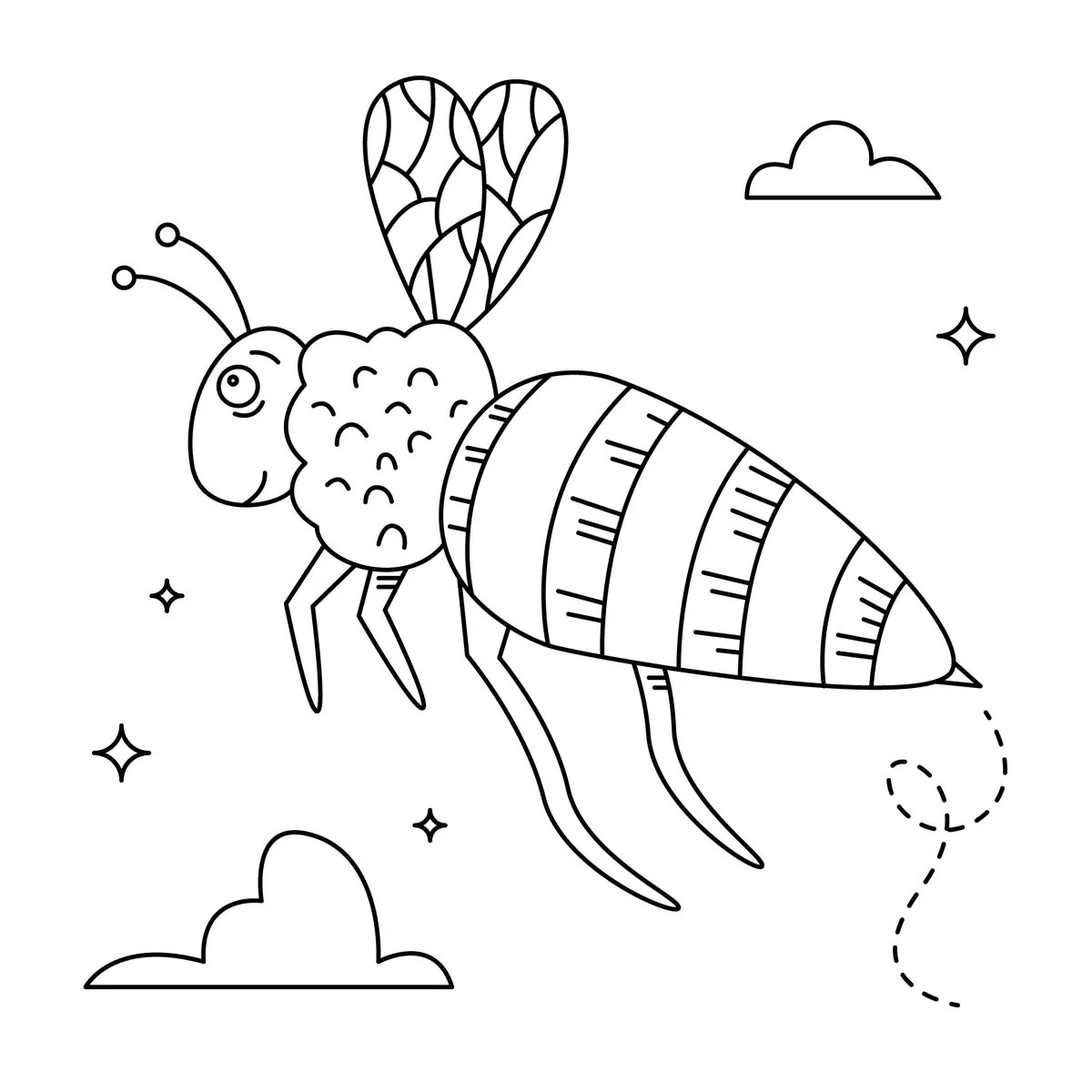
This third colouring page offers a more graphic, stylised bee. The patterns on the wings invite you to play with varied colours. Clouds and little stars liven up the background of the drawing.
This model suits children who love precise details well. It calls for a little more patience than a classic kawaii bee. Older children enjoy this slightly modern graphic style.
The final result is really elegant with a few well-placed golden touches. The child discovers that a colouring page can also be a graphic work in its own right.
🌻 The bee and the flower, friends
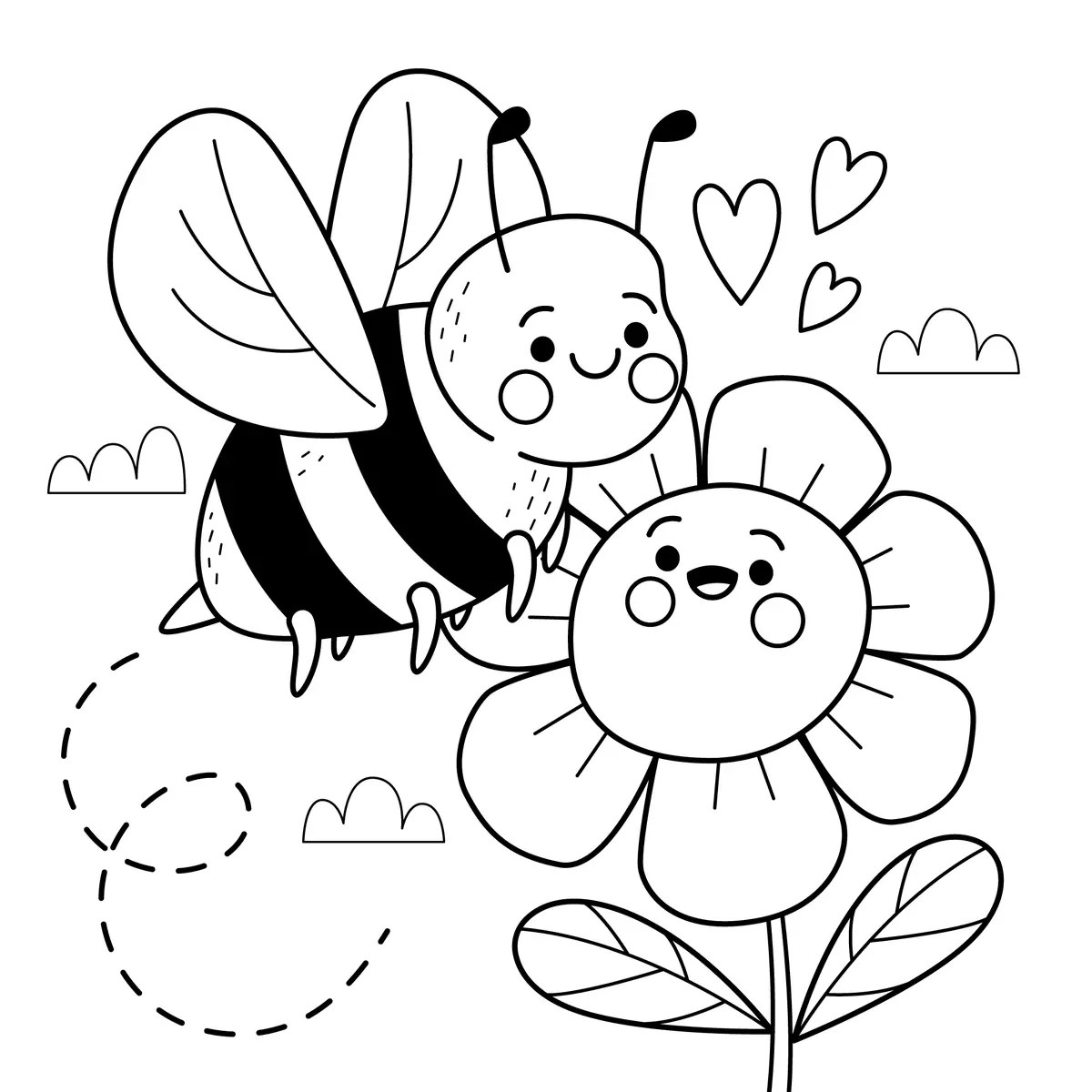
This tender colouring page features a bee and a flower with smiling faces. The little hearts that surround them tell of their lovely bond. The scene immediately touches children’s hearts.
The very rounded style reassures even the littlest ones. Every element invites gentleness and delicacy. It is an ideal drawing for talking about friendship and nature.
Your child can colour the flower with their favourite colour. They also choose the shades for the little floating hearts. This positive scene leaves a smile on every little face.
🌼 The bee in the daisies
This more detailed colouring page shows a bee in full flight above the daisies. The finely drawn petals call for a little precision. The whole offers a lovely spring scene to fill with colours.
The drawing suits children from seven or eight. It rewards the patience and care given to the colouring. The final result truly evokes a field of flowers bathed in sunshine.
It is also a chance to talk about the bees’ favourite flowers. Dandelions, lavenders, daisies and clovers attract the foragers. Your child thus connects their drawing to the real garden.

🍯 The bee near its hive
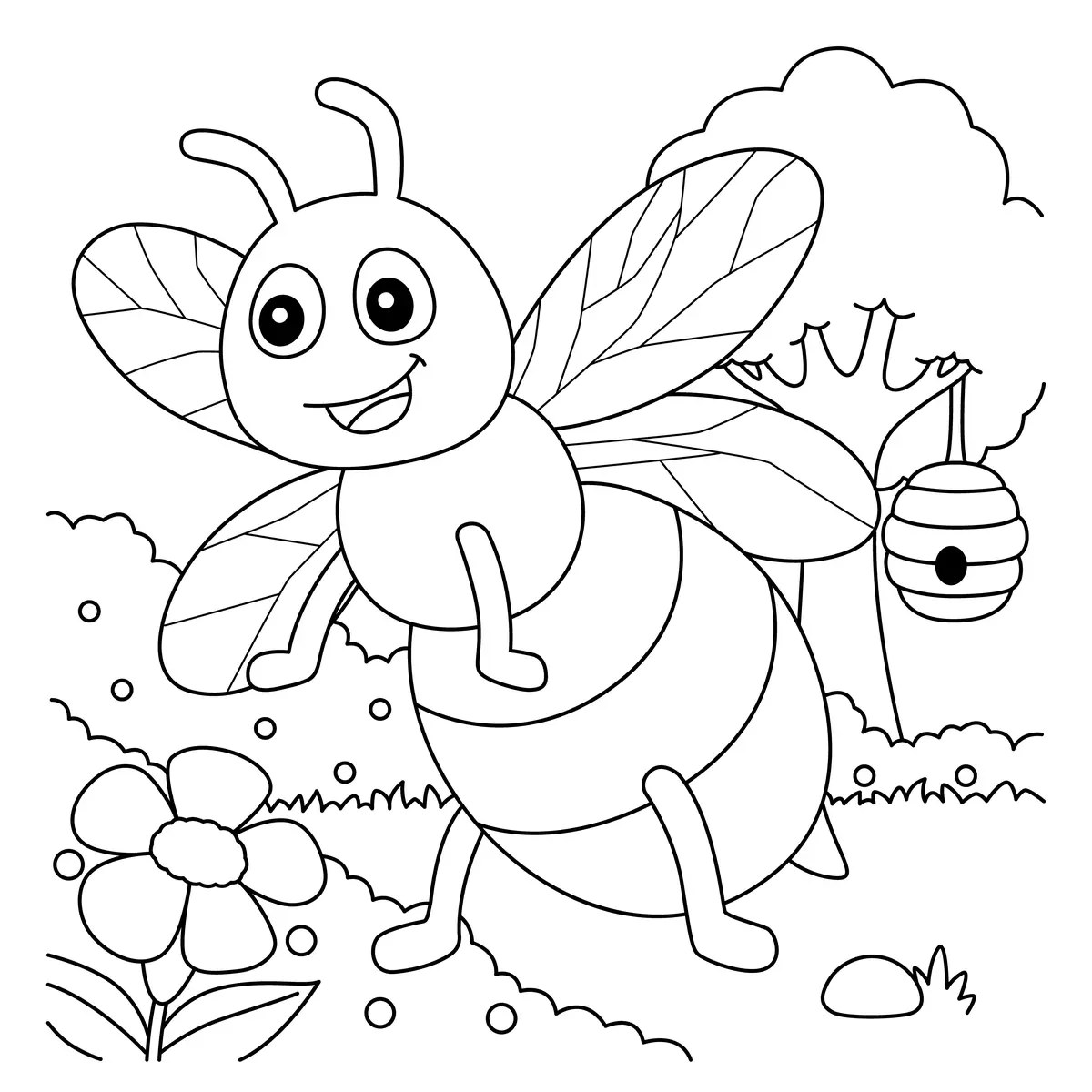
This colouring page shows a cheerful bee in front of its little hanging hive. Flowers, bushes and a hive make up a complete garden setting. It is a scene that sums up the whole world of the forager.
This drawing especially appeals to children who love stories. They imagine the little bee going home after its day. This silent narration makes the colouring page truly captivating.
Children enjoy colouring the hive and the imaginary honey pot. They practise their precision on several different elements. Each area brings its own little technical and artistic challenge.
🐞 Our ladybird colouring pages to print
Our four ladybird colouring pages celebrate this little lucky insect. From the very simple kawaii style to the finely detailed drawing, every age finds something to love. Your child thus explores all the poetry of the ladybird.
🐞 The very simple kawaii ladybird
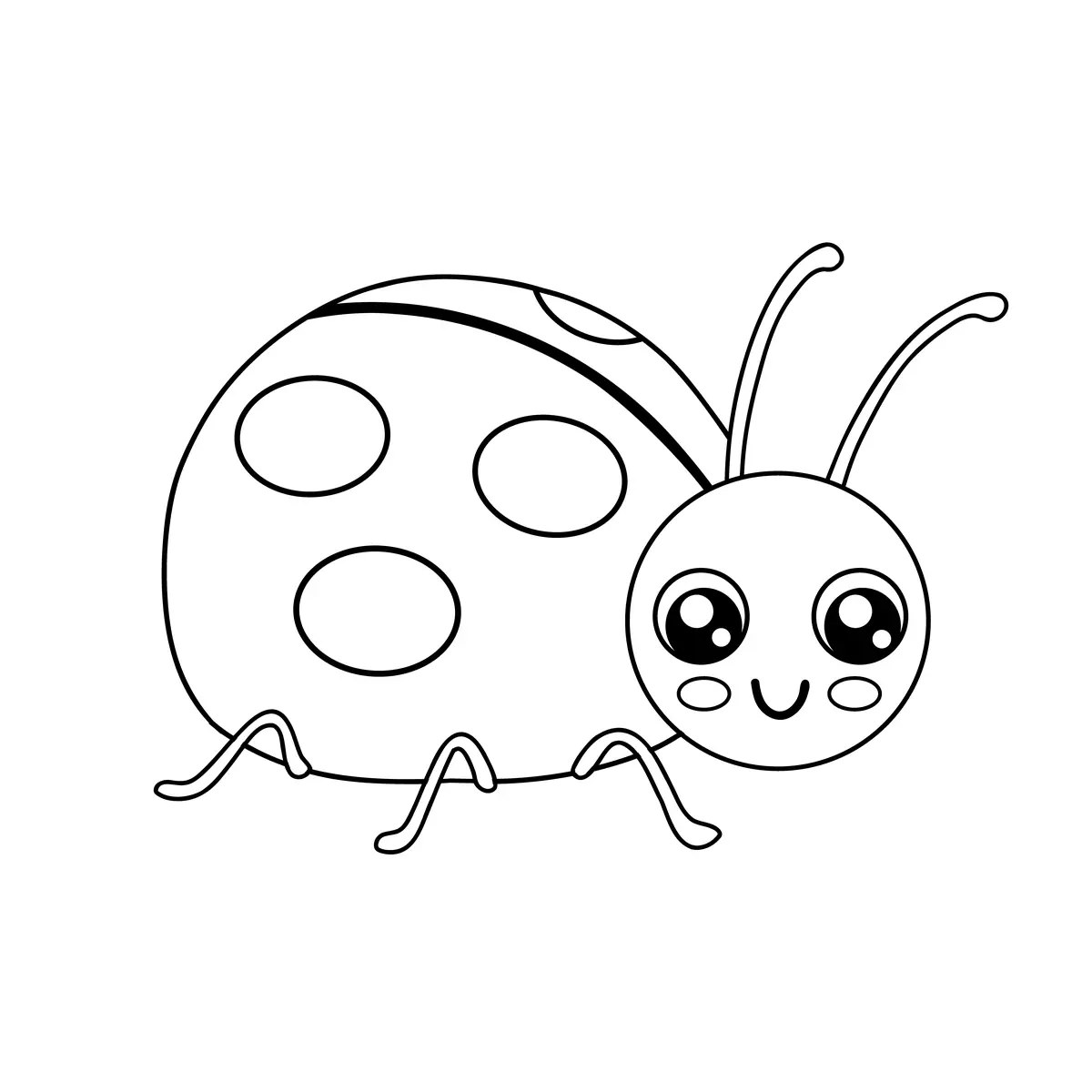
Our first ladybird is all round and adorably kawaii. Its big shining eyes and its smile melt little ones’ hearts. The three big round spots are very easy to colour.
This drawing suits children aged three to five perfectly. The thick outlines tolerate the first clumsy pencil strokes. Success is almost guaranteed from the first few minutes.
The big round dots offer a quick filling-in pleasure. The child sees their work progress very fast and concretely. This immediate satisfaction encourages them to carry on with enthusiasm.
🌱 The smiling ladybird in the grass
This colouring page features a cartoon ladybird resting in the grass. Pretty stylised leaves fall around it like a gentle rain. The scene breathes the softness of a spring day.
The drawing offers more details than the previous one. Blades of grass, leaves and little petals enrich the setting. Here the child explores a whole little nature world to colour.
This model suits children of around five to eight. It calls for a little more patience but generously rewards the effort. The final result truly evokes a little corner of living nature.

🔴 The ladybird seen from above
This colouring page shows the ladybird seen from above in a more precise style. The antennae, the legs and the eight spots are perfectly drawn. It is almost a little naturalist diagram to fill with colours.
The model appeals to children who love watching real insects. It lets them reproduce the exact outline of a ladybird. This contact with the real prepares scientific curiosity.
You can show them a photo of a ladybird while they colour. They then notice the resemblance and feel proud of their result. This connection between drawing and reality truly feeds their learning.

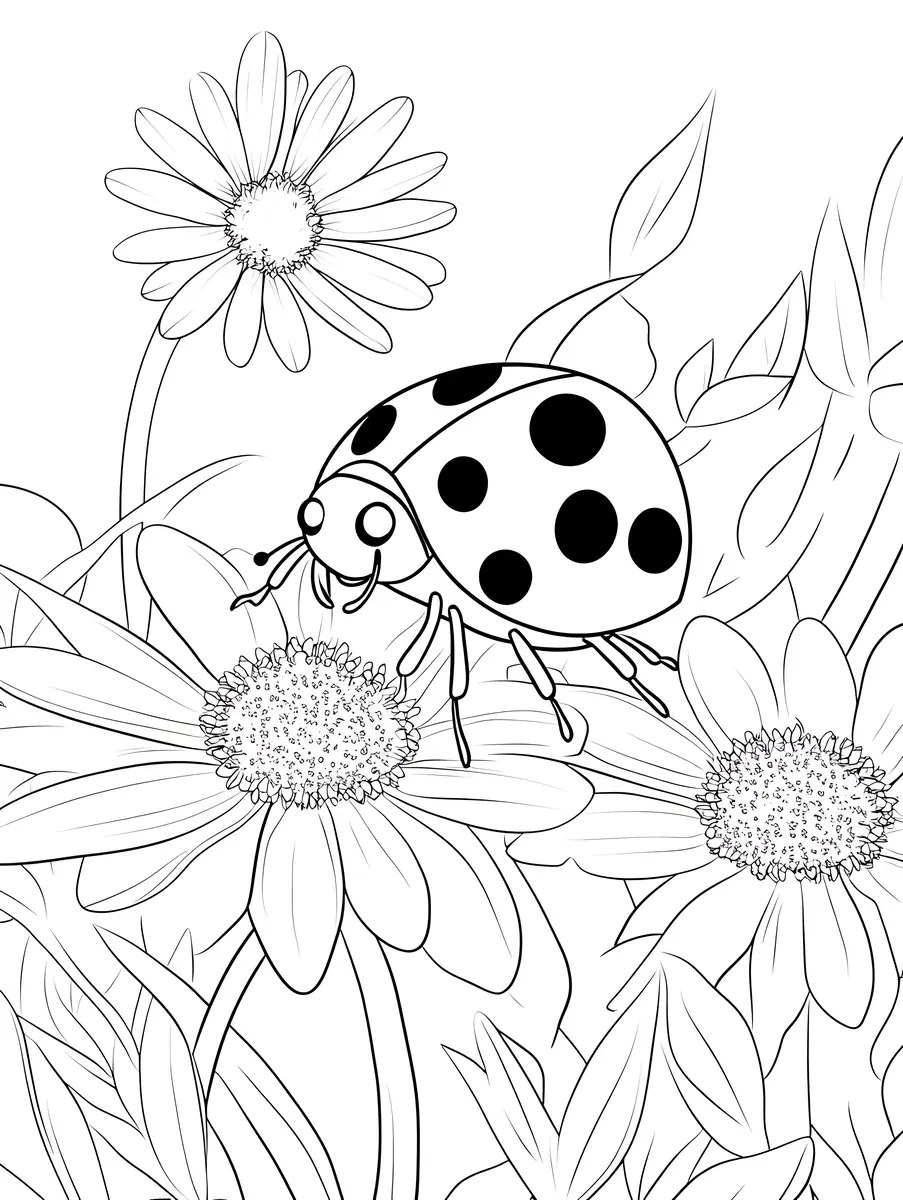
🌼 The ladybird on the daisies
Our most detailed colouring page shows a ladybird on daisies. Finely drawn leaves, grasses and petals make up a whole picture. This drawing becomes a real work to finish with care.
It suits patient children from eight or nine. The details call for good pencil precision. The final result always impresses a lot once finished.
It is also a soothing activity for older children. Detailed colouring naturally calms restless minds. This meditative dimension is a real added benefit.
🌟 The benefits of colouring for your child
The bee and ladybird colouring page brings many benefits to development. This activity works on several crucial skills at the same time. Each session quietly helps build lasting gains.
✋ Fine motor skills and precision
Holding a pencil and colouring calls for precise hand coordination. The child strengthens their little fingers and their wrist. This skill prepares directly for the act of writing to come.
Small details such as the daisies or the stylised wings demand a lot of attention. The child thus naturally progresses in their dexterity. This improvement transfers to all their manual activities.
🧘 Concentration and patience
Colouring calls for sustained attention over several minutes. The child learns to stay focused on a single task. This ability develops gradually like a trained muscle.
The more detailed models in our collection train this attention endurance. Session after session, your child holds out longer on their drawing. This progress truly reassures parents worried about restlessness.
🌍 Raising awareness of nature
Colouring insects helps the child to know and appreciate them. They get past the negative preconceptions sometimes spread about them. The bee and the ladybird become familiar friends in their world.
This first approach builds a respectful attitude towards the living world. The child then observes real insects with more kindness. They learn to coexist with them in the family garden.
🎨 Which colours for these little insects
Is your child wondering how to colour their insects faithfully? Here are a few suggestions to capture their real colours well. These pointers feed their creativity without ever curbing their imagination.
🟡 The traditional colours of the bee
The European bee has a body striped with golden yellow and black. Its wings are transparent with fine visible veins. These colours are almost always the same in nature.
Your child easily alternates the yellow and black stripes on the body. The eyes can be simply black or very dark brown. These choices faithfully reproduce the insect’s real appearance.
🔴 The classic colours of the ladybird
The best-known ladybird wears a bright, vivid red with black spots. Its head and legs are a contrasting black. This distinctive outfit makes it an immediately recognisable character.
Your child fills the wings in red and then adds the black spots. This simple technique gives a very satisfying result. The contrast between the two colours is especially rewarding.
🌿 The colours of the natural setting
The flowers around these insects offer every imaginable colour. Pink, yellow, blue, purple depending on the species shown in the drawing. Your child can mix several tones for more cheer.
The leaves and grass generally stay in varied greens. Light green, dark green, soft green or olive green. This range already offers plenty of creative possibilities to explore.
🌿 Ideas to extend the nature activity
Once the colouring pages are finished, many ideas extend the theme. These extra activities truly enrich the discovery experience. The colouring then becomes the starting point of a nature project.
🔍 Observing bees and ladybirds in the garden
Make the most of a fine day to take your child outdoors. Watch together the insects that visit the garden flowers. This direct observation gives meaning to the colouring time.
Your child can try to recognise the species they coloured. They compare their drawings with the real insects they meet. This observation-and-creation loop is precious for their learning.
📖 Creating a little book of insects
Gather several finished colouring pages into a little homemade booklet. Add a title page with the first name and the date. Your child thus owns their first personal book about insects.
Look at other nature and discovery activities to round off this first naturalist’s notebook. Worksheets, games and colouring pages complete the collection.
🌻 Planting flowers to attract insects
Plant a few nectar-rich flowers together in a pot or in the garden. Lavender, borage and sage naturally attract the hard-working bees. Your child can watch their regular visits over the days.
You can also set up a little insect hotel in a corner. Ladybirds find a welcome shelter there during the cold seasons. This simple action gives your child a lasting awareness of biodiversity.
❓ FAQ
👶 From what age should these colouring pages be offered?
The bee and ladybird colouring page is suitable from age three with the simple kawaii models. The more detailed drawings such as the daisies or the stylised bee suit children from age seven.
🆓 Are the colouring pages all free?
Yes, our ten colouring pages are entirely free and can be downloaded freely. You can print them as many times as needed. They can be used at home or at school without restriction.
🖍️ Which materials should I choose for these colouring pages?
Coloured pencils suit all ages and all drawings. Felt pens give brighter, more vivid results. For the detailed models, fine pencils offer more precision.
🐝 How to explain the bee’s role to a child?
The bee carries the pollen from one flower to another as it forages. This action helps plants to make seeds and fruit. Without bees, we would have far fewer fruits to eat.
🌿 Why is the ladybird useful in the garden?
The ladybird eats the aphids that damage the leaves of plants. It is a real natural protector for attentive gardeners. Some farmers even release them on purpose in their pesticide-free crops.
🦋 Are there other insect colouring pages on the site?
Yes, we also offer free colouring pages of butterflies and other insects. Explore our full collection to find other treasures to print.
