
The return of sunny days often comes with children pacing around indoors, itching to move. To turn that boredom into adventure, 🌳 spring nature activities with kids offer wonderfully simple ideas, from making mud pies to spotting insects with a magnifying glass. Here you’ll discover how to create unforgettable memories through treasure hunts and Land Art sessions that gently awaken all their senses.
- What tools should you pack in the backpack?
- Ephemeral art and plant creations
- Sensory exploration and little creatures
- Building projects in the garden
- Adventure and search games
- Gardening and the cycle of life
- Night walks and the nature journal
- How do you motivate tired little walkers?
🎒 What tools should you pack in the backpack?
Once you’ve decided to head outside, the question of gear comes up to turn a simple walk into a real expedition.
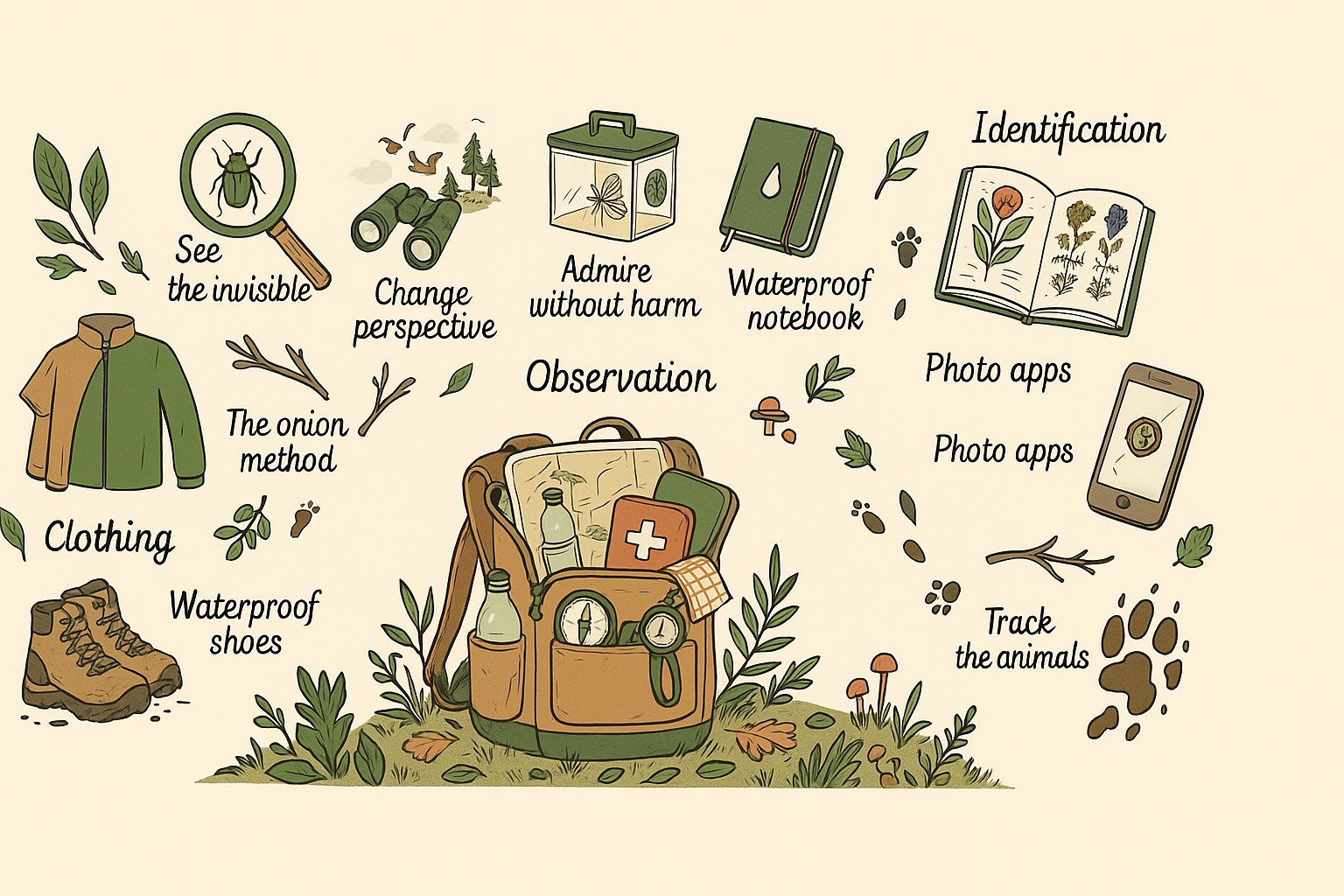
🔍 The must-haves for a close-up look
A magnifying glass completely changes how little ones see tiny treasures. Binoculars also help them scan distant birds. These tools finally reveal what’s invisible to the naked eye.
Airy observation boxes are really handy too. You can admire an insect for a moment before letting it go unharmed.
Don’t forget a notebook. A waterproof one will brave the morning dew without a worry.
🧅 Dressing the onion way
Layering three layers helps you regulate body temperature. The first wicks away sweat. The second keeps the warmth in. The last shields you from the wind. That’s the secret to avoiding chills during your spring nature activities with the children.
Bring out the walking shoes or wellies. The ground is often muddy in April. Waterproofing then becomes your absolute priority.
🌿 Identifying wildlife and plants easily
Illustrated pocket guides are perfect for little hands. They feel more real than screens. This way you learn to recognise wild flowers in the blink of an eye.
Photo-recognition apps are a big help. They’re a useful joker when the book isn’t enough to identify a plant.
Try animal tracking. Look for footprints in the mud to work out who came by.
🎨 Ephemeral art and plant creations
Once you’re well equipped, nature becomes a huge open-air studio where every element is a source of inspiration.

🍂 Land Art to express creativity
Use pebbles, leaves or branches to create patterns on the ground. Play with the contrast of colours between tender green and brown earth. It’s a free, easy activity. The artwork stays in place for the next walkers to enjoy.
Land Art teaches children that beauty is fleeting, and that we must respect the environment and take nothing away.
🖼️ Making pictures from natural elements
Get some frames ready from recycled cardboard. Stick double-sided tape in the middle. The children will fix their finds onto it, like petals or light little twigs.
Make a simple pressed-plant album. It’s a brilliant way to remember the names of the plants you meet on your outings.
Forest centres often run activities to spark creativity. They’re perfect for a bit of fun.
📸 Getting started with nature photography
Learn to frame tiny details. The texture of bark or a drop of dew becomes a fantastic landscape. Spring light gives off gorgeous reflections.
Set up a friendly little contest. Who will take the most unusual or most colourful photo during the walk?
Use an old smartphone. It’s a perfect tool for getting younger ones into framing.
🐞 Sensory exploration and little creatures
Beyond the visual, spring calls on all the senses, inviting direct contact with materials and living things.
🦶 The barefoot trail and the colour hunt
Walk barefoot on cool moss or sand. This sensory experience strengthens the connection with the earth. The feelings of softness and freshness are one of a kind.
Launch a colour hunt. Use a paint swatch card to find the exact shades in the surrounding plants.
Close your eyes for a moment. Feel the texture of the ground under your feet without the help of your sight.
🐜 Watching insects without disturbing them
Look for earthworms after the rain. Watch the bees gather nectar from the first blossoms in the orchard. Every insect has a precise role in our fragile ecosystem. We must learn to watch them without ever disturbing their vital work.
It really helps to raise children’s awareness of biodiversity so we can protect these little residents that are so essential to our garden.
🧘 Mindfulness in the heart of the woods
Listen to the birdsong in silence. Try to tell apart the different melodies that weave together. It’s a calming exercise, perfect for soothing the most restless children.
Practise some deep breathing. The smell of damp earth and pine trees is a natural remedy against stress.
Feel the wind on your face. Become aware of the temperature of the air and the sounds far away.
🏗️ Building projects in the garden
After the quiet watching comes the time for action, with building projects that get the whole family involved.
🏕️ Building dens and secret shelters
Gather dead branches to put up a sturdy structure. Lean them against a strong tree trunk. It’s the start of an incredible adventure in your own garden or out in the forest.
Add sheets or foliage for the roof. Furnish the inside with tree stumps for seats. Your secret shelter is finally ready for the afternoon snack.
🪶 Setting up feeders and insect hotels
Make water spots for the birds. They need to drink and bathe after their long migration. Use a simple shallow dish with a few stones in it.
Fill wooden structures with pine cones. This makes an ideal refuge for ladybirds and lacewings.
Choose a quiet spot. The hotel should face south.
🥧 Playing in the rain and making mud pies
Jump in the puddles in your wellies. Rain shouldn’t stop you from going outside. It turns the garden into a slippery playground.
Make mud pies decorated with flowers. It’s a hands-on activity that delights budding little chefs.
Clean everything with fresh water. A simple hose-down is enough to make the toys look brand new.
🗺️ Adventure and search games
For children who need a clear goal, turning the outing into a quest makes the whole thing far more exciting.
💎 The treasure hunt and the nature trail
Prepare a list of things to find. A white pebble, a feather or a yellow flower will do nicely. A nature trail sharpens the sense of observation of young explorers.
Make up some simple riddles about plants. This lets children learn while having fun without even noticing.
Plan a final reward. A snack shared on a tree stump rounds off the adventure perfectly.
📍 Getting into geocaching as a family
Use a phone’s GPS to locate hidden boxes. It’s a modern, worldwide treasure hunt. You often discover beautiful, little-known spots right on your doorstep. Children love swapping small objects.
Here are a few steps to get off to a good start:
- Download the official app
- Bring a small object to swap
- Respect the hiding spots carefully
- Sign the logbook
🥚 Fun challenges with Easter eggs
Hide messages inside plastic eggs. Each egg holds a sporty challenge, like hopping like a rabbit. It’s a playful twist on the traditional chocolate hunt.
Organise a simplified orienteering race. Use easy visual markers to guide the youngest ones to victory.
Adjust the difficulty to suit the age. Hide the eggs higher up for older children.
🌱 Gardening and the cycle of life
Exploring is great, but understanding how life returns each year is a vital lesson in patience.
🌱 Planting seeds and watching them grow
Choose radish or nasturtium seeds. They sprout very quickly, which keeps little gardeners interested. It’s so rewarding to see life rise from the soil so fast.
Hand over the watering job. This gives the child a sense of responsibility towards their plantings every day.
Keep a notebook. Note down every leaf with pride.
🌷 Understanding the spring revival and the seasons
Explain how nature wakes up after the cold. Watch the buds swelling on the branches together. The longer daylight and the warmth set off this magical process. It’s the perfect moment to talk about the cycle of life.
| Season | Visible sign | Recommended activity |
|---|---|---|
| Spring | Buds | Sowing seeds |
| Summer | Fruit | Harvesting tomatoes |
| Autumn | Leaves | Making compost |
| Winter | Rest | Preparing the tools |
🥕 Creating a vegetable patch in a box or planter
Set up a growing corner on the balcony. Even a small space is enough to grow aromatic herbs. Mint and basil are tough and smell wonderful.
Use homemade compost to feed the soil. It’s a chance to explain the natural recycling of organic waste.
Harvest and taste. Nothing beats a homegrown tomato.
🌙 Night walks and the nature journal
The adventure doesn’t stop when the sun goes down; it simply changes its face and its sound.
🌙 Organising a safe night walk
Give each child a red head-torch. Walking in the dim light completely transforms the familiar landscape. It’s a powerful experience that takes a little courage from the smallest ones.
Listen closely to the sounds of the night. The hoot of an owl or the snap of a branch takes on a whole new dimension. Learn to identify animals by their night-time calls.
📓 Keeping a growing nature journal
Record the most striking discoveries of the month. Draw the wild flowers or the insects you crossed paths with. This journal becomes a precious keepsake of your family moments.
Stick in flat things you’ve gathered. A dried leaf or a found feather will give your pages some texture.
Write down your impressions. Note how you felt on each outing.
♻️ Adopting zero-waste habits out in the field
Pick up the litter you find on your walks. It’s a simple gesture to protect local biodiversity. Children become true guardians of the surrounding nature.
Use only natural materials to play with. Branches and stones make far better toys than plastic ones.
Explain the impact of humans. Help your children understand how fragile ecosystems are.
💪 How do you motivate tired little walkers?
Even with all the enthusiasm in the world, sometimes legs grow heavy and motivation runs low.
💚 The physical and mental benefits of the outdoors
Forest bathing lowers stress. Direct contact with trees soothes children for a long time. It’s a genuine cure of natural health for the whole family.
Concentration improves noticeably outdoors. After the outing, little ones often find a calm composure and a steady focus back at home.
The body grows stronger. Exposure to the elements helps the immune system defend itself better.
🎲 Playful tricks to keep going without getting bored
Inventing heroic stories changes everything. The child becomes the hero of an epic quest. Every oak tree turns into an obstacle or a precious ally in their imaginary adventure.
Riddles work like magic. They keep the mind busy along the way. You forget how tired your legs are on the journey home.
The walk becomes a mission. Turn yourselves into spies or secret explorers to spice up your hike.
👁️ Independent observation without a constant guide
The child can lead part of the way. This independence boosts their confidence. Don’t always stay behind them. Let them freely explore the bushes or the piles of dead leaves during your spring nature activities with the children.
Praise their own little finds. A shiny pebble deserves your attention. This encourages their natural curiosity in a kind, gentle way.
Armed with magnifying glasses and good wellies, your little explorers are ready to savour the spring revival. Between Land Art creations and playful gardening, these moments strengthen their precious bond with nature. Now hurry off and enjoy the first flowers before summer settles in. Turn every walk into an unforgettable adventure!
❓ FAQ
🎒 How should you equip children for a spring nature outing?
To turn a simple stroll into a real expedition, I’d suggest slipping a few magical tools into the bag. A magnifying glass, binoculars and a small airy observation box let you admire insects up close before letting them go. It’s amazing how a tiny beetle becomes fascinating when you can count its legs!
When it comes to clothes, the onion-layering technique is our best friend. You layer three layers to adapt to changing temperatures, and you absolutely mustn’t forget the waterproof wellies. In April, mud is usually part of the deal, and let’s be honest, jumping in puddles is our little explorers’ favourite activity.
🌲 What creative activities can you do in the forest with natural elements?
Nature is a huge free studio! You can try Land Art by creating patterns on the ground with pebbles, leaves or branches. It’s an ephemeral activity that teaches children to respect the environment: you create, you admire, and you leave the artwork in place for the next walkers.
To bring home a little keepsake, why not prepare cardboard frames with double-sided tape? Children can fix petals or light little twigs onto them, gathered along the way. It’s a really gentle way to spark their creativity while observing the variety of spring plant life.
🌱 How can you introduce children to gardening as soon as the sunny days return?
You don’t need a huge plot of land to get started; a few boxes or planters on a balcony are plenty. I’d advise choosing seeds that grow fast, like radishes or nasturtiums. It’s so rewarding for them to see life rise from the soil in just a few days!
Getting children involved in the watering or weeding gives them a real sense of responsibility. You can also set up a little insect hotel or a dish of water for the birds. It’s the perfect chance to explain the cycle of the seasons and how important it is to protect our little winged and pollinating neighbours.
🥾 What tricks can you use to motivate slightly tired little walkers?
When legs start to feel heavy, there’s nothing like turning the walk into a secret mission or a heroic quest. You can become spies of the forest or knights on the way to their castle. Riddles and made-up stories also work wonders to forget the tiredness of the journey home.
Another playful idea is to set up a colour hunt or a nature bingo. Give them a list of things to find: a white pebble, a yellow flower, a feather… Suddenly, their attention turns to the treasure to track down rather than the distance covered. And of course, the promise of a good snack on a tree stump is always a foolproof motivation!
🥚 Can you organise an original outdoor Easter egg hunt?
Absolutely. You can liven up the tradition by hiding little messages inside plastic eggs. Each egg holds a fun challenge: hop like a rabbit, imitate a bird’s song or find a tree with swelling buds. This turns the chocolate hunt into a real, lively nature trail.
For older ones, you can even step it up with a simplified orienteering race or an introduction to geocaching. Using a phone’s GPS to find hidden boxes turns the outing into a modern, thrilling treasure hunt for the whole family.
