
It’s hard to lose yourself in a good book when the noise of the TV or constant comings and goings ruin your concentration. 📖 To turn your home into a haven, a well-planned reading corner carves out a space of total calm, far from everyday distractions. Here you’ll find out how to choose the perfect chair and tame the light to create a real little cocoon of comfort.
- Finding the perfect spot for your reading corner
- Choosing a truly comfy seat
- Getting the light right for your eyes
- Storing your books without cluttering the space
- Creating a soft, sensory atmosphere
- Fitting the project to your home
📍 Finding the perfect spot for your reading corner
Once you’ve decided to create this cocoon, the first step is to track down the ideal square metre in your home, the one that naturally invites calm.

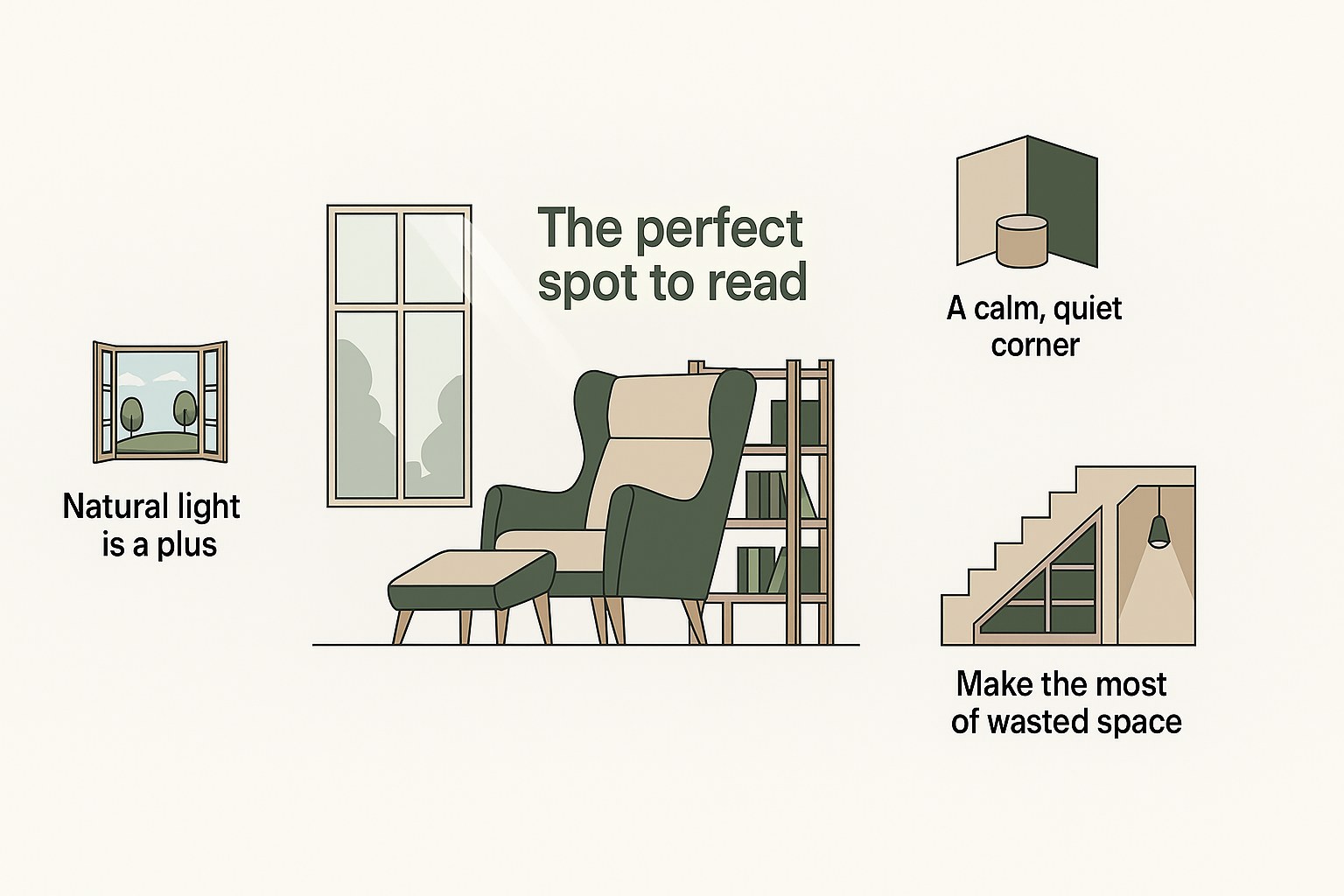
🪟 Make the most of a bright window
Spot the areas bathed in natural light. Being close to a window lifts your mood. Reading in the sunshine makes the whole experience far more pleasant day to day.
Angle your chair to avoid direct glare. Manage the reflections on your white pages. That way you can devour your chapters without needlessly tiring your eyes.
Make the most of the view outside to rest your eyes. Looking into the distance between two paragraphs gives them a break. The scenery adds a soothing touch to the moment.
📐 Claim a quiet corner of the room
Find the dead zones away from the foot traffic. Solitude and quiet are essential for getting absorbed. A tucked-away corner encourages total, uninterrupted focus.
Use the structure of the walls to shut yourself off. Right angles form a natural shelter. They strengthen that feeling of safety and privacy that’s so precious for escaping into a book.
Create a bubble of calm away from screens. Physically disconnect from noisy or work areas. Your mind will come to link this particular corner with rest and escape.
🪜 Put the space under the stairs to good use
Fit a made-to-measure nook into this wasted space. It’s the dream spot for a cosy reading hideaway. This little snug quickly becomes an original little zone.
Put up shallow shelves for your books. Use the slope to arrange them by size. The result is a built-in bookcase that’s both stylish and practical.
Make the most of every centimetre with the right lighting. Since the spot is often dark, a wall light is a must. It turns this useless nook into a real centrepiece.
🪑 Choosing a truly comfy seat
Once you’ve found the spot, the choice of seat becomes the cornerstone of your comfort, so you don’t finish your session with a sore back.

🛋️ Go for an armchair with armrests
Choose a model that gives good back support. A firm but welcoming backrest is best for long sessions. Your spine will thank you.
Favour soft fabrics like bouclé. Touch plays a huge part in the feeling of well-being. The fabric should be an invitation to relax straight away.
Check the height for prolonged, pain-free reading. Your feet should reach the floor or be slightly raised. That’s the secret to good ergonomics.
🛏️ Try a daybed or a chaise longue
Set up a long seat so you can stretch your legs out. A chaise longue is the reader’s ultimate luxury. It lets you change position with no constraints.
Fit a storage chest under the seat. It’s a brilliant space-saving trick. You can slip your throws or the books you’ve already finished inside.
Match the dimensions to the size of the room. Don’t overload the space visually. A made-to-measure bench under a window remains an elegant, discreet option.
🦶 Don’t forget the footstool
Improve your circulation with a matching pouf. Raising your legs reduces physical fatigue. It’s a detail that’s often overlooked but really matters.
Use this accessory as an occasional side table. You can rest a tray or an e-reader on it. It’s a versatile piece that makes life easier.
Vary the textures to add to the cosy feel. A velvet or leather pouf brings character. Mixing styles creates a more personal mood.
💡 Getting the light right for your eyes
But a good chair is no use if you’re squinting at every line; lighting is what keeps you reading for the long haul.
💡 Combine a floor lamp with a focused reading light
Set up a directional light source above your shoulder. The light should fall straight onto the pages. That saves you straining your eye muscles.
Avoid shadowy patches on the pages of your book. Badly placed lighting creates awkward contrasts. The light should be even across the whole reading surface.
Choose an adjustable arm for more flexibility. That way you can fine-tune the beam to suit your position. It’s the ideal tool for switching from a big hardback to a small e-reader.
🔆 Go for warm-toned bulbs
Opt for a soothing colour temperature. Warm white recalls candlelight. It’s perfect for signalling to your brain that it’s time to slow down.
Pick dimmable LED bulbs. Being able to lower the light creates an instantly snug mood. It’s an affordable luxury that radically transforms the feel of your little corner.
Create soft, low lighting that’s just right for relaxing. The whole setting should stay gentle. Light that’s too harsh instantly breaks that protective cocoon feeling.
👀 Avoid eye strain with the right position
Place the light source to cut down on reflections. If you read on a tablet, the angle is crucial. Avoid having the lamp directly behind you, facing the screen.
Alternate between ambient light and precision lighting. Don’t read in pitch dark with just a small lamp. That harsh contrast tires the optic nerve very quickly.
Keep a healthy distance between the book and your eyes. About thirty centimetres is recommended. Look after your eyesight so you can read for many years to come.
📚 Storing your books without cluttering the space
For your mind to stay free, the space needs to be free too; organising your collection helps you avoid visual overload.
📚 Put up light wall shelves
Using the height up to the ceiling lets you free up the floor. Walls are precious allies in décor. You gain room to move freely around the space.
Fitting invisible models gives an airy effect. The books seem to float against the wall. It’s a modern trick that considerably lightens the look of your living space.
Lining books up by size or by collection soothes the eye. Visual order is restful. A well-arranged bookcase becomes a real decorative wall feature.
🗄️ Use alcoves or low bookcases
Building storage into existing furniture is clever. An alcove in a TV unit can hold your favourites. It’s a smart way to merge useful functions.
Having a surface to set things down helps with the book you’re currently reading. A low shelf doubles as a bedside table. You can rest your cup of tea on it without worry.
Personalising the shelves with a few decorative objects changes everything. Don’t pack the space with paper. Tuck in keepsakes or photo frames to let your book collection breathe.
🗂️ Sort to keep a tidy shelf
Organising your books makes them much easier to find. Sorting by genre or by colour works well. The key is to spot your gems in the blink of an eye.
Alternating vertical and horizontal positions livens up the whole thing. It breaks the monotony of spines all in a row. It’s a stylist’s trick to make a bookcase lively and very visual.
Clearing out regularly stops tiring visual build-up. Give away the books you’ll never reread. Making space lets you welcome new literary discoveries into your home.
🕯️ Creating a soft, sensory atmosphere
Comfort isn’t just physical, it’s emotional too; this is where décor turns a simple seat into a sanctuary.
🛋️ Pile up cushions and throws
Layering textiles creates an instant cocoon effect. Building up the layers adds real visual depth. It’s the basis of a successful, welcoming set-up.
Choose natural materials like wool or cotton. These fibres breathe better and offer healthy contact. They’re unbeatable for feeling at home.
Vary the cushion sizes to support your lower back. A big one supports the back and a small one the neck. Sensory comfort comes from a perfect adjustment of your posture.
“To create a reading corner that’s just right for relaxing, it’s a good idea to add comforting touches such as rugs and cushions.”
🎨 Choose relaxing wall colours
Use muted colours like sage green. These shades naturally calm the heart rate. They invite reflection and unhurried reading.
Use wallpaper to mark out the zone visually. A discreet floral or geometric pattern creates a break. That defines the space with no need for partitions.
Create a soft contrast with the rest of the room. The reading area should stand out subtly. Colour is a powerful tool for marking out your territory of calm.
🌿 Add a touch of green or a scent
Place air-purifying plants to freshen the air around you. Greenery instantly soothes a tired mind. It’s a direct link with nature right in your living room.
Light a candle with woody or floral notes. Smell is a sense tied to memory. A particular scent can trigger your urge to read.
Bring in natural elements to calm the mind. A small pebble or a piece of driftwood is enough. A sensory approach to the book and its surroundings enriches the whole experience.
🏠 Fitting the project to your home
Not everyone has a spare room, but every home has hidden potential you just need to make the most of with a little ingenuity.
🚪 Set apart a reading corner in a shared living room
Use a screen or a light room divider. It creates a physical barrier without blocking the light. You stay present while still being in your own bubble.
Mark out the floor with a textured rug. The rug defines a symbolic zone. It’s an invisible but very effective boundary for the brain.
Painting one wall marks out the area. This trick separates the room’s functions. It’s an affordable way to give structure to a big living room.
- A screen for privacy
- A rug to mark the boundary
- Wall paint for visual zoning
🏢 Plan solutions for small flats
Choose multifunction furniture. A fold-away table can act as a surface. The idea is to avoid needlessly blocking the way through.
Turn a windowsill into a bench seat. It’s making the very most of your space. Add a few cushions for a reading corner worthy of a magazine.
Make use of corners with dedicated furniture. We often forget these spaces. Yet they’re perfect for small book shelves.
| Constraint | Solution | Benefit |
|---|---|---|
| Lack of space | High shelves | Frees up the floor |
| No nook | Windowsill | Light |
| Multifunction | Room divider | Flexibility |
| Small budget | Floor cushions | Affordable |
🏰 Dream up a fun den for the children
Set up a teepee or a mattress on the floor. Children love hideaways. It makes the activity playful and less formal.
Put the book bins at their height. Easy access is the key to independence. They can then choose their story without any help.
Use stimulating colours. A cheerful environment encourages the urge to explore. That’s how you raise keen young readers.
- Picture books
- Children’s magazines
- Comics
This range of reading material helps you create a reading corner at home with ideas and tips that get children dreaming.
A perfect reading corner rests on a cosy seat, warm light and tidy storage. Get your chair set up by a window soon to enjoy this soothing cocoon. Your future haven is just waiting for a few cushions to turn every chapter into a magical little escape.
❓ FAQ
🔍 How do I track down the best spot for my little reading corner?
To treat yourself to a proper escape, the ideal is to choose a quiet place, well away from the foot traffic and from noisy distractions like the TV. A little corner of a room, an alcove or even the often-wasted space under the stairs work wonders for creating a protective cocoon feeling.
If you can, set yourself up near a window. Enjoying natural light is a real treat for the eyes and the mood during the day. The main thing is that this spot calls you to relax the moment you look at it.
🪑 What kind of chair should I choose to read without backache?
Comfort is essential, so you don’t turn your reading session into a physio session! I’d suggest an armchair with armrests so you can rest your arms properly. If you have a bit of room, a chaise longue or a daybed lets you stretch out fully, which is an absolute luxury.
Don’t forget to add a footstool and soft materials like bouclé or curly wool. Good support for the back and neck is the secret to devouring whole chapters without noticing the time pass.
💡 Which bulb is best so I don’t tire my eyes?
The choice of LED bulb is strategic. For a relaxing evening mood, go for “warm white” (between 2,700 K and 3,000 K), as this soft light limits eye strain. If you read more during the day to study, “cool white” (4,000 K to 5,000 K) helps you stay focused.
For brightness, aim for between 300 and 500 lumens. A handy tip: opt for a lamp with an adjustable arm or a clip-on reading light. That lets you aim the light right onto your pages without creating annoying reflections on your book or tablet.
🪜 How can I set up a nice reading corner under the stairs?
It’s the perfect spot for a reading hideaway! You can fit a made-to-measure bench with built-in storage underneath to make the most of every centimetre. Shelves fixed straight onto the sloping wall keep your treasures within reach.
Since this space can be a little dark, take care with the lighting using built-in spots or a pretty string of fairy lights. Light colours like beige or cream white will help make this little haven really welcoming and less cramped.
🛋️ How do I mark out my reading space if it’s in the living room?
No need to build partitions to get your privacy. A rug is a great visual tool for marking out the territory of your chair. You can also use an open bookcase as a divider: it stores your books while creating a protective screen from the rest of the room.
Playing with wall colours or adding a movable screen are also simple, effective solutions. The idea is to signal to your brain (and to the rest of the family!) that when you’re on this rug, you’re in your bubble.
🏢 Any tips for a reading corner in a small flat?
In a small space, versatility is everything! A pouf with a storage chest lets you rest your feet while hiding your throws. You can also turn a deep windowsill into a makeshift bench with a few nice plump cushions.
Use the height of the walls with slim shelves so you don’t clutter the floor. Even a simple armchair placed in a quiet corner, with a little fold-away table, is enough to create a really satisfying sanctuary.
📖 How do I make children want to read with a dedicated corner?
For our little ones, the reading corner should be playful and easy to reach. A teepee or a simple mattress on the floor with a mountain of cushions always works really well. The important thing is to put the book bins at their height so they can be independent.
Mix things up by offering picture books, children’s magazines and classic tales. A colourful, comfortable setting turns reading into a moment of shared fun and pleasure, far from screens.
