
It’s hard to stay calm when colic or a nasty cold ruins your little ones’ nights, isn’t it? 🌿 This article guides you through using medicinal plants as a true natural first-aid kit, while respecting safety rules that are non-negotiable. You’ll discover how to soothe tummy aches with fennel or encourage peaceful sleep with lemon balm, so you can care for the whole family gently and lovingly.
- Safety and precautions with medicinal plants for children
- Preparing and dosing natural remedies properly
- Soothing common digestive and respiratory troubles
- Helping children sleep and relax
- Treating little skin scrapes
- A practical guide to getting herbal teas accepted
⚠️ Safety and precautions with medicinal plants for children
While nature offers wonderful treasures to care for our little ones, it is not without danger and calls for constant watchfulness to avoid slip-ups.
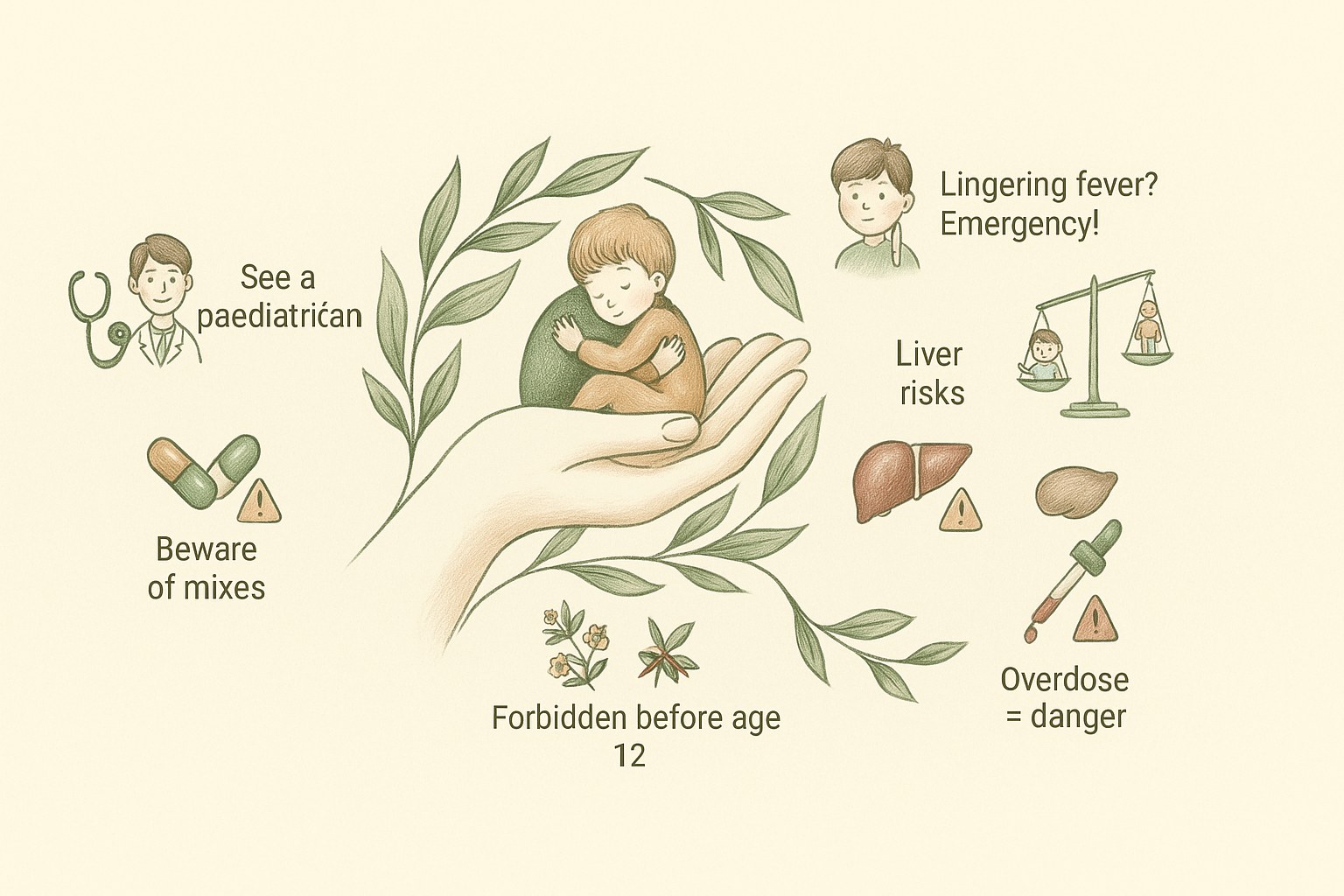
👨⚕️ Medical advice always comes first
Seeing a paediatrician is vital before any self-medication. Children’s symptoms change very fast. A professional diagnosis comes before any natural advice. This is a non-negotiable safety rule.
Watch out for drug interactions. Some plants change how prescribed medicines work. Always tell the doctor about any natural remedies given alongside, to avoid risky mixes.
Learn to spot the warning signs. If a fever lingers or your child becomes drowsy and limp, stop everything. Get urgent medical help right away.
⚠️ Age limits and toxicity risks
Tolerance levels vary with age. A baby’s liver isn’t fully developed. What’s good for an adult can be poison for a baby.
Some plant compounds are hard for the body to clear out. There are real risks of liver toxicity. Side effects can be severe in newborns.
Beware of accidental overdoses. Unsecured bottles are a hazard. One extra drop can have serious effects on a child’s nervous system.
🚫 Plants strictly forbidden before age 12
Leave out plants with salicylate compounds, such as meadowsweet. They carry a risk of Reye’s syndrome. Caution is essential until growth is complete.
The menthol in peppermint carries different levels of risk depending on age: it can trigger a reflex pause in breathing before age 2 and possible throat spasms up to age 4. It is strictly forbidden before age 2 and not advised until age 4; as an essential oil or breathed in, it should be avoided until the teenage years.
- Peppermint
- Meadowsweet
- White willow
- Wormwood
⚖️ Preparing and dosing natural remedies properly
Once you’ve taken these precautions on board, the whole skill lies in the precise preparation and strict respect of the right doses.
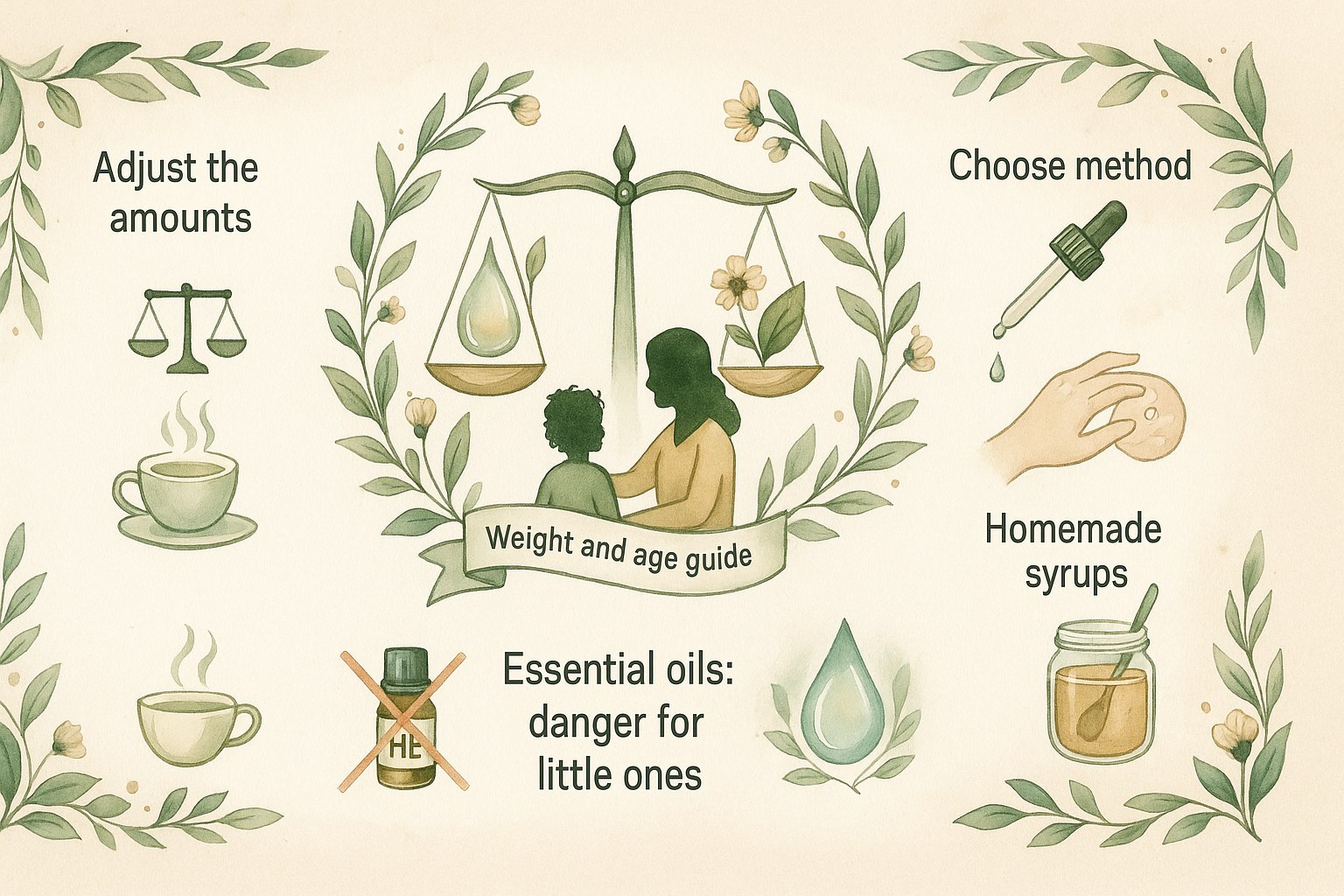
⚖️ Adjusting amounts to weight and age
The amount is often worked out from body weight. You generally use a fraction of the adult dose. Never play the sorcerer’s apprentice with measurements.
Dilution is the key for infusions. Keep steeping times very short. A tea that’s left too long becomes too concentrated in active compounds for a little one.
Spread the doses across the day. Three small doses are better than one big amount swallowed in one go.
🌿 Choosing between infusion, bud therapy and external use
Bud therapy uses plant buds. It’s a gentle and very effective method. It often allows precise dosing drop by drop, which makes daily use easier.
Use on the skin is a useful alternative. The active compounds soak through the skin gently. It’s ideal for children who refuse to drink strong-tasting preparations.
You can also make homemade syrups. They help mask bitterness.
Traditional remedies such as plant syrups are still widely used to build children’s strength in many cultures.
🛑 The danger of essential oils for little ones
Essential oils are powerful chemical concentrates. Their use in babies is extremely risky. They can cause convulsions or serious burns. Health authorities give precise safety guidance on this.
Choose floral waters (hydrosols) instead. They hold the same benefits but without the toxicity of the oils. This is the safe option for gentle aromatic care for children.
Taking them by mouth is forbidden. Never swallow essential oils before age 6 at the very least. This is an absolute golden rule.
🤧 Soothing common digestive and respiratory troubles
Beyond the technique, plants turn out to be precious allies for calming tummy aches and runny noses.
🌱 Easing colic and constipation gently
Fennel is the king against colic. It helps push out trapped gas. A small dose is enough to ease a baby’s tummy tension.
For constipation, count on mallow. Its flowers act as a very mild laxative. They soften the stools without irritating the delicate walls of the gut.
Here are a few helpful digestive plants:
- Fennel: ideal for trapped gas.
- German chamomile: calms spasms.
- Mallow: helps things move along.
🤧 Calming coughs and colds naturally
Thyme is a major airway antiseptic. As a light infusion, it helps clear blocked airways. It’s the classic remedy for tough winters, for the whole family.
Mallow soothes sore throats. It calms a dry, scratchy cough. Its softening action is immediate and much loved by young, poorly children.
The traditional use of plants around the world shows their power against respiratory infections.
🍯 The role of mucilage for irritated linings
Mucilages are sticky plant substances. In contact with water, they swell and form a protective gel. This gel coats the inflamed lining of the throat or stomach. It’s a real natural plaster, and very effective.
You find them in marshmallow root or plantain. These plants are perfect for children. They carry no toxicity at all and offer gentle, soothing relief.
The extraction is done cold. Let the plants soak in lukewarm water. This preserves the delicate structure of the mucilage.
😴 Helping children sleep and relax
Once the body is soothed, it’s just as important to look after the mind to ensure peaceful, restful nights.
🌙 Which plants for calmer nights?
Lemon balm is ideal for drifting off. It calms nervous restlessness before bedtime. Its lemony taste is usually a big hit with children, which makes it easy to give.
Setting up a ritual is essential. The herbal tea should be part of this calm moment. Switch off the screens and choose soft, dim light to encourage relaxation.
Give the drink thirty minutes before bed. That gives the active compounds time to work gently. Medicinal plants explained to children then become a reassuring routine.
🧘 Managing restlessness and fidgeting day to day
Hawthorn helps balance over-the-top emotions. It’s useful for “sponge” children who get stressed easily. It’s a plant of the calm heart and steady nerves, above all.
Don’t mix up passing restlessness with deeper troubles. If a child is constantly overexcited, look for other causes. Diet or lack of sleep often play a big part. Plants are only an occasional support.
Try relaxing through breathing. It’s a perfect partner to plants. Teach your child to breathe out slowly.
⏳ The difference between occasional use and a long course
Plants shouldn’t become a permanent crutch. Long-term use can lead to the body getting used to them. The body ends up no longer responding to the plant’s active compounds.
A course usually lasts three weeks. That’s the time needed to support the immune system. Beyond that, the effect fades and the risk of liver fatigue rises.
Always take a break from treatment. Stop the doses for at least a week. This lets the child’s body find its natural balance again.
🩹 Treating little skin scrapes
Wellbeing also runs through healthy skin, especially when outdoor play leaves a few marks on the knees.
🌿 Local treatments for skin irritations
Calendula oil is a must-have. It soothes redness and little grazes. It’s the gentlest oil for the delicate skin of babies and children.
Chamomile compresses calm itching. Soak a clean cloth in cooled infusion. Dab it gently on the irritated area for quick, natural relief.
Traditional healing remedies from around the world show many gentle plant treatments for cuts and grazes.
🛁 The benefits of plant baths
A chamomile bath is a great classic. It soothes the skin and the mind alike. It’s the perfect remedy after a day full of big feelings.
For atopic (very dry) skin, oats are wonderful. They calm severe irritation and moisturise deeply. Put oat flakes in a fabric pouch under the running tap. The oat milk released will work wonders.
Keep an eye on the water temperature. It shouldn’t go above 37 degrees. Keep the bath to ten minutes.
🏡 A healthy lifestyle and environment
Healthy skin also comes from the inside. A diet rich in good fats is essential. Cold-pressed oils support the skin barrier.
Watch out for pollutants in the home. Air the bedrooms every day to freshen up the air. Chemical cleaning products can make skin problems worse for sensitive children.
Some studies look at unwanted skin reactions linked to plants or to environmental toxins, to better protect the most fragile.
🍵 A practical guide to getting herbal teas accepted
For this advice to bear fruit, your child first has to agree to taste these sometimes surprising drinks.
👅 Tips to improve taste and temperature
A little honey can transform a herbal tea. Choose a raw, good-quality honey, and only after age one. It softens the natural bitterness of certain medicinal plants like thyme.
Mix it with apple juice to mask the grassy flavours. It’s a foolproof trick for the fussiest little ones. Serve the drink at room temperature, as lukewarm is ideal.
🌱 Choosing quality organic plants and storing them
The organic label is a must to guarantee there are no pesticides. A pure plant means an effective one. Store your supplies away from light in tinted jars.
Damp is the enemy of active compounds. Check the smell and colour regularly. A faded plant loses its benefits, so renew your jars every year.
📋 Quick age-versus-plant chart
This chart works as a quick reference guide to check a plant’s safety. Medicinal plants explained to children then become child’s play.
| Age | Plants | Use | Precaution |
|---|---|---|---|
| 3-12 months | Fennel (with paediatrician’s advice) | Colic | Strong dilution |
| 1-3 years | Lime blossom | Sleep | Honey only after age 1 |
| 3-6 years | Lemon balm | Digestion | No mint |
| 6-12 years | Mallow | Wellbeing | Medical advice |
This visual aid helps you get the doses right for calm, everyday use.
Caution, precise dosing and organic quality are the pillars for caring for your little ones with plants. Always see a doctor before using these natural remedies for children. By respecting these precautions, you give your family calm, lasting health. Nature is a precious ally when you learn to handle it wisely.
❓ FAQ
👶 From what age can you give medicinal plants to a child?
Caution is the watchword with our little treasures. As a general rule, giving plants by mouth is not advised before age six without strict medical advice. A child’s system is still developing fully and doesn’t process active substances the way an adult’s does.
That said, a few exceptions exist under a professional’s supervision. For instance, fennel may be suggested from three months for tummy aches, while marshmallow root or hawthorn are sometimes considered from age three. Your paediatrician’s advice remains your best compass.
⚠️ What precautions should you take with essential oils for little ones?
Essential oils are very powerful natural concentrates, sometimes too much so for children. Taking them by mouth is strictly forbidden for them. Even on the skin, you must never improvise: medical advice is essential, and dilution is compulsory to avoid burns or convulsions.
Certain oils such as peppermint, cinnamon or clove must be avoided completely without an expert’s green light. For something gentler, turn to hydrosols (floral waters) instead, which offer the benefits of plants without the risks of concentrated oils.
🚫 Are there plants that are forbidden for children and teenagers?
Yes, some plants call for special care. That’s the case for those containing salicylate compounds, such as meadowsweet or white willow. In young people, they can raise the risk of Reye’s syndrome, a rare but serious illness, especially after a viral infection.
Mint should also be watched closely: it is not advised before age two because of a risk of a reflex pause in breathing. It stays unadvised until age four, or earlier if the child is prone to convulsions. We don’t take chances with our little ones’ safety!
⚖️ How do you dose natural remedies correctly for young children?
Dosing isn’t a guessing game; it is often worked out by weight or age, and always following a health professional’s advice. The instructions on official products are your best friends for avoiding any accidental overdose.
For infusions, keep steeping times very short to get a light preparation. The idea is to support the body gently, without overloading its still-fragile workings. A small dose well spread across the day is often more effective and safer.
🌿 Which natural solutions are best for skin problems?
For little skin scrapes, nature is very generous. Calendula (marigold) oil is a must-have for soothing irritations. You can also use oat-flour baths, a miracle trick for soothing itchy skin, whatever the child’s age.
From age three, arnica gel or cream can help with bruises and bumps (choose these forms over the tincture, which contains alcohol and so isn’t suitable for young children). For over-sixes, compresses of witch hazel leaf infusion are very useful. It’s a gentle way to treat grazes after a lively play session in the garden.
