
Does your child love challenges and always look for puzzles to solve? 🧩 Printable mazes for children aged 5-6 are an ideal activity for developing logic, concentration and fine motor skills. At this pivotal age between nursery and reception, little explorers are ready for medium-level paths that stimulate them without discouraging them.
We offer you a selection of free printable mazes, specially designed for children aged 5-6. From classic paths to animal shapes, by way of mission mazes, every model has been thought out to offer a fun and educational moment. Just print the sheets and let your child trace their way with a pencil. Ready to take on the challenge?
🌀 Classic mazes
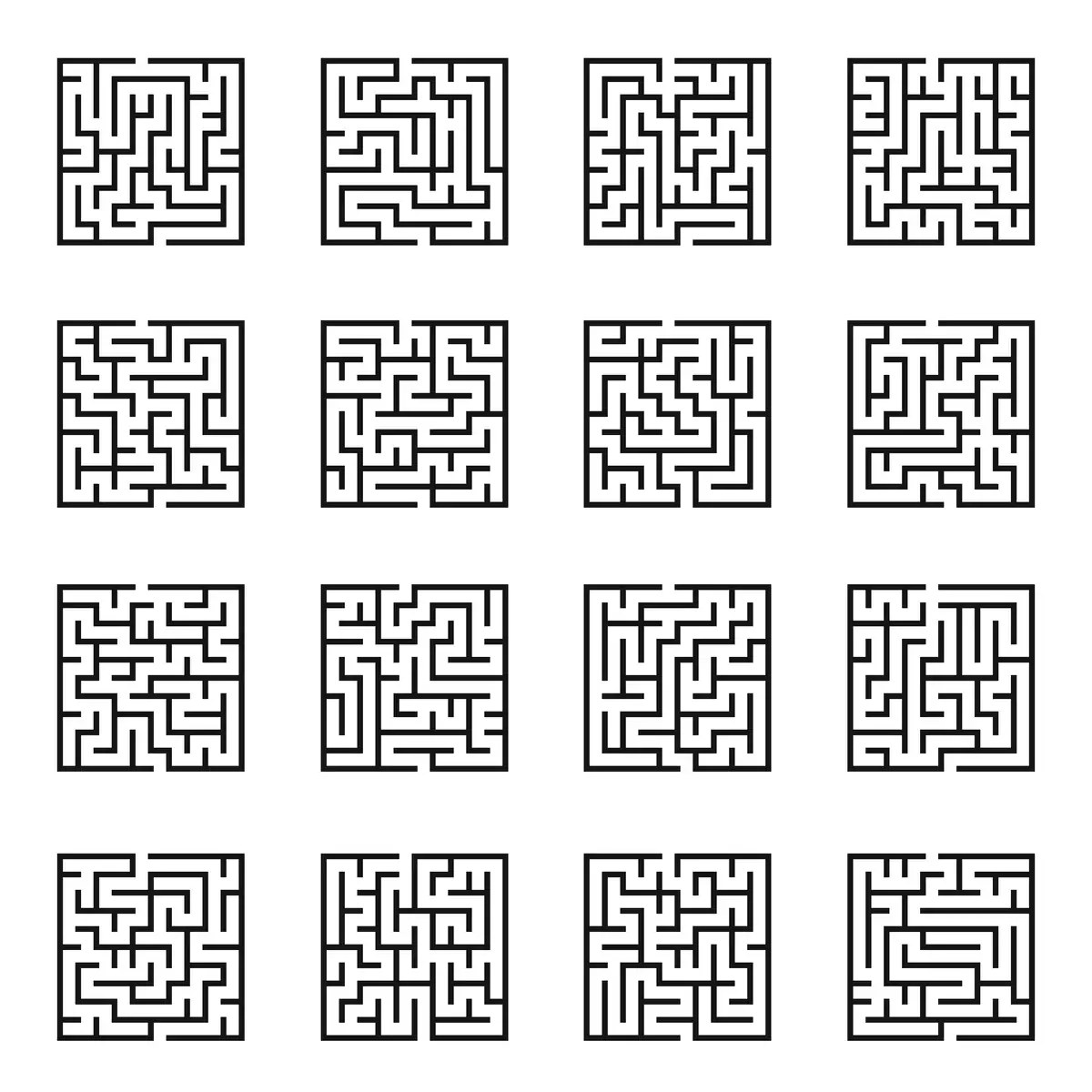
Classic mazes are the perfect starting point for children aged 5-6. With their well-defined corridors, their multiple turns and their strategically placed dead ends, they teach your child to anticipate their route and to backtrack when they find themselves at a dead end. The paths are wide enough for the pencil to stay within the lines, while offering forks that call for real thought. Encourage your child to look at the maze as a whole before starting, then to trace their way gently, without rushing.

🐾 Animal-shaped mazes
What could be more motivating for a child than to solve a maze shaped like their favourite animal? These original mazes combine the pleasure of animal drawing with the challenge of finding the path. The path winds inside the animal’s silhouette, creating a captivating visual puzzle. Your child will proudly discover the complete shape of the animal once the maze is solved. These models are especially loved by children in their final nursery year and in reception, because they add a creative dimension to the logic exercise.

🎯 Mission mazes
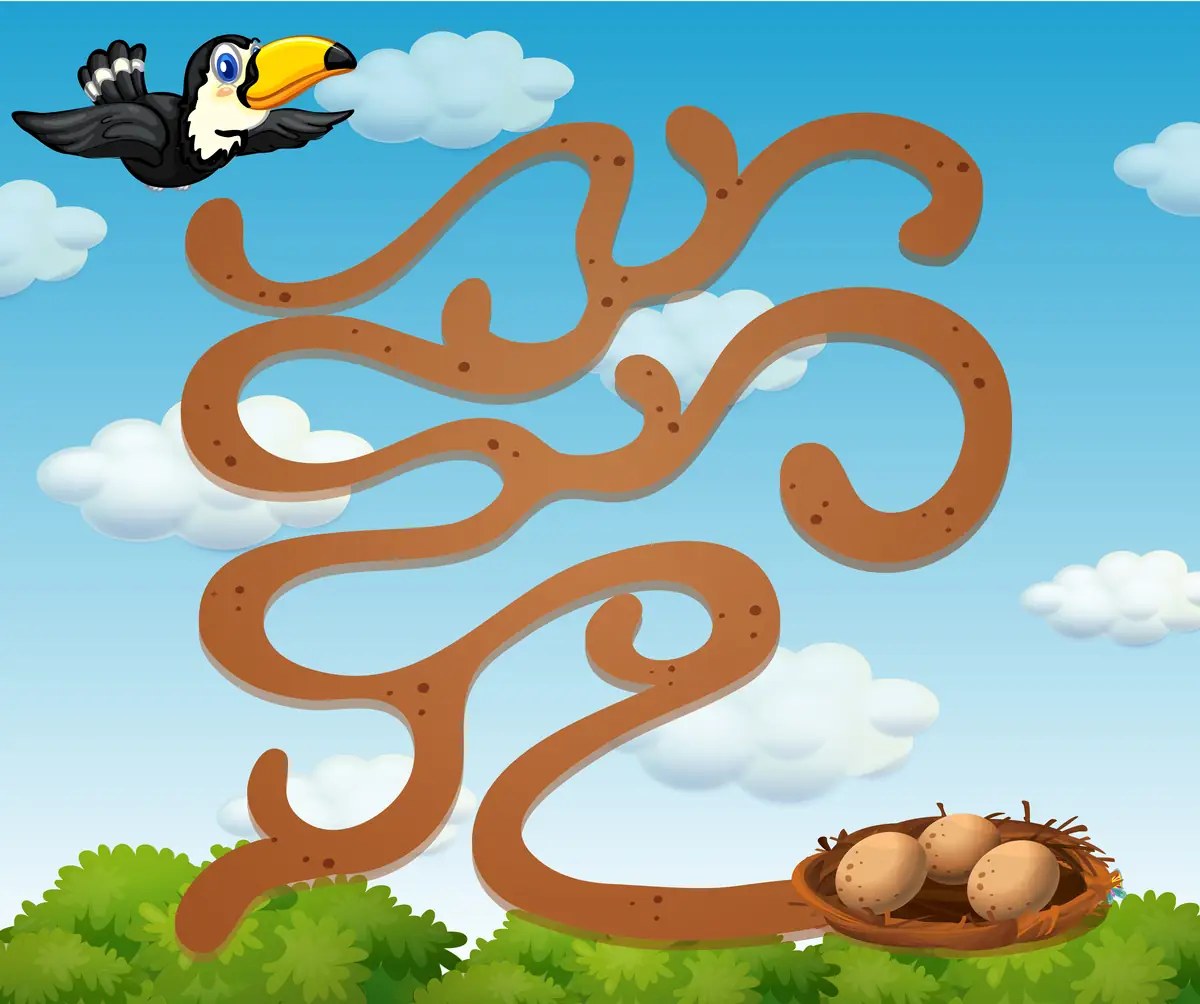
To make the activity even more exciting, these mazes add a mission to accomplish along the way. Your child doesn’t only have to find the exit, they also have to collect objects scattered along the path. This variant develops the ability to plan a route while taking several goals into account at once. It’s an excellent strategy exercise suited to children aged 5-6, who thus learn to prioritise and organise their progress through the maze. You can ask your child to colour each object collected to make the activity even more interactive.


📈 Progression and difficulty
So that your child gets the most out of these printable mazes, we recommend following a progression suited to their pace. Here are a few tips for supporting their progress.
- Start with the simplest mazes. Classic square mazes make a good starting point. Your child gets familiar with the principle of the entrance, the exit and the dead ends without being overwhelmed by complexity.
- Increase the difficulty gradually. Once the classic mazes are mastered, move on to the animal shapes, then to the mission mazes. Each step adds an extra layer of thought that reinforces the skills already acquired.
- Value every attempt, even an unsuccessful one. Taking a wrong path in a maze is part of the game. Praise your child for their perseverance rather than for the speed of solving. A child who starts again without getting discouraged develops a positive attitude towards challenges.
- Suggest redoing the mazes they’ve solved. Your child can look for an alternative path or try to solve it faster. This reinforces their spatial memory and their confidence.
- Limit the length of the sessions. Fifteen to twenty minutes are enough for a child aged 5-6. Short, regular sessions are better than one long session that wears out their concentration.
🧠 The benefits of mazes in the final nursery year
Mazes are not just a simple game. For children aged 5-6, in their final nursery year or at the start of reception, they are a genuine tool for cognitive and motor development. By tracing their way with a pencil between the lines of the maze, children prepare their hand for writing. The movement is similar: controlling the pressure, following a precise trajectory, anticipating the curves. It’s a handwriting exercise disguised as a game.
On the cognitive side, solving a maze calls on essential skills. The child has to anticipate their route by observing the available paths before setting off. They learn to plan, that is, to work out a mental strategy before acting. When they meet a dead end, they develop their ability to adapt by retracing their steps to try another path. These skills of anticipation and planning are precisely those that will be called upon in maths, in reading and in problem-solving throughout their schooling.
Finally, the satisfaction of finding the exit boosts self-esteem. Your child learns that perseverance pays off and that mistakes are part of the path to success. A precious lesson, far beyond the simple printable maze.
❓ Frequently asked questions
👶 From what age can a child solve medium-level mazes?
Medium-level mazes are generally suited to children from the age of 5. At this age, most children have a good enough grasp of pencil tracing and understand the concept of an entrance and an exit. However, every child develops at their own pace. If your 5-year-old finds these mazes too hard, offer them simpler models with fewer dead ends first. Conversely, a 4-year-old particularly at ease with puzzles can give them a try. The important thing is that the activity stays a pleasure and not a source of frustration.
🆘 How do I help my child if they get stuck in a maze?
If your child finds themselves stuck, avoid showing them the solution directly. Guide them instead with questions: “Have you tried the path that goes to the right?” or “What if you went back to this junction?”. You can also suggest they start from the exit to work back to the entrance, a technique that often helps to unblock the situation. If frustration mounts, suggest a break and come back to the maze later. You can also use a pencil so they can rub out their attempts and start again without the sheet getting overloaded with lines.
