
The frog fascinates children with its double life between water and land. 🐸 Croaking at the edge of the pond, leaping from one lily pad to the next, watching the world with its big round eyes: this little amphibian holds a special place in a child’s imagination. Our free frog colouring pages to print let them step into this watery world through creativity.
This selection offers ten varied drawings: frogs on their lily pads, fairy-tale scenes with mushrooms and moon, frogs seen from the front with big round eyes, detailed mandalas for older children. From very simple to highly elaborate, your child is sure to find the frog that speaks to them.
🐸 Why frogs fascinate children
💧 An animal between two worlds
The frog lives both in the water and on the land, which makes it a mysterious animal for children. Its double life between pond and bank intrigues them from a very young age. This double belonging makes frog colouring pages especially rich. The child can imagine several habitats for their character.
🌟 Huge eyes that spark dreams
The frog’s big, round, expressive eyes captivate children straight away. These eyes, exaggerated in our kawaii drawings, make the frogs instantly endearing. The frog becomes a little comic-book character you want to protect.
🌿 A journey through tales and songs
The Frog Prince, the frog of fairy tales, “The Frog Who Wished to Be as Big as the Ox” by La Fontaine: the animal holds an important place in children’s culture. Colouring a frog after reading these stories deepens the pleasure. Art and literature come together naturally.
🐸 Our 10 frog colouring pages to print
Our selection of frog colouring pages to print offers ten varied drawings, from the simple frog on its rock to the detailed mandala for confident colourists. Each sheet reveals a different world.
🪷 The frog on its lily pad at the edge of the pond
This adorable frog lounges on its lily pad in the middle of the pond. Reeds and bulrushes frame the scene while two more lily pads float on the surface of the water. It’s our most iconic sheet on the frog theme. The portrait format prints perfectly on an upright A4 sheet.
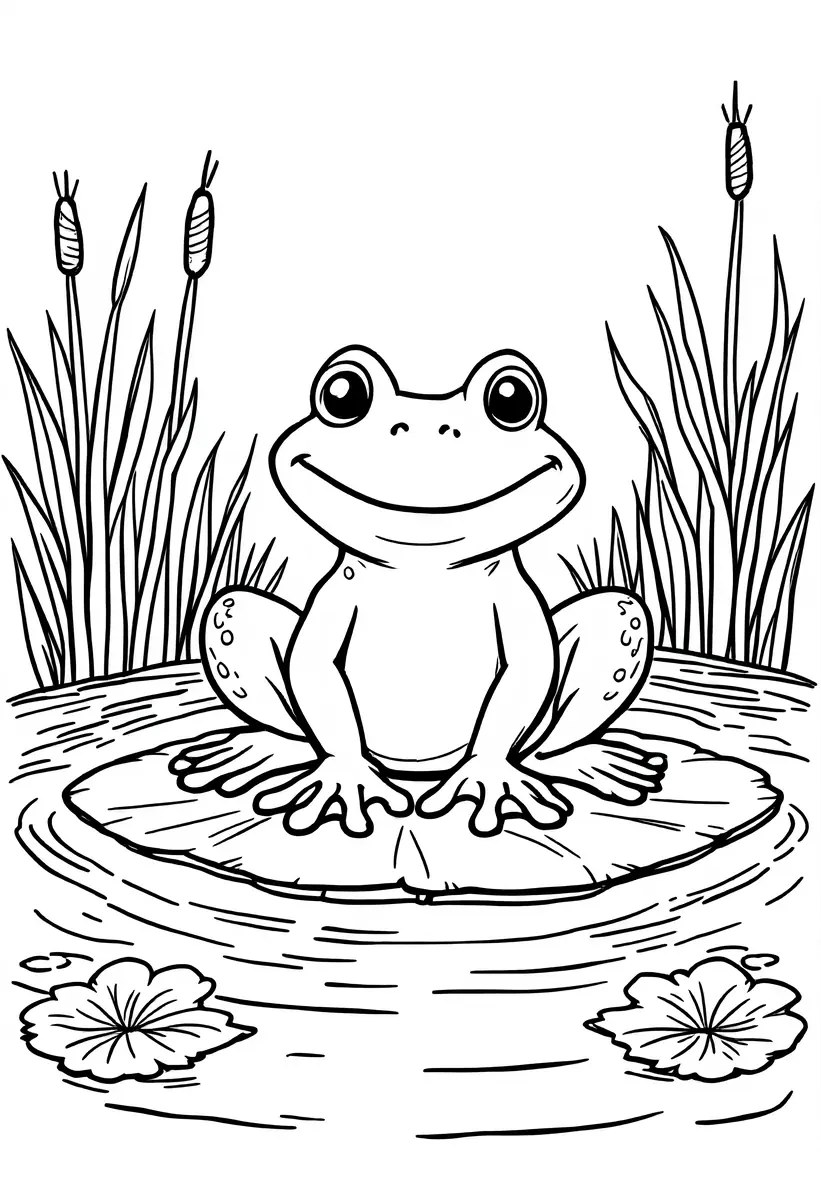
Tip: a soft green for the frog and pale blue ripples for the water make this peaceful scene come alive.
😄 The laughing frog on its flowery lily pad
A frog all smiles poses proudly on its lily pad, surrounded by tall reeds and two lovely water-lily flowers. Its joy for life jumps out at first glance. The colouring areas are clearly outlined and easy to fill in. It’s a perfect sheet for a quiet family colouring session.

Tip: bright pink and yellow flowers will bring a cheerful pop of colour to the scene.
🐝 The greedy frog and the flies around the lily pad
This frog watches carefully the insects flying above its lily pad: bees, flies and little air bubbles make up the whole scene. It’s the perfect chance to explain to your child what frogs really eat. The clean style leaves plenty of room for nice, neat colouring.
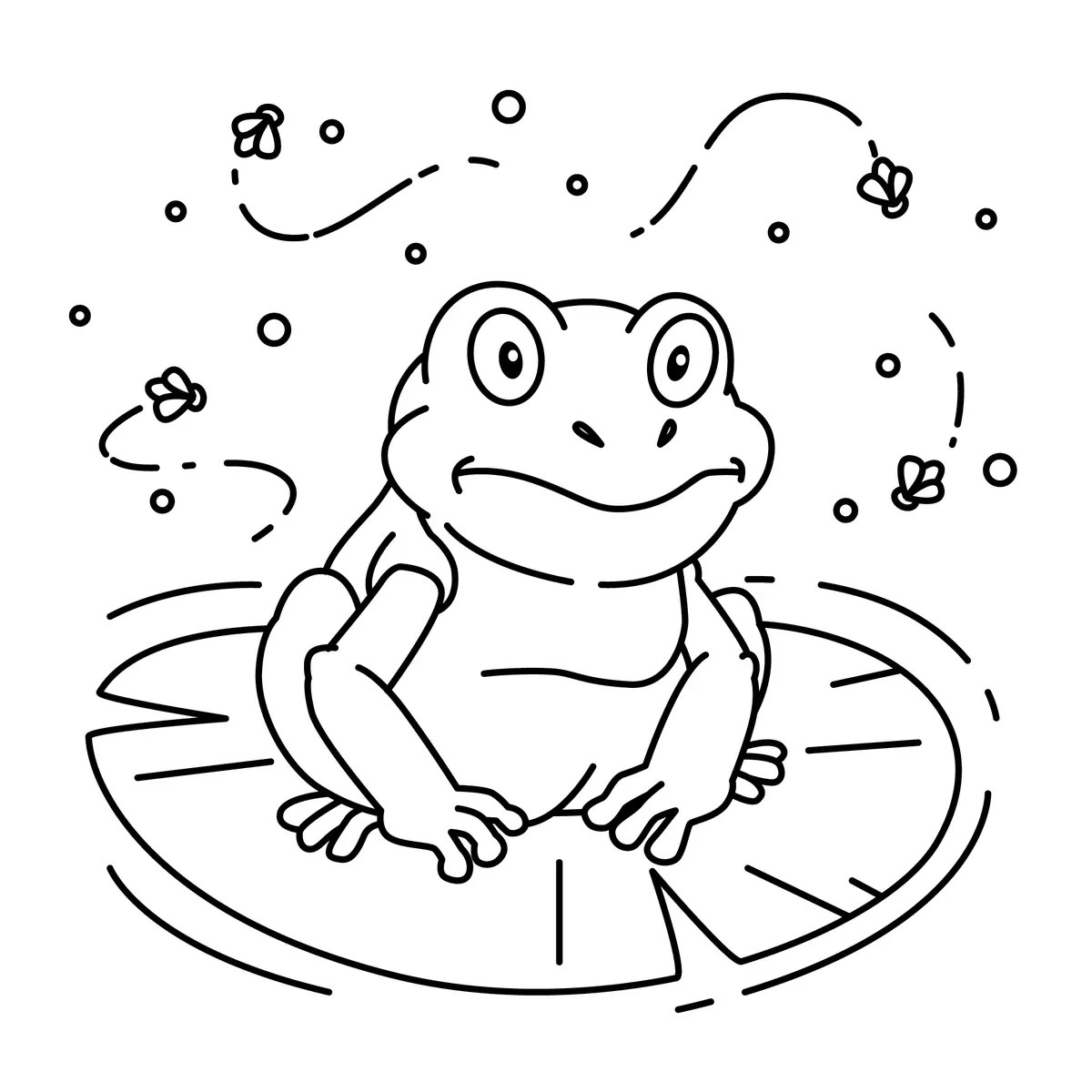
Tip: yellow-and-black stripes for the bees add a lovely contrast next to the green frog.
👀 The front-facing frog with its big round eyes
Seen from the front, this frog stares at your child with its enormous round, expressive eyes. The many spots on its back and legs offer a real, careful colouring challenge. This detailed sheet suits children from the age of 6. The final result is always impressive thanks to the richness of the drawing.

Tip: use two different greens for the spots and the body to give the frog real depth.
🍄 The plump frog in front of the spotted mushrooms
A round, smiling frog poses in front of three big red-spotted mushrooms. The decorative leaves and little clouds add to the charm of the scene. This very kawaii sheet is a huge hit with children aged 4 to 7. The spots on the mushrooms are perfect for practising neat circles.
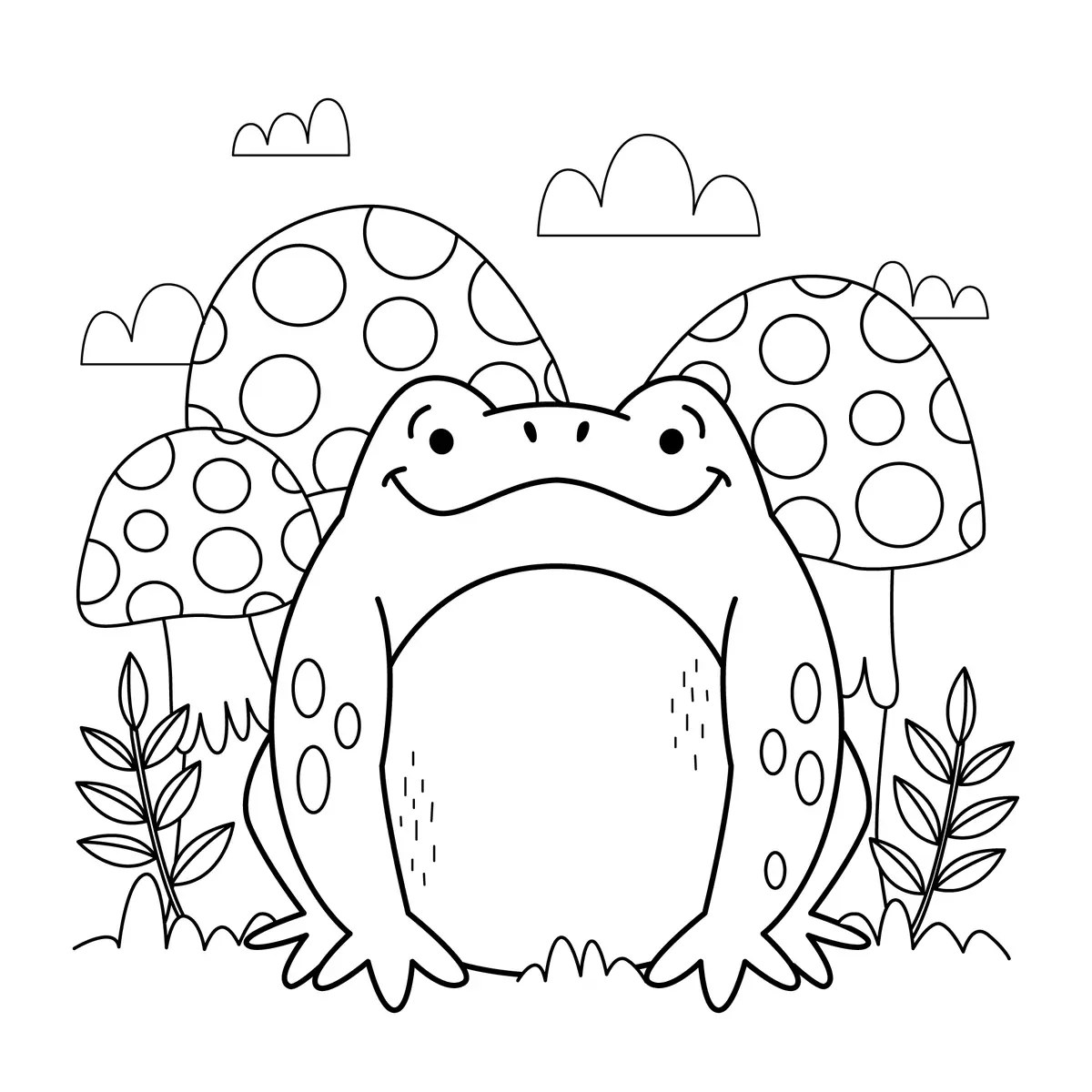
Tip: red caps with white dots make the classic toadstool look every child loves.
🌿 The little frog sitting among the reeds
This very simple, very cute frog sits quietly among the marsh reeds. A few pebbles at its feet complete the very clean scene. The minimalist style leaves plenty of room for creative colouring. Your child can invent a personalised background around the central character.
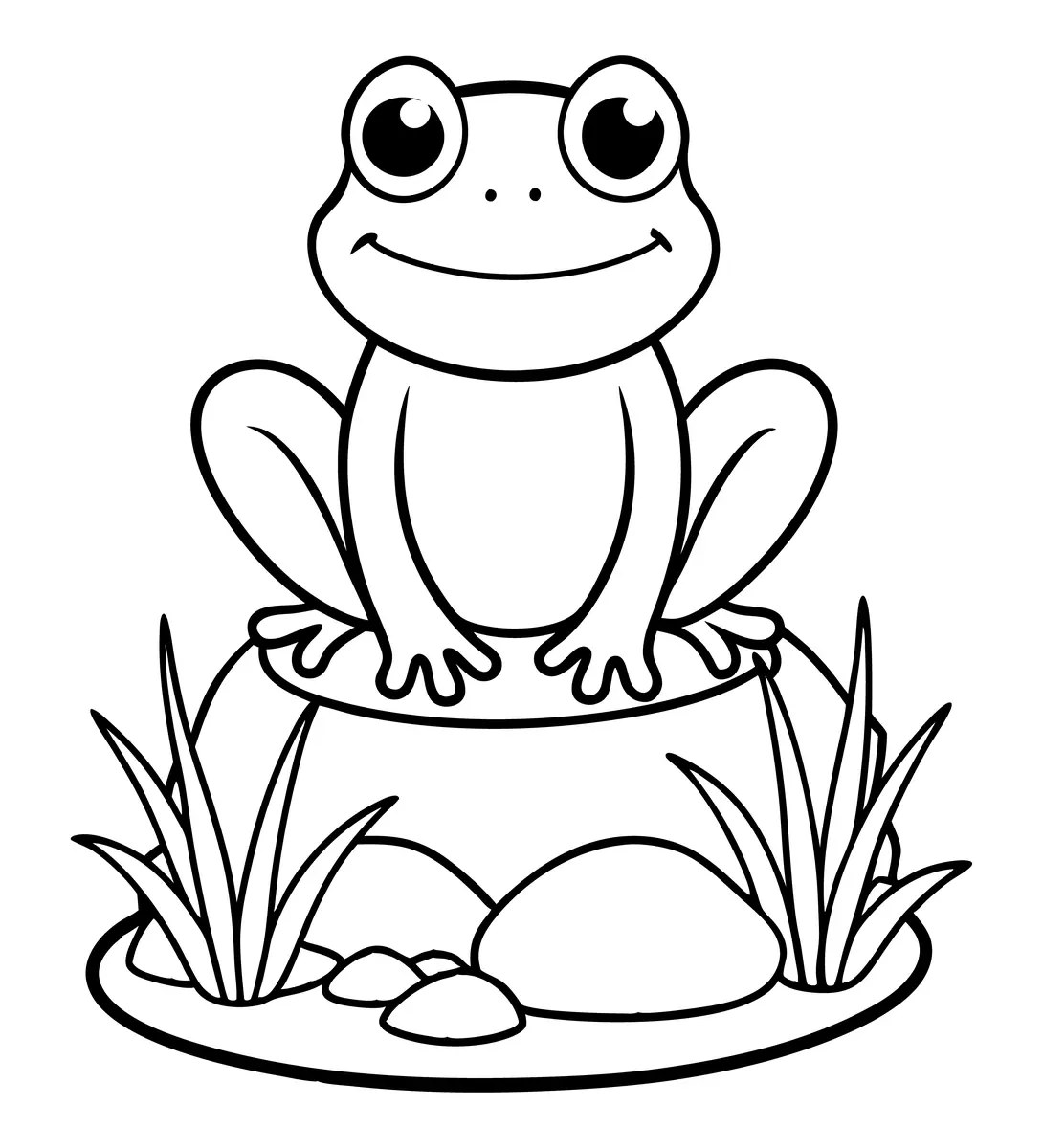
Tip: encourage your child to add their own sky and sun in the empty spaces.
💧 The frog in profile on its lily pad
Seen in profile on its lily pad, this frog gazes at the horizon with curiosity. A few water bubbles around it suggest the gentle life of the pond. Its round spots on its back offer a lovely pattern to colour patiently. This square-format sheet suits children from the age of 5.
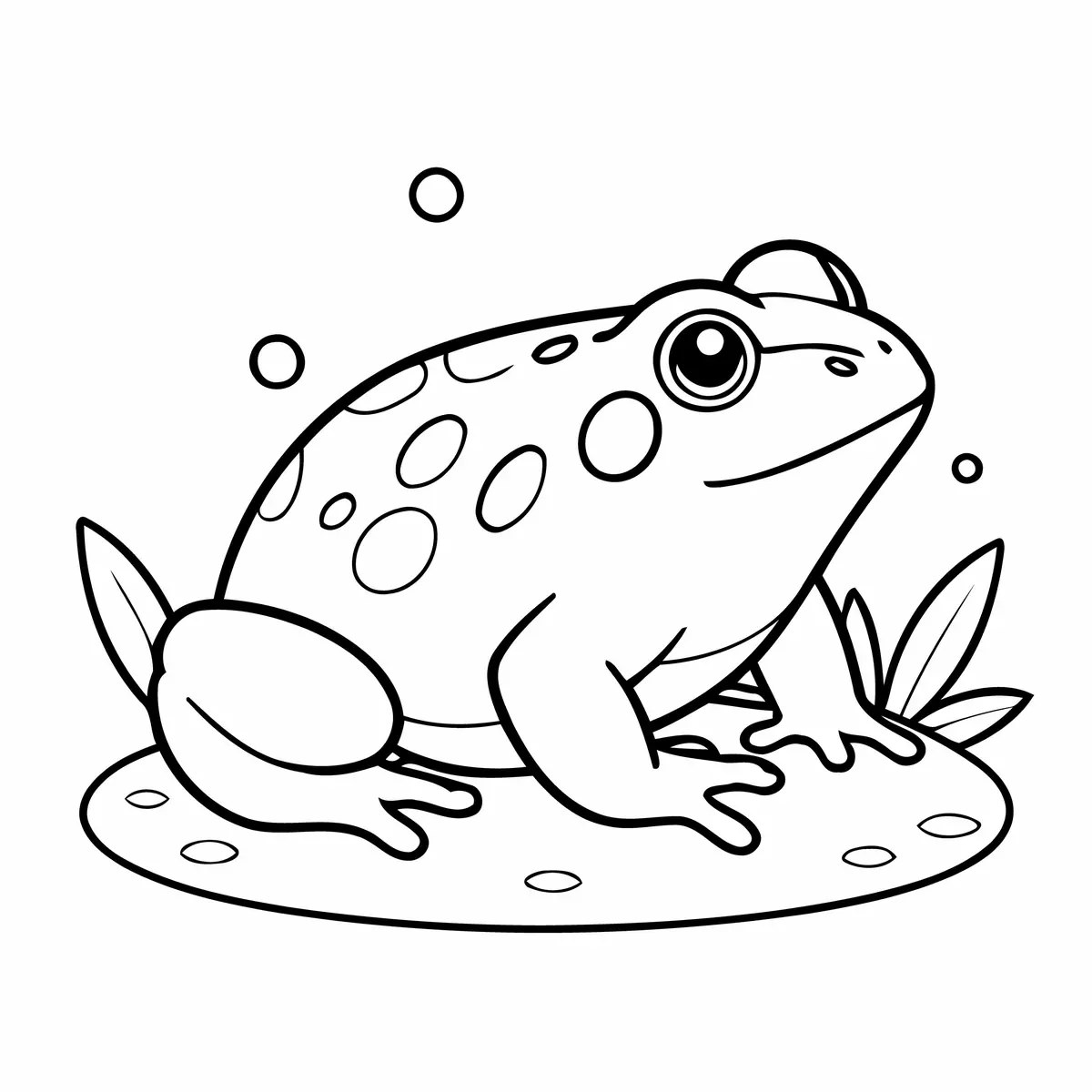
Tip: pale blue bubbles dotted around the frog add a refreshing, watery feel.
🎩 The playful frog with its gnome hat
This funny frog wears a little pointed gnome hat on its head. Butterflies and leaves swirl all around it. The squared background looks like a page from a school notebook. This original sheet brings a touch of whimsy and raises a smile the moment you discover the design.
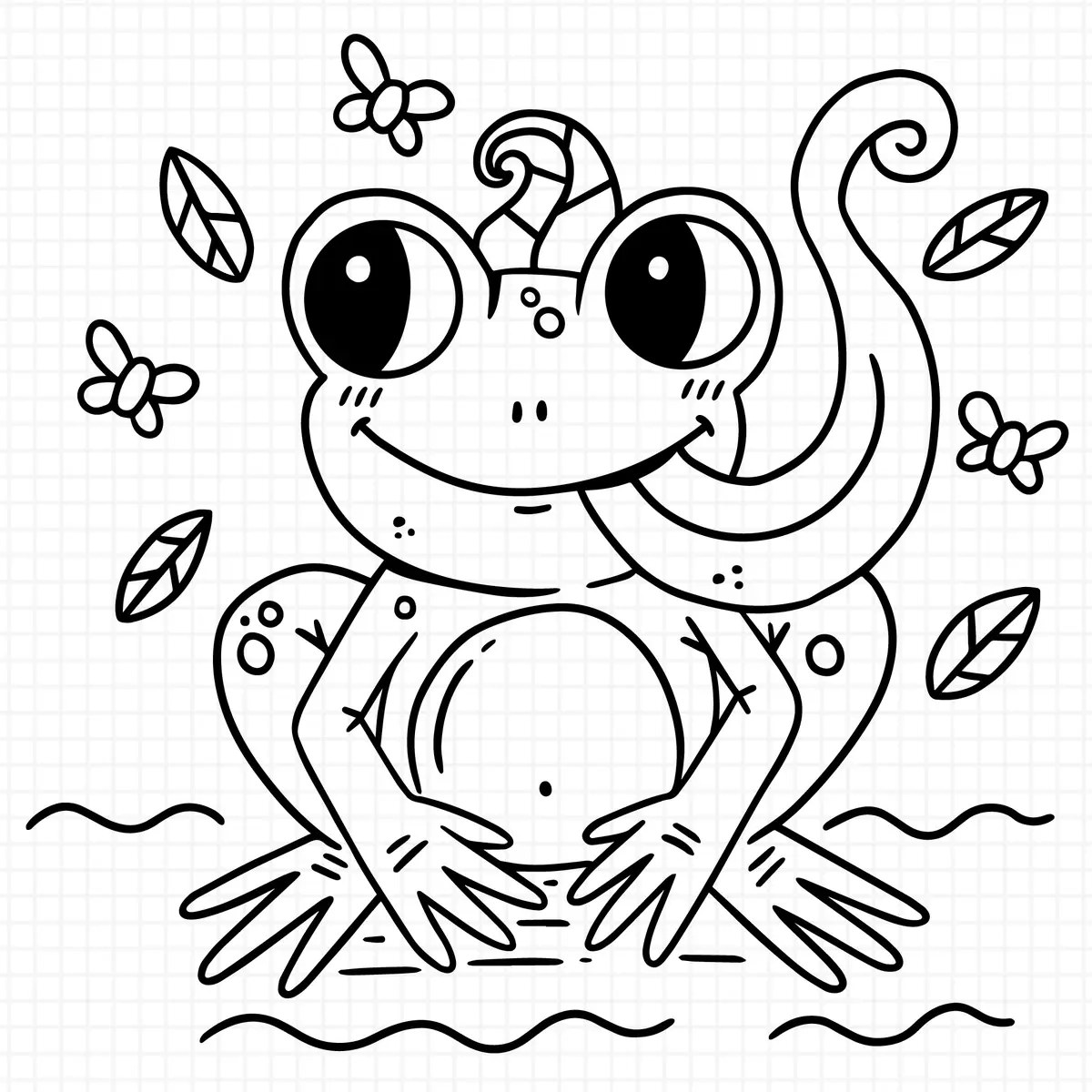
Tip: a red-and-white striped hat makes the playful gnome look really stand out.
🌙 The magical frog in the mushroom forest
A fairy-tale scene where a frog watches the giant mushrooms growing around it by moonlight. The crescent moon, the bubbles, the little scattered mushrooms: everything evokes the magic of a night in the forest. This very detailed sheet suits children from the age of 7. The density of the drawing promises a long session of careful colouring.
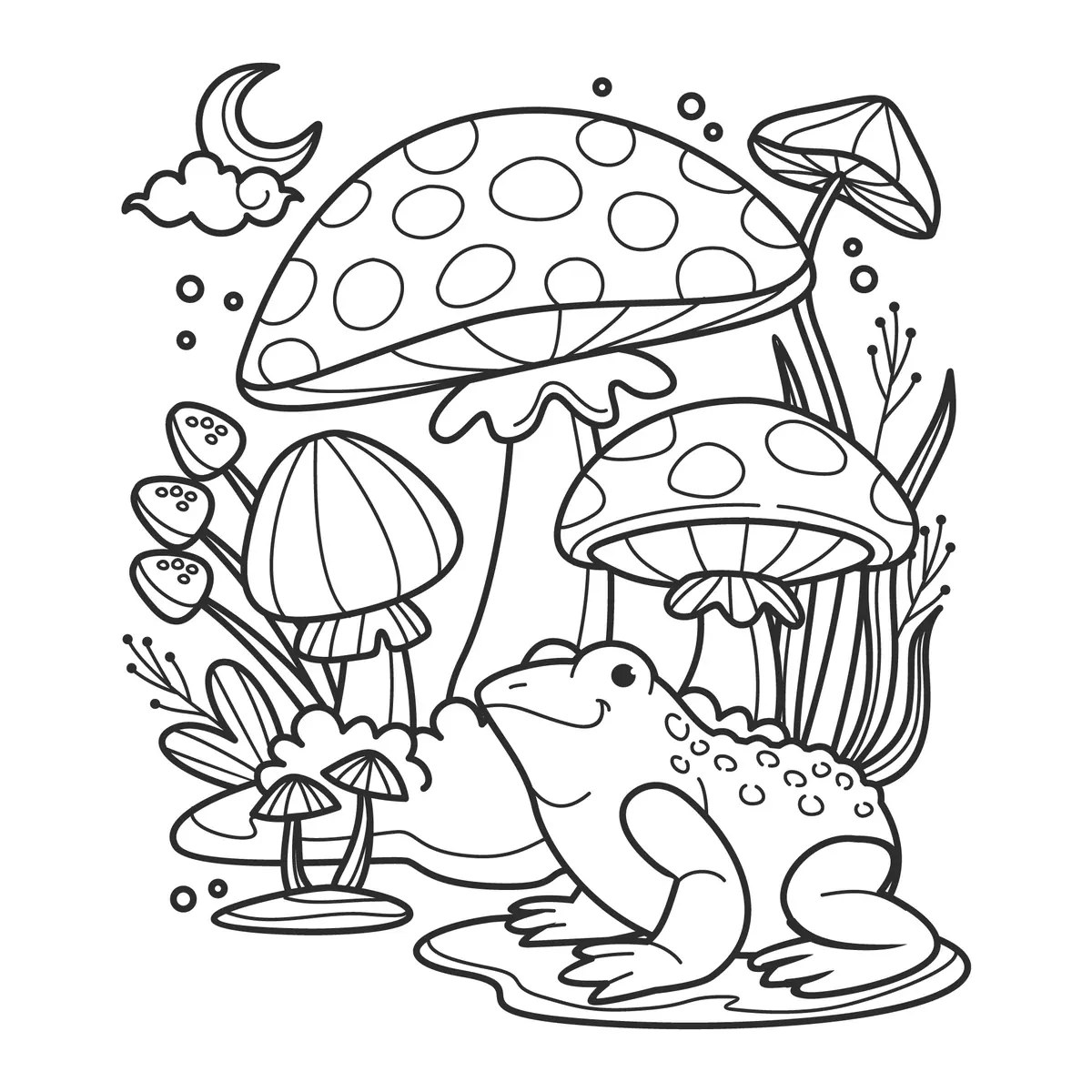
Tip: deep blues and purples for the night sky make the moonlit scene truly magical.
🎨 The mandala frog with detailed patterns
This frog decorated with mandala-style patterns offers the most demanding colouring challenge in our selection. The lines, the circles and the stripes invite you to choose a different colour for each area. This sheet is perfect for children from the age of 8 and even for adults who want to relax while colouring. The final result is always spectacular.
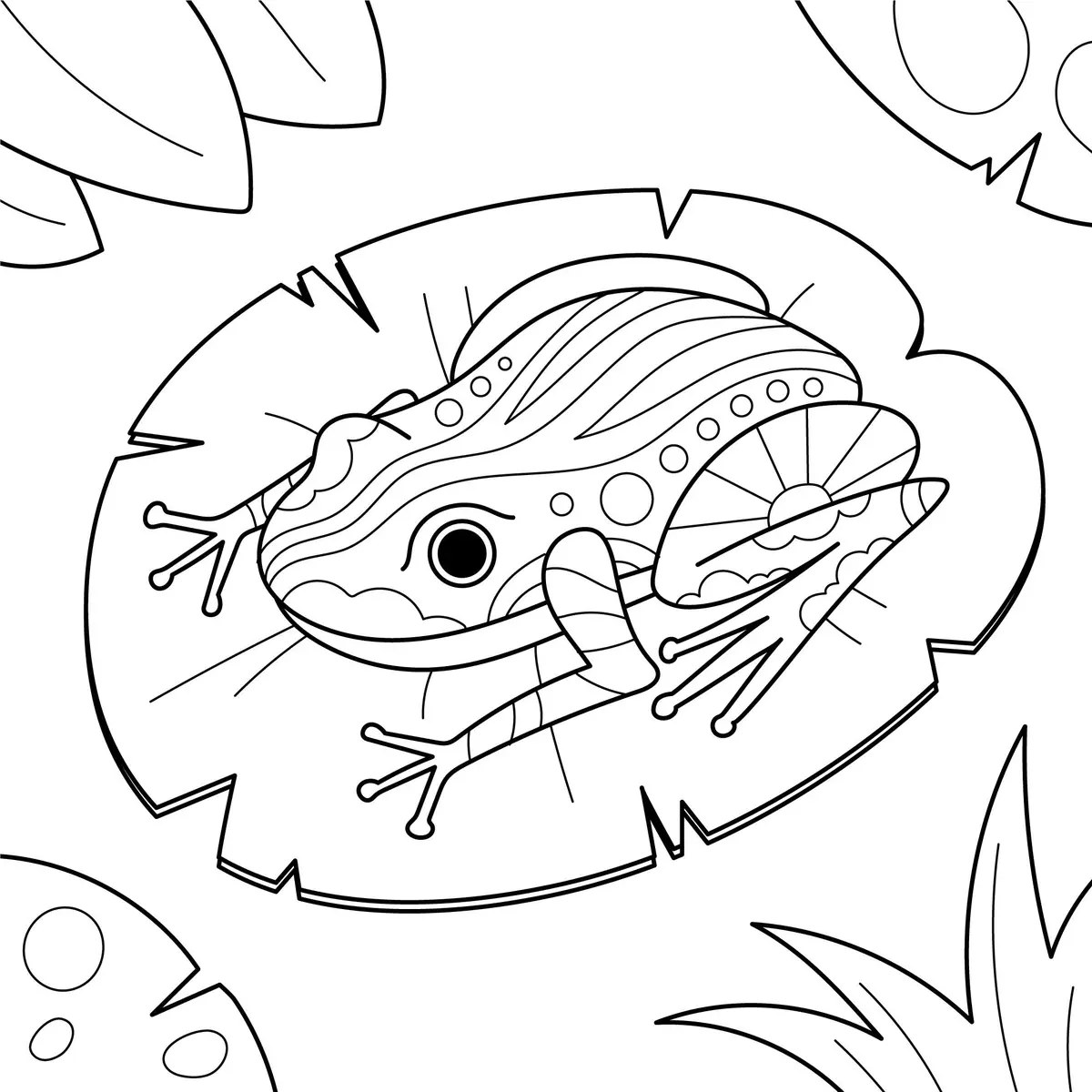
Tip: a rainbow approach, one colour per zone, turns this mandala into a small masterpiece.
🌟 The benefits of frog colouring
🌍 Discovering the frog’s life cycle
The frog goes through several fascinating stages: egg, tadpole, tadpole with legs, froglet, adult frog. Colouring the animal opens the door to simple explanations about this extraordinary transformation. This metamorphosis always sparks children’s scientific curiosity. Colouring becomes a natural introduction to biology.
🎯 Developing precision on fine details
Frog colouring pages often feature rich patterns: the spots on the back, the webbed feet, the markings on the lily pads, the water bubbles. Reproducing these patterns calls for concentration and precision. These exercises directly prepare your child for the demands of handwriting. Fine pencil control builds session after session.
🗺️ Nurturing curiosity about nature
The frog naturally opens the door to discovering wetland habitats. Pond, lake, marsh, stream: so many environments to explore after colouring. A walk in wellies to the local pond wonderfully extends the creative moment. An illustrated atlas of amphibians enriches the activity even further.
🎨 Which colours to choose for the frog
💚 Green in all its shades
Green is the frog’s queen colour, but it comes in several shades. Light green for the belly, darker green for the back, brownish green for the legs. Encourage your child to use at least two or three different greens. This work with shades gives depth to the character and makes the colouring more lively.
🌈 Exotic frogs in bright colours
Some tropical frogs are red, blue, yellow or even bright pink. Encourage your child to dare to use unexpected colours. A pink frog with blue spots is perfectly allowed in colouring. This creative freedom removes any guilt and frees the imagination. The result is often surprising and joyful.
🎨 The bonus: water and lily pads
The watery environment offers a palette of its own: cool blues for the water, deep greens for the lily pads, yellows for the water-lily flowers. The contrast with the green frog highlights the central animal. A few water bubbles coloured in very pale blue add a touch of freshness.
🖨️ Practical tips for printing the sheets
📄 Paper and resolution for sharp details
Frog colouring pages often include fine patterns such as the back spots, the veins of the lily pads or the water bubbles. For these elements to come out sharp, set your printer to “normal” or “high” quality. Paper of 90 or 100 gsm copes better with felt-tips and avoids buckling.
⚫ Printing in greyscale
Our files are in black and white, but check that your printer prints in greyscale to save your colour ink cartridges. Simply save each sheet and open the image full size. The picture opens large and prints directly from your browser.
🖼️ Creating a big pond collage
An original idea is to print several colouring pages and assemble them on a large piece of card to create a pond mural. Your child can arrange the frogs on cut-out lily pads, add water painted in blue and create a real panorama. This larger project keeps them busy over several sessions.
📺 Extending the activity with a nature outing
🌳 Watching a real pond in spring
From March to June, ponds are teeming with tadpoles and young frogs. A family walk in a nature park or a botanical garden lets you observe these little creatures directly. A child who has coloured frogs is doubly amazed when meeting real ones. This hands-on experience often leaves a lasting mark on childhood memories.
📚 Reading books and documentaries about amphibians
Picture books, first illustrated documentaries and tales featuring frogs enrich your child’s world. A video of a tadpole turning into a frog never fails to fascinate. These resources perfectly complement the colouring by varying the approaches.
🌱 Raising awareness about protecting amphibians
Many species of frogs and amphibians are threatened by the loss of wetlands. From the age of 6 or 7, you can simply explain that frogs need clean ponds to live and breed. Not trampling the banks, not polluting the water: so many simple actions your child can understand.
❓ FAQ
🐸 From what age are these frog colouring pages suitable?
These colouring pages are suitable from the age of 3 for the simple sheets such as the frog on its lily pad or the frog sitting among the reeds. The more detailed scenes like the mushroom forest or the mandala are better suited from the age of 7 or 8. Your child will instinctively choose the frog that appeals most.
🌎 Which species of frogs live in the wild?
The countryside is home to several species of frogs: the common frog, the marsh frog, the agile frog, the European tree frog that climbs trees, and the common toad. Many are protected by law. Our selection shows generic frogs that your child can imagine in any pond.
🐸 What’s the difference between a frog and a toad?
The frog has smooth, moist skin, long legs that let it jump far, and it lives near the water. The toad has warty, dry skin, shorter legs, and it walks rather than jumps. Both are amphibians that are useful to biodiversity.
🥚 How does a frog transform?
The mother frog lays her eggs in the water in spring. From these eggs hatch tadpoles that look like little fish. Over the weeks, the tadpoles grow back legs, then front legs, their tail disappears and they become little frogs. This whole metamorphosis takes about three months.
👶 Can you catch a frog with a child?
It’s better to observe frogs without touching them. Their skin is very fragile and sensitive to the products on our hands such as sun cream or soap. Nets and little observation containers are a good alternative for looking at them up close for a few moments before releasing them back into their habitat.
🌳 Why do we hear frogs croaking in the evening?
Frogs croak mostly in spring and summer, at the end of the day and at night. It’s the males that sing to attract the females. This collective chorus can be very noisy, but it’s a sign of a healthy pond. The more frogs there are singing, the better the ecosystem is doing.
