
Color-by-Number Addition Worksheets to Print (Ages 6-7)
🎨 Around ages 6 to 7, addition takes a big step forward: your child leaves behind the small sums of the earlier year and starts working with two-digit numbers, whole tens and their first carrying. To support this move gently and effectively, color-by-number stays a precious ally that turns every exercise into a discovery.
Our color-by-number addition worksheets are tuned to what children learn at ages 6 to 7: sums up to 20, whole tens, carrying, doubles of two-digit numbers. Six different picture themes keep your child motivated all year long. ✨
🎨 Building on earlier skills with color-by-number
🔢 An important step: two-digit numbers
Ages 6 to 7 mark a turning point in learning maths. Your child moves from simple sums up to 10 to working with tens and units. This transition can worry some children, especially when the first carrying appears. Color-by-number brings a reassuring, motivating frame here: the point is not to “do maths”, but to uncover the hidden picture.
✨ New challenges, same joy of the reveal
The idea stays the same as before: your child works out a sum, finds the answer in the colour key and colours the matching square. But the sums are now more complex: 14+8, 37+25, 46+19… The visual reward of the picture slowly appearing makes up for the harder sums and encourages your child to keep going right to the last square.
🏡 A consolidation tool at home and in class
These worksheets fit perfectly into a daily revision routine of 10 to 15 minutes. Teachers can also use them as a differentiated activity, with advanced pupils working on the carrying sheets while others consolidate sums up to 20. Their self-contained format and instant visual self-correction make them especially handy.
📋 Our color-by-number addition worksheets
🌷 Level 1: simple sums up to 20
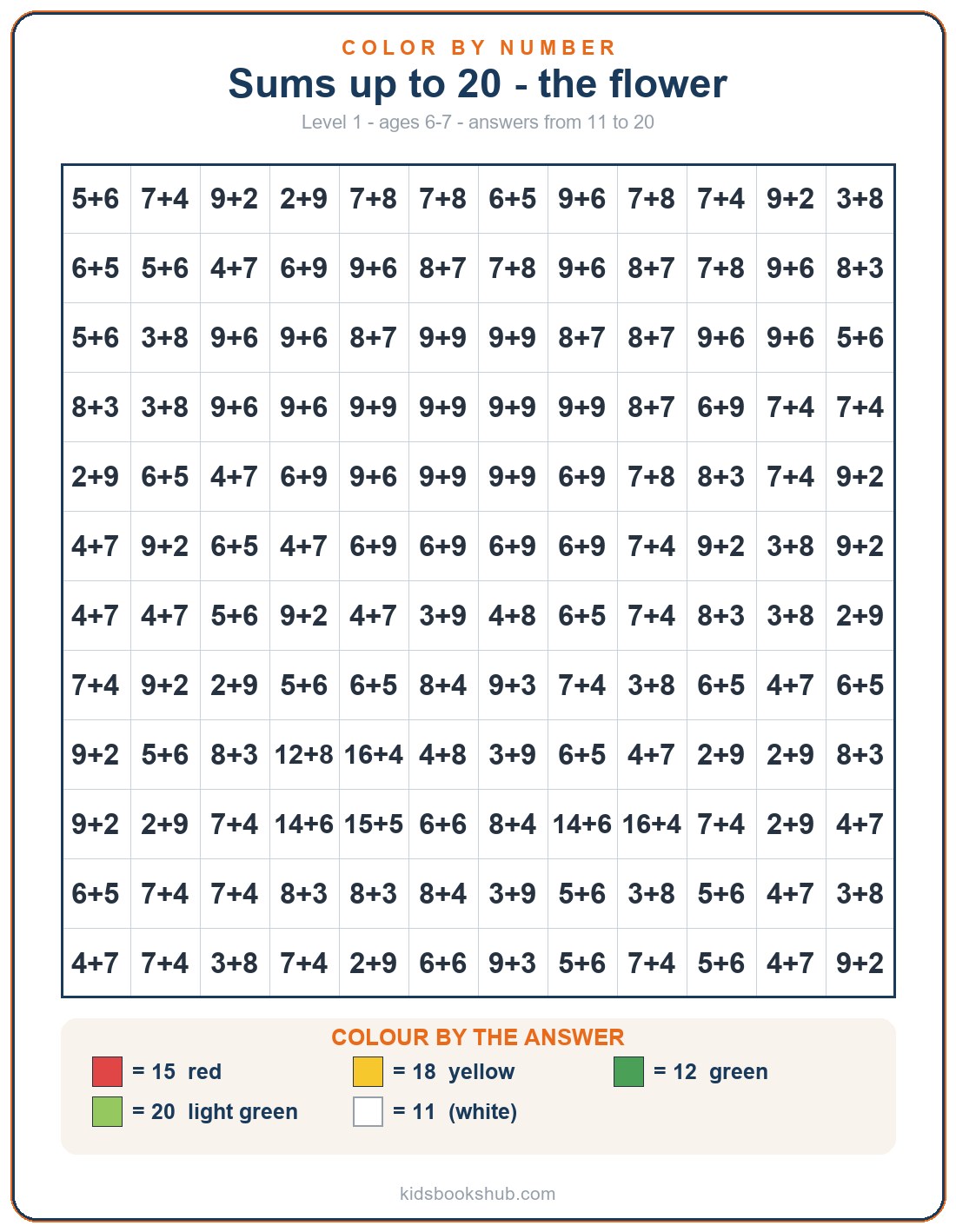
This first sheet picks up exactly where the earlier year left off. The sums give answers from 11 to 20, without carrying: 8+7, 13+5, 9+9… The key uses ten distinct colours numbered from 11 to 20 to make matching easier. The picture revealed shows a familiar, reassuring nature theme for your child at the start of the year.
🏠 Level 2: sums with whole tens
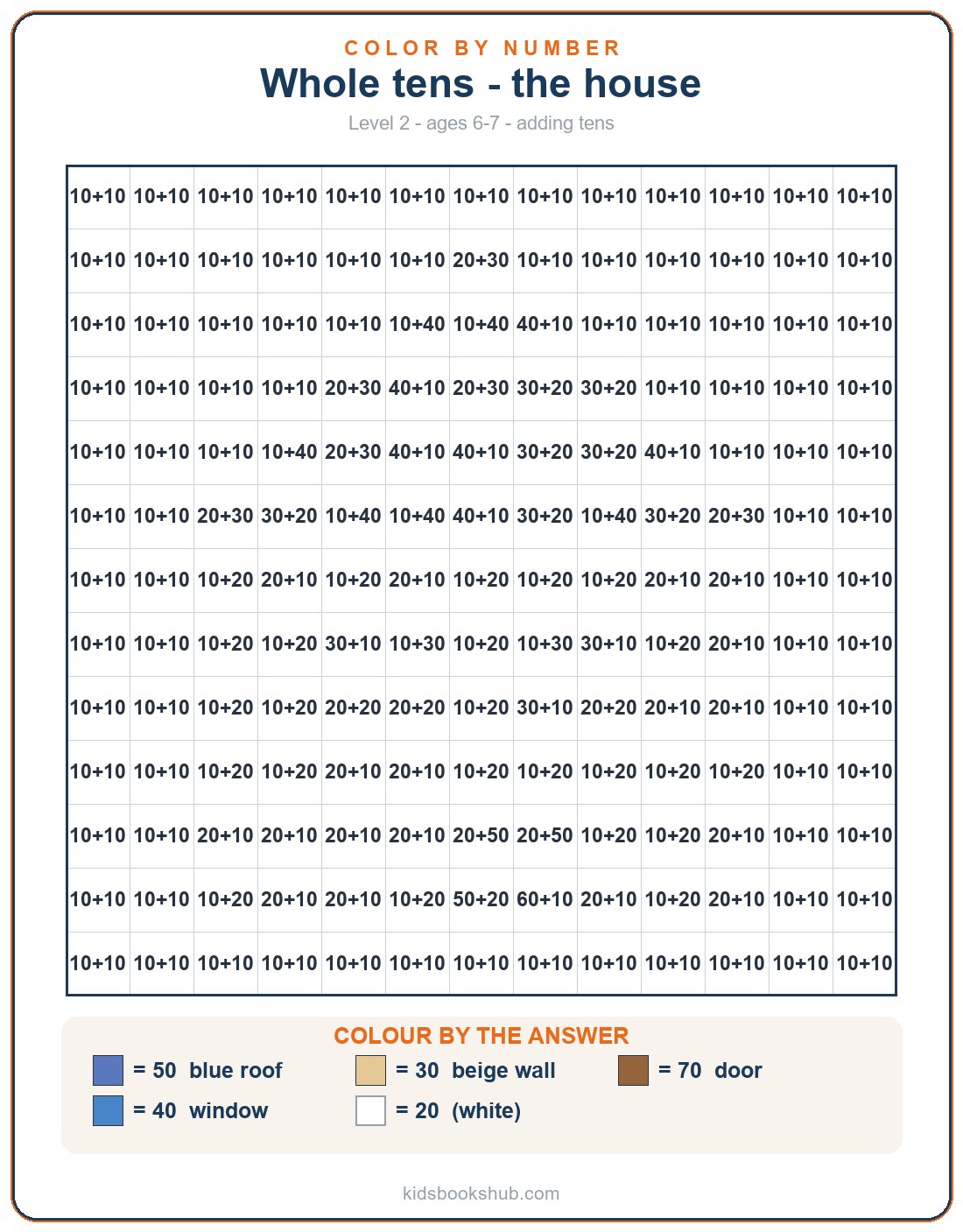
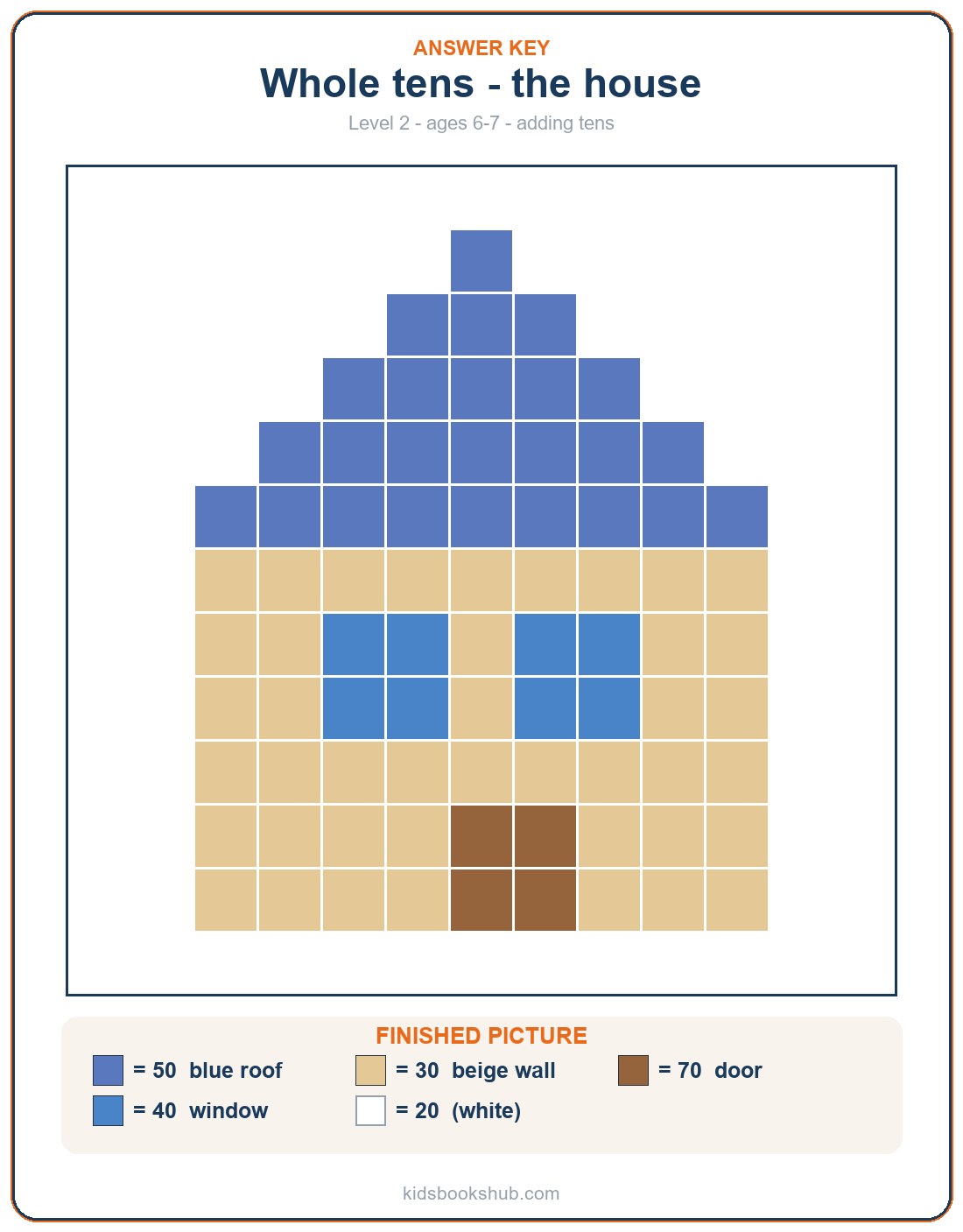
This sheet brings in round tens: 20+30, 40+20, 50+30… Your child practises place value by understanding that 20+30=50 works just like 2+3=5, but with tens. This regular structure is a great way into bigger numbers, because it builds on solid earlier skills. A village theme with colourful houses and gardens makes the tens easy to picture.
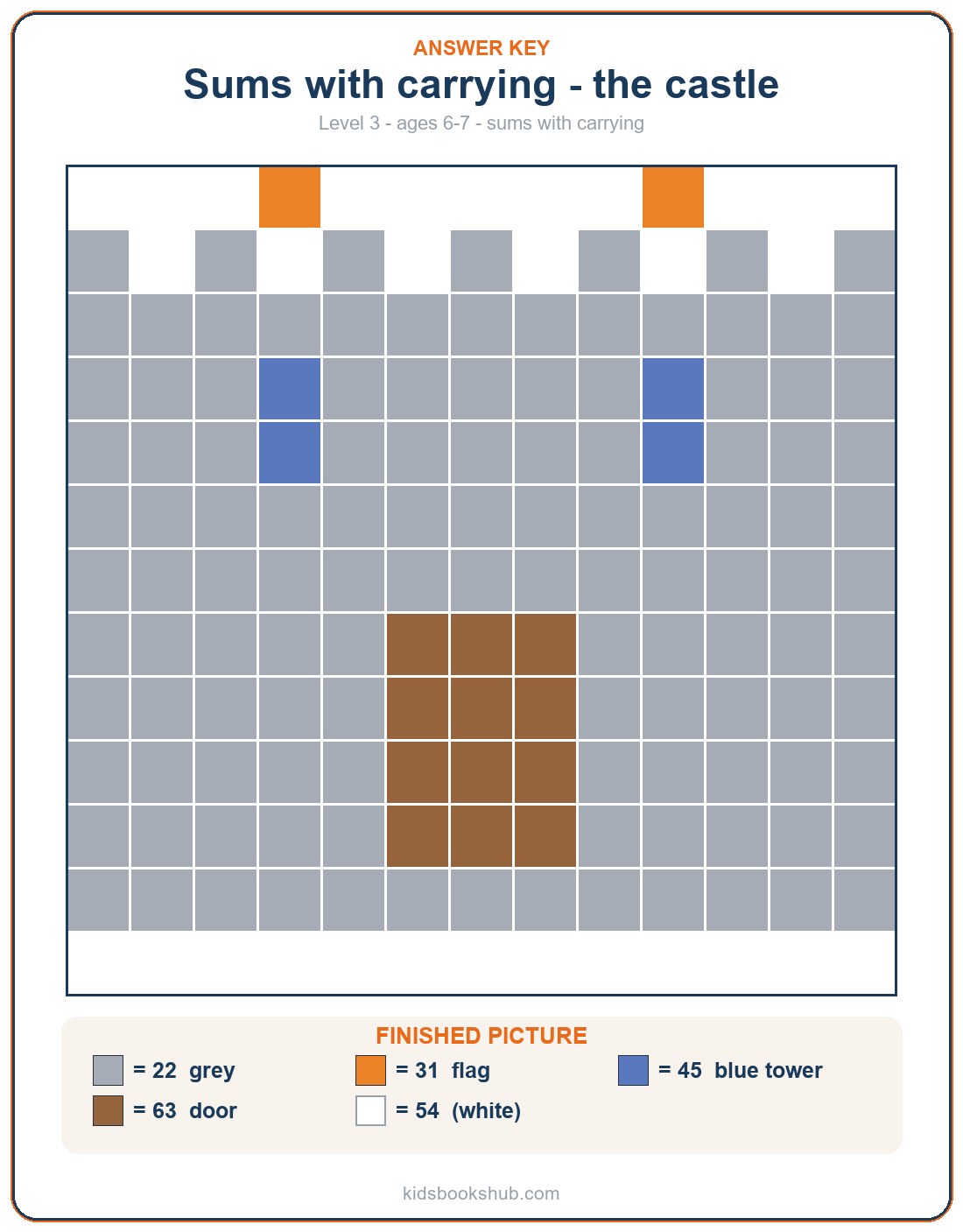
🏰 Level 3: sums with carrying
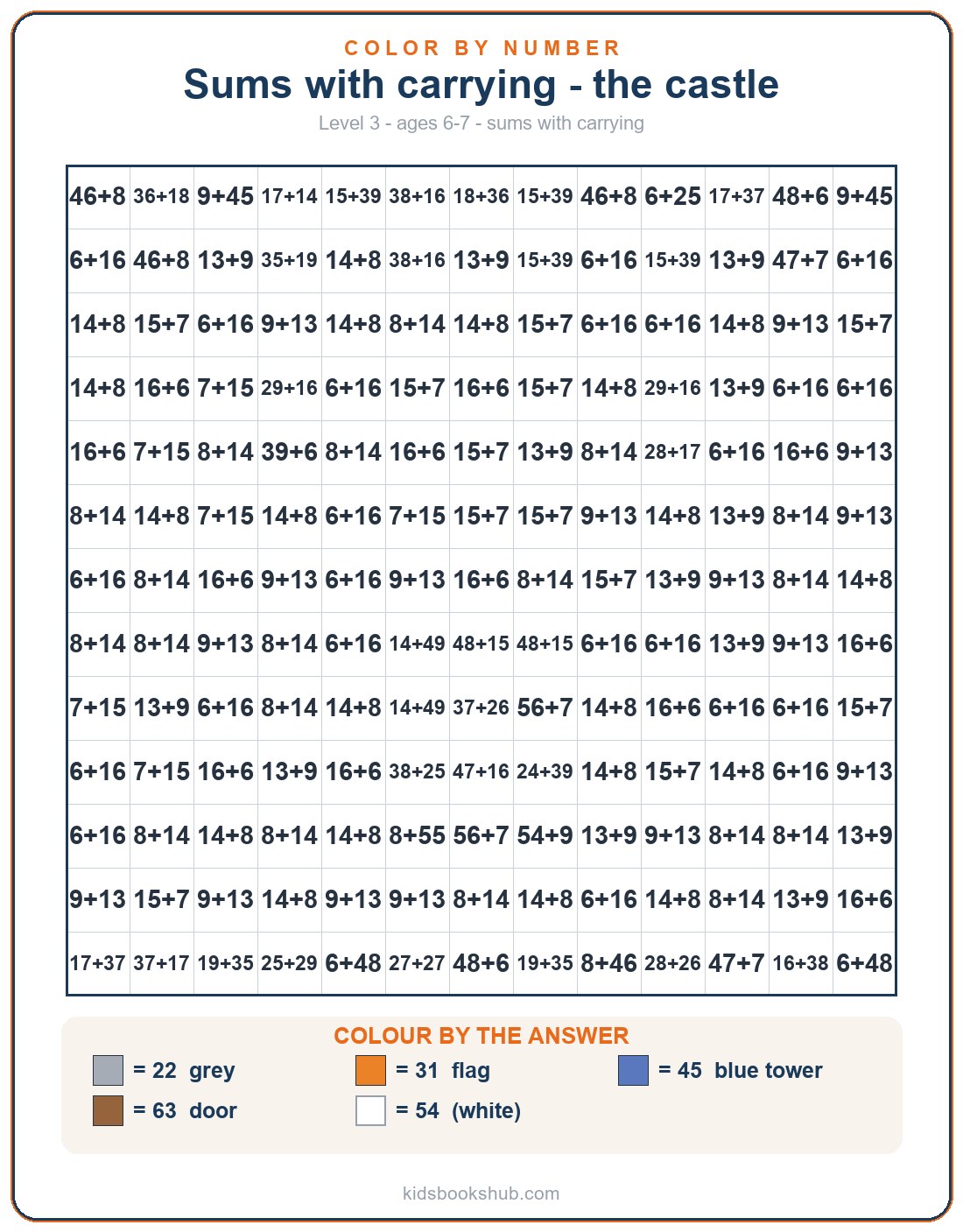
Here is the heart of the programme: sums with carrying (14+8=22, 27+15=42, 38+24=62). This sheet has its own built-in progression, starting with simple carrying, then moving to harder sums. Uncovering the final picture (a castle with its towers) rewards your child for mastering this demanding technique. We recommend using this sheet once the written method has been well understood in class.
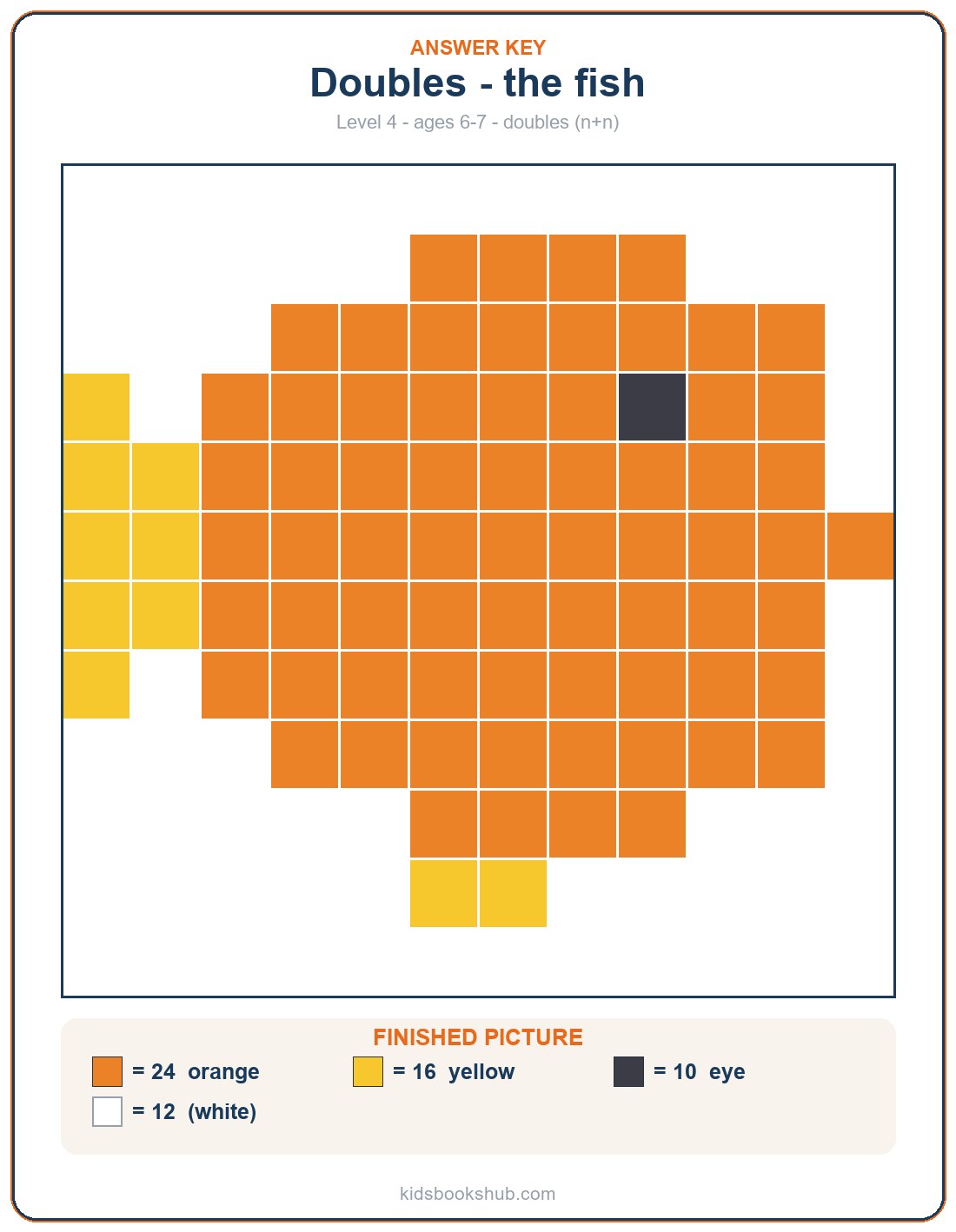
🐠 Level 4: two-digit doubles
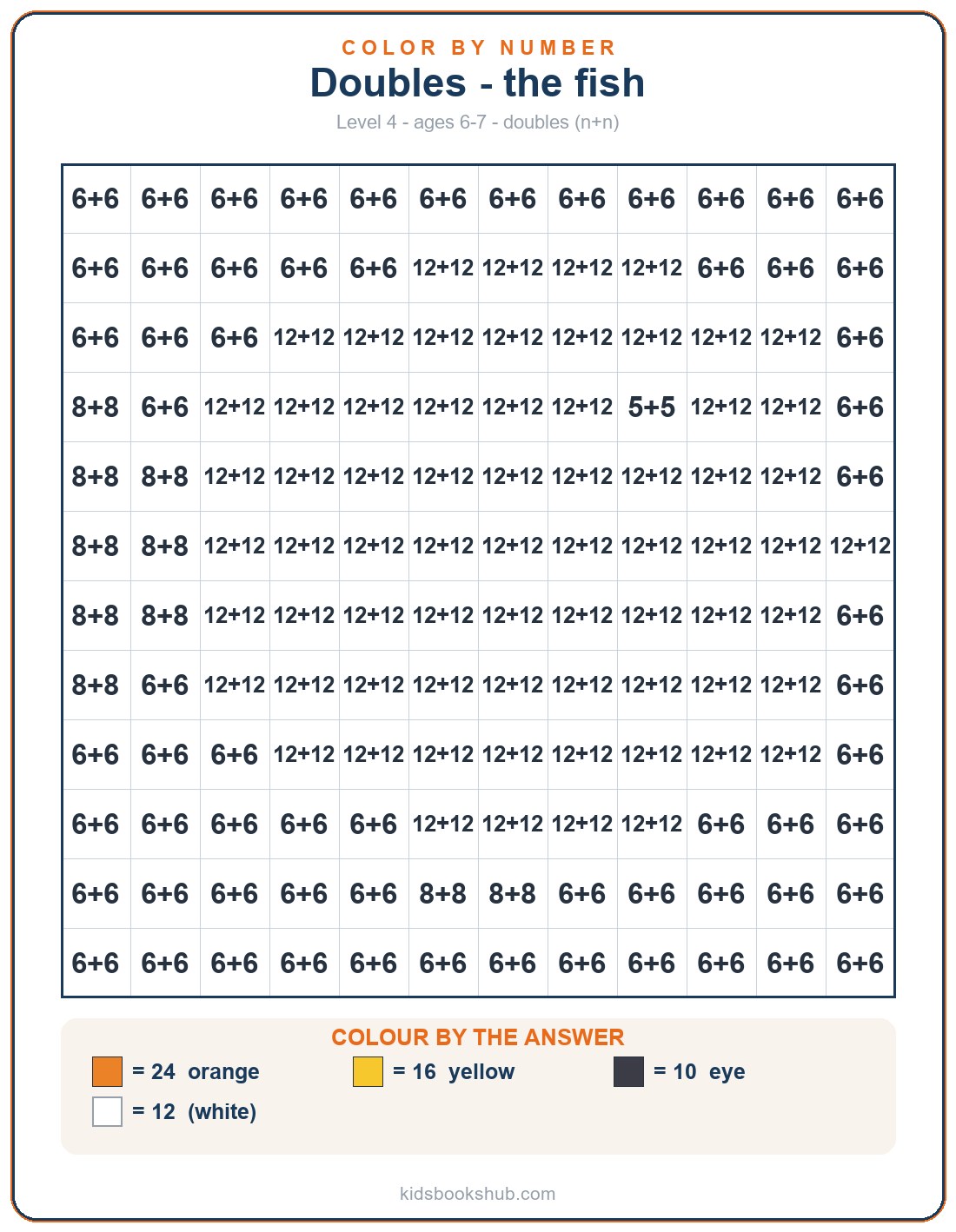
Doubles of two-digit numbers (11+11, 14+14, 23+23) are a specific point for this age that gets ready for multiplication. This dedicated sheet lets your child practise this particular type of sum. The regular structure (same number + same number) helps with memorisation and intuitively prepares them for the idea of “2 times” a number.
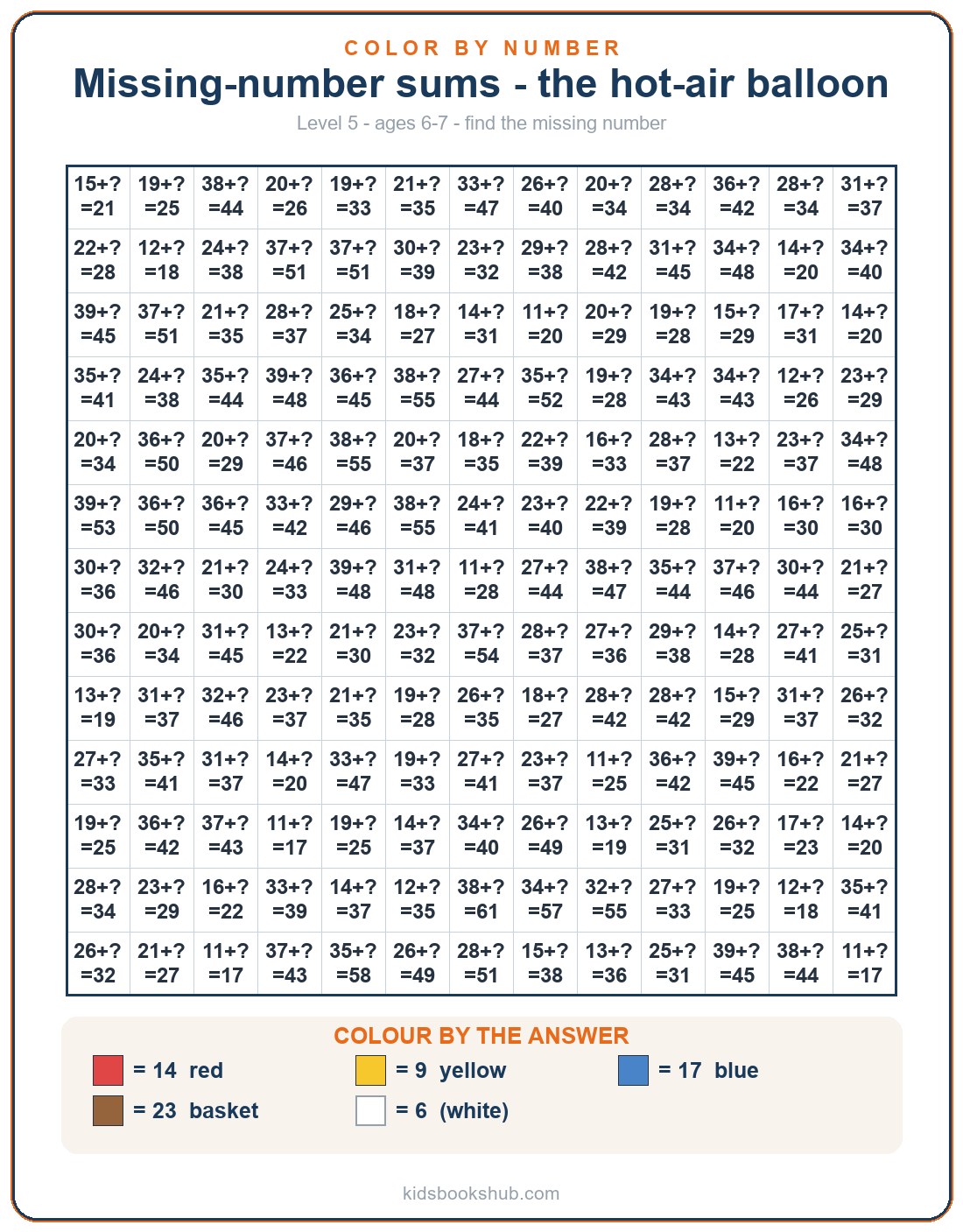
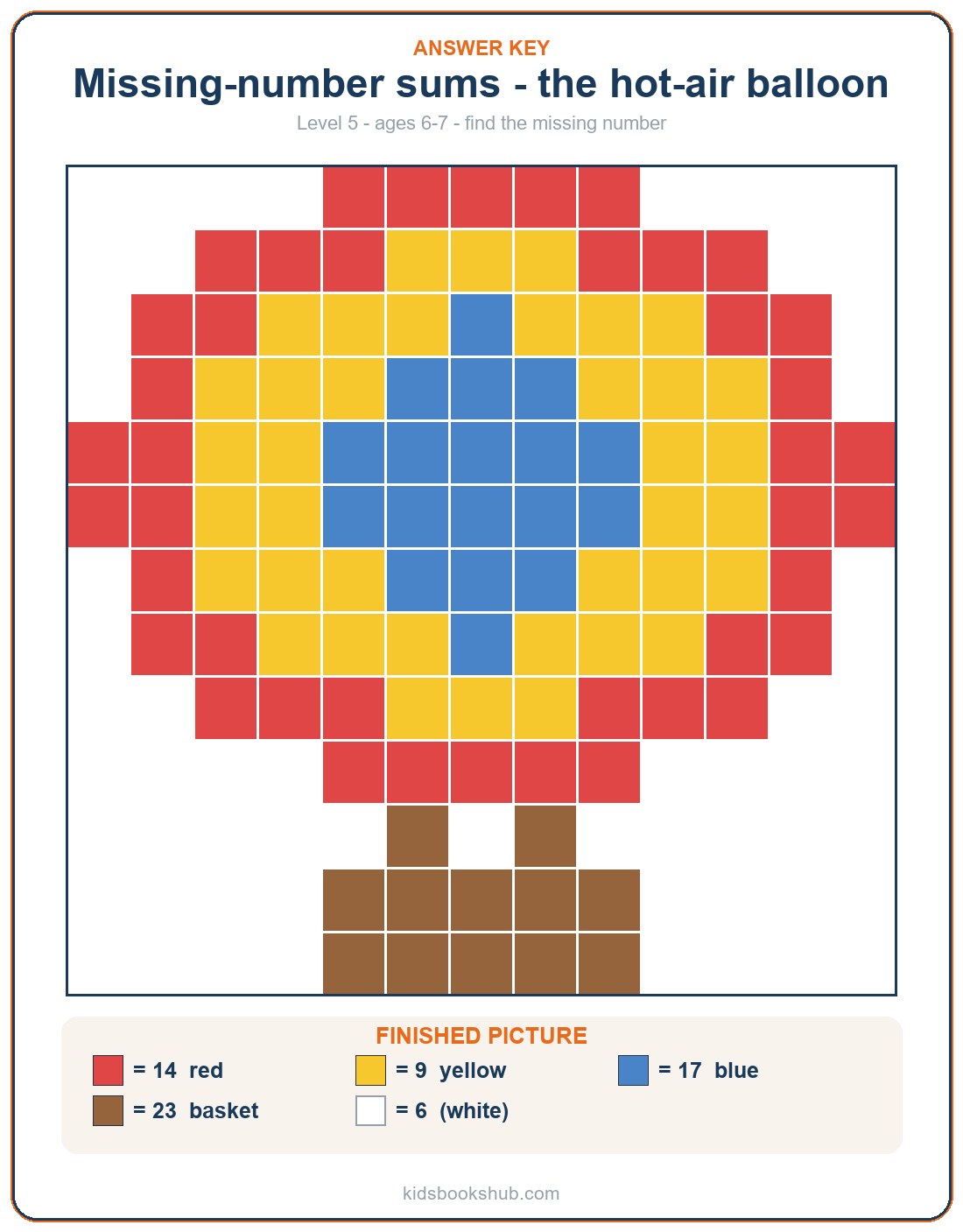
🎈 Level 5: missing-number sums
Just like the earlier year, the missing-number sheet offers incomplete sums (25 + ? = 41, ? + 18 = 33). At this age, these exercises use two-digit numbers and require understanding the link between addition and subtraction. This type of exercise builds mathematical reasoning by pushing your child to think about how numbers relate, rather than applying a procedure mechanically.
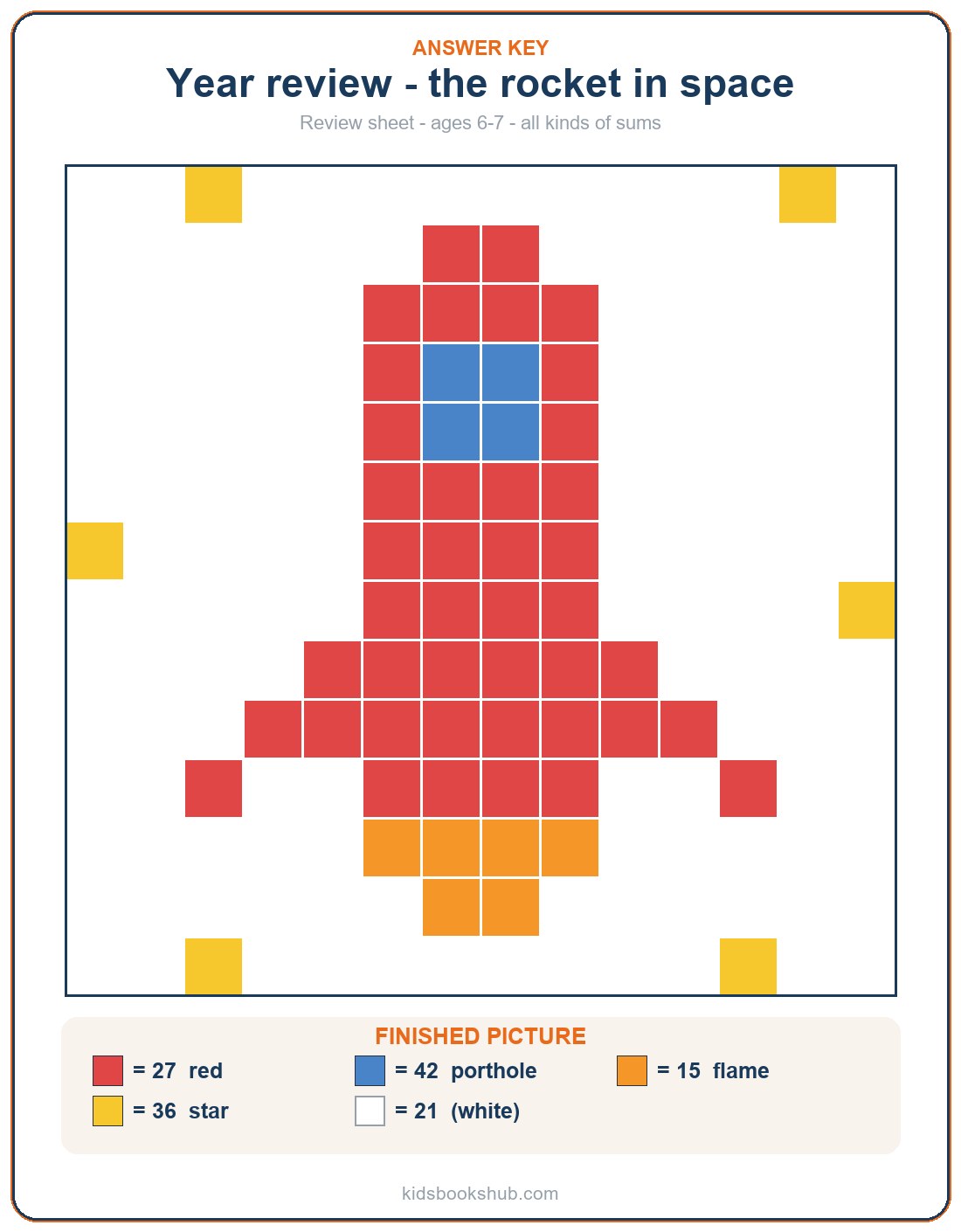
🚀 Year-review sheet: space theme
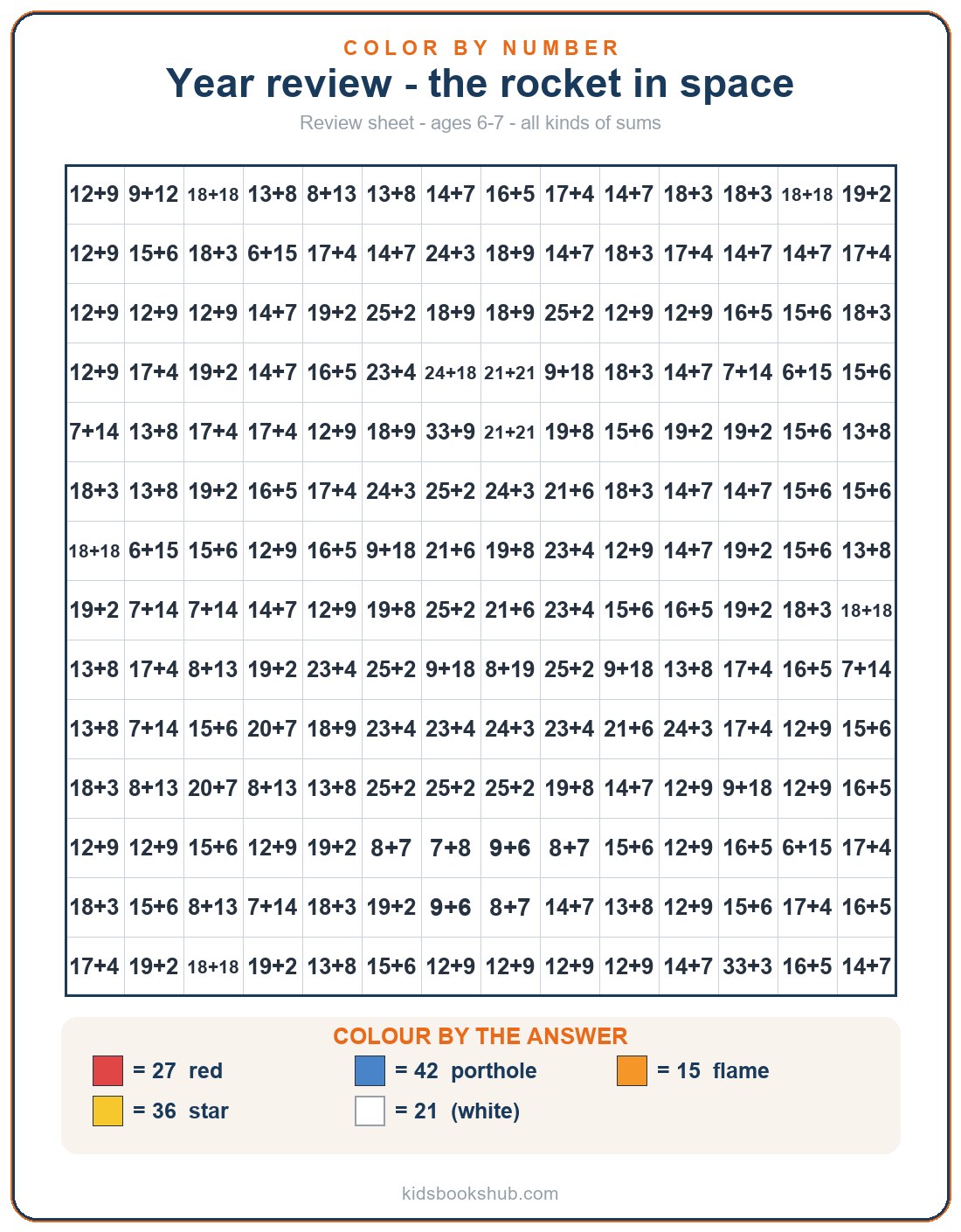
The end-of-year review sheet mixes every type of sum from the programme: up to 20, tens, carrying, doubles and missing numbers. Bigger and more complex than the others, it reveals a spectacular space scene (planets, comets, astronauts). This festive sheet is ideal for celebrating the end of the year’s learning while checking how well your child has mastered the whole set of addition skills.
🧮 The benefits for mastering addition
⚙️ Mastering carrying: from technique to instinct
Carrying is often the first big maths hurdle for children. Understanding why you “put 1” in the tens column takes a real effort of thinking. The playful repetition of color-by-number speeds up the move from understood technique to smooth instinct. A child who does ten carrying sums on a colouring sheet builds an ease that ten plain exercises would not have produced as effectively.
🧠 Mental maths and breaking numbers apart
Color-by-number encourages mental maths: your child first tries to estimate the answer to find their place in the key, even before writing out the sum. This habit of working it out in their head before checking with the written method is a high-level maths skill. Children who practise regularly build an intuitive feel for numbers that will serve them all through their schooling.
💪 Motivation and sticking with it when things get hard
This is a year when maths really does get harder for some children. Motivation can fade in the face of repetitive exercises. Color-by-number keeps them engaged with the promise of the final picture. Your child learns to keep going when things are hard, a skill that carries over to all learning, at school and in life.
💡 How to use these worksheets effectively
📋 The three-step method
The method stays the same as before, but the calculation step is now more demanding. Your child needs to: work out the sum (in their head or written at the side of the sheet), find the answer in the colour key, and colour the square. Encourage your child to jot their working in the margin for the harder sums: this builds the habit of showing their work and makes it easier to spot mistakes.
🎯 Adapting support to the difficulty
If your child is stuck on a carrying sum, several strategies are possible: use hands-on materials (number rods, cubes), break the sum into two steps (14+8 = 14+6+2 = 20+2 = 22), or use a number line. The key is not to give the answer straight away, but to guide your child towards the strategy that suits them, so the answer they find truly feels like their own.
📅 Fitting the worksheets into a year-long progression
At the start of the year, begin with the sums up to 20 to consolidate earlier skills. A few months in, bring in whole tens. Then work on sums with carrying. Towards the end of the year, use the doubles, missing-number and big review sheets. This progression follows the natural rhythm of the year and makes sure your child is always working at a level where success feels within reach.
📈 Moving on to the next year
✖️ Multiplications and more complex color-by-number
Once the addition skills are solidly in place, your child is ready for the next year with its multiplications and harder subtractions. Color-by-number exists for those topics too, with multiplication tables to find or two-digit subtractions. The familiar format makes it easier to take on these new challenges calmly.
🧮 The abacus and addition tables
Alongside color-by-number, the abacus is a great tool for picturing carrying. A full addition table (from 1+1 to 10+10) pinned to the bedroom wall helps your child check their answers and gradually memorise the key sums. These tools alongside color-by-number make for a complete set of learning aids.
🎲 Extending with maths games
🃏 The maths card game
Make a deck of 40 cards: 20 two-digit sums and their 20 matching answers. The idea of a memory or pairs game pushes your child to calculate in their head to find the matches. The friendly competition of the game (against a parent, a brother or a sister) adds extra motivation while making addition revision enjoyable and shared.
🧱 The abacus and hands-on materials
For carrying sums in particular, hands-on work is irreplaceable. A two-row abacus (units and tens) lets your child physically see what happens when the units go over 9 and you “swap” 10 units for 1 ten. Switching between the abacus and color-by-number creates multi-sensory learning that is especially solid and lasting.
🔑 Worksheet answer keys
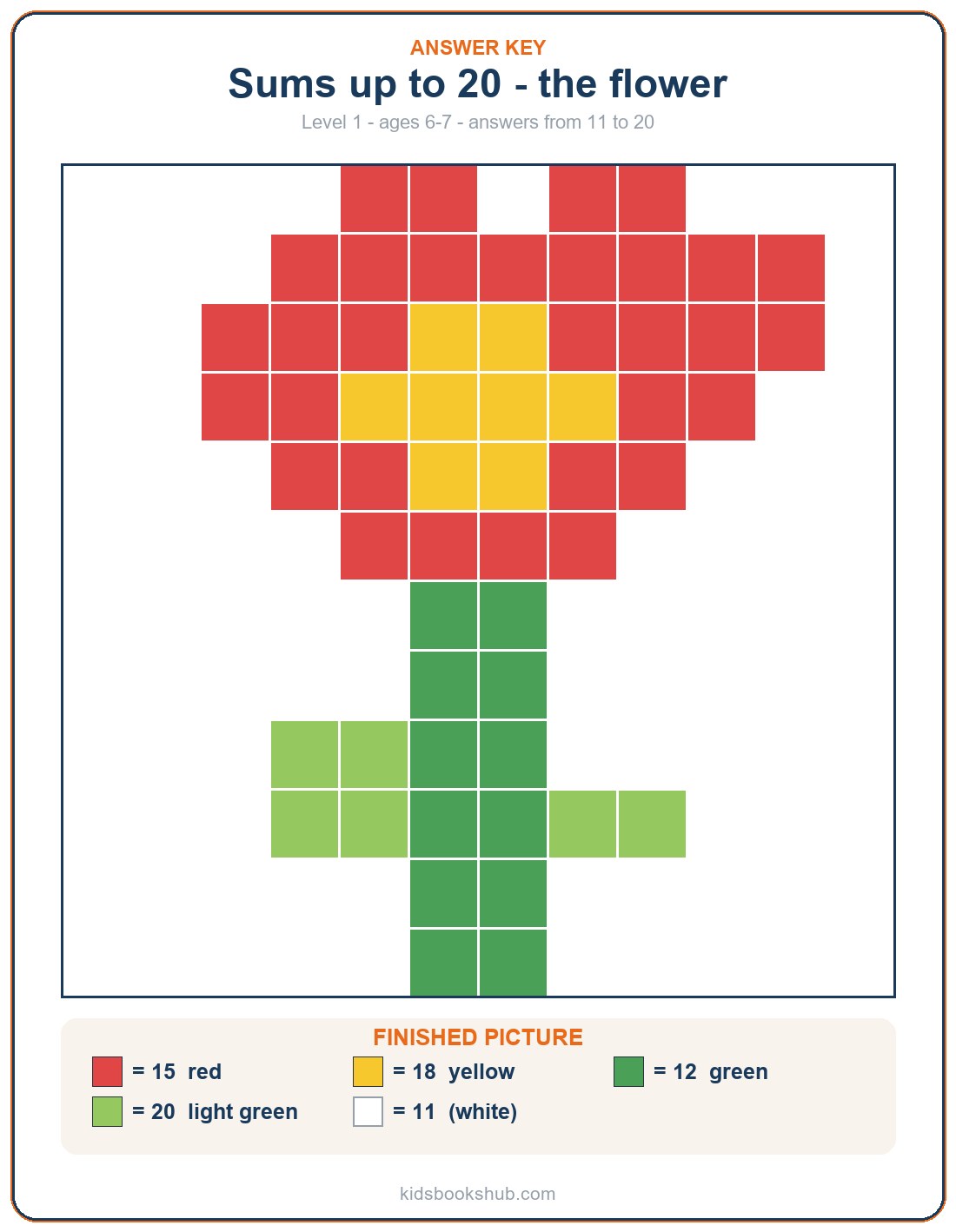
🔑 Here are the revealed pictures for the six sheets. Use them to check your child’s colouring once all the sums are done: if the picture matches, the sums are right!
🌷 Answer key — The flower (sums up to 20)
🏠 Answer key — The house (whole tens)
🏰 Answer key — The castle (sums with carrying)
🐠 Answer key — The fish (doubles)
🎈 Answer key — The hot-air balloon (missing-number sums)
🚀 Answer key — The rocket (year-review sheet)
❓ FAQ
👶 What age are these color-by-number addition worksheets for?
These sheets are designed for children aged 6 to 7. The level 1 sheets (sums up to 20) can be used from the start of the year, or as revision at the end of the earlier year for children who are ahead. The carrying sheets suit the second half of the year better, once the technique has been introduced in class.
💯 How big do the numbers get in addition at this age?
Children of this age work on adding whole numbers up to 99 (two digits), with carrying introduced. They learn to set out and work through sums like 47+35 or 68+24. Sums above 100 come the following year. Our sheets cover this whole range, from whole tens to two-digit sums with carrying.
🔄 What is the difference between the earlier sheets and these ones?
The earlier sheets work on sums whose answer does not go above 10, with no carrying. These sheets bring in two-digit numbers (answers from 11 to 99), whole tens and carrying. The sums are clearly more complex, but the color-by-number idea stays the same to keep a reassuring continuity between the two levels.
⏰ Is carrying introduced right at the start of the year?
No. Carrying is usually introduced during the first part of the year, once sums up to 20 without carrying are well mastered. Teachers follow a progression that goes from simple two-digit sums towards sums with carrying. Our sheets respect this progression by offering several distinct levels.
📊 Can these sheets be used as an assessment tool?
Yes, color-by-number sheets can serve as an informal assessment. If the final picture is consistent and recognisable, the large majority of the sums are correct. For a more precise check, ask your child to note their working in the margin: you can then pinpoint exactly which types of sum still cause difficulty. The space year-review sheet is especially suited to this use at the end of the year.
➖ What is the link between color-by-number addition and subtraction?
Addition and subtraction are two sides of the same maths coin. Understanding that 34+18=52 means that 52-18=34. The missing-number sheets in our collection (such as 25+?=41) are in fact a natural introduction to subtraction as reversed addition. Our color-by-number subtraction sheets pick up this type of exercise to deepen this complementary learning.
