
Explaining where a chick comes from without getting in a muddle is a real challenge for lots of parents. 🐣 This article walks you through every stage of a hen’s life cycle and gives you a handy printable sheet to turn this nature lesson into a fun moment to share together. You’ll discover how to use our step-by-step pictures and learning tools to grow your little ones’ vocabulary while watching the magic of hatching unfold after 21 days of waiting.
- The secrets of the egg and the 21-day incubation
- 3 key steps for a successful hatching
- How to support a young chick’s growth
- Reaching adulthood and the first eggs
- 4 signs that a hen is getting older
- Learning tools and fun printable sheets
🥚 The secrets of the egg and the 21-day incubation
After a quick word about the magic of life on the farm, let’s lift the lid on what really goes on inside the shell before the first cheep is ever heard.
🥚 How the egg forms and how a hen lays
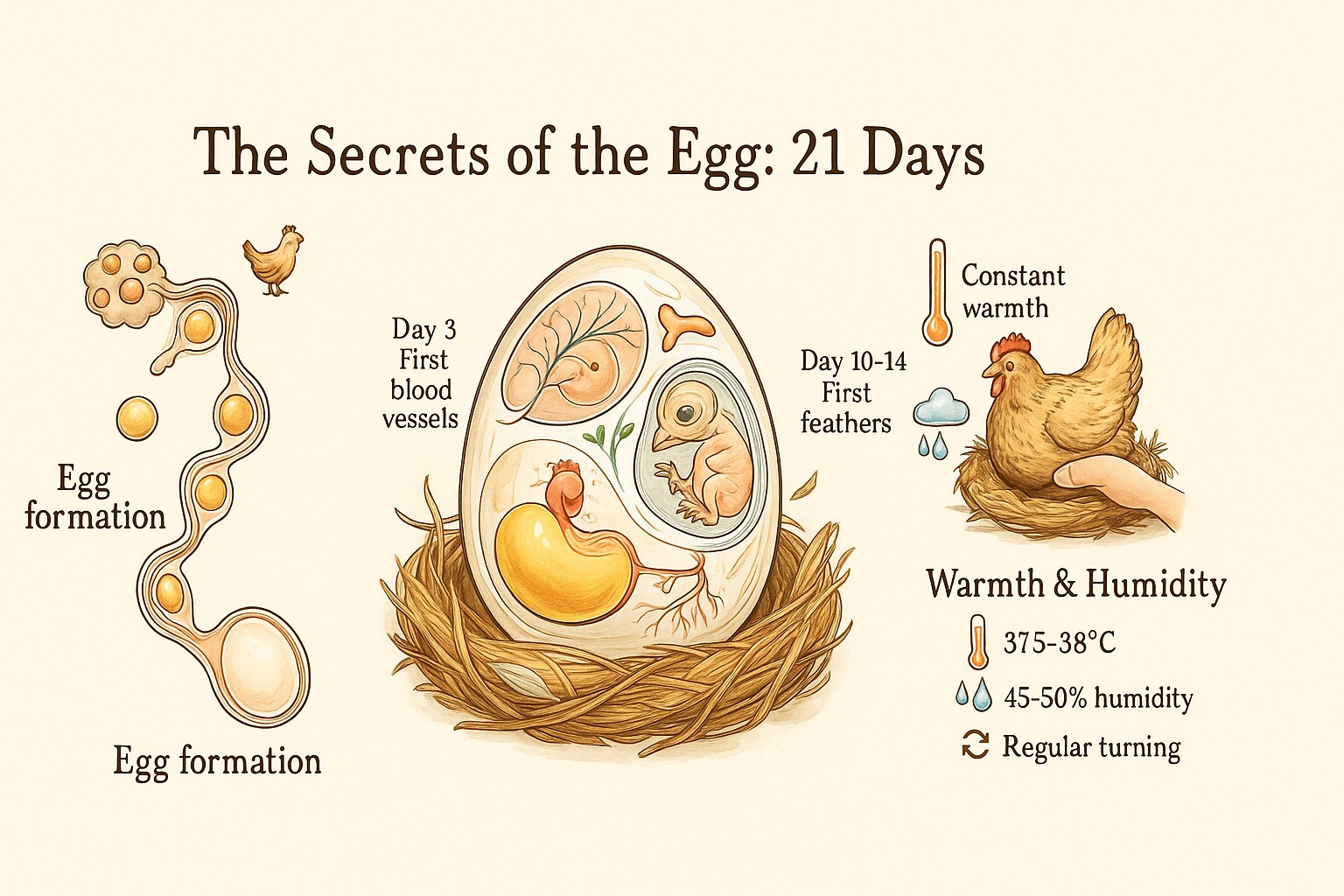
The journey begins in the oviduct, where the egg cell slowly travels down. The egg white wraps around it first to keep it safe. Finally, a tough chalky shell forms all around the little treasure inside.
The cuticle then acts like an invisible but powerful shield. This thin layer seals the egg to block nasty bacteria. Even so, it’s clever enough to let the embryo breathe normally.
Here’s a fun fact: a hen lays perfectly well without a rooster. The egg is simply unfertilised in that case.
🔬 The stages of the embryo’s development
By the third day, tiny blood vessels have already appeared. That’s the starting point of an amazing transformation. It all happens quietly, tucked safely under the protective shell.
The heart soon starts to beat, proving this little life is on its way. The future chick draws all its energy from the yolk. This egg yolk is an incredible store of nutrients.
The organs and limbs then take shape quickly. By around the tenth day, you can even spot the first feathers starting to show.
🌡️ The right warmth and moisture
The temperature must stay steady, ideally around 37.7°C. The smallest cold spell could bring this lovely adventure to a halt. Moisture is the other thing you must never forget.
The hen, or the keeper, turns the eggs very regularly. This stops the embryo from sticking to the inner membrane. It’s a small but vital job to repeat several times a day.
Here are the key points for a successful incubation:
- Ideal temperature: 37.5-38°C
- Moisture level: 45-50%
- Turning frequency: at least twice a day
🐣 3 key steps for a successful hatching
Once the 21 days are up, the calm of the incubation gives way to a real struggle for survival: the big hatching day has arrived.
🐣 The hard work of breaking the shell
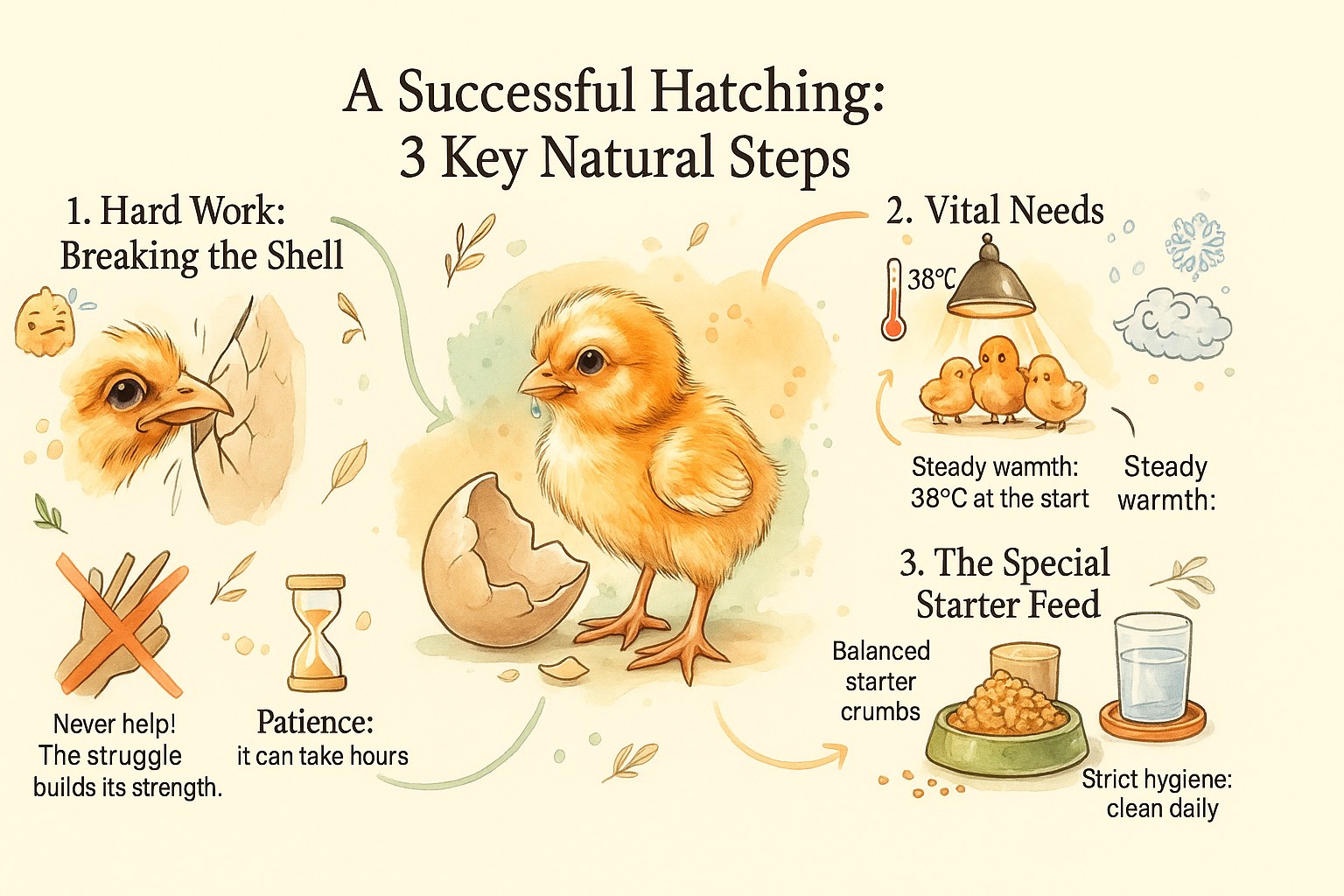
The little one has a diamond. It’s a chalky point on its beak, called an egg tooth. It pierces the air pocket first. Then it goes to work on the shell. This effort is exhausting.
You must never help it. The chick has to push on its own. This strengthens its lungs. Its muscles get stronger this way too.
Hatching sometimes takes several hours. Be really patient. That’s the golden rule here. Just watch without stepping in.
🔥 What a chick needs in the brooder
The chick should dry off inside the incubator. Its down then becomes nice and fluffy. Don’t move it too soon. Cold is its worst enemy.
Get a warm, steady spot ready. Keep it at 38°C. The little ones huddle together if the temperature drops. Keep a close eye on how they behave.
Steady heat in the first few days keeps them alive. Without that warmth, they tire out fast. Check the bedding regularly.
🌾 The special starter feed
Offer protein-rich starter crumbs. They make sure the chicks grow healthily. The bits are really tiny. That’s perfect for their small, delicate beaks.
Clean water should always be within reach. Avoid icy water for them. It causes a cold shock. A proper drinker stops silly drowning accidents.
Keep the equipment spotlessly clean at all times. A dirty tray kills. Early illnesses come quickly without cleaning. Stay careful about cleanliness.
🐤 How to support a young chick’s growth
After the fragile first days, the chick begins a spectacular change that will turn its fluffy little ball of down into a real bird.
🪶 Swapping down for real feathers
From the very first week, the first feathers show on the wings. The down slowly falls out to make room for the proper plumage. This stage takes a huge amount of energy from the little ones.
The feathers mostly help with keeping warm. The more feathers they grow, the less they mind the cold. You then lower the temperature by two degrees each week, carefully.
Once a young bird is fully feathered, it can finally face the chilly outdoors without any real risk to its health.
🍽️ Changing the growing diet
By around the sixth week, you move on to grower pellets. This mix, less rich than the starter, still firmly supports the bones. It’s the perfect time to add a bit of variety.
You gently introduce greens and small insects found in the garden. This stirs their natural urge to forage while topping up their vitamins. They love scratching the ground to dig out a few well-hidden worms.
Always keep an eye on the water. Staying well hydrated makes for healthy growth.
👑 Sorting out the pecking order
Watch the first little shoves and the games of chase. These social moments hide something serious behind their playful look. They simply decide who the future leader will be.
The small symbolic pecks work like a universal language. This is what we call the pecking order, a ritual that’s needed to build a lasting peace. Each one has to find its exact place.
Behaviours to watch for:
- Mock fights
- Sharing the shady spots
- Group alarm calls
🐔 Reaching adulthood and the first eggs
Playtime is over. The young hens are now getting ready to carry out their main job in the coop: laying eggs.
🐔 The physical signs of growing up
The comb and the wattles turn bright red. That’s the hormonal signal that laying is really getting close. The hen also becomes a lot more talkative.
The hips widen as the pelvic bones spread apart. Her shape grows heavier and rounder. She then starts looking for a quiet corner to nest in.
On average, the laying period starts between 4 and 5 months. It’s a key milestone.
🥚 The laying rhythm and what a hen needs
The first egg is often small or oddly shaped. Don’t worry, the rhythm soon settles depending on the breed. A good layer sometimes gives 300 eggs a year. That’s a huge feat for such a small body.
Calcium is vital for building the shell. Without it, the hen draws straight from her own bones. It’s best to leave crushed oyster shells out for her to help herself. It keeps her healthy and safe.
Natural light plays a driving role too. It nudges the pituitary gland to trigger daily ovulation.
❄️ Handling the moult and the winter rest
The plumage renews itself every year, usually in autumn. The hen loses her feathers and stops laying. All her energy goes into making her new winter coat.
Laying naturally drops over winter. The days are too short to stir her body enough. It’s a needed rest that protects her long, healthy life.
Respecting a hen’s natural winter rest helps her stay healthy for far longer.
⏳ 4 signs that a hen is getting older
Like every living thing, a hen eventually slows down, easing into a peaceful old age that deserves our respect.
⏳ Lifespan and changes in behaviour
A hen’s lifespan often reaches 8 to 10 years. Older breeds usually live longer than hybrids. Taking in a hen is therefore a long-term commitment.
You’ll soon notice a drop in her overall energy. The older hen prefers to rest for a long while in the sun. She also loses her top spot within the social group of the coop.
This feathery old lady deserves all your care. Give her food that’s easy to digest. An easier way up to the perch will also help her sleep soundly.
📊 Comparing the stages of development
A young hen has a slim, light build. The adult, on the other hand, has a far chunkier shape. Its legs also grow scalier and rougher over time. That’s a great clue to its age.
Its comb changes too as it gets older. It sometimes turns paler or loses its firmness. You can sense the eyes lose a little of their sparkle.
| Stage | Look of the legs | Type of plumage | Main activity |
|---|---|---|---|
| Chick | Soft | Down | Exploring |
| Young hen | Smooth | Smooth feathers | Growing |
| Adult | Firm | Dense feathers | Laying |
| Senior | Rough scales | Dull feathers | Frequent naps |
🔍 Simple anatomy for curious kids
A hen’s body hides some fun secrets. Hens have no visible ears, yet they hear everything perfectly. Their beak takes the place of hands to explore every corner of the garden.
The gizzard plays a truly fascinating role. With no teeth, the hen swallows little stones to grind up the seeds. Its powerful muscles then turn the organ into a real inner recycling factory.
Feathers insulate the bird perfectly. They keep the warm air close to its little body.
📄 Learning tools and fun printable sheets
To turn all this knowledge into a memorable experience, nothing beats hands-on activities made for children.
👨👩👧 Setting up a family observation session
Suggest watching how the hens behave in the coop. Look at how they drink by tipping their heads up to the sky. It’s a biology lesson in the open air, simple and really effective.
Ask the children some questions. Why does the hen scratch the ground? Where do they sleep at night? Let them come up with their own ideas before you answer. That’s how they learn best.
Here are a few ideas to guide their eyes:
- Preening the feathers
- Hunting for worms
- Dust baths
🧩 Using picture cards and puzzles
Show them how to use the step-by-step pictures. The child has to put the egg, the chick and the hen back in order. This builds their sense of how time passes in a very hands-on way.
Point out the value of life-cycle puzzles. By piecing the picture back together, the child learns the names of the body parts. It’s a method inspired by the Montessori approach. Play makes learning feel natural and stress-free, which is exactly what we want.
These visual tools lock in tricky ideas for the long run. They’re perfect for young schoolchildren.
🖨️ A handy guide to printing the sheets
Give a few tips to make the sheets last. Use slightly thick paper so they hold up better. Laminating them lets you reuse them often without wearing them out too soon.
List the kinds of activities you can download. The colour-by-number teaches the colours while having fun. The mazes help the chick find its way back to its mother hen, which is very sweet.
Making a little farm notebook is a brilliant activity for the holidays or the weekend. Children love seeing their progress on paper.
Once you understand a hen’s life cycle, you can calmly guide every stage, from the 21-day incubation to laying. Download your printable sheets now to turn these discoveries into memorable games. Give your little explorers the wonder of a life that hatches, starting today.
❓ FAQ
⏰ How long does an egg need to incubate before the chick pokes its beak out?
You’ll need a little patience: the development cycle inside the egg lasts exactly 21 days. That’s the time it takes for the magic to happen, going from an invisible cell to a tiny creature ready to break its shell.
🐓 Is it true that a hen can lay without a rooster around?
Absolutely! A hen lays eggs naturally, whether or not a rooster is nearby. However, without Mr Rooster stepping in, the egg isn’t fertilised and will never hatch into a chick.
🌡️ What are the ideal conditions for eggs to hatch well?
For a successful incubation, precision matters. The temperature must stay steady at around 37.7°C. Moisture is just as crucial: it should be kept between 45 and 50% for the first 19 days, then rise to 70-75% to help the chick get out.
🔄 Why do the eggs need turning while they’re being kept warm?
It’s a vital job the mother hen does naturally with her beak. If you use an incubator, you have to turn the eggs at least twice a day. This simply stops the embryo from sticking to the inner membrane of the shell, which would halt its development.
🐔 At what age does a young hen start laying her first eggs?
She usually reaches maturity between 4 and 5 months. You’ll notice her comb turns a brighter red and she starts exploring the nest boxes. The first eggs are often tiny, while her body settles into its rhythm.
📚 How can you help children understand a hen’s life cycle?
The simplest way is to use visual tools like step-by-step pictures. By asking children to put the egg, incubation, hatching and growth back in order, you turn a science lesson into a fun game that grows their vocabulary in a hands-on way.
📅 Does a hen lay eggs all year round?
Not quite. Laying is linked to daylight. In winter, when the days get shorter, production drops or stops. It’s a well-earned rest for their bodies. There’s also the moult, in autumn, when they use all their energy to renew their feathers.
