
Explaining metamorphosis to your children can sometimes feel like a never-ending puzzle. To make life easier, this article breaks down every stage of the frog life cycle and offers a fun printable. You’ll discover how the eggs become little tadpoles before turning into proud amphibians, able to leap from the garden all the way to the pond. 🐸
- The frog life cycle begins with egg-laying
- 3 steps to understand tadpole development
- How does the physical metamorphosis happen?
- Telling the difference between a frog and a toad
- Survival strategies and adult feeding
- Teaching activities and welcoming frogs to the garden
🐸 The frog life cycle begins with egg-laying
After winter, life springs back in the ponds and it all starts with a fascinating ritual where water becomes the cradle of a new generation.
🌷 The springtime meeting in the pond
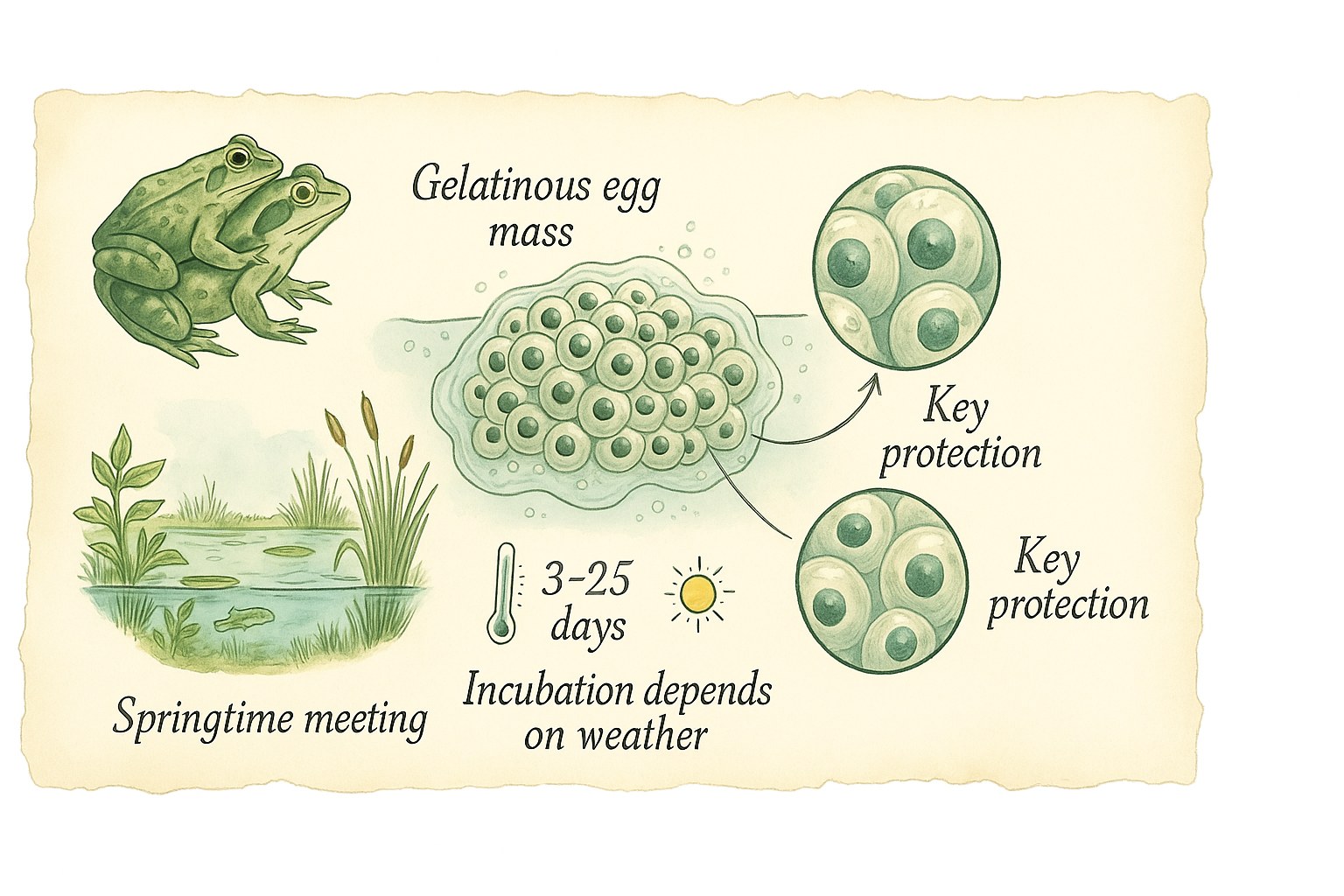
The male grips firmly onto the female’s back during amplexus. This vigorous embrace is an essential natural reflex. It perfectly synchronises the release of the gametes into the water.
Calm wetlands are essential for the survival of the species. External fertilisation in frogs requires an aquatic environment. Without this still water, the future tadpoles could never see the light of day.
The parents carefully choose the ideal laying site. They favour shallow water and dense vegetation. These natural hiding places offer a first vital protection against currents or prying eyes.
🥚 Thousands of eggs in a protective jelly
At the surface, you can spot odd, dark, sticky clusters. These egg masses float to soak up the gentle warmth of the sun. It’s a springtime sight we love to watch with the children.
Each little black dot is surrounded by a translucent, jelly-like substance. This soft coating acts like a shield against knocks. It also stops the surrounding bacteria from attacking the fragile embryos.
The slimy texture is an effective trick against the greedy creatures of the pond. Fish and insects often go on their way past this sticky lump. Here’s what this jelly does:
- Thermal protection to help development.
- A physical barrier against aquatic predators.
- A constant store of hydration for the embryo.

🌡️ How temperature affects incubation
The wait before hatching varies with the species and the weather. It takes between 3 and 25 days to spot the larvae. It’s a time of patience for little nature watchers.
The climate acts like a metronome for these future amphibians. Water that’s too cold sharply slows their internal growth. On the other hand, too much heat risks drying out the pond before the process is over.
This stage remains the most vulnerable in the frog life cycle. The survival rate depends on the stability of the environment. A simple change in water level can tip everything over.
🐟 3 steps to understand tadpole development
Once it has left the jelly-like coating, the embryo becomes an independent larva that must adapt straight away to a purely aquatic life.
💧 Hatching and the first gills
The newborn has a nimble tail. It then looks like a little wriggling black fish. Its oval body groups the head and abdomen together for swimming efficiently.
Breathing is done through gills. They are external and clearly visible at first. This system captures oxygen to succeed in its change of habitat.
To avoid drifting, it clings on. It uses a special sticky organ. This lets it stay fixed to the water plants in complete safety.

🌱 The life of a little aquatic herbivore
The diet is plant-based at first. Tadpoles graze on algae. They also eat the plant debris settled on the submerged rocks of the pond.
The muscular tail powers every movement. It’s its only engine for escaping. You can see a way of moving perfectly suited to survival underwater.
The larval phase of amphibians takes place entirely in water, where they feed mainly on vegetation and debris.
Growth quickly becomes very visible. The body thickens by the day. This constant feeding prepares the future morphological changes of metamorphosis.
💧 Why water quality is so vital
These larvae are extremely fragile. They act like biological sponges. Pesticides or household pollutants can stop their natural development dead.
Dissolved oxygen is a vital need. Stagnant water runs low too quickly. This threatens the survival of the tadpoles, who can no longer breathe properly.
Watching healthy tadpoles is reassuring. It’s the sign of a balanced ecosystem. Their presence confirms the good health of your favourite watering hole.
To help children along, feel free to look up the frog life cycle printable to illustrate these fascinating observations.
🔄 How does the physical metamorphosis happen?
But the tadpole doesn’t stay a swimmer forever; a radical transformation takes place to launch it into life on land.
🦵 The appearance of legs and the change of menu
Complete metamorphosis usually spreads over a period of 12 to 16 weeks. It’s fairly precise timing for becoming a great jumper. Patience is the name of the game.
The hind legs appear first, clearly visible. Soon after, the front legs break through under the skin. The body changes shape. The animal then starts to look like a little hybrid creature.
The mouth gradually widens. The digestive system starts to change for its future life. It slowly gets ready to give up the plants. It’s a truly major internal stage.
🫁 The disappearance of the tail and a new way to breathe
The tail doesn’t drop off onto the ground. It’s gradually “digested” by the body to provide energy. The nutrients are recycled this way. Nothing is wasted during this stage.
The gills disappear in favour of lungs. This forces the animal to come and gulp air at the surface regularly. It’s its first contact with outside oxygen. It finally learns to breathe.
The skull clearly hardens. The spine adapts to its future leaps on land. The skeleton becomes more robust. The bone structure gets ready for the impact of bounding through the grass.
🐸 The froglet ready for dry land
The froglet still has a little stump of a tail. Even so, it can already get out of the water. It often sits on pebbles. It’s a rather amusing transition stage.
It leaves the algae behind to hunt small insects. This marks its entry into the world of predators. Its appetite changes completely. It becomes a real little hunter.
This young amphibian leaves the pond to explore the tall grass. It still stays close to moisture, though. The adventure on land begins at last. The frog life cycle printable lets you follow all this.
🔍 Telling the difference between a frog and a toad
Once they’re adults, it isn’t always easy to know which one you’re dealing with, the species look so alike at first glance.
🟢 The skin and the general look
The frog has smooth, damp skin. It often looks slimy. The toad, on the other hand, is rough and warty.
Frogs are slim and slender. They’re built for swimming. Toads are squat and chunky.
| Feature | Frog | Toad |
|---|---|---|
| Skin | Smooth | Rough |
| Shape | Slim | Squat |
| Hind legs | Long | Short |
| Way of moving | Jumping | Walking |
| Egg-laying | Clusters | Strings |
Their eyes differ too. The pupils vary from one family to another. The position of the eyeballs changes as well.
🦘 Way of moving and habitat
The frog prefers athletic leaps. Its back legs are very long. They give an impressive power.
The toad is much heavier. It moves with small, slow strides. Its hops stay short and rather clumsy.
Their need for water differs. The frog stays near permanent water. The toad copes better with dry surroundings.
🍃 The special case of the European tree frog
The tree frog has suckers on its toes. They’re small, sticky discs. They let it climb up leaves.
It’s really tiny. Its body shows a bright apple-green. That makes it unique among our species.
Its call is very loud. Its vocal sac is powerful. You can hear it from very far away despite its size.
🍽️ Survival strategies and adult feeding
To last in a world full of predators, these animals have developed some pretty incredible defence and adaptation techniques.
🛡️ Camouflage and defence tricks
Their skin changes shade to blend into the mud or the leaves. This natural colour-matching makes them almost invisible. It’s a simple but formidable protection against prying eyes.
Some species secrete irritating or venomous substances through the skin. This liquid puts off predators that are too greedy and try to gobble them up. The tomato frog even produces a thick glue to block the attacker’s mouth.
Puffing up its body is a common tactic to look more impressive. Staying completely still also helps it avoid being spotted. These reflexes often save its life during a dangerous encounter.
😴 Sleeping all winter at the bottom of the mud
As soon as the cold arrives, the metabolism slows right down. The animal then buries itself in the mud or under a carpet of leaves. This deep torpor lets it get through the harshest months.
Some frogs produce a kind of natural antifreeze, like glucose, to survive. They can partly freeze without dying, even at sub-zero temperatures. Their organs stay protected this way all winter.
As soon as the first mild spring days come, they finally emerge from their sleep. They head straight for the breeding sites to lay their eggs. It’s the ideal moment to watch the frog life cycle printable.
🫁 Breathing through the skin
The skin is so thin and full of blood vessels that it absorbs oxygen directly. This gas exchange happens both in the air and underwater. It’s a vital complement to the lungs, sometimes even the main way of breathing.
For this mechanism to work, the skin absolutely must stay damp. A protective mucus coats the body to help the oxygen dissolve. Without this constant moisture, air could no longer cross the skin barrier.
Without water, the frog quickly suffocates as its skin dries out. This limits its movements in full sun or in dry areas. So it always stays near water or a cool shelter.
🌿 Teaching activities and welcoming frogs to the garden
Welcoming these precious allies to your home is a treat, both for biodiversity and for awakening the youngest to nature.
🏡 Setting up a pond to welcome your new friends
Creating a watering hole takes little effort. A small pond with gently sloping banks is more than enough. It helps naturally attract the first individuals.
The choice of plants is decisive for the balance. Put in water lilies and rushes to offer laying supports and hiding places for the tadpoles. Here are a few useful plants:
- Water lilies to provide shade.
- Yellow flag irises to act as a support.
- Waterweed to oxygenate the water.
A friendly tip: avoid goldfish. These greedy creatures eat the eggs and the larvae. Sadly, this stops the life cycle from completing properly at your place.
🔎 Observation games and printables
To learn while having fun, suggest sequencing exercises. Simply ask the children to put the life-cycle pictures back in the right logical order. It’s very visual.
Encouraging simplified diagrams is also an excellent idea. Drawing the stages of metamorphosis helps memorise the impressive physical changes of the tadpole over the weeks.
Metamorphosis is an evolutionary process involving major morphological transformations, shown by the change from tadpole to frog.
Finally, why not use logbooks? Noting the date of the first egg-laying or of the appearance of the legs really gives little observers a sense of responsibility. The frog life cycle printable then becomes a precious tool.
🌾 The role of crop protector
This incredible natural helper deserves real credit. An adult frog can eat hundreds of slugs and harmful insects every month. It’s free and very effective help.
In the vegetable patch, its impact is immediate. By keeping pest populations in check, frogs cut down the need to use harmful chemicals. Your vegetables will thank you for the helping hand.
Protecting amphibians means keeping a healthy, natural balance at the heart of your own garden. It’s a small step for you, but a big step for local biodiversity.
Watching the metamorphosis, from jelly-like eggs to the adult’s leap, always amazes children. Use our frog life cycle printable right away to turn your garden into a living laboratory. Pass on this lasting passion for nature to them, starting today! 🌱
🎬 Watch the video
❓ FAQ
🥚 How many eggs can a frog lay at once?
A female can lay an impressive number of eggs, sometimes up to 4,000 in a single clutch. This natural strategy maximises the chances of survival for the future tadpoles, faced with the pond’s many predators.
These eggs are grouped into jelly-like masses that float at the surface. This slimy substance is essential because it protects the embryos from bacteria while keeping in the warmth of the sun needed for their development.
⏳ How long do frog eggs take to hatch?
The incubation time depends enormously on the weather and above all on the water temperature. As a general rule, it takes between 3 and 25 days for the little tadpoles to finally come out of their protective coating.
If the water is nicely warmed by the spring sun, the process speeds up. The other way round, a spring that’s too cool will slow down the transformation of the embryo into an independent larva.
🔄 How does the tadpole’s metamorphosis into a frog happen?
It’s a real little miracle of nature that spreads over 12 to 16 weeks. It all starts with the appearance of the hind legs, followed by the front legs, while the body thickens and the head becomes more defined.
Around the 12th week, the tail starts to shrink down to a simple stump. It’s also the moment when the lungs form, letting the little frog leave its watery home to breathe at last in the open air.
🐸 What is the difference between a frog and a toad?
To tell them apart in the garden, look at their skin: a frog’s is smooth and damp, while a toad has rough, warty skin. The frog is often slimmer and built for big jumps.
Their egg-laying habits also vary a lot. Frogs lay their eggs in big clumps or clusters, while toads prefer to set them out in long ribbons or jelly-like strings attached to the vegetation.
🪰 What do tadpoles and adult frogs eat?
The diet changes radically over their lifetime. The tadpole is mainly a herbivore and grazes on the algae in the pond. As it grows, it starts to take an interest in small plant debris and insects.
Once it’s an adult, the frog becomes a fearsome carnivore. It feeds on insects, slugs and small animals, which makes it a precious, eco-friendly ally for protecting your vegetable patch from pests.
🌿 How can you attract frogs to your garden?
The ideal is to set up a small pond with gently sloping, shallow banks. Put in native plants like water lilies or irises, which will offer hiding places and supports for egg-laying.
Be careful, though, not to add goldfish, because these greedy creatures won’t hesitate to devour the eggs and the tadpoles. Let nature take its course; the amphibians will find their own way to your watering hole!
