
Magic colouring for ages 3-4 turns simple colouring into a moment of discovery. Each area of the picture has a number, and a little key shows which colour matches it. Your child follows the code, colours each area by its rule, and bit by bit a lovely coloured picture appears before their eyes. 🎨 The final surprise is the biggest motivator there is for little ones.
Our sheets range from the very simplest — the teddy bear, the butterfly, the mouse, with large areas and 4 to 6 colours, perfect for getting started — to the most detailed, up to 8 or 9 colours, for children ready to take on a challenge (end of the early years) or to colour together. They all show their own illustrated key: just follow the numbers. All that’s left is to print them out and reach for the pencils! ✏️
🎯 Why magic colouring is ideal in the early years
At 3 or 4, your child is busy discovering colours and numbers. Magic colouring creates the perfect setting for tackling both of these together, without it feeling like a lesson.
The idea is simple and reassuring: your child sees a number, finds the right colour in the key, and colours it in. They don’t have to make any complex creative decisions or memorise lots of rules. This guidance through the code makes the activity easy to access and lets your child have a complete experience of success.
Motivation through surprise is the format’s other strength. Unlike ordinary colouring, where children see right away what they have to colour, magic colouring reveals its subject bit by bit. This element of mystery naturally grabs your child’s attention and encourages them to see it through to the end.
Finally, the colour code uses bright, easily recognisable colours — red, blue, yellow, green, pink… — marked by a key of numbers with pencils, stars or coloured dots. Exactly the colour vocabulary your child is learning to name in class.
📋 Our magic colouring sheets to print
🖍️ Here are eleven magic colouring sheets to print, from the simplest to the most detailed. The first ones — the teddy bear, the butterfly, the mouse — are perfect for getting started: few colours, large areas. The next ones, richer, will delight children ready for a challenge, at the end of the early years, or can be coloured together for a lovely shared moment. Each sheet shows its colour key: follow the numbers, and the picture appears!
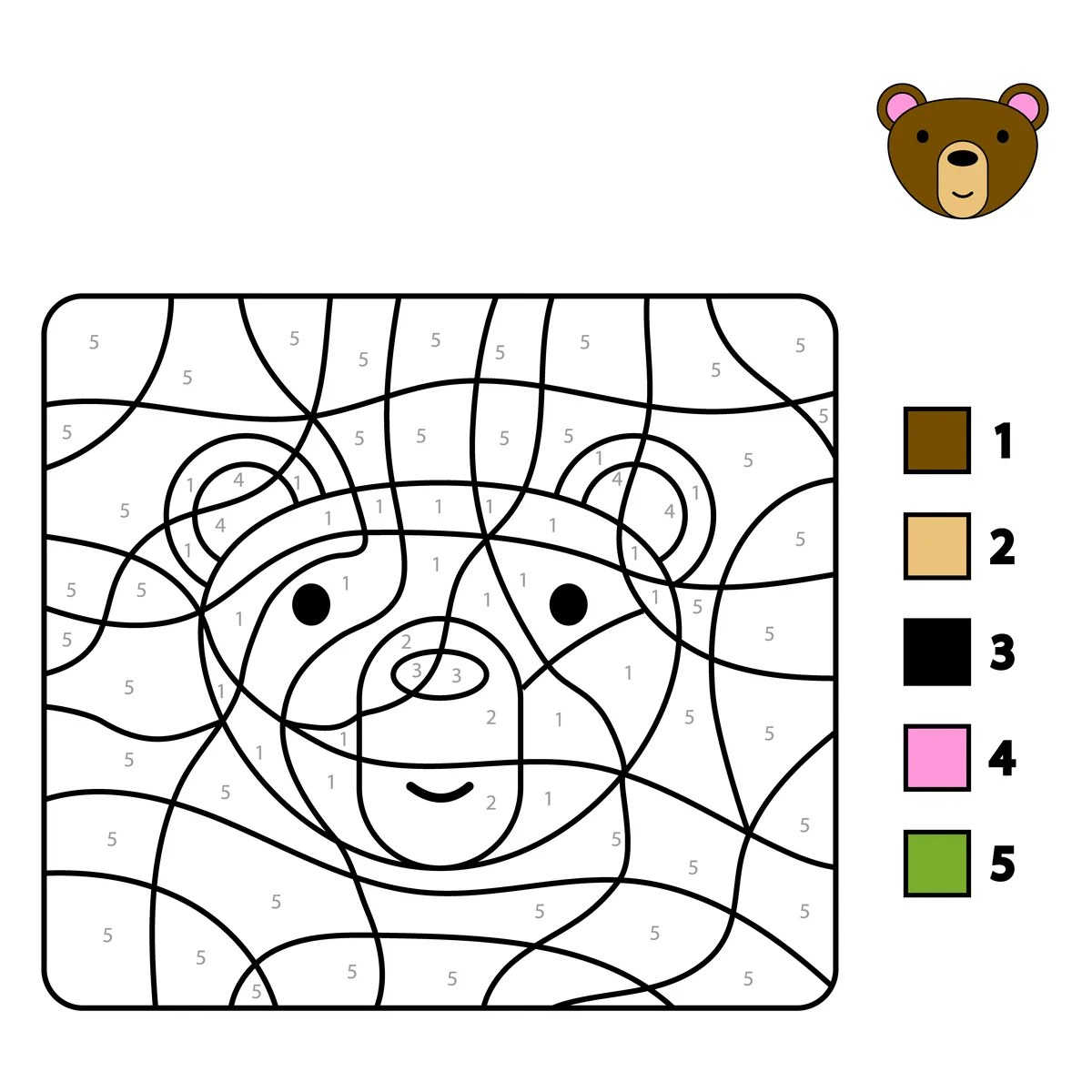
🐻 The teddy bear: 5 colours, ideal for getting started
An adorable teddy-bear face with large areas and just five colours (brown, beige, black, pink, green). It’s THE perfect sheet for a first go: few colours, wide spaces, and a sweet result your child will be proud of.
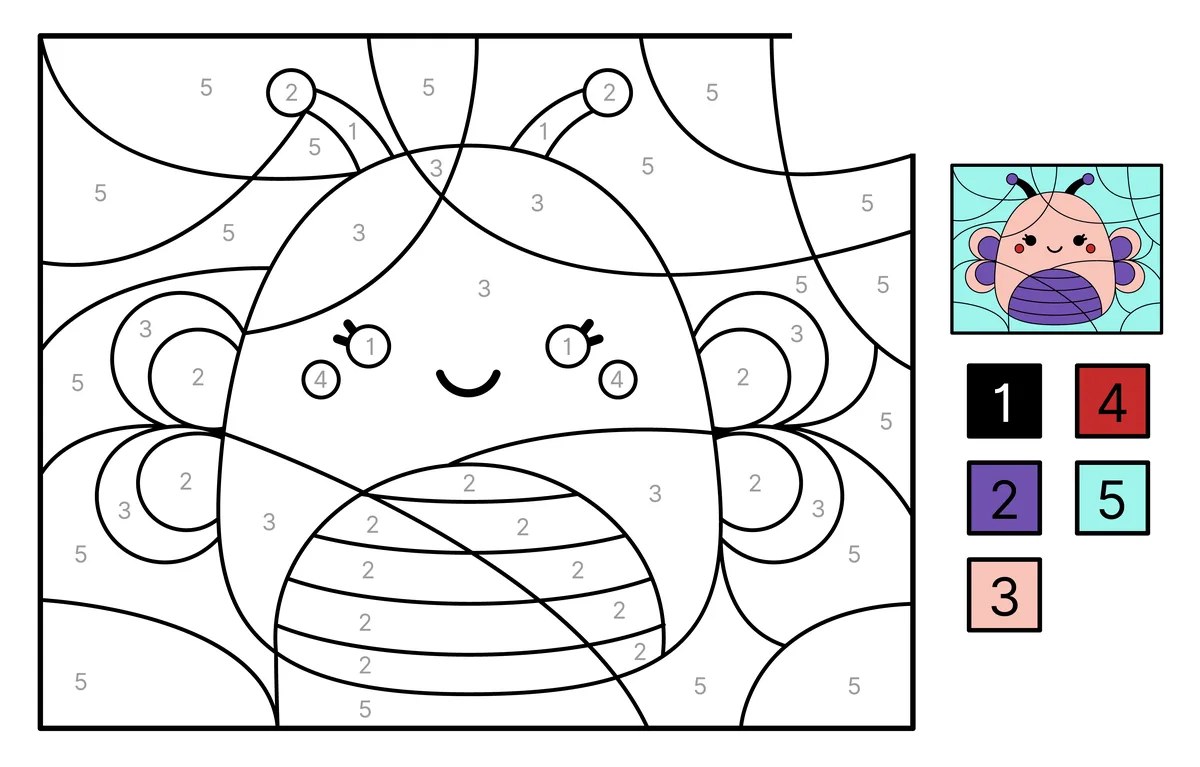
🦋 The butterfly: 5 colours
A little round butterfly, to colour in five colours. The areas are clearly separated and the key, made of coloured squares numbered 1 to 5, is easy to read. A reassuring, cheerful subject for gentle practice.
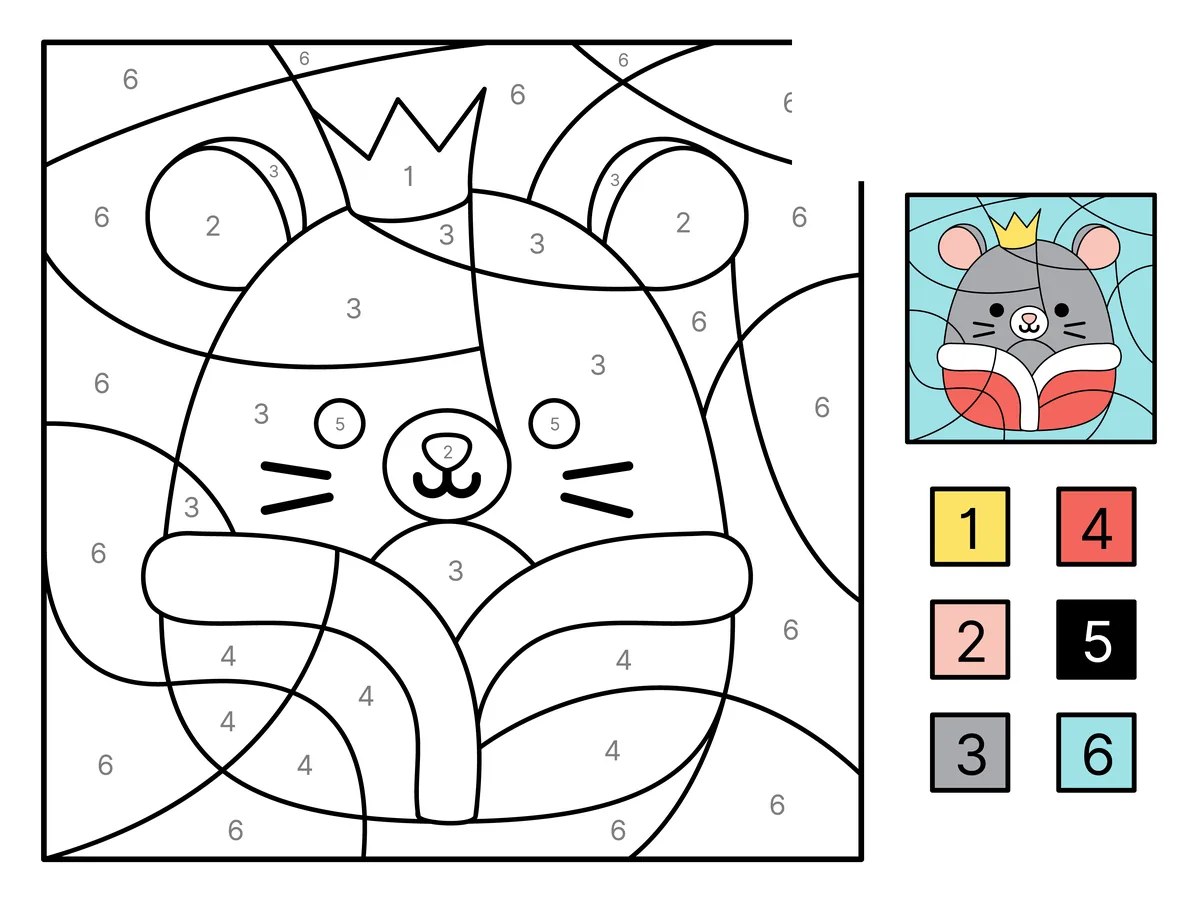
🐭 The little mouse with a crown: 6 colours
A kawaii mouse wearing a little king’s crown. Six colours, large areas, and a colour model right beside it to show the result to aim for. Perfect for the end of this first stage, as your child gains confidence.
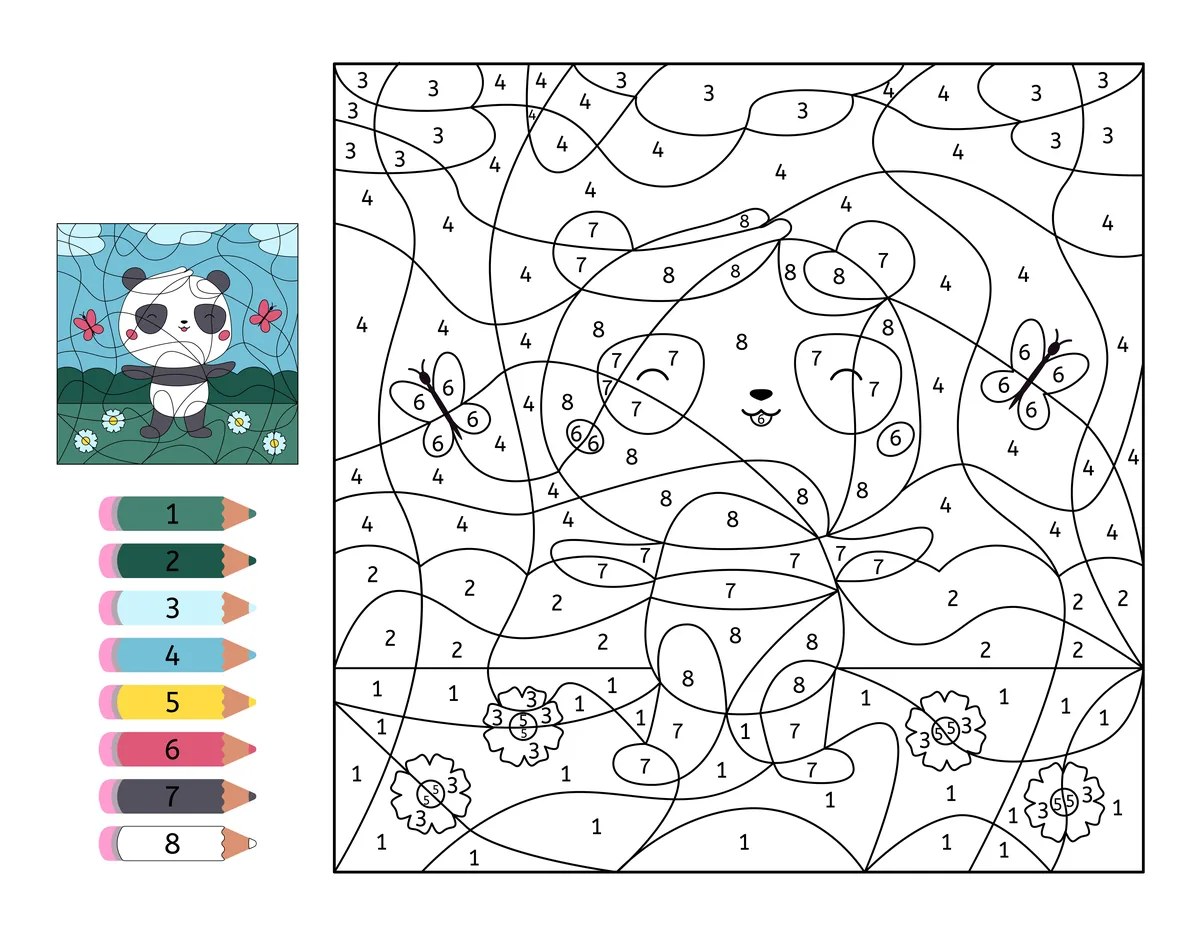
🐼 The panda and its butterflies: 8 colours
A round panda surrounded by butterflies and flowers, with a key of pencils numbered 1 to 8. More areas and more colours: a lovely challenge for children already comfortable with the idea, to do alone or with a little helping hand.
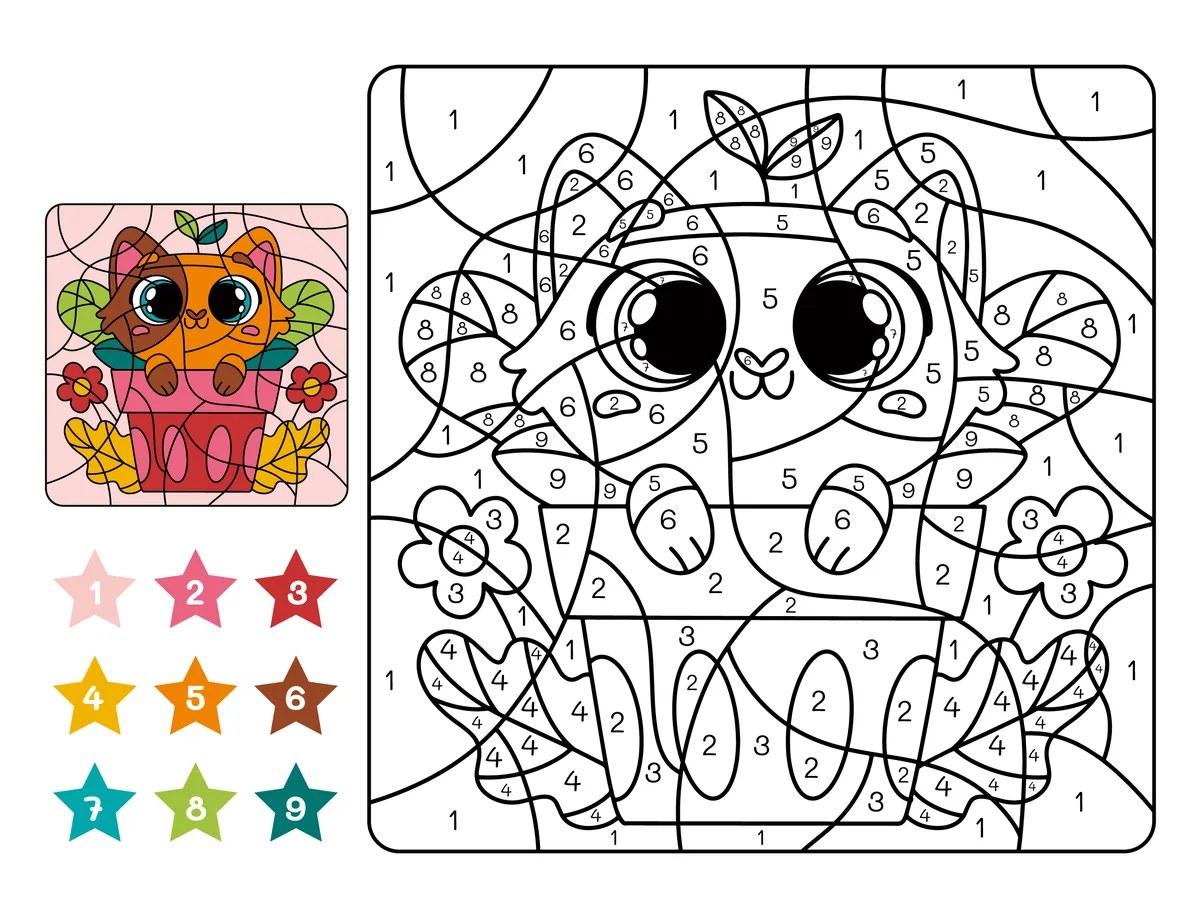
🐱 The kitten in its flowerpot: 9 colours
A ginger kitten settled in a flowerpot, to colour mosaic-style. Nine colours marked with numbered stars: a rich, detailed sheet, ideal for children ready for a real challenge (end of the early years) or to colour together.
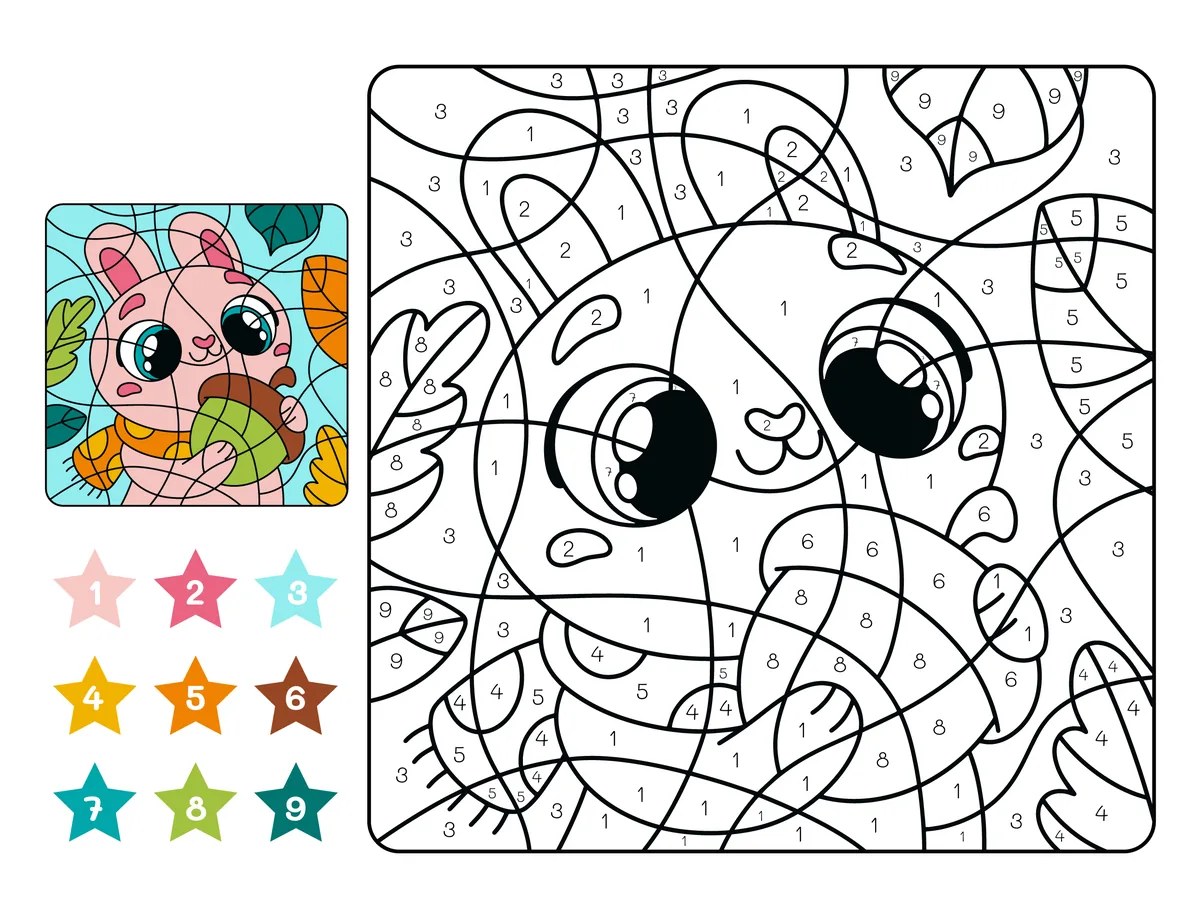
🐰 The soft little rabbit: 9 colours
A pink, big-eyed rabbit, nestled in a setting of leaves. Nine colours and lots of small areas to work on precise pencil control. Best saved for children who already colour well within the lines.

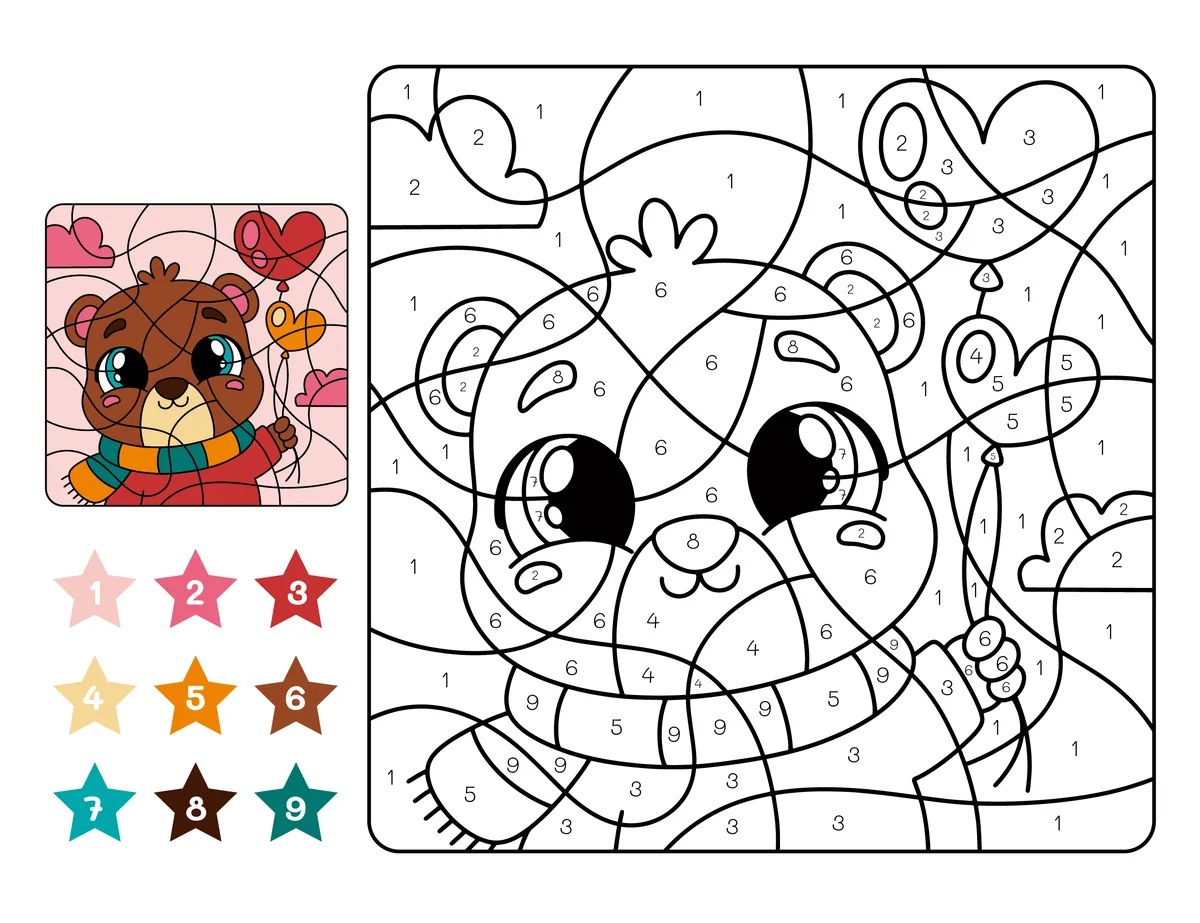
🎈 The teddy bear with balloons: 9 colours
A little bear in a scarf holding heart-shaped balloons. A tender, colourful scene, in nine colours, for a slightly longer and very rewarding colouring session.
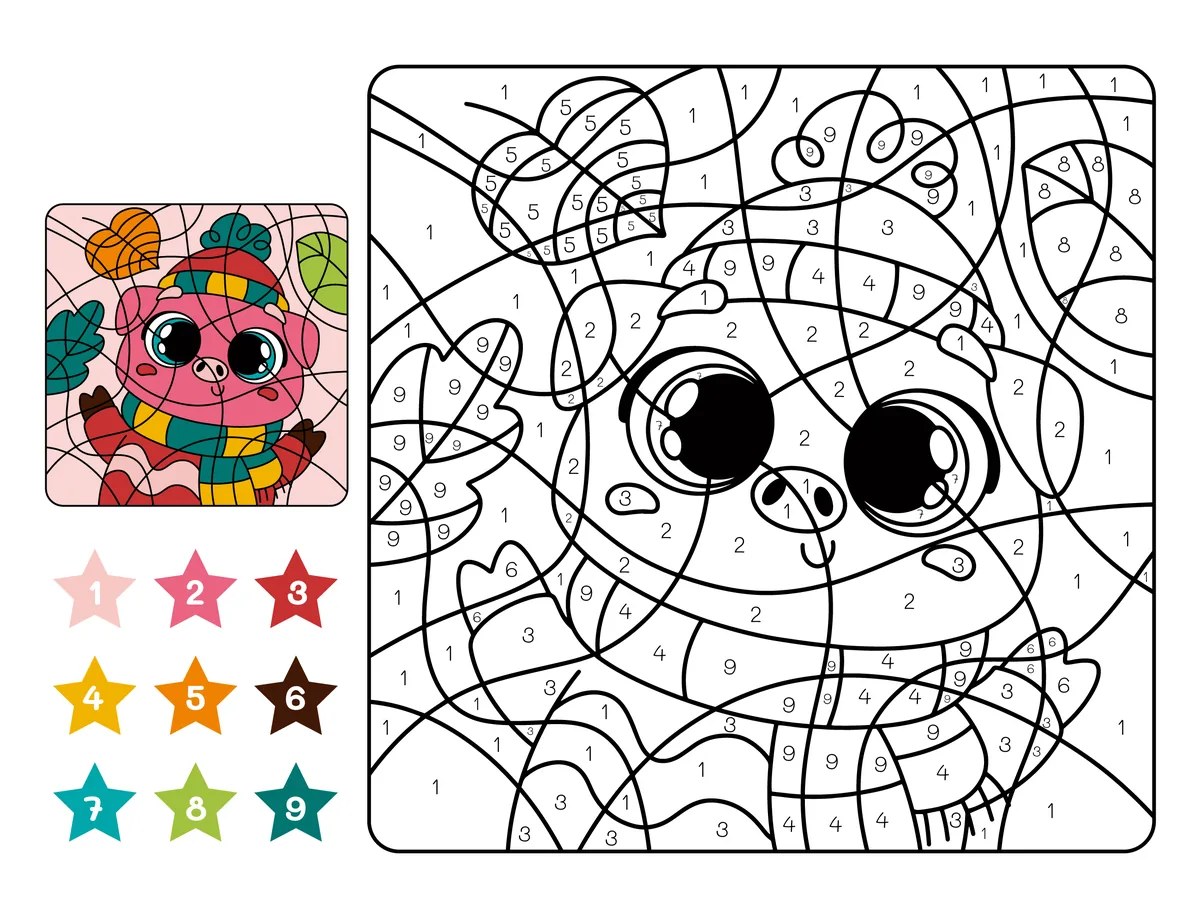
🐷 The pig in a winter hat: 9 colours
A pink pig snuggled up in its hat and scarf, surrounded by autumn leaves. Nine colours and plenty of detail: a cosy colouring sheet, perfect for warm afternoons indoors.
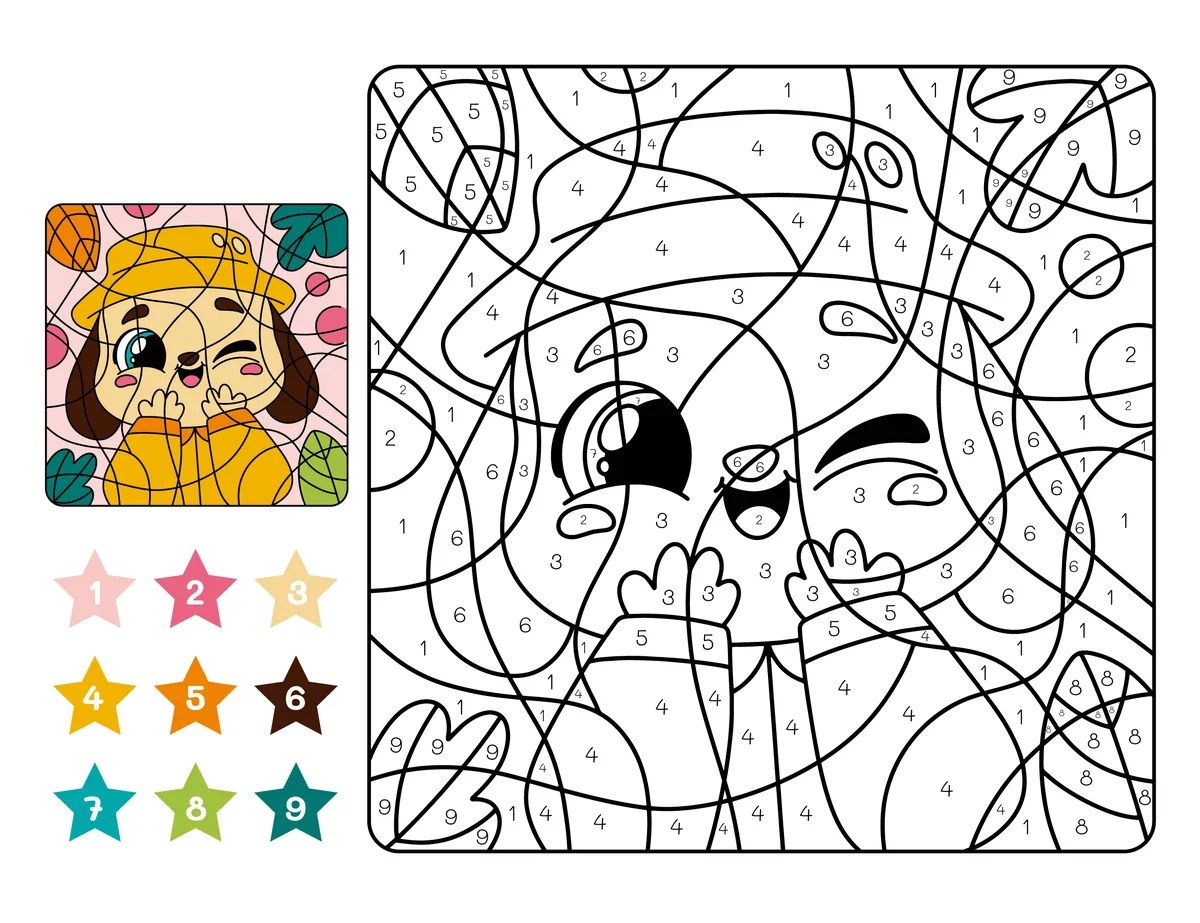
🐶 The dog in a yellow raincoat: 9 colours
A happy puppy in its yellow raincoat, under the autumn leaves. Nine colours and a funny little wink: just the thing to fill a rainy moment beautifully.
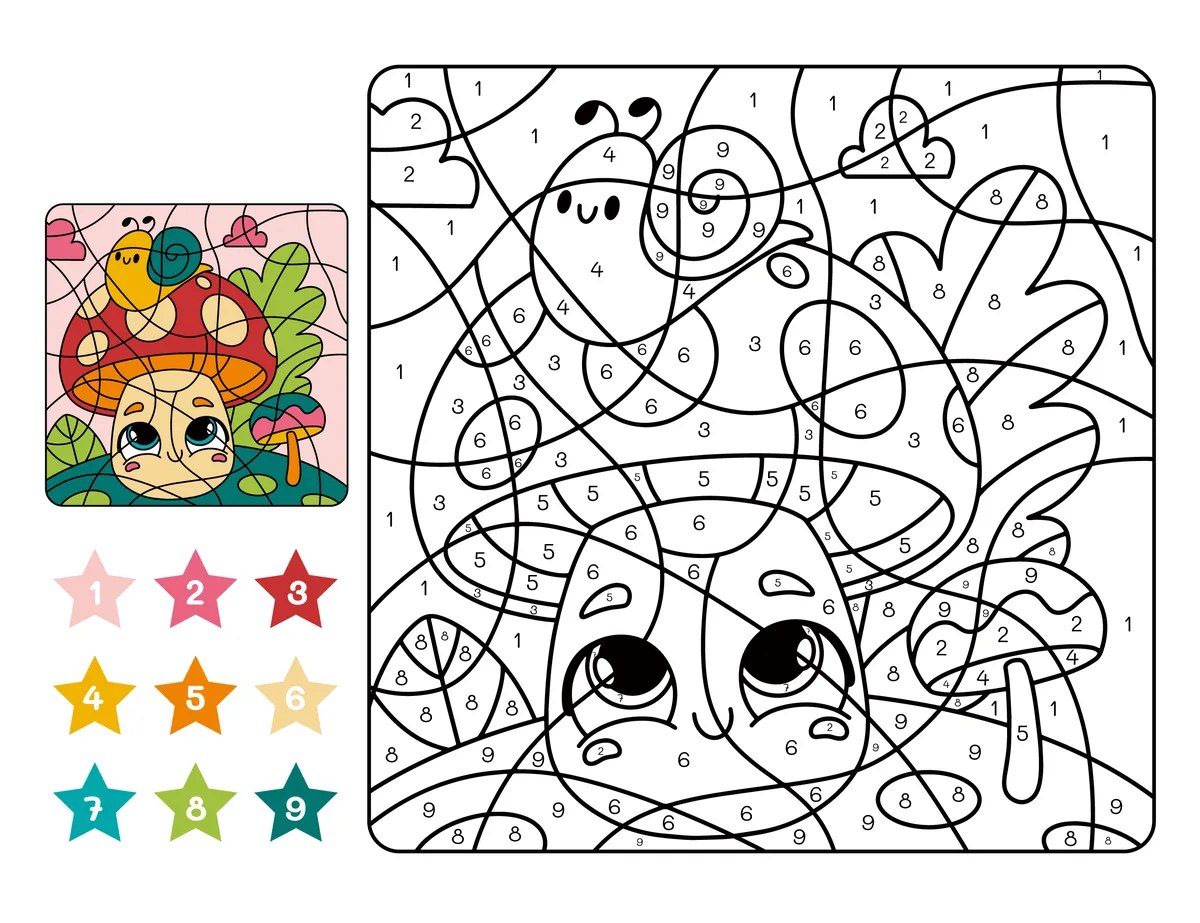
🐌 The snail on its mushroom: 9 colours
A little snail perched on a mushroom, in a setting of leaves. Nine colours and varied areas make this sheet a lovely way to discover nature through colouring.
🦝 The little raccoon in autumn: 9 colours
A sweet little raccoon cuddling an acorn between its paws, surrounded by autumn leaves. Nine colours for a gentle autumn scene, to colour without rushing.
🌟 The benefits for your child
Magic colouring develops several fundamental skills in your child aged 3 to 6.
Colour discrimination is at the heart of the activity. Your child has to tell red from pink, blue from purple, yellow from orange. This perceptual precision builds up gradually and is a prerequisite for many later learnings.
Number recognition (1 to 9 depending on the sheet) is practised in an implicit way. Your child sees the number in the area, looks up the match in the key, and applies the right colour. This back-and-forth between the area and the code is a first decoding exercise.
Focus comes into play with every sheet. Your child has to keep their attention on several pieces of information at once: which number is in the area, which colour matches, whether they’re staying within the lines. This effort of sustained attention very concretely prepares them for the demands of the early years.
Finally, the magic result brings real satisfaction. Your child finishes their sheet and watches a coloured picture appear that they created themselves by following rules. This pride in success is an essential driver of the desire to learn.
💡 How to use the sheets with your child
Before starting, take a moment to read the colour code together. Show your child the sheet’s key: “Look, 1 is red, 2 is blue, 3 is yellow.” Have them point to each colour in their box of pencils or felt-tips.
Then let your child choose where to start. They can spot an area marked 1 and colour every area with that number before moving on to the next. This “by colour” strategy is often simpler for beginners than working through area by area.
If they’re unsure about a number, show them the key rather than giving the answer outright. Going back to the key to check is a valuable skill they’ll use again in many other school contexts.
As for equipment, washable felt-tips are ideal in the early years: the colour is bold, they glide nicely on the paper and wipe off fingers easily. Coloured pencils also work well, especially for practising pencil pressure. Avoid watercolours, which bleed through the paper and make the numbers impossible to read.
📈 From age 3 to age 6: progression by level
Magic colouring stays with your child throughout the early years with a natural progression.
Ages 3-4: choose the simplest sheets (the teddy bear, the butterfly), with 4 to 5 colours, large areas and a clearly recognisable picture. If your child can’t recognise numbers yet, help them by pointing to the colour in the key. The main thing is for them to understand the idea of code-to-colour matching.
Ages 4-5: move up to 6, 7, then 8 colours, with smaller areas and more detailed pictures (the mouse, the panda). Your child starts to work on precise pencil control by colouring finer spaces.
Ages 5-6: the richest sheets, with 9 colours and many areas (the kitten, the rabbit, the raccoon), become accessible. Magic colouring remains an excellent tool for focus and fine motor skills before starting primary school.
🚀 Ideas to extend the activity
Magic colouring can reach beyond the printed sheet to feed your child’s creativity.
Suggest inventing a magic colouring on a small whiteboard: they draw a simple picture themselves (a sun, a house, a balloon), divide the areas with a line, write a number in each area, and give you the instructions for colouring. This role reversal helps them understand the logic of the code from the inside.
You can also create a homemade colour code together on a blank sheet. Draw a very simple animal (a cat, a rabbit), mark out the areas, and write the numbers together. This way your child sees how a sheet is made and builds a deeper understanding of the idea of coding.
❓ FAQ
👶 My child is 3: is this really within reach for them?
Yes, as long as you choose a simple sheet — the teddy bear or the butterfly, with 4 to 5 colours and large areas. At 3, your child understands the matching idea very well (this number = this colour) if you explain it briefly before starting. What can be tricky is staying within the lines: that’s normal and it improves with practice.
🎨 How many colours should you plan for a first sheet?
For a very first sheet at ages 3-4, choose one with 4 or 5 colours and large areas (the teddy bear, the butterfly). Your child quickly masters the idea and enjoys complete success. The more detailed sheets, with 8 or 9 colours, suit the end of the early years (ages 4-6) or colouring together.
🖍️ Felt-tips or coloured pencils: which to choose?
Broad-tip washable felt-tips are recommended for the youngest: the colour is more vivid, the movement is less tiring, and the result is immediately visible. Coloured pencils are useful for practising pencil pressure and suit children who already control their strokes well.
🔢 My child can’t recognise numbers yet: what should I do?
Help them by pointing together to the number and then the matching colour in the key, or start with a sheet that has few colours. You can also stick a little coloured sticker next to each number. The goal at ages 3-4 isn’t reading numbers but understanding the idea of code.
🆚 What’s the difference between magic colouring and number colouring?
The two terms often mean the same thing. We say “magic colouring” to highlight the surprise of the result, and “number colouring” or “coded colouring” to stress the method. In the early years, the magic, surprising side is put forward because that’s what motivates children aged 3 to 6 the most.
✏️ What’s the link between magic colouring and learning pre-writing skills?
Magic colouring fits perfectly with the pre-writing work of the early years. It strengthens the colouring movement (holding the pencil, applying steady pressure, staying within the outlines), visual discrimination (telling apart the marked-out areas) and fine motor skills. Teachers often use it alongside pre-writing exercises to vary the tools.
