
Is your child looking for a fun activity that mixes play and learning? 🔢 Our connect-the-dots 1 to 50 (medium) to print offer six pictures to put together by following the numbers. Animals and machines appear bit by bit under their pencil.
These sheets download and print for free from your home printer. The medium level suits children aged around six to eight who already know their numbers up to 50. Two longer bonus sheets offer a real challenge to older children.

- Why choose medium-level connect-the-dots
- Our connect-the-dots sheets to print
- The benefits of connect-the-dots for your child
- Tips for supporting your child
- How to print and set up the activity
- Ideas to extend the numbers activity
📊 Why choose medium-level connect-the-dots
Connect-the-dots are a timeless classic of activity books. The level around 50 points is an ideal step after the first easy sheets. Your child consolidates their counting skills while discovering a captivating activity.
🎯 A challenge suited to children aged 6 to 8
Counting up to 50 matches what children learn at around age 5 to 6. The child handles numbers daily at this stage of school. The connect-the-dots sheet gently consolidates their knowledge.
The number of points stays accessible without becoming discouraging. Your child finishes a medium sheet in about ten to fifteen minutes. This perfect length keeps their attention without tiring their concentration.
The medium level offers a real challenge without frustrating the child. Success always comes at the end of the effort. This satisfaction feeds their confidence in their own abilities.
🎲 An activity that marries play and learning
The child doesn’t see the work behind the fun activity. They follow the numbers to discover the hidden picture. This natural curiosity pushes them to go all the way.
Counting comes alive, far from the repetitive exercises of the workbook. The child memorises the number sequence through pleasure. This playful approach anchors the learning lastingly in their mind.
You can offer this activity at the weekend or during the holidays. It’s a perfect replacement for screen time, with no resistance. Your child comes back to it on their own for the magic of discovery.
🏠 A perfect resource for home and school
Teachers often use these sheets in class to vary the exercises. Parents offer them at home to make good use of quiet times. This versatility makes connect-the-dots a must-have in any kit.
Each sheet works individually or in a happy little group. Siblings aged six to eight easily share the moment. This calm activity really adapts to every family set-up.
The sheets also keep well in a folder for journeys. Train, car, doctor’s waiting room. Your child always has a constructive thing to do on hand.
🖨️ Our connect-the-dots sheets to print
Our selection of connect-the-dots 1 to 50 (medium) to print offers six varied pictures. Four sheets stay around 50 points for the medium level. Two longer bonus sheets offer a challenge to the most confident children.
🐟 The smiling ray in the ocean
Our first sheet reveals a lovely manta ray with a mischievous look. Around fifty points draw its big wings and its long tail. The final silhouette delights children who love sea animals.
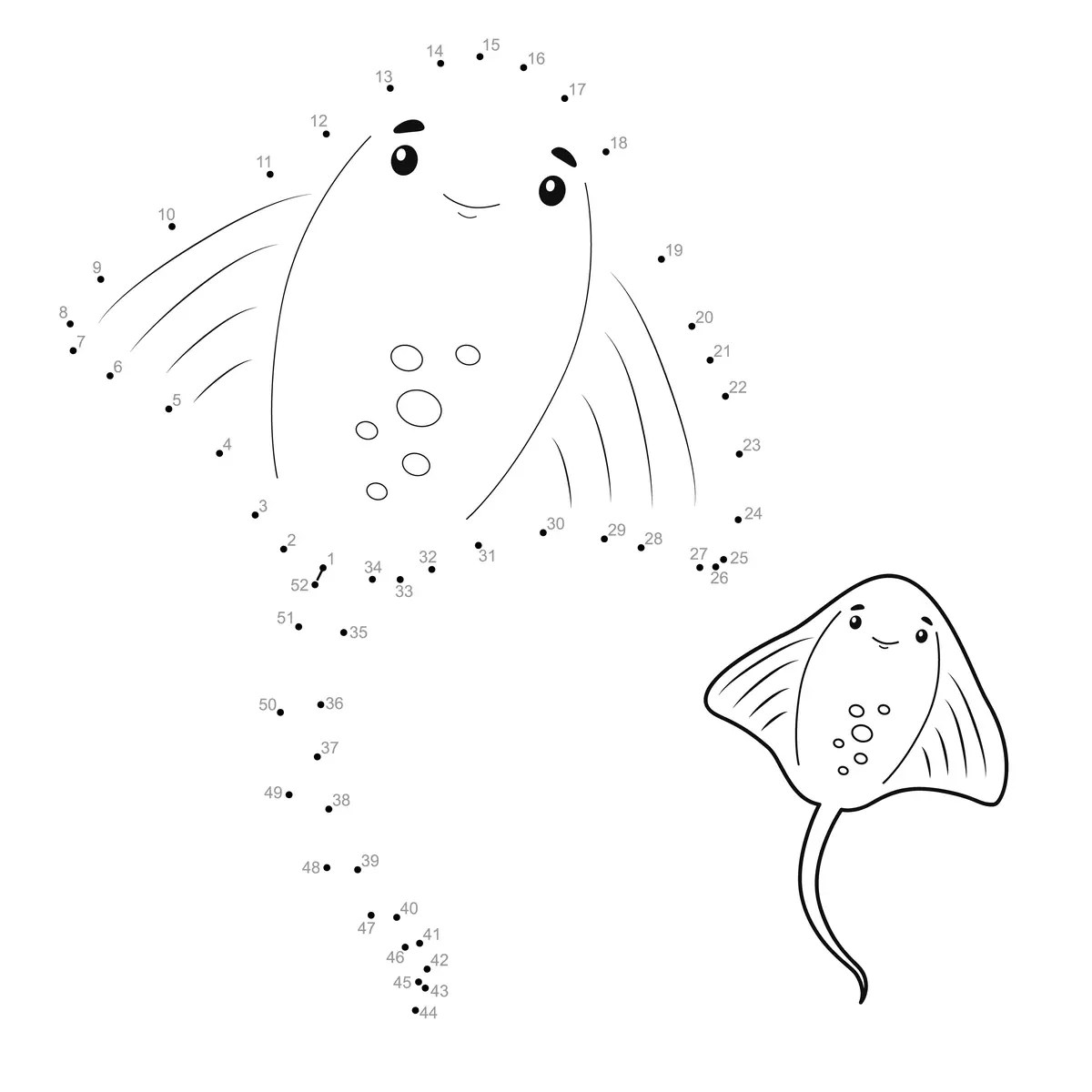
The line follows a logical progression all around the body. Your child quickly understands the general direction of the drawing. This consistency reassures and guides without making the exercise too easy.
Once the points are joined, the ray is waiting for its colours. A colour model in a corner gives inspiration. This second step nicely extends the pleasure of the activity.
🚤 The submarine ready to dive
Our second sheet shows a submarine with its periscope and its portholes. Around fifty points trace the hull, the propeller and the details. The result delights children curious about machines and exploration.
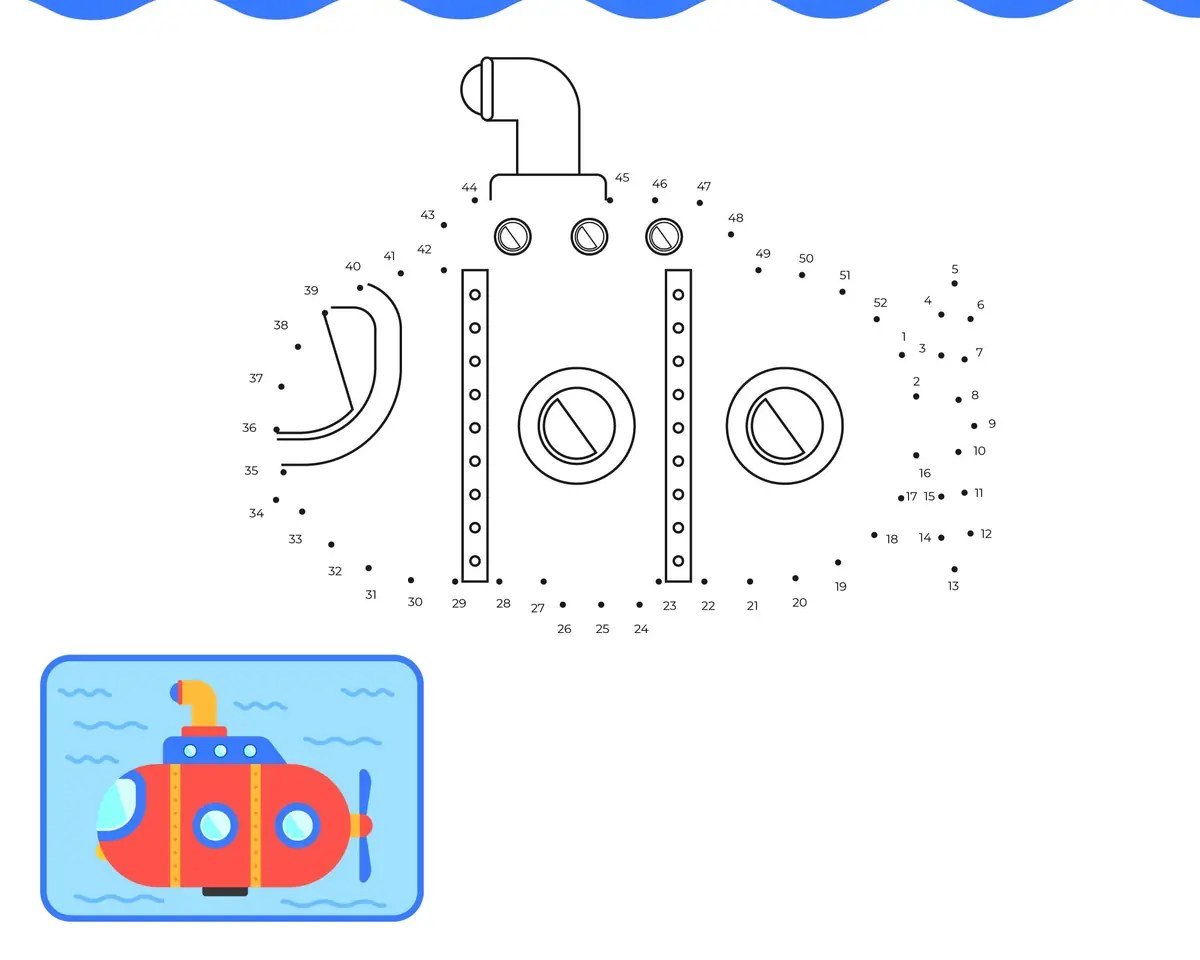
The curves of the hull alternate with the round portholes. This variety keeps your child’s attention right to the last point. The line stays clear even if a few lines are imperfect.
The submarine then invites them to make up a whole underwater adventure. What will it explore today, which animals will it meet? This narrative extension nicely enriches the creative time.
🐋 The humpback whale blowing its spout
Our third sheet draws a big humpback whale blowing its spout. Around fifty points form its massive body, its fins and its tail. Little lovers of the giants of the sea adore this theme.
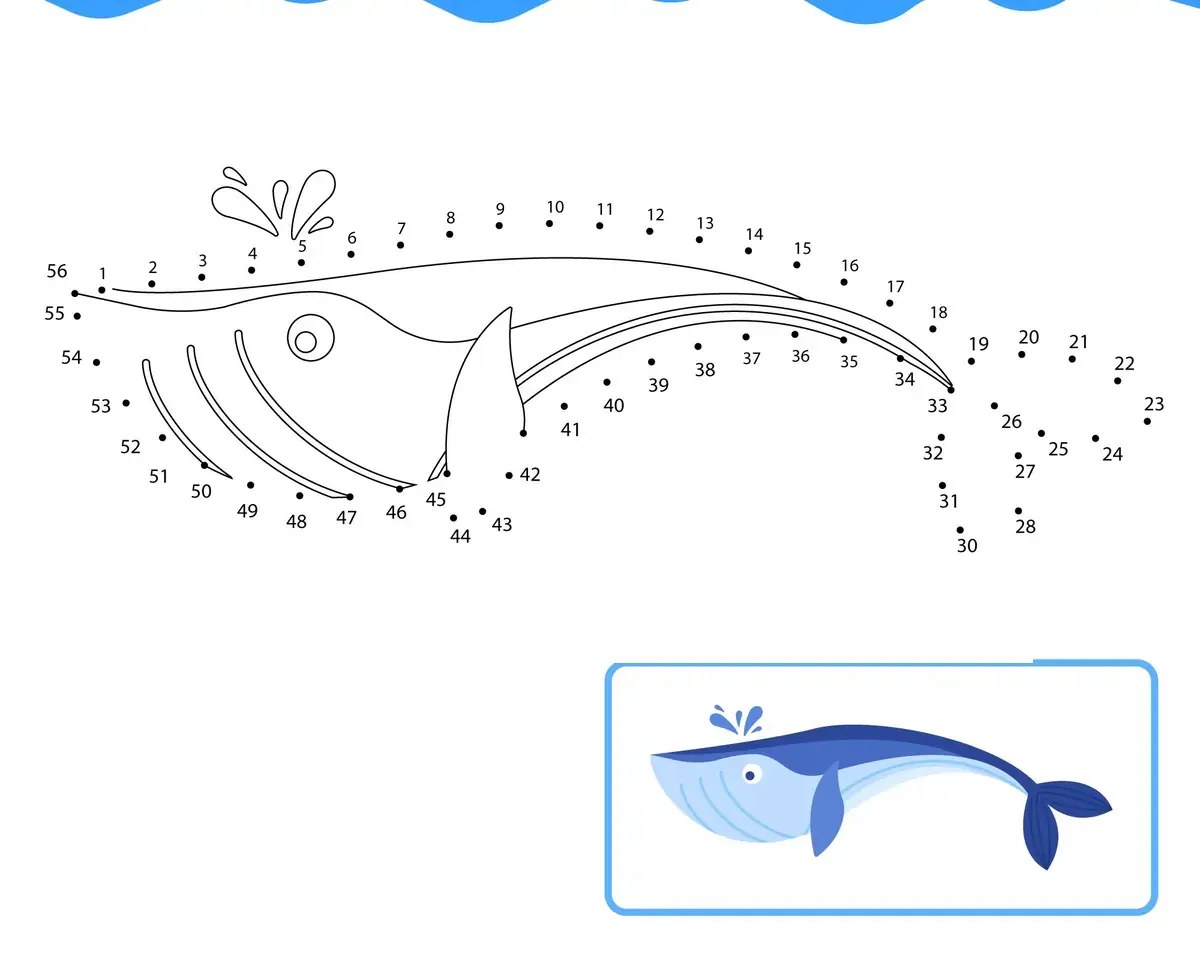
The drawing mixes long gentle curves with smaller, more demanding details. This balanced combination is perfect for the medium level. Your child progresses without getting discouraged at any moment.
The whale then becomes the starting point of a conversation about the ocean. Where does it live, what does it eat, why does it blow like that? This opening up to curiosity nicely extends the adventure on paper.
🦛 The cute little hippopotamus
Our fourth sheet shows a chubby hippo sitting quietly. Around fifty points trace its big body, its round head and its little ears. The endearing silhouette warms the hearts of little animal friends.
The hippo’s gentle curves call for a flexible, patient line. Your child refines their movement by carefully following each segment. This precision develops their fine motor skills in a pleasant way.
A colour model comes with the sheet to guide the colouring. Grey, mauve or a fantasy colour, your child chooses freely. This personalisation makes each sheet unique and fully theirs.
🐒 The greedy monkey and its banana
Our fifth sheet is a bonus sheet, longer, with nearly 90 points. The line reveals a funny little monkey proudly holding its banana. This challenge delights children already comfortable with the medium level.
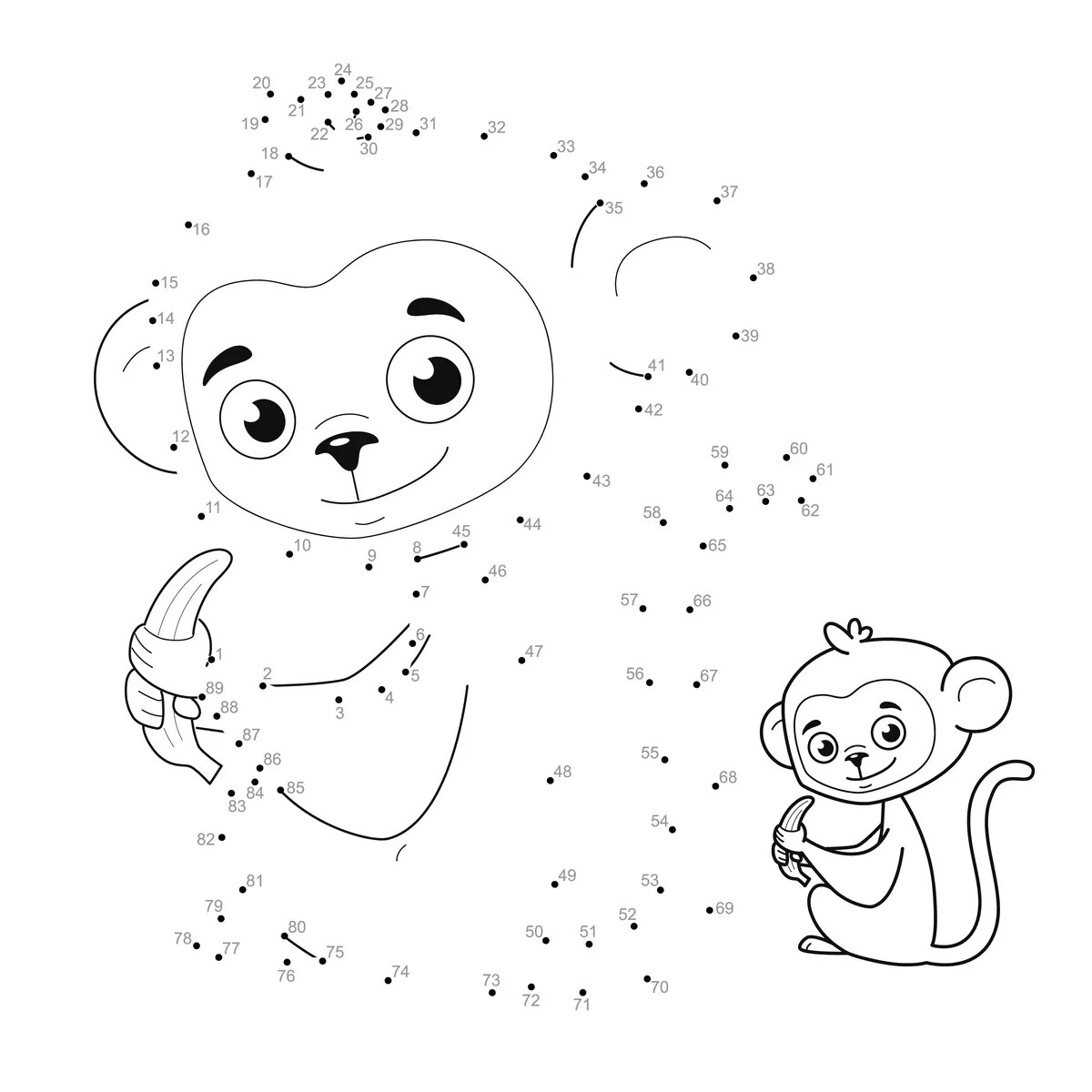
The large number of points calls for more patience and concentration. Your child enjoys real pride at seeing the monkey appear. This success clearly strengthens their self-confidence.
A colour model sits alongside to inspire the colouring. The monkey is then coloured in brown, beige or cheerful colours. This colour freedom fully encourages personal creativity.
🐶 The funny little dog, the biggest challenge
Our sixth sheet is the most demanding, with over 130 points to connect. The line reveals an adorable little dog playing with its bone. This big challenge awaits the most persevering children.

This sheet can happily be done in two sittings if needed. Your child finishes with a lovely satisfaction at having met the challenge. This success really celebrates their effort and concentration.
The dog is then coloured according to your child’s imagination. A colour model comes with it to give ideas. This final sheet nicely crowns the whole series.
✨ The benefits of connect-the-dots for your child
Our connect-the-dots 1 to 50 (medium) to print are not just a simple game. This activity works on several essential skills in parallel. Each sheet builds lasting gains in several areas.
🔢 Consolidating counting skills
Following the numbers in order calls for knowing their sequence well. The child actively revises the number chain with each sheet. This playful repetition gently consolidates school learning.
The numbers become familiar and concrete before their eyes. Your child spots 37 or 42 more quickly in a list. This number ease will serve them in all their maths exercises.
Crossing the tens is worked on naturally through the sheets. 29 then 30, 39 then 40. These thresholds call for attention and become automatic with regular practice.
✏️ Fine motor skills and pencil grip
Drawing a straight line between two precise points calls for a steady hand. The child coordinates their eye and movement with precision. This skill directly prepares the cursive writing of primary school.
The pressure of the pencil becomes more refined as more sheets are done. Neither too hard nor too light for a nice clear line. This control of the movement stays acquired throughout their school years.
Curves and straight lines alternate in each sheet. Your child adapts their movement to the different shapes they meet. This manual flexibility lastingly enriches their drawing vocabulary.
🧠 Concentration and patience
Finishing a sheet calls for staying focused for several minutes. The child learns to persevere until the picture appears. This precious ability builds like a muscle with practice.
The mistakes in the line teach them to slow down and check. Your child develops a real sense of care. This quality counts in all school subjects and beyond.
The final satisfaction richly rewards the effort. The picture appears as if by magic after the last point is joined. This moment of surprise lastingly feeds your child’s motivation.
💡 Tips for supporting your child
A few simple tips make the activity even more enjoyable and educational. Your kind support makes all the difference for your child. Here are our recommendations drawn from family experience.
💡 Setting a calm, well-lit space
Settle your child at a clean table under good light. Precision calls for being able to see the small numbers clearly on the sheet. This simple condition avoids early eye strain.
Prepare a well-sharpened pencil and a clean eraser. Mistakes happen and can be corrected with no drama. This chance to put things right really reassures your child.
Avoid distractions during the activity. Television off, phone silent, siblings busy elsewhere. This bubble of concentration really helps them engage with the task.
👏 Encouraging without stepping in too quickly
Let your child look for the next number themselves. The search is an integral part of the educational exercise. Helping too quickly takes away the pleasure of discovering on their own.
If they’re stuck for a while, ask a question rather than giving an answer. Which number have you just joined, what comes next? This gentle guidance develops their independent reasoning.
Praise the effort as much as the final success. A careful line deserves encouragement even if one line goes over. This valuing of the process counts more than a perfect result.
📈 Varying the levels over the sessions
Alternate the medium sheets and the bonus sheets depending on the mood of the day. On a good day, your child takes on the challenge of the monkey or the dog. On a tired day, a sheet of around 50 points will be enough.
This flexibility respects the child’s natural rhythm. There’s no obligation to progress in a straight line. Pleasure should stay the main driver of the activity.
Keep the finished sheets in a dedicated folder. Your child sometimes comes back to look at them with pride. This visible collection concretely measures their progress over the months.
📋 How to print and set up the activity
Our connect-the-dots 1 to 50 (medium) to print are used in just a few clicks. No complicated preparation slows down the start. Your child can begin within a minute of downloading.
🖨️ Printing easily from home
Download the sheet that interests your child from our page. A click opens the image file directly in your browser. Printing starts from the usual menu in your software.
A standard 80 gsm A4 sheet works very well. The numbers stay perfectly clear at this common resolution. Printing in black and white saves plenty of your colour ink.
Print several copies so you can start over if needed. Your child sometimes redoes the same sheet with pleasure. This repetition consolidates the number skills even better.
✏️ Choosing the right writing tools
An HB pencil is perfect for the first line. Its lines rub out easily in case of a mistake. Your child corrects without damaging their sheet.
Fine pens mark the lines well once the line is sure. Save them for children already comfortable with the exercise. Permanent ink rules out any later correction.
A ruler can help older children who want precision. But freehand, the charm of a child’s line stays whole. Each approach has its own merits.
📁 Organising the finished sheets
Plan a folder or a sleeve to keep the finished works. Your child proudly adds each new completed sheet. This visible build-up measures their progress over time.
Date each sheet with the date it was done on the back. You’ll see the clear development of the line later on. These souvenirs gain a lot of value as the years go by.
Display the loveliest successes on the fridge or a wall. This public recognition lastingly feeds your child’s confidence. The pleasure of the activity then becomes even greater.
🔢 Ideas to extend the numbers activity
Connect-the-dots open the door to many fun extensions. These add-ons enrich your child’s relationship with numbers. Counting then becomes an endless, exciting playground.
✨ Creating your own connect-the-dots
Suggest your child draw and then number a picture themselves. They place the numbers in the right spot to guide whoever joins them. This swapping of roles develops their deep understanding of the exercise.
Brothers and sisters can swap their creations. Each one challenges the other with a hidden picture to guess. This family cooperation creates very close moments.
This creative activity often reveals unexpected drawing talents. Your child builds a little personal experimentation lab.
🔢 Playing with numbers in everyday life
Count the steps of the staircase together, the apples in the basket. These little games strengthen counting with no special material. Everyday life becomes a permanent learning ground.
Look for numbers in the street on plates and signs. Your child becomes an expert in active number spotting. This new attention lastingly develops their view of the world.
You can round things off with our other games. Mazes, sudokus and spot-the-difference enrich the kit. Each activity brings its own educational richness to your child.
🖼️ Turning the sheets into decoration
Once the sheets are finished and coloured, they become real works. Frame a few to decorate your child’s bedroom. This valuing really touches budding little artists.
You can also make a garland with the best creations. Hung in the living room, they celebrate the efforts made. This display goes well beyond the original activity.
Photos also keep the memories for the years to come. Your child will look back fondly at their first lines later. These little family archives gain a lot of value over time.
❓ FAQ
👶 From what age should these sheets be offered?
Our connect-the-dots 1 to 50 (medium) to print are suitable from age six. Children at this stage know their numbers up to 50. The bonus sheets of the monkey and the dog await the most confident.
🎁 Are the sheets really free?
Yes, all our sheets are completely free and freely downloadable. You can print them as many times as you need. They can be used at home and in class with no commercial restriction whatsoever.
🤝 My child is stuck, how do I help effectively?
Ask them to read out loud the last number they joined. Then suggest they look for the next one in their head. This guidance through questions respects their independence and feeds their thinking.
🔢 How many points does each sheet have?
Four sheets stay around 50 points for the medium level. The monkey sheet has nearly 90 and the dog one over 130. These two bonus sheets offer a gradual challenge to older children.
⏱️ How long does a sheet take on average?
A sheet of around 50 points takes ten to fifteen minutes on average. The bonus sheets of the monkey and the dog call for more time. This length stays suited to the concentration of six to eight-year-olds.
🏫 Are these sheets suitable for school?
Yes, primary teachers happily use them. They fit into counting workshops or free time. The sheets nicely enrich the usual teaching resources of the class.
📚 Are there other sheets on your site?
Yes, we offer other levels to support every step. Explore our free games to discover all our offerings. Each level supports a precise step in your child’s progress.
Going further: dip into our free educational games to print, sorted by subject and by age group.
