
Does your child love games that mix drawing with a little thinking? Our easy dot-to-dot 1 to 20 printables 🖍️ offer eleven free sheets that are perfect for beginners. Your child joins up the numbers and watches a lovely surprise picture appear.
These sheets download and print straight from your home printer. They suit children who already know their numbers up to 20, with a few sheets that go up to 26 dots for those who want to push a little further. Your child has fun while building solid foundations in counting and number sense.
- Why choose easy dot-to-dots
- Our 11 dot-to-dot 1 to 20 sheets
- The benefits of dot-to-dots for your child
- Our tips for helping your child
- How to print and set up the activity
- Ideas to extend the dot-to-dot game
🌱 Why choose easy dot-to-dots
Dot-to-dots from 1 to 20 are perfect for children who are just starting out. This easy numbering means quick wins, so no one gets discouraged. Your child builds confidence with every sheet they happily finish.
🌱 A difficulty level made for beginners
Twenty dots is the ideal number for a first try. Your child feels neither overwhelmed by the complexity nor bored by the simplicity. That sweet spot sparks instant engagement in the activity.
Numbers from 1 to 20 are usually mastered by the final year of nursery. Your child does not have to hunt around for each number. That ease lets them focus on the fun of the drawing.
The size of the sheets spaces the dots out well, so they are easy to read. There is no chance of muddling up two neighbouring numbers. This clarity avoids the discouraging mistakes that can happen early on.
🎯 An activity that mixes several skills
Dot-to-dots bring together counting, focus and fine motor skills. Your child works on three skills at once without even noticing. That rich blend makes it a wonderfully complete activity.
As the picture slowly appears, every step of the work is rewarded. Your child discovers the hidden shape bit by bit. That suspense keeps the motivation going right to the last line.
The activity also calls for following a precise order. Your child learns to respect a logical, numbered sequence. That care will come in handy across many future school subjects.
⭐ A playful, rewarding format
Finishing a whole picture gives your child a real sense of pride. They built the image step by step through their own work. That personal satisfaction strengthens self-confidence for the long run.
Easy sheets allow plenty of wins with no stress. Your child completes several drawings in a single sitting. That positive momentum gently anchors the joy of the activity.
Once finished, the drawings can be coloured in freely. The activity naturally flows on into creativity. This double pleasure keeps your child busy for ages.
🖨️ Our 11 dot-to-dot 1 to 20 sheets
Our selection of easy dot-to-dot 1 to 20 printables offers eleven varied drawings, from the simplest (11 dots) to the most generous (26 dots). Each sheet hides a different shape to keep the fun fresh. Your child explores several little worlds through the numbers.
🦉 The little kawaii owl (1 to 11 dots)
Our simplest sheet hides an adorable owl with big round eyes. Just eleven dots are enough to reveal its round face and tiny wings. It is the ideal sheet for a very first dot-to-dot experience. Your child finishes in a few minutes and walks away with a super-cute picture to colour.

🚗 The funny little car (1 to 16 dots)
This mini car with cheeky eyes comes together in just sixteen dots. The numbers follow a smooth path around the bodywork. Your child gradually discovers the bumper, the wheels and then the windscreen. A perfect sheet for moving from the very start to a slightly richer drawing.

⛵ The little sailing boat (1 to 17 dots)
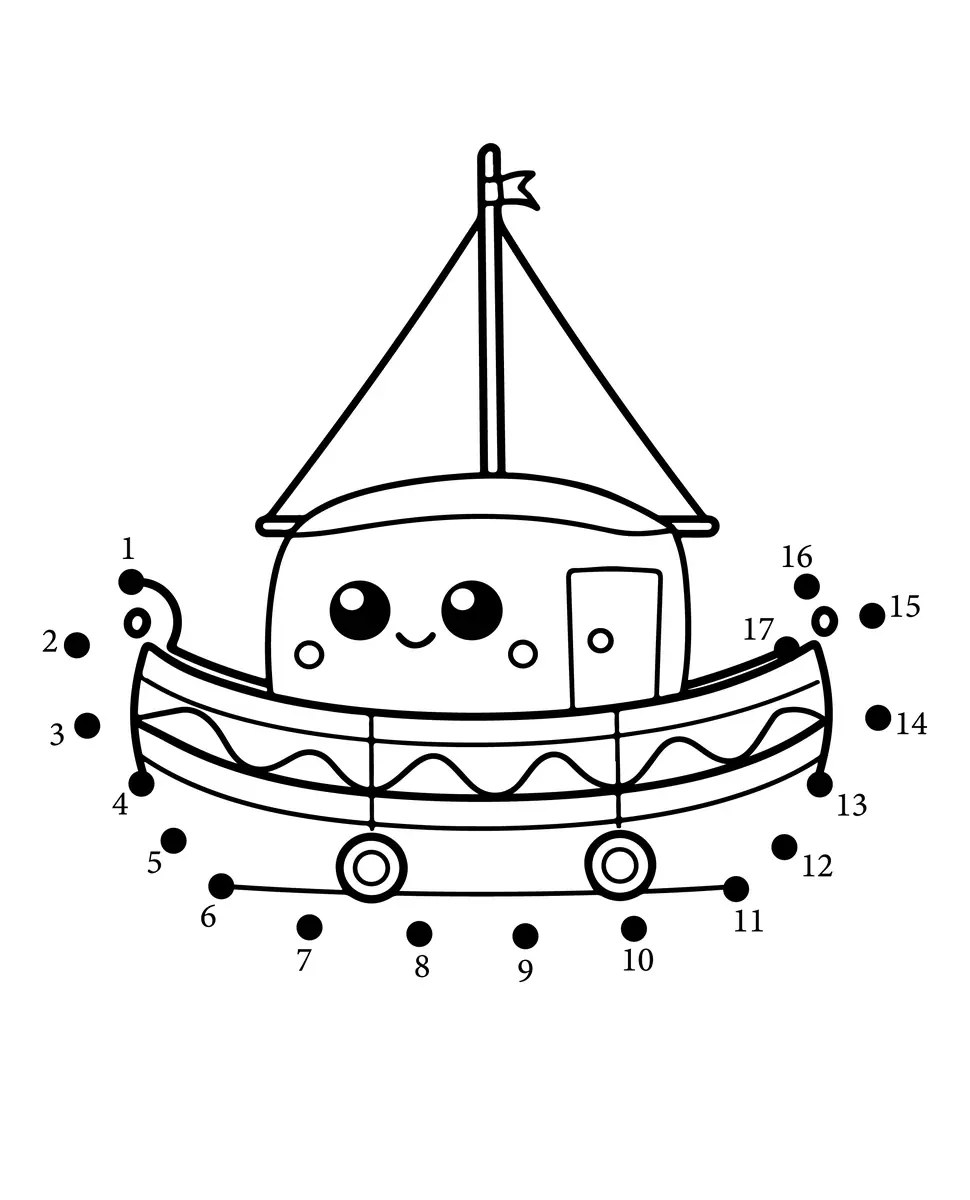
A smiling little sailing boat is waiting for your child on this sheet. The seventeen dots trace the rounded hull, the cart wheels and the mast. It is a great chance to introduce the theme of the sea and getting around. The drawing is compact and fits on a single page, perfect for trips away.
🚙 The bubbly convertible (1 to 20 dots)
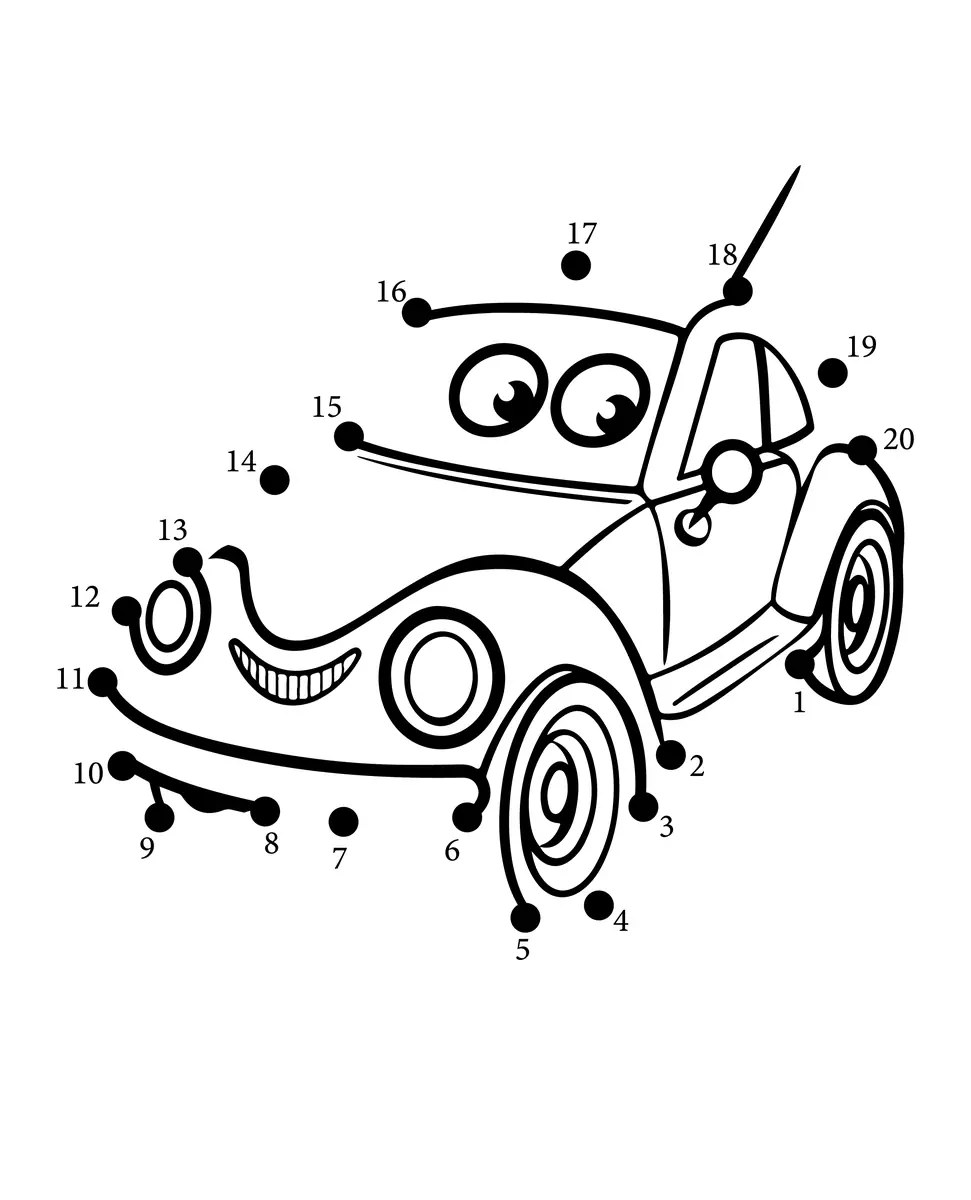
Exactly twenty dots for a convertible car with a big grin. The path starts at the front right wheel and loops around the vehicle. Your child joins the numbers in order and watches a car full of character appear. It is the sheet that matches the “1 to 20” goal exactly.
🐼 The little sitting panda (1 to 21 dots)
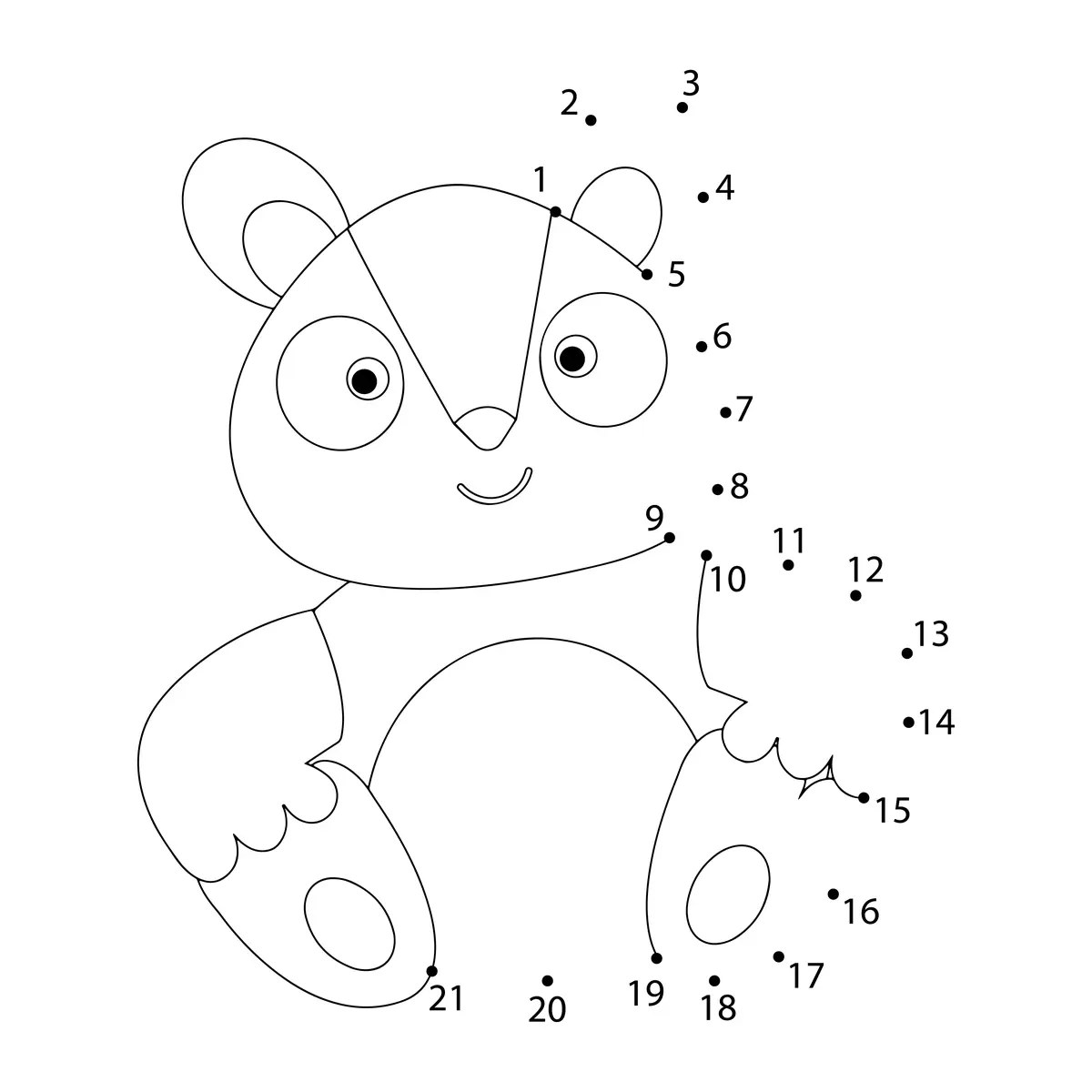
An adorable baby panda is sitting behind these twenty-one dots. The line follows the front paw, climbs up to the head and comes back down to finish at the back paw. The final result makes you want to scoop the animal up for a cuddle. This sheet gently introduces one extra dot beyond twenty.
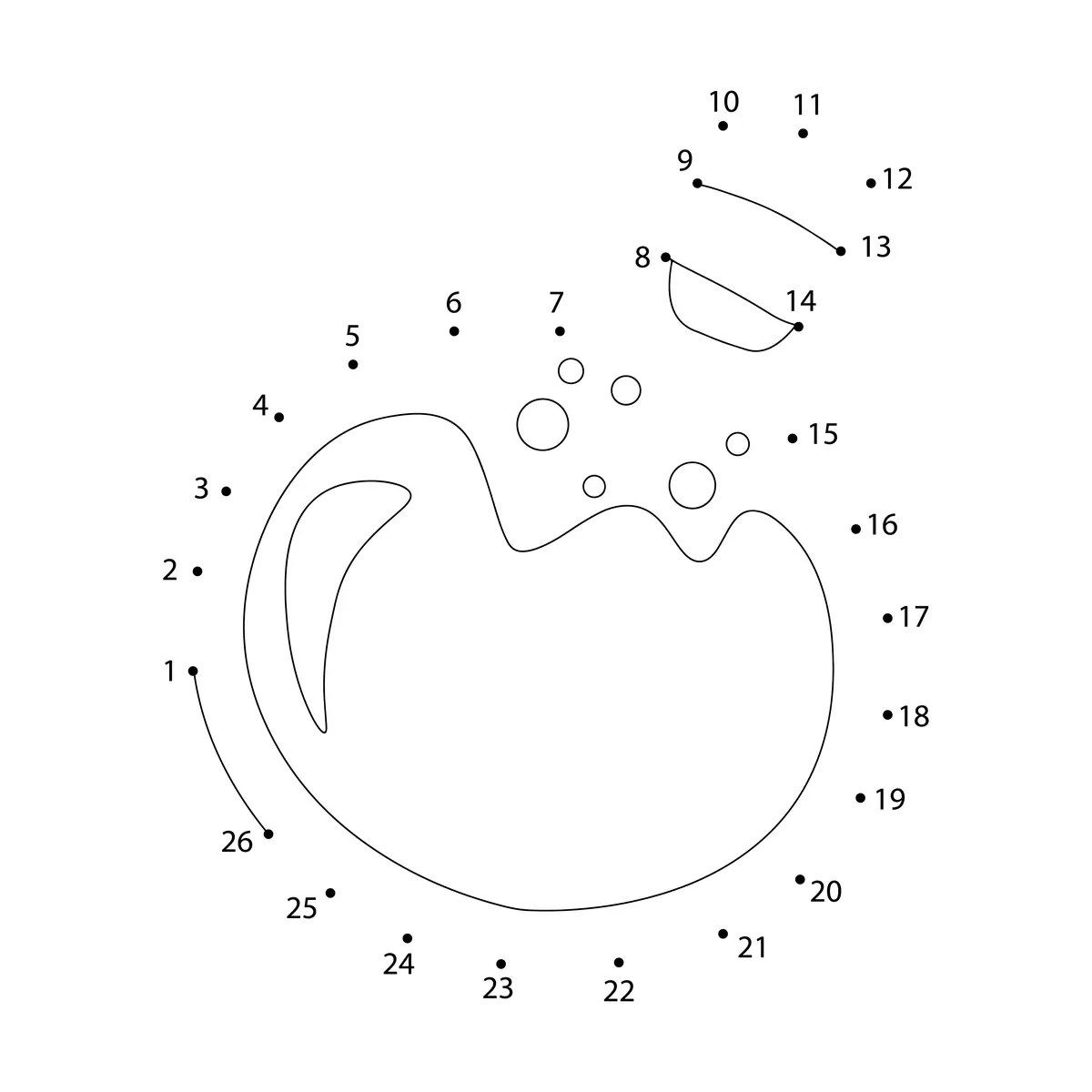
🍎 The round fruit with its leaf (1 to 22 dots)
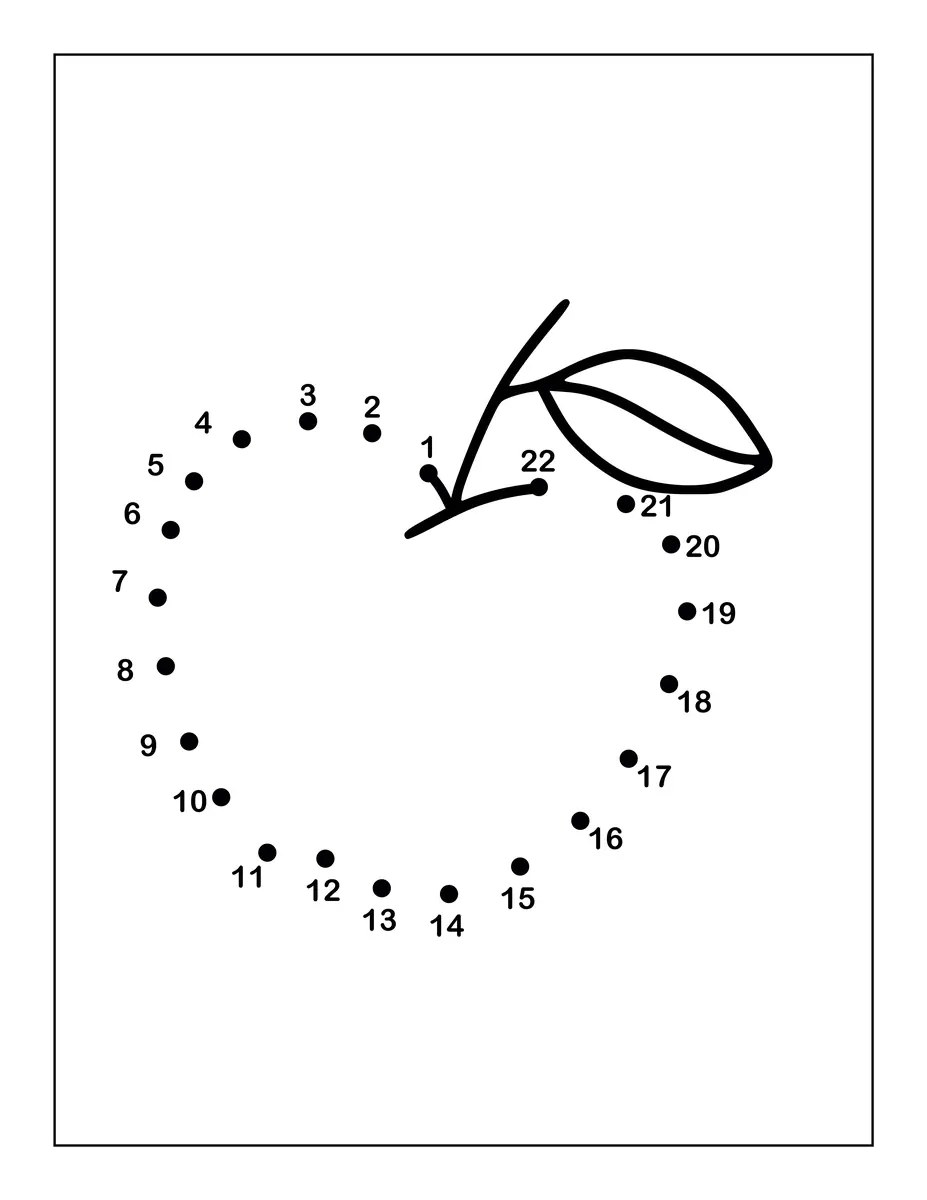
This very clean sheet reveals a round fruit topped with a pretty leaf. Twenty-two dots trace the perfectly even outline of the shape. The minimal design leaves plenty of room for colouring afterwards. Your child can imagine an orange, an apple or even a pumpkin.
🚗 The cheeky cartoon car (1 to 22 dots)
This car with big round eyes and a mischievous smile wins everyone over straight away. The numbered path starts at the back and goes all the way around the vehicle. Your child discovers the roof, the windscreen and then the wheels one by one. A real triumph to stick on the fridge once it is coloured.

🐶 The very sweet little dog (1 to 25 dots)
Twenty-five dots to reveal a little dog with long fur. The line starts at the front paw and climbs up to the ears before coming back down. The dog is the animal children ask for most in creative activities. This sheet always raises a smile the moment the shape appears.

🐬 The playful dolphin (1 to 25 dots)
A cheerful dolphin swims along these twenty-five dots. The path follows the snout, the back, the dorsal fin and then the tail. A few decorative little bubbles complete the scene once it is finished. It is a perfect sheet for exploring the theme of the sea and ocean animals.

🚚 The funny vintage truck (1 to 26 dots)
This vintage truck with big round headlights really tickles children. Twenty-six dots draw the cab, the trailer and the two pairs of wheels. It is our most complete sheet, best saved for last in a session. The visual reward is well worth the effort it asks for.

🎃 The funny autumn pumpkin (1 to 26 dots)
A pretty pumpkin with its stalk and leaves appears thanks to these twenty-six dots. The line follows the rounded outline of the fruit and finishes with the stem. This sheet is perfect in October for an autumn and Halloween mood. It also works all year round as a lovely garden pumpkin.
✨ The benefits of dot-to-dots for your child
Beyond the instant fun 🎉, dot-to-dots offer real educational benefits. This activity gently develops several essential skills. Your child learns without even realising it, sheet after sheet.
🔢 Building up counting and number sense
Each sheet means spotting the numbers in increasing order. Your child handles the number line visually and concretely. This regular practice firmly anchors their understanding of counting.
The sheets that go beyond twenty dots gently prepare what comes next. Your child meets numbers up to twenty-six with no pressure. This gradual stretch readies them for the more complex sheets to come.
Quickly picking out one number among twenty-six takes real attention. Your child develops the ability to scan information visually. This skill will be precious for reading and maths.
🧠 Focus and sustained attention
Finishing a sheet calls for ten to fifteen minutes of continuous focus. Your child learns to stay locked on a single task. This attention stamina builds up gradually with this kind of activity.
The activity means ignoring nearby distractions to follow the order. Your child trains their brain to filter out background noise. This skill becomes essential the moment primary school begins.
Controlling the movement also calls for constant watchfulness from the eyes. Your child coordinates reading the number with the hand that draws. This eye-hand teamwork supports many school subjects.
✋ Fine motor skills and a precise hand
Drawing an accurate line from one dot to another works on fine motor skills. Your child adjusts their pressure and direction all along the line. This fine muscle control is essential for learning to write well.
The pencil grip naturally gets stronger sheet after sheet. Your child adapts their hold to the direction and length of each line. This adjustment prepares the flexibility needed for joined-up writing.
The movement becomes surer and smoother with regular practice. Your child gains confidence in their drawing abilities. That confidence then carries over to writing exercises in class.
💡 Our tips for helping your child
Good support turns the activity into a special moment of togetherness. A few simple ideas help you get the most fun and learning from it. Your child makes better progress when they feel supported rather than taken over.
✅ Check they know their numbers
First, make sure your child knows their numbers up to twenty well. A quick count out loud before starting clears up any doubts. This little warm-up avoids frustration and giving up halfway through.
For the sheets that go up to twenty-six, lend a hand the first time. Say the numbers beyond twenty together with your child if needed. This kind help stretches the comfort zone without breaking it.
If your child hesitates, point to the area where the next number is. Do not give the answer, but guide their eyes. Your child remembers far better when they find the solution themselves.
🤝 Guide without doing it for them
Resist the urge to draw the lines or tidy up the wobbly ones. The result must belong entirely to your child to bring them pride. Fully owning the work is what feeds self-confidence.
Encourage with short phrases rather than vague compliments. Name exactly what worked well to steer their progress. This targeted feedback helps far more than a simple “well done”.
Ask questions about the picture as it appears along the line. “Can you tell what it is?” or “What could it be?” spark the imagination. Your child gets more involved when they are guessing the final reveal.
💖 Accept the wobbles in the line
The first lines are never perfectly straight, and that is completely normal. Your child learns by doing, not by chasing instant perfection. This kind tolerance avoids blocks and a loss of motivation.
If a line goes off course, do not ask them to rub it out or start again. The drawing keeps all its charm with its little imperfections. These personal touches give your child’s work its authenticity.
With time, accuracy will come naturally with no conscious effort. The movement sharpens sheet after sheet as they add up. This organic progress lasts longer than an early demand for perfection.
📋 How to print and set up the activity
Getting the materials right largely sets up the success of the activity. A few simple preparations guarantee a smooth, enjoyable moment. Your child gets straight into the action with no frustrating waiting around.
🖨️ Getting set up to print at home
Open each picture you would like and send it to your home printer. Choose standard A4 size and portrait orientation in your printer settings. This setup gives a dot size that is comfortable for a child’s hand.
Go for thick white paper of at least 90 grams if you can. This thickness stops the felt-tips bleeding through and marking the table below. Quality paper also gives extra value to your child’s finished work.
Print several sheets in advance so you have a ready-to-use stock. Your child can then freely pick the drawing they fancy. This independence boosts their engagement in the activity on offer.
✏️ Choosing the right drawing tools
An HB pencil is perfect for the first sheets. Your child can rub out a mistake without damaging the paper. This safety net reassures children who are a little bit of a perfectionist.
For the next sheets, offer a fine felt-tip in a bright colour. The line becomes more visible and more satisfying to look at afterwards. The strong contrast makes you want to stick the drawing on the fridge.
Avoid pens that are too thick and hide the numbers as you draw. Your child should always clearly see the next number to reach. This visibility is what keeps the numbered path flowing.
🪑 Setting up a space that helps concentration
Sit your child at a flat table with good direct light. Avoid switched-on screens right next to the work space. This calm environment helps the sustained attention they need.
Get the sheet, the pencils and the rubber ready before starting the session. Your child does not have to break their flow to look for materials. This prep work supports concentration all the way through the line.
Keep interruptions and demands to a minimum for the length of the activity. Fifteen minutes without being disturbed is enough to finish a whole sheet. This protected little window becomes a precious moment in the day.
🎨 Ideas to extend the dot-to-dot game
Once the sheet is finished, the adventure can carry on in a thousand ways. These extensions turn a simple activity into a richer project. Your child deepens their learning while having even more fun.
🎨 Colour in the revealed drawings
Once the line is finished, bring out the felt-tips or colouring pencils. Your child picks the shades themselves to dress up their drawing. This creative moment naturally extends the total length of the activity.
Encourage your child to dare to use unexpected or wacky colours. A blue dog or a golden dolphin stir up free imagination. This creative licence takes away the guilt and frees up children’s creativity.
Mix up the techniques: watercolour, oil pastels, markers or watercolour pencils. Each tool gives a different finish on the same starting line. Your child discovers the rich variety of art materials on offer.
✨ Make their own dot-to-dots
Suggest your child invents their own numbered sheets. They draw a simple shape in pencil, then place numbered dots on it. This role reversal firmly anchors their understanding of the idea.
Get them to make a sheet for a younger brother, sister or cousin. Your child feels the pride of passing on an activity they have mastered. This little-teacher role strengthens their own learning.
Set a family challenge: who can make the most creative sheet? Everyone makes a sheet for the others, then the whole family plays. This shared buzz turns a solo activity into a group moment.
📈 Going further with more complex sheets
When your child has mastered the 1 to 26 sheets, step up the difficulty. We also offer dot-to-dots that go up to 50 or 100. This natural progression keeps interest alive without any sudden jumps.
The more complex sheets sometimes use only even or only odd numbers. This teaching twist enriches their understanding of number sense. That way your child explores maths ideas through play.
Explore our other printable activities too: mazes, colouring pages and spot-the-difference games. They all complement each other to offer a varied learning journey. Your child always finds a sheet that matches their mood of the moment.
❓ FAQ
👶 What age are these sheets for?
These sheets suit children from the final year of nursery, around five years old. Your child should recognise numbers up to twenty and hold a pencil with ease. For the simplest sheets (11 or 16 dots), even slightly younger children can try with a helping hand.
📏 Should they use a ruler to draw the lines?
No, freehand drawing is far better at this age. A ruler makes the movement needlessly tricky and breaks the flow of the path. Your child develops their fine motor skills much more by drawing freely.
🤔 What if my child skips a number?
No need to panic: simply go back to the last correct dot and pick up from there. The final drawing will still look very much like the expected shape. What matters most is the fun and the movement, not a perfect result.
🔁 Can the same sheet be printed several times?
Of course, and it is even recommended for the favourite sheets. Your child can try different colouring tools on the same sheet. This repetition also strengthens the movement and the speed of doing it.
🏫 Are these sheets suitable for school?
Yes, many teachers use these materials in the final nursery year or in Reception. They work on number sense, focus and motor skills in a single activity. These sheets are free to use for a non-commercial educational setting.
🤝 How can I help a child who gives up halfway?
Offer a short break, then pick up the started sheet together. You can also point to the next number to get the movement going again. If they are too tired, go back to a simpler sheet the next day.
📚 Are there harder sheets on your site?
Yes, we offer dot-to-dots that go up to 50 and even 100 dots. These sheets suit children from Reception to Year 4 depending on their level. Browse the colouring and games section to discover our whole selection.
To go further: explore our other printable activities for nursery and the early school years, designed for younger and older children alike.
